

When you’re injured in a car crash, medical providers often place liens on your case to guarantee payment for treatment. These car crash medical liens can significantly impact your settlement and how much money you actually receive.
At Schaar & Silva LLP, we’ve seen countless accident victims lose thousands of dollars because they didn’t understand how medical liens work. This guide walks you through what you need to know to protect your case.
What Medical Liens Actually Cost You
How Medical Liens Reduce Your Settlement
A medical lien is a legal claim that hospitals, doctors, chiropractors, and other healthcare providers place on your car accident settlement to guarantee they get paid for treating your injuries. When you receive medical care after a crash and cannot pay upfront, the provider agrees to wait for payment until your case settles. In exchange, they file a lien that gives them the right to take money directly from your settlement before you receive anything. Once a lien is filed, it becomes legally binding and must be resolved before you get paid.
Medical liens reduce your net recovery dollar-for-dollar. If you settle for $100,000 and have $25,000 in medical liens, you walk away with $75,000 before any other deductions. This direct reduction makes lien management critical to protecting your final payout.
The Rising Cost of Auto Injury Treatment
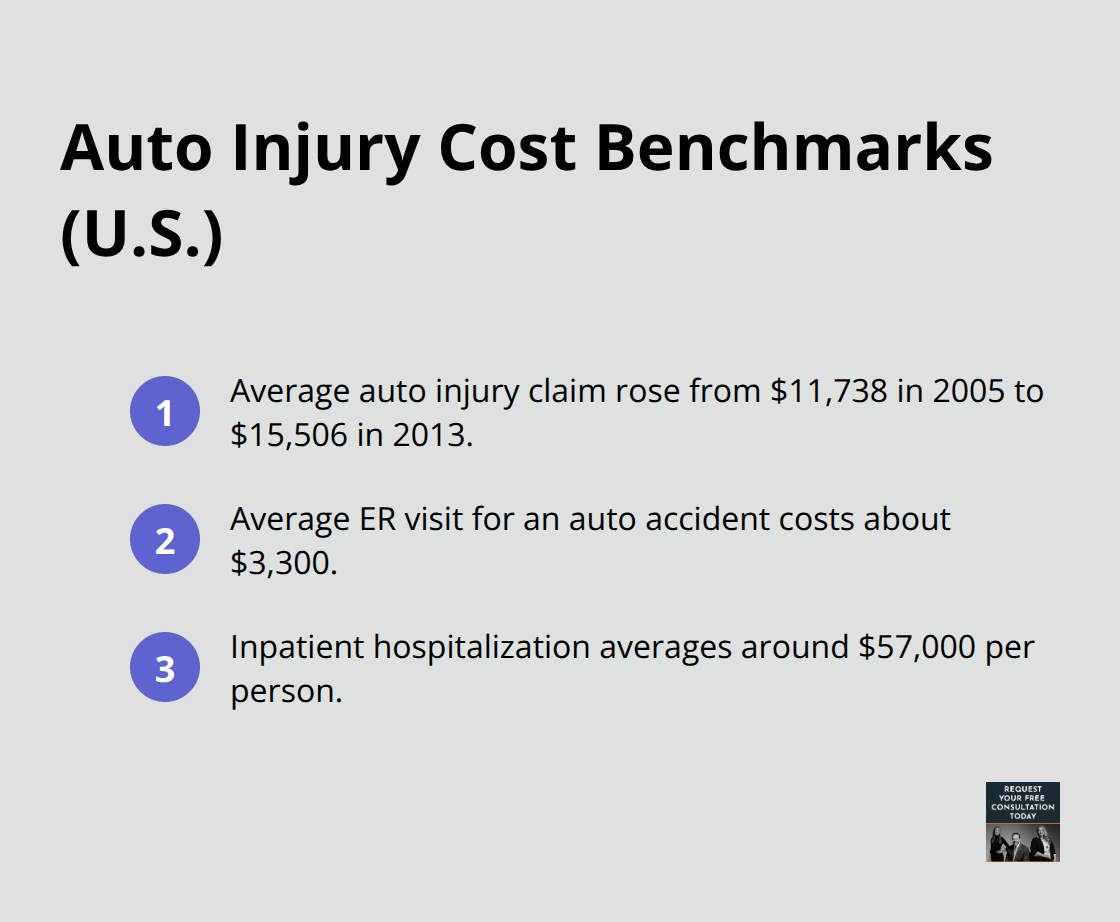
Auto injury claims have climbed significantly over the past two decades. According to the Insurance Research Council, the average claim rose from $11,738 in 2005 to $15,506 in 2013. As these claims grow larger, so do the medical bills attached to them. The average emergency room visit for an auto accident costs about $3,300, while inpatient hospitalization averages around $57,000 per person.
Those numbers add up fast, and when providers place liens on your case, they protect their ability to collect from your settlement rather than chase you for payment later.
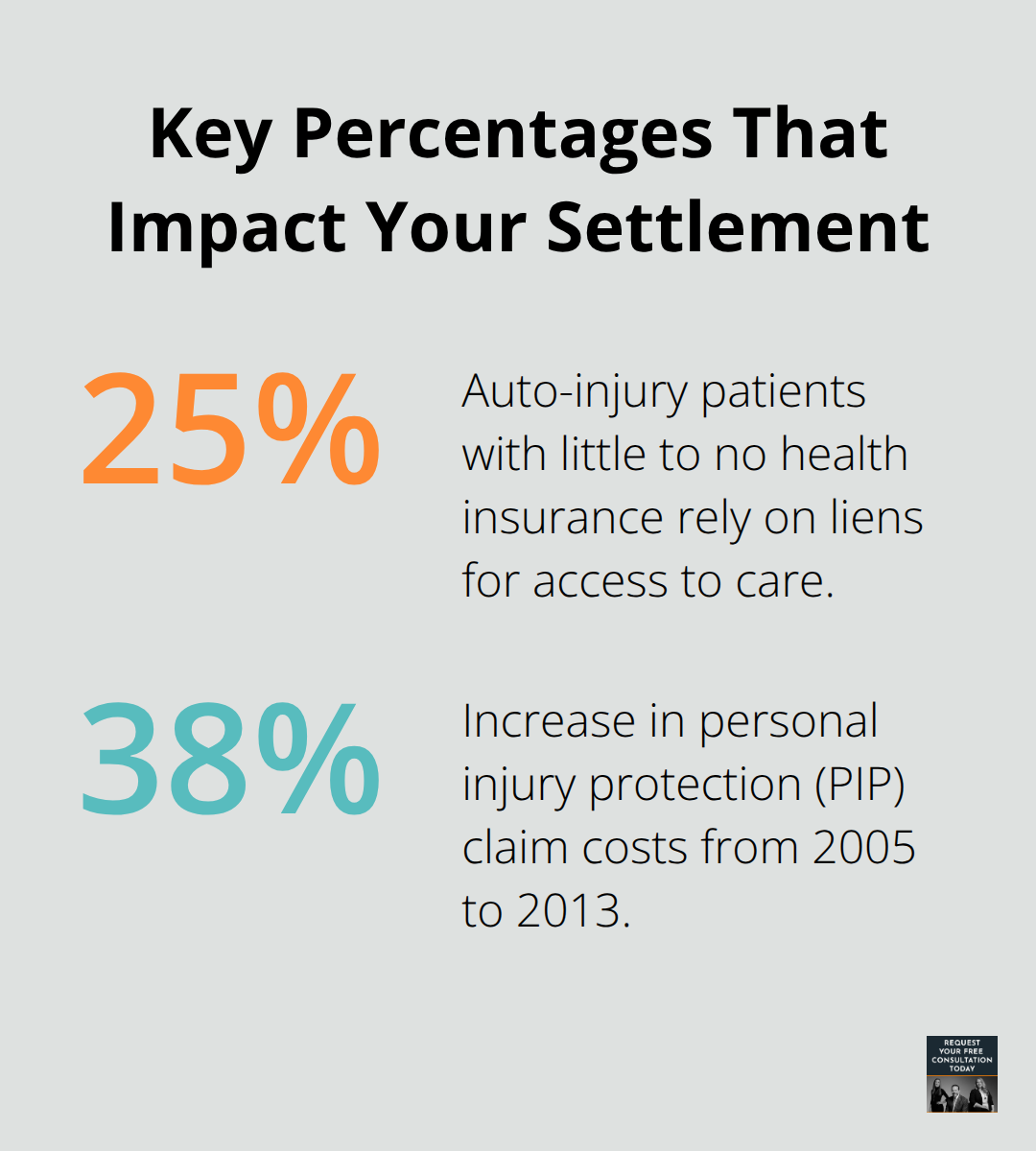
About 25 percent of auto-injury patients have little to no health insurance, making liens the only way they can access necessary treatment. While this system allows injured people to get care without paying upfront, it also means you need someone watching your back to prevent providers from inflating bills or filing duplicate claims.
Tracking Multiple Lienholders
Many accident victims do not fully understand which providers have filed liens until their attorney reviews the case file. Hospitals, doctors, physical therapists, health insurers, and even government programs like Medicare or Medicaid can place liens on your case. The complexity grows when you have seen multiple providers-each one may file separately, and tracking them all becomes a nightmare without professional help.
Hospitals, doctors, chiropractors, and other healthcare providers all have the power to file liens. Government programs add another layer of complexity. When you work with an attorney, they identify every lien on your case and negotiate reductions with providers to maximize what you actually receive.
Documentation Prevents Costly Mistakes
The key to protecting yourself is documenting everything from day one-every doctor visit, every provider name, every bill. This documentation prevents providers from inflating charges or filing duplicate claims that slip through unnoticed. Without a complete record, you risk losing money to claims you did not even know existed. Your attorney uses this documentation to verify that each lien is valid, connected to your accident injuries, and accurate before settlement occurs. Understanding which providers have filed liens and how much they claim allows you to make informed decisions about your case and settlement strategy.
Common Mistakes People Make With Medical Liens
Hiding Medical Treatment Costs You Control
Accident victims commonly hide or downplay medical treatment because they feel embarrassed, want to move forward quickly, or simply forget about visits to urgent care or physical therapy. This silence backfires when providers file liens later and your attorney discovers undisclosed treatment that complicates the case. Hospitals and doctors maintain records, and they will file liens regardless of whether you mention them. Failing to disclose treatment upfront means you lose control of the narrative and cannot prepare your legal strategy around the actual medical costs. Your attorney needs a complete picture from day one to negotiate effectively with all lienholders.
Accepting Settlement Without Knowing Lien Amounts
The second mistake is accepting a settlement offer without knowing the exact lien amounts owed. Many accident victims see a settlement number and assume it is theirs to keep. They do not ask their attorney for a detailed breakdown of every lien, the amount each provider claims, or whether those amounts are reasonable. This ignorance costs money fast. If you settle for $80,000 and discover afterward that $35,000 in liens reduce your net recovery to $45,000, you cannot undo that deal.
The Insurance Research Council found that personal injury protection claim costs climbed 38 percent from 2005 to 2013, jumping from $5,802 to $8,017 per claim. Those rising costs mean liens are larger than ever.
Before you accept any settlement, demand a written summary showing every lienholder, the amount claimed, and how your attorney negotiated those figures. Ask your attorney specifically which liens they reduced and by how much.
Poor Record-Keeping Weakens Your Position
The third mistake is poor record-keeping throughout your recovery. Many victims throw away receipts, lose provider contact information, or cannot remember which clinics they visited months after the crash. Without documentation, you cannot verify whether bills are accurate or catch duplicate charges from the same provider. Your attorney relies on your records to identify invalid liens and negotiate reductions. If you have scattered paperwork or gaps in your treatment timeline, your attorney has less leverage to challenge inflated claims.
Start a dedicated folder the day of your accident and keep every invoice, receipt, appointment card, and provider name in one place. This simple step gives your attorney the ammunition needed to protect your settlement. Once you understand these three mistakes, the next step is learning how to actively protect your case from lien problems before they arise.
How to Protect Your Case From Medical Lien Issues
Document Everything From Day One
Start building your lien defense on the day of your accident. Open a dedicated file or folder-physical or digital-and place every medical receipt, provider statement, appointment card, and bill inside it immediately. Do not wait weeks or months to organize this information. Hospitals and clinics generate records automatically, and providers will file liens based on their documentation, not yours. Your job is to have parallel documentation that allows your attorney to verify each claim is accurate and connected to your crash injuries.
Write down the provider name, address, phone number, and the dates of service for every visit. Include the type of treatment received and the amount billed. This creates a complete audit trail that prevents providers from filing duplicate liens or inflating charges without detection. When your attorney reviews your case, they will cross-reference your records against the liens filed and immediately spot discrepancies. Maintaining detailed medical records from day one of your accident creates a foundation for accurate lien management. Many accident victims lose money because they cannot prove a provider already collected payment or billed twice for the same service. Your documentation stops that from happening.
Demand a Written Lien Breakdown Before Settlement
The second critical step is demanding a detailed lien breakdown from your attorney before you accept any settlement. Do not settle based on a round number. Require a written document that lists every lienholder, the exact amount they claim, and specifically which liens your attorney negotiated down and by how much. Ask your attorney to explain why certain providers will not reduce their bills and whether those amounts are reasonable given the services rendered.
The Insurance Research Council data shows that auto injury claims have grown substantially, meaning liens are consuming larger portions of settlements than ever. If your attorney cannot or will not provide this breakdown in writing, that is a serious red flag. You deserve complete transparency about how much money is actually going into your pocket versus how much goes to medical providers.
Handle Government Liens Separately
Before signing off on any settlement, understand your rights regarding government liens like Medicare or Medicaid, which operate under different rules than private providers and sometimes cannot be negotiated down. Your attorney must address these separately because they carry legal weight that private liens do not. Government programs have statutory authority to recover costs, and their liens often resist reduction more than hospital or doctor liens do.
This distinction matters significantly when calculating your actual net recovery. A settlement that looks substantial on paper shrinks considerably once government liens take their share. Your attorney needs to identify which liens fall into this category early in your case so you can plan accordingly and avoid surprises at settlement time.
Final Thoughts
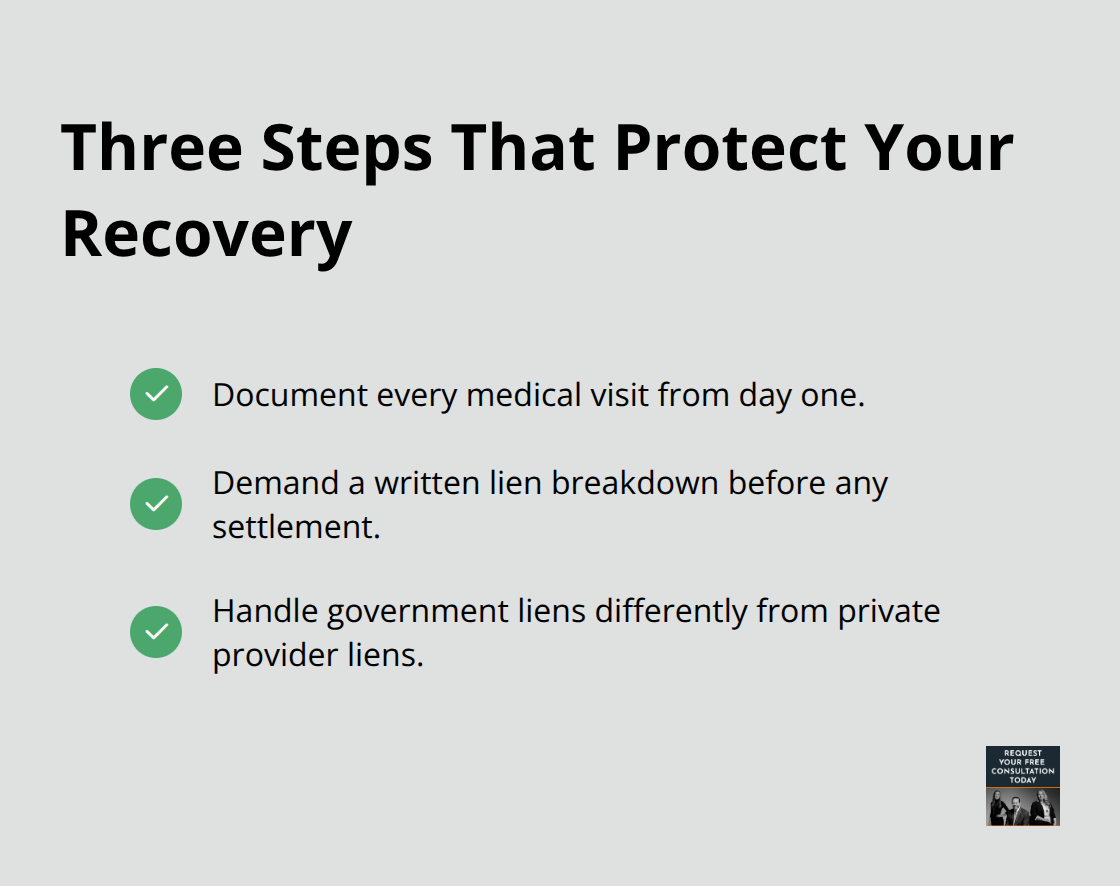
Car crash medical liens reduce your settlement dollar-for-dollar, and waiting until settlement day to address them costs you thousands. The three steps that matter most-documenting every medical visit from day one, demanding a written lien breakdown before you accept any offer, and understanding that government liens follow different rules than private provider liens-protect your recovery when you act on them now. Accident victims who treat liens as an afterthought watch their settlements shrink at the worst possible moment, but you can avoid that trap by staying informed and proactive throughout your case.
We at Schaar & Silva LLP identify every lienholder on your case, verify that each claim connects to your accident injuries, and negotiate reductions with providers to maximize what you take home. Our team handles the complexities of car crash medical liens so you can focus on healing without worrying about how treatment gets paid for while your case moves forward. We provide medical bill assistance and connect you with lien services that keep your recovery on track.
If you were injured in a car accident in Santa Cruz County, Sacramento, or Oakland, contact Schaar & Silva LLP for a free case review to discuss your liens and settlement options. Our legal team walks you through exactly what you owe, what can be negotiated, and how much you can realistically expect to receive. Reach out to us today and let us protect your recovery.
