

After a car accident in Santa Cruz, one question dominates your mind: how long until this is resolved? The Santa Cruz settlement timeline varies dramatically depending on your case’s complexity, the injuries involved, and whether insurers cooperate.
We at Schaar & Silva LLP have guided hundreds of clients through this process, and we know exactly what delays to watch for and which milestones signal progress. This guide breaks down each phase so you understand what’s coming next.
Getting Started: What Happens in the First 30 Days
The first month after your Santa Cruz accident determines whether your case moves forward smoothly or gets bogged down in delays. Most people file their insurance claim within days of the crash, but this is where critical mistakes happen. You must file your claim within 30 days of the accident to protect your rights and signal to the insurance company that you’re serious about your case.
File Your Claim Immediately
Don’t wait to file. The sooner you file, the sooner the investigation clock starts ticking, and the sooner the insurer must respond with their initial assessment. Filing within 30 days sets the foundation for everything that follows and prevents the insurance company from using delays as a tactic to weaken your position.
Gather Evidence at the Scene and Beyond
At the scene, take broad and close-up photos of vehicle damage, road conditions, and your injuries. Collect the other driver’s license, vehicle registration, and insurance information. Get witness contact details and file a police report with the Santa Cruz County Sheriff’s Office immediately. Request the official accident report through their Public Records Request service as soon as it’s available-this document carries enormous weight in settlement negotiations and typically arrives within 1–2 weeks. The police report becomes the foundation for everything that follows.
Insurance Investigation and Medical Documentation
Once you file your claim, the insurance company launches its investigation, and this phase typically takes 30–90 days for straightforward cases. The insurer will request your medical records, accident reports, witness statements, and any prior injury history. This is where many Santa Cruz residents lose leverage: incomplete medical documentation stalls negotiations for weeks. Start collecting medical records from your first doctor visit (whether that’s an emergency room, urgent care, or your primary physician) and maintain a detailed timeline of every appointment, medication, and treatment.
Insurance adjusters handle hundreds of claims simultaneously and will slow things down if your paperwork isn’t organized. You must reach maximum medical improvement (MMI) before settlement negotiations can conclude fairly. Some injuries reveal themselves slowly: back injuries, traumatic brain injuries, and nerve damage often take 6–12 months to show their full impact. Settling before you reach MMI means accepting less money than your case is actually worth.
Organize Your Expenses and Documentation
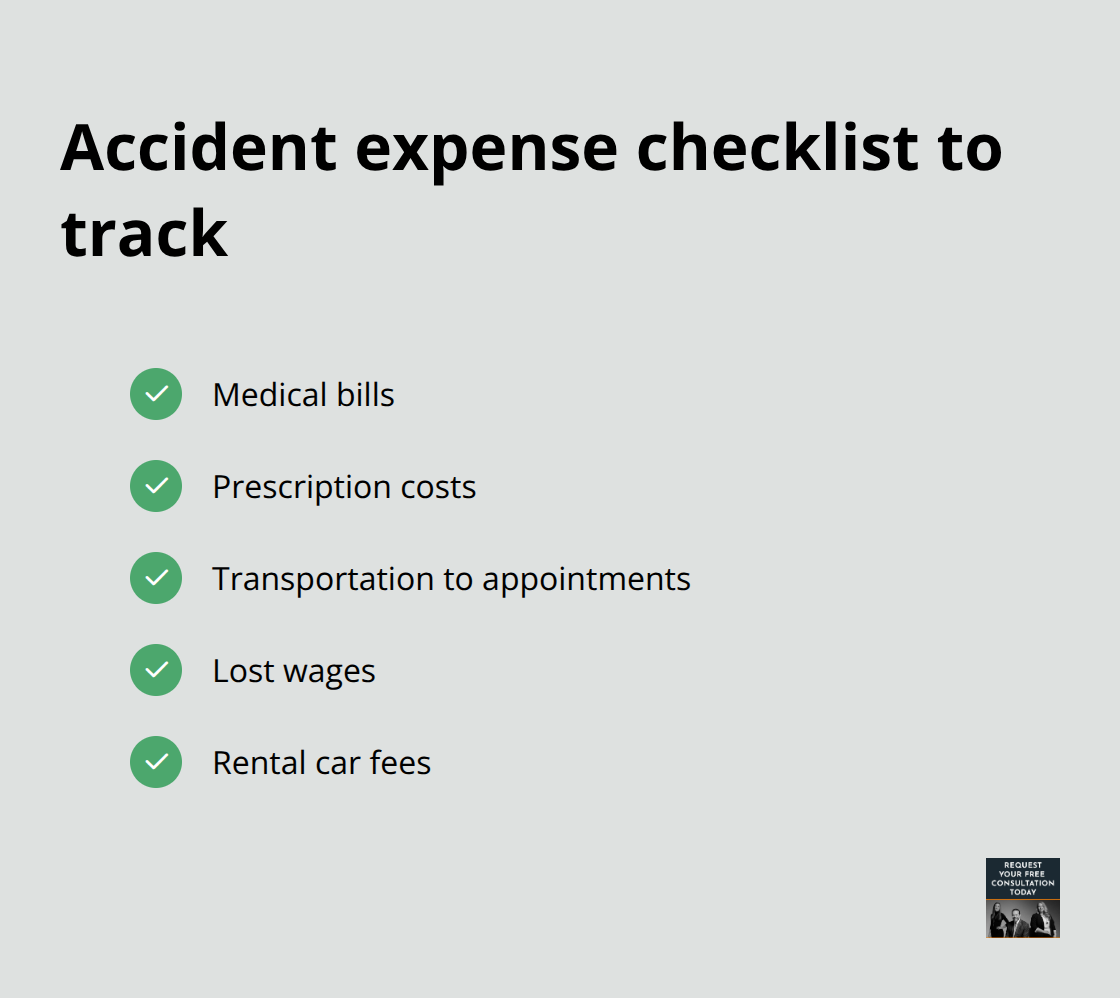
Document every expense related to your accident: medical bills, prescription costs, transportation to appointments, lost wages, and rental car fees. Store digital copies in the cloud.
This preparation directly accelerates the negotiation phase that comes next, where your organized records give you leverage against insurers who count on disorganized victims to accept low offers. The stronger your documentation, the faster negotiations move forward.
Negotiation and Settlement Discussions
Once your insurance investigation wraps up, typically 30–90 days after filing, the insurer sends their initial settlement offer. This first offer almost always falls short of what your case is worth. Insurance adjusters work within strict guidelines to minimize payouts, and they count on you accepting quickly without understanding the long-term consequences of your injuries. Expect their opening number to be 40–60% below your actual claim value. This is not negotiation; this is positioning. The insurer wants to test whether you’ll accept a lowball offer or push back with evidence and counteroffers.
The First Settlement Offer Arrives
The timing of that initial offer matters. Insurers typically respond within 30–60 days of receiving your complete documentation. If your paperwork is disorganized or incomplete, they stretch this timeline deliberately. A well-organized claim file (medical records, bills, wage loss documentation, and police reports all in one place) signals that you’re serious and forces faster responses. The insurer’s opening position is rarely their final one, so treat it as the start of a conversation, not an endpoint.
Back-and-Forth Negotiation Rounds
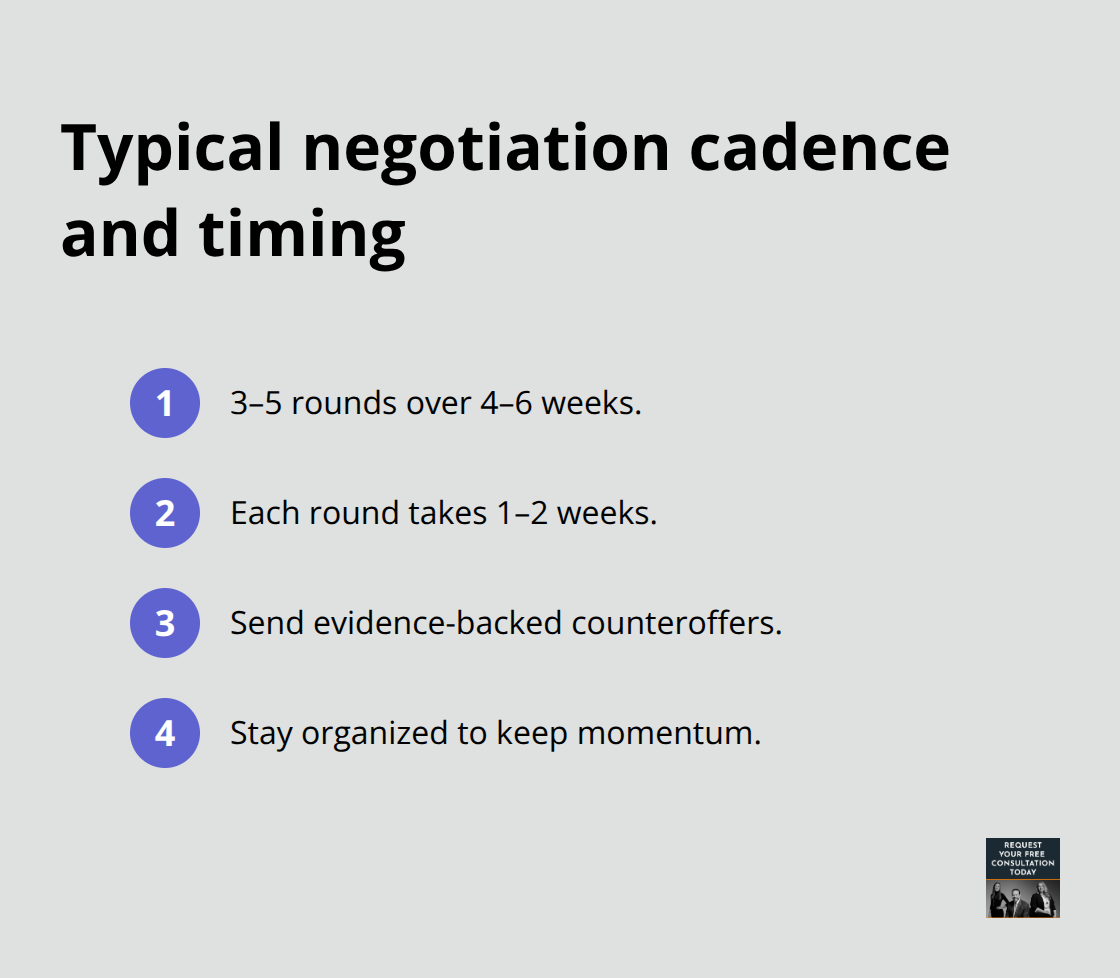
After you receive that initial offer, the real negotiation begins. Most Santa Cruz cases go through 3–5 rounds of offers and counteroffers spread across 4–6 weeks. Each round typically takes 1–2 weeks as your attorney prepares a reasoned counteroffer supported by your medical records, wage loss documentation, and expert opinions on future care costs. The insurer responds with their counter, and the cycle repeats. This isn’t a quick process, but it’s predictable if you stay organized.
The key is refusing to negotiate before you’ve reached maximum medical improvement. Settling prematurely because an adjuster pressures you into a timeline costs you tens of thousands of dollars. Your case value cannot be accurately assessed until your doctors confirm you’ve stopped improving. Back injuries, traumatic brain injuries, and nerve damage often reveal their full extent 6–12 months post-accident, which is why rushing the process undermines your recovery.
What Speeds Up Negotiations
Insurance companies slow negotiations deliberately when they sense weakness. Missing medical appointments, gaps in your treatment records, or disorganized documentation gives adjusters ammunition to argue your injuries aren’t as serious as claimed. Conversely, strict compliance with medical advice, complete billing records, and a clear injury timeline demonstrate credibility that forces faster settlements. Straightforward cases with clear liability and minor injuries settle in 30–90 days total. Complex cases with multiple parties, disputed fault, or severe injuries extend 6–18 months.
What Stalls Your Settlement
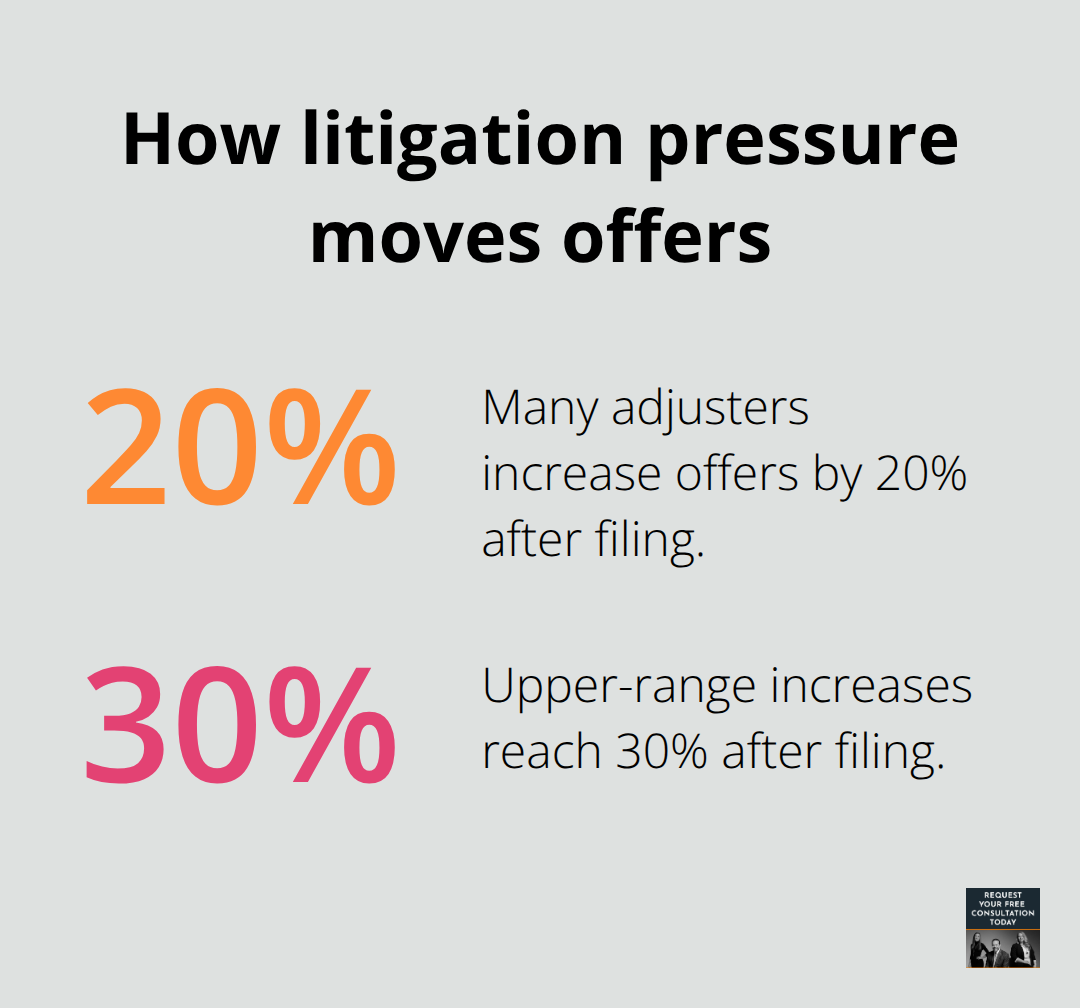
Santa Cruz County’s court system adds pressure too. Once you demonstrate readiness to file a lawsuit, insurers increase their offers significantly because litigation creates real costs. Court filing fees, expert witness fees, and attorney preparation time mount quickly, and insurers know this. A credible threat to litigate often produces a settlement increase of 20–30% within days. Government vehicles complicate everything. If a city or county vehicle caused your accident, special claims procedures apply under California Government Code 905, requiring a Government Claims Act notice within six months of the crash. Miss this deadline and you lose your right to sue entirely.
Moving Toward Resolution
As negotiations progress and both sides gather evidence, the pressure to settle increases. The chance to reach agreement grows stronger once discovery begins and both parties understand the strength of their positions. This momentum toward resolution accelerates when you have organized documentation and legal representation that understands Santa Cruz County’s court system and settlement patterns. The next phase-what happens when settlement talks break down-requires understanding your litigation options and the court deadlines that apply in Santa Cruz County.
When Settlement Negotiations Fail
If settlement talks stall after 4–6 weeks of negotiation and the insurer’s final offer remains significantly below your case value, litigation becomes your realistic option. Santa Cruz County Superior Court handles personal injury cases, and filing a lawsuit is not a sign of failure-it’s a strategic decision that often increases settlement pressure immediately. Insurers know that litigation costs them money through expert fees, court reporter fees, and attorney preparation time. The moment you file, many adjusters increase their offers by 20–30% because they understand trial expenses will mount.
Understanding Your Filing Timeline
In Santa Cruz County, the statute of limitations gives you two years from the accident date to file a personal injury claim, so you have time to pursue settlement before court becomes necessary. However, waiting until month 20 to file creates unnecessary stress and limits your preparation window. Filing around month 6–8 (after you’ve reached or are approaching maximum medical improvement) signals serious intent without rushing your medical recovery. Once your complaint is filed with Santa Cruz County Superior Court, the defendant must be served at least 15 days before any court appearance. If the at-fault driver lives outside Santa Cruz County, service becomes more complex and adds 1–2 weeks to the timeline. Service must be performed by someone other than you-typically a sheriff’s office or professional process server.
Discovery and Case Momentum
After service is complete, the case enters the discovery phase, where both sides exchange interrogatories, requests for production of documents, and depositions. Most discovery responses are due within 30 days, and depositions typically occur 2–4 weeks after notice is given. This discovery process often accelerates settlement because both parties now see the actual strength of their opponent’s case. Medical experts may be deposed, police reports are scrutinized, and witness credibility becomes clear. Many cases settle during discovery once the insurer realizes a jury might award more than their current offer.
Court Scheduling and Trial Preparation
Initial case management conferences in Santa Cruz County occur within 60–90 days of filing, and these conferences establish discovery deadlines and trial dates. Santa Cruz County Superior Court typically schedules trials 4–8 months from the filing date, though this timeline varies based on court congestion. If settlement fails and trial approaches, you’ll need to prepare 4–6 weeks before the scheduled date by organizing witness lists, exhibits, medical records, and expert reports. Trial-related costs escalate rapidly at this stage. Initial trial preparation expenses (expert fees, court reporters, and attorney time) typically range from $5,000–$15,000, which is why insurers often increase their settlement offers significantly as trial dates approach.
Settlement Pressure During Litigation
The decision to settle during litigation remains entirely yours, but having experienced legal representation means you’ll evaluate that decision with complete information about your case’s actual trial value and the realistic costs of proceeding. We at Schaar & Silva LLP understand Santa Cruz County’s court system, local procedures, and settlement patterns that influence outcomes. Our experience means we know when to push toward trial and when settlement momentum favors resolution.
Final Thoughts
Your Santa Cruz settlement timeline depends on how well you prepare and who represents you. Straightforward cases resolve in 30–90 days total, while complex cases with multiple parties or disputed liability extend 6–18 months. The difference between fast resolution and prolonged delay often comes down to organization and legal strategy that moves insurers toward fair offers.
We at Schaar & Silva LLP accelerate your timeline by handling the details that slow most victims down. We manage your medical bill assistance through lien services, so you avoid pressure to settle prematurely because of mounting expenses. We evaluate your property damage claims accurately and connect you with support specialists when accident trauma complicates your recovery, because we understand how these factors affect settlement decisions.
After settlement is finalized and you sign the release, money typically arrives within 14–45 days. Medical liens from providers, workers’ compensation, health insurers, and Medicare must be verified and resolved, which usually takes 1–2 weeks. Contact Schaar & Silva LLP for a free case evaluation and start moving toward resolution today.
