
An accident in Oakland can leave you overwhelmed with medical bills, insurance calls, and legal deadlines. The Oakland accident claim process involves specific timelines and local court rules that most people don’t understand.
We at Schaar & Silva LLP have helped countless clients navigate these claims successfully. This guide walks you through each stage, from the initial police report to final settlement, with practical tips to avoid costly mistakes.
What to Do Right After an Oakland Accident
The first 24 to 72 hours after your accident in Oakland determine how smoothly your claim moves forward. Stop your vehicle safely and move only if necessary to avoid further collision risk. Call 911 immediately if anyone is injured, as this creates an official emergency response record that insurers rely on. At the scene, collect the other driver’s name, phone number, address, driver’s license number, vehicle identification number, and license plate. Get the same information from any witnesses and ask for their contact details directly. Take wide-angle photos of the entire scene, then close-up photos of vehicle damage, skid marks, road conditions, traffic signals, and weather. These photos should be taken from multiple angles and preserved immediately, as they strengthen your claim significantly.
Filing Your Oakland Police Report
You must file California DMV Form SR-1 within 10 days if anyone is injured or if property damage exceeds $1,000. Failure to file results in automatic suspension of your driving privileges according to California DMV rules. For Oakland specifically, obtain your traffic collision report through the Oakland Police Department’s online portal via LexisNexis, which costs $30 and typically takes 60 to 90 days for processing.
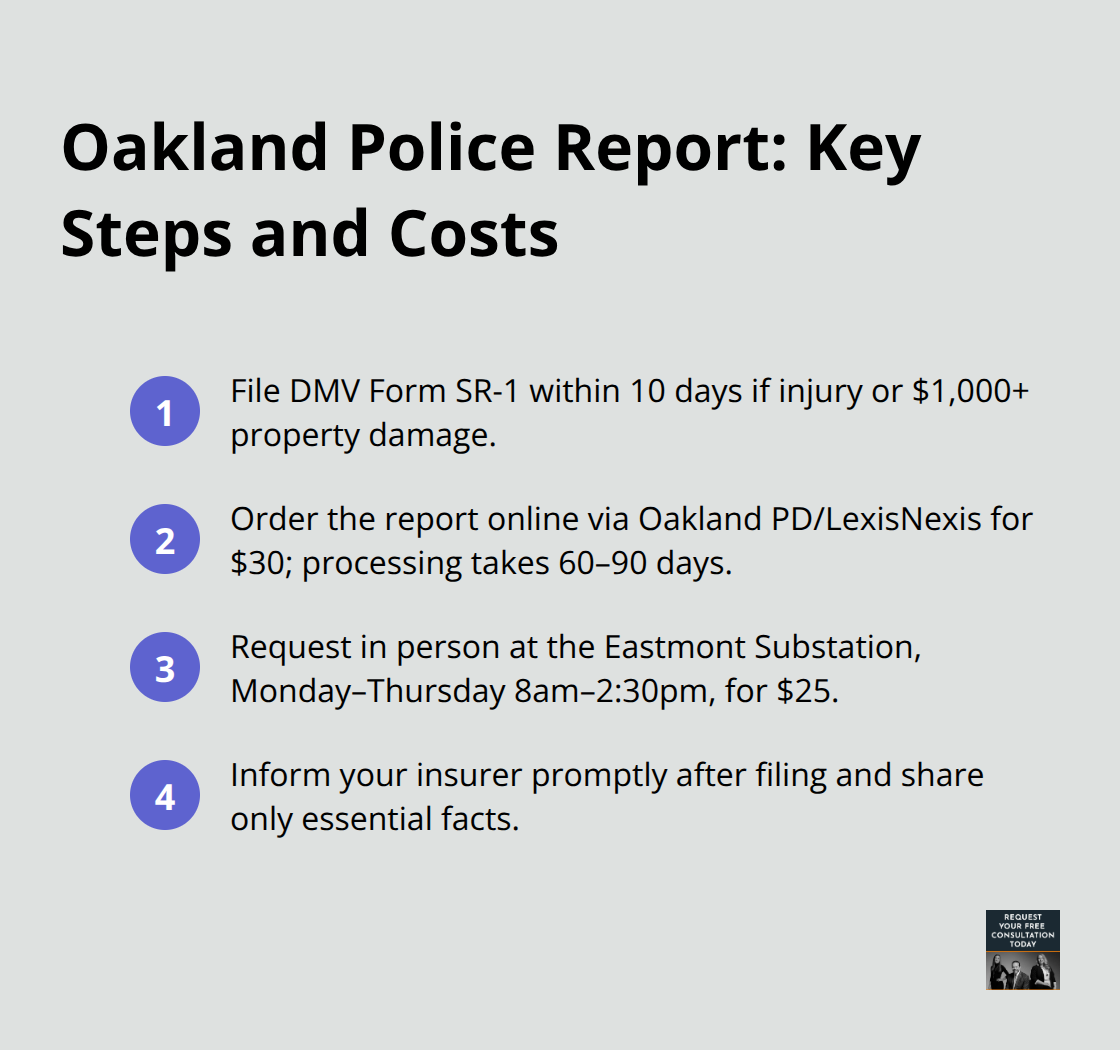
You can also request reports in person at the Eastmont Substation Traffic Investigations Unit located at 2651 73rd Avenue, Oakland, CA 94605, during Monday through Thursday 8am to 2:30pm, where the fee is $25. This official report documents the location, time, responding officer observations, and witness statements-all of which insurers use to verify fault and liability. Inform your insurer promptly after filing the police report, as delays in notification can be used to deny coverage. Provide only essential facts to adjusters and avoid discussing fault; let your attorney handle detailed communications instead.
Building Your Evidence File
Preserve all documentation from day one in an organized file. Obtain medical attention immediately, even if you feel fine, as invisible injuries like traumatic brain injury or whiplash often appear hours or days later and early evaluation links these injuries directly to the crash. Keep copies of all medical records, prescriptions, treatment notes, and rehabilitation records. Separate economic damages (lost wages, rental car costs, medications) from non-economic damages (pain, emotional distress). Never post about the accident on social media, as posts can be subpoenaed and used to undermine your claim or suggest exaggerated recovery. Collect repair estimates, towing receipts, and all insurer communications. The stronger your evidence file, the more leverage you have during settlement negotiations.
What Happens Next With Your Insurer
Your insurer will contact you within days of your report. They will request your initial statement, review your policy coverage, and assign an adjuster to your case. Share only the facts about what happened-not your opinions about fault or injury severity. Adjusters work for the insurance company, not for you, so they evaluate claims through a lens that protects their employer’s interests. Your documentation from the scene and medical records will form the foundation of their investigation. The next phase involves medical review and damage assessment, which directly affects your settlement value.
How Long Does an Oakland Claim Actually Take
Timeline Factors That Shape Your Claim
Your Oakland claim timeline depends on injury severity, liability clarity, and how thoroughly you document damages. Straightforward claims with clear fault and minor injuries settle within three to six months, while serious injury cases typically take six to twelve months or longer.
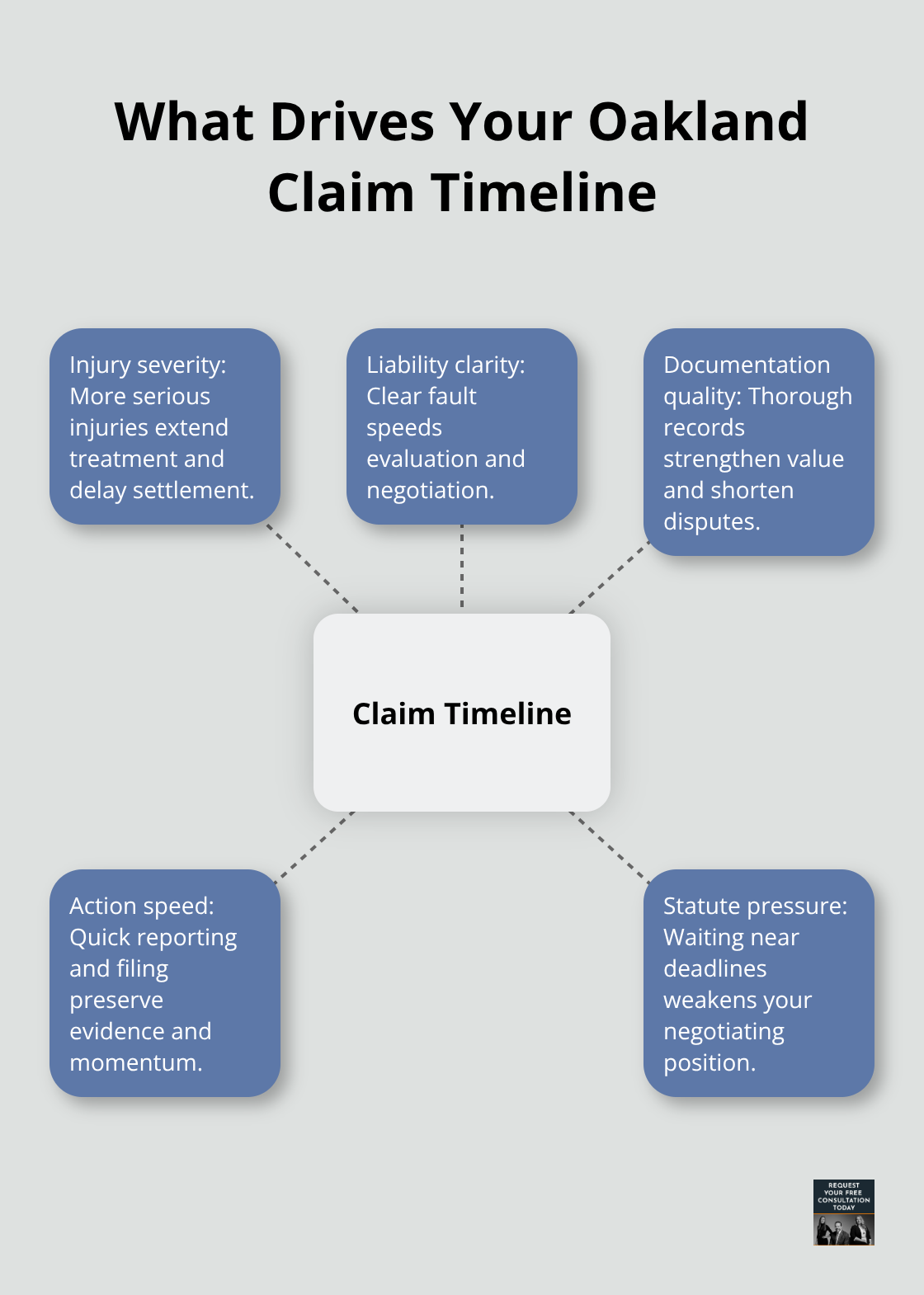
The California statute of limitations gives you two years to file a personal injury claim and three years for property damage under California Code of Civil Procedure Section 335.1, but waiting until the deadline approaches weakens your negotiating position because insurers know you’re running out of time. Start the process immediately after your accident because quick action preserves evidence, meets internal filing deadlines, and signals seriousness to insurers.
What Your Insurer Does During Evaluation
Your insurer begins their evaluation within days of receiving your claim. They review your policy, inspect vehicle damage, obtain medical records if you’ve sought treatment, analyze the police report for fault assignment, and determine if subrogation applies (meaning they can recover costs from the at-fault party). This process typically takes two to four weeks. During this phase, maintain continuous medical documentation because gaps in treatment give insurers ammunition to argue your injuries aren’t serious. If you skip appointments or delay follow-up care, adjusters will use those gaps to devalue your claim significantly.
Communication Standards and Red Flags
California’s Fair Claims Settlement Practices Regulations require insurers to investigate promptly and communicate within defined timeframes, so if your adjuster goes silent for more than ten business days without explanation, that’s a red flag. Never accept the first settlement offer, which is almost always a lowball figure designed to close the claim quickly. Initial offers typically omit future medical costs, ongoing therapy, lost earning capacity, and pain and suffering. Wait until your medical treatment is complete or stable, then have a professional calculate the full value of your claim including past and future expenses before you counter.
Complications That Extend Your Timeline
If the at-fault driver was uninsured or underinsured, your own uninsured motorist coverage may apply, adding complexity and extending timelines by several weeks. Settlement negotiations in Oakland cases typically last four to eight weeks once you submit a demand letter with supporting documentation. However, if liability is disputed or damages are substantial, you may need to file a lawsuit to create leverage, which extends the timeline to twelve to eighteen months or beyond. Understanding these variables helps you prepare for what comes next in the negotiation phase.
Mistakes That Derail Oakland Claims
Missing Deadlines Costs You Everything
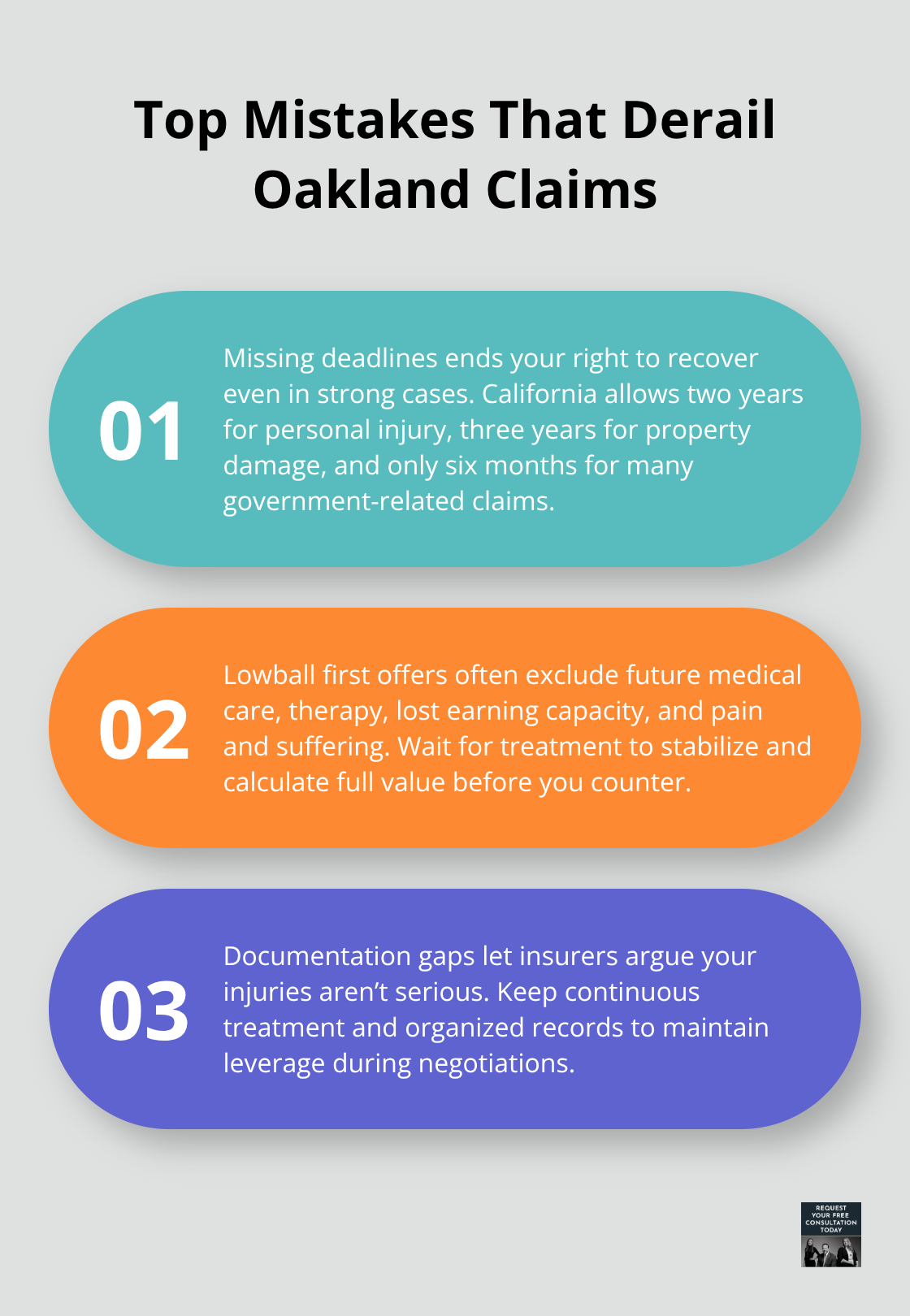
The biggest mistake Oakland accident victims make is treating deadlines as suggestions rather than hard stops. California gives you two years to file a personal injury claim and three years for property damage, but these timelines are absolute. Miss them, and you lose the right to recover anything, regardless of the strength of your case. Many victims focus on healing and assume they have plenty of time, only to discover six months later that they wasted critical months when they should have been building their evidence file and communicating with insurers. The statute of limitations clock starts the moment the accident occurs, not when you decide to pursue a claim.
If your accident involves a government vehicle or public property, the deadline shrinks dramatically to just six months under California law, making immediate action even more essential. Start the process within days of your accident, not weeks or months. Early action gives you leverage because insurers know you’re serious and not scrambling against a deadline they can exploit.
Lowball Offers Trap Unprepared Victims
Accepting the first settlement offer is the second major pitfall that costs victims tens of thousands of dollars. Initial offers are deliberately lowball figures designed to close claims quickly and cheaply. Insurers count on victims being desperate, injured, and unfamiliar with claim valuation. Your first offer will almost certainly exclude future medical costs, ongoing physical therapy, lost earning capacity over the next five or ten years, and non-economic damages like pain and suffering.
Never accept until your medical treatment is complete or stable, which typically takes three to six months for moderate injuries. Calculate the full value of your claim by adding past medical expenses, projected future treatment costs, lost wages, reduced earning capacity, property damage, and pain and suffering before you counter any offer.
Documentation Failures Destroy Your Leverage
Documentation failures amplify settlement problems significantly. Victims who skip medical appointments, fail to keep detailed treatment records, or delay follow-up care hand insurers the ammunition to argue injuries aren’t serious. Gaps in medical documentation are treated as evidence that you’ve recovered, even when you haven’t. Maintain continuous care as prescribed by your doctors and keep organized copies of every medical bill, prescription, treatment note, and rehabilitation record (including physical therapy sessions and specialist visits). This documentation directly translates to settlement dollars.
Final Thoughts
The Oakland accident claim process demands immediate action, thorough documentation, and strategic negotiation to protect your rights. You now understand the critical 24 to 72 hour window after your accident, the importance of filing your police report within 10 days, and how to build an evidence file that gives you real leverage with insurers. Most importantly, you know that accepting lowball offers and missing deadlines cost victims the most money.
Your claim’s success hinges on three factors: speed, documentation, and professional guidance. Start within days, not weeks, and keep every medical record, repair estimate, and communication with your insurer organized in one place. California’s two-year statute of limitations for personal injury claims and three-year window for property damage sound generous until you realize that waiting weakens your position and allows evidence to fade.
Contact Schaar & Silva LLP for a free consultation to review your rights and options regarding your Oakland accident claim process. We work on contingency, meaning you pay nothing unless we recover compensation for you, and an experienced attorney transforms your claim from a stressful solo effort into a managed process with professional negotiation power behind it.
