
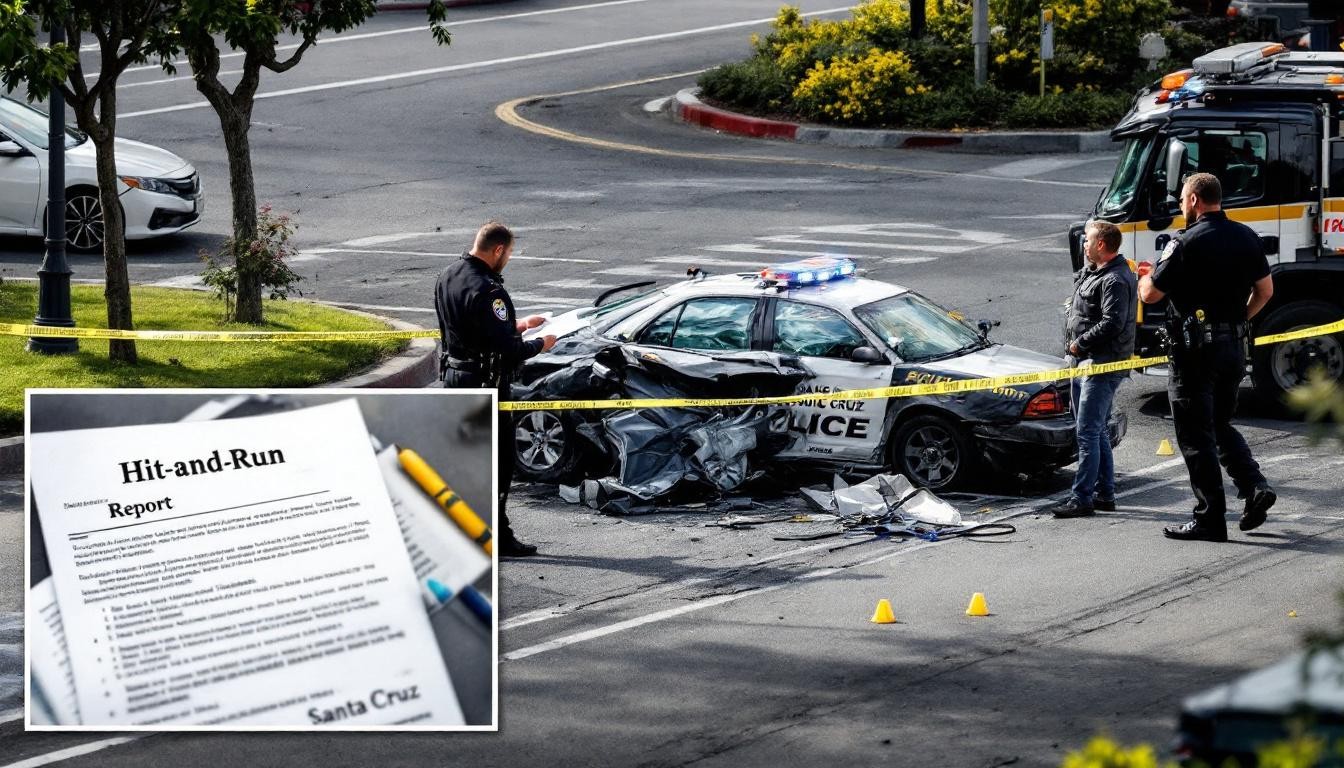
A Santa Cruz hit and run leaves you with injuries, property damage, and questions about what happens next. The first hours after the accident matter most-what you do immediately affects your legal options and recovery.
We at Schaar & Silva LLP help victims navigate reporting to Santa Cruz PD, gathering evidence, and pursuing the compensation they deserve. This guide walks you through each step.
How to Report a Hit-and-Run to Santa Cruz Police
Choose Your Reporting Method Based on What You Know
The first step after a hit-and-run is contacting the Santa Cruz Police Department, and your reporting method depends on whether you know the suspect. If the suspect is unknown, you can file a non-emergency report online through the Coplogic system at the Santa Cruz Police Department website. This online platform works well for hit-and-run cases where the other driver fled and you have no identifying information. For known suspects, skip the online system and call Non-Emergency Dispatch at 831-471-1131 or 911 for emergencies. The online process takes about 30 minutes, so gather your details beforehand: the exact time, location, vehicle description, and any partial license plate numbers you recorded.
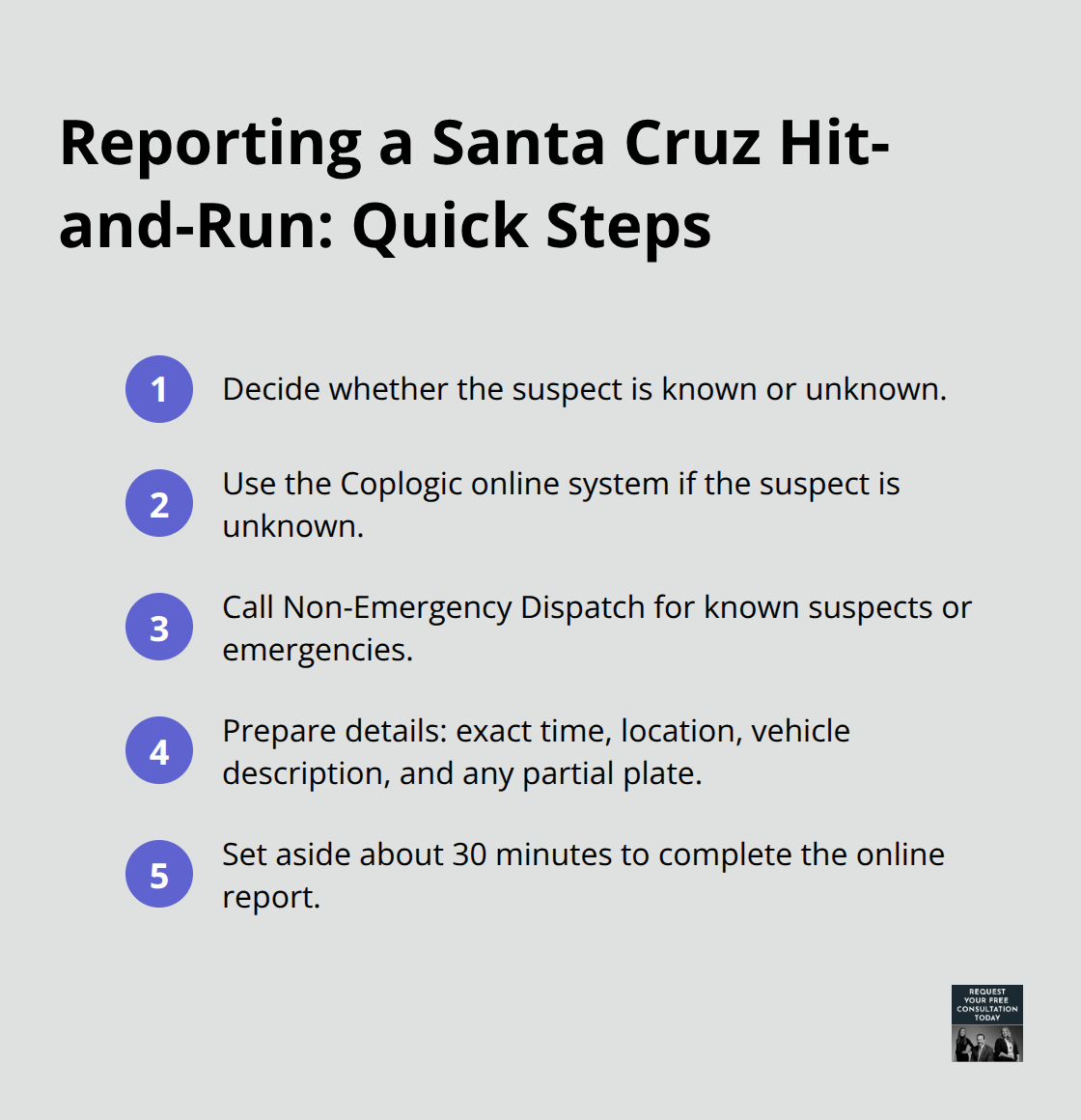
Complete Your Online Report and Track Your Case Number
After you submit an online report, you’ll receive a temporary tracking number by email. Once the department approves your report, you get a permanent case number, which you need for insurance claims and any legal action. If you lack computer access, the Santa Cruz Police Department lobby at 155 Center Street offers public computers Monday through Thursday, 9am to 4pm. This ensures that lack of technology doesn’t prevent you from filing your report.
Document Everything at the Scene
The information you gather in those first minutes after impact directly determines how investigators can track down the fleeing driver. Photograph the crash scene from multiple angles, capturing vehicle damage, surrounding area, road conditions, and any tire marks. Get the names and contact information of every witness-even someone who saw the other car briefly helps investigators. Document the runaway driver’s full or partial license plate, vehicle make and model, color, and any distinctive features (bumper stickers, dents, unusual paint). Write down the exact time, date, and location where the crash occurred. These details strengthen your case significantly when you file the official report with police.
Let Investigators Use Your Evidence to Build the Case
Investigators at Santa Cruz PD focus on scene evidence, eyewitness statements, photos, and video footage, so your documentation becomes critical to locating the responsible driver and establishing liability for your insurance claim or legal recovery. The evidence you collect at the scene directly influences whether police can identify the fleeing driver and hold them accountable. With solid documentation in hand, you’re ready to understand what happens next in the investigation process.
How Santa Cruz PD Investigates Hit-and-Run Cases
The First 72 Hours: When Evidence Matters Most
Santa Cruz Police Department investigators follow a structured approach that starts the moment your report is filed. They focus on scene evidence first, then expand outward to eyewitness statements, photos, and video footage. Within the first 72 hours, officers canvass the area where the crash occurred, checking nearby businesses and residences for security camera footage that might have captured the fleeing vehicle or driver. This timeline matters because video evidence degrades quickly as businesses overwrite recordings. The department also checks dispatch records and police radio logs to identify any officers who may have spotted a damaged vehicle matching your description in the hours following the crash.
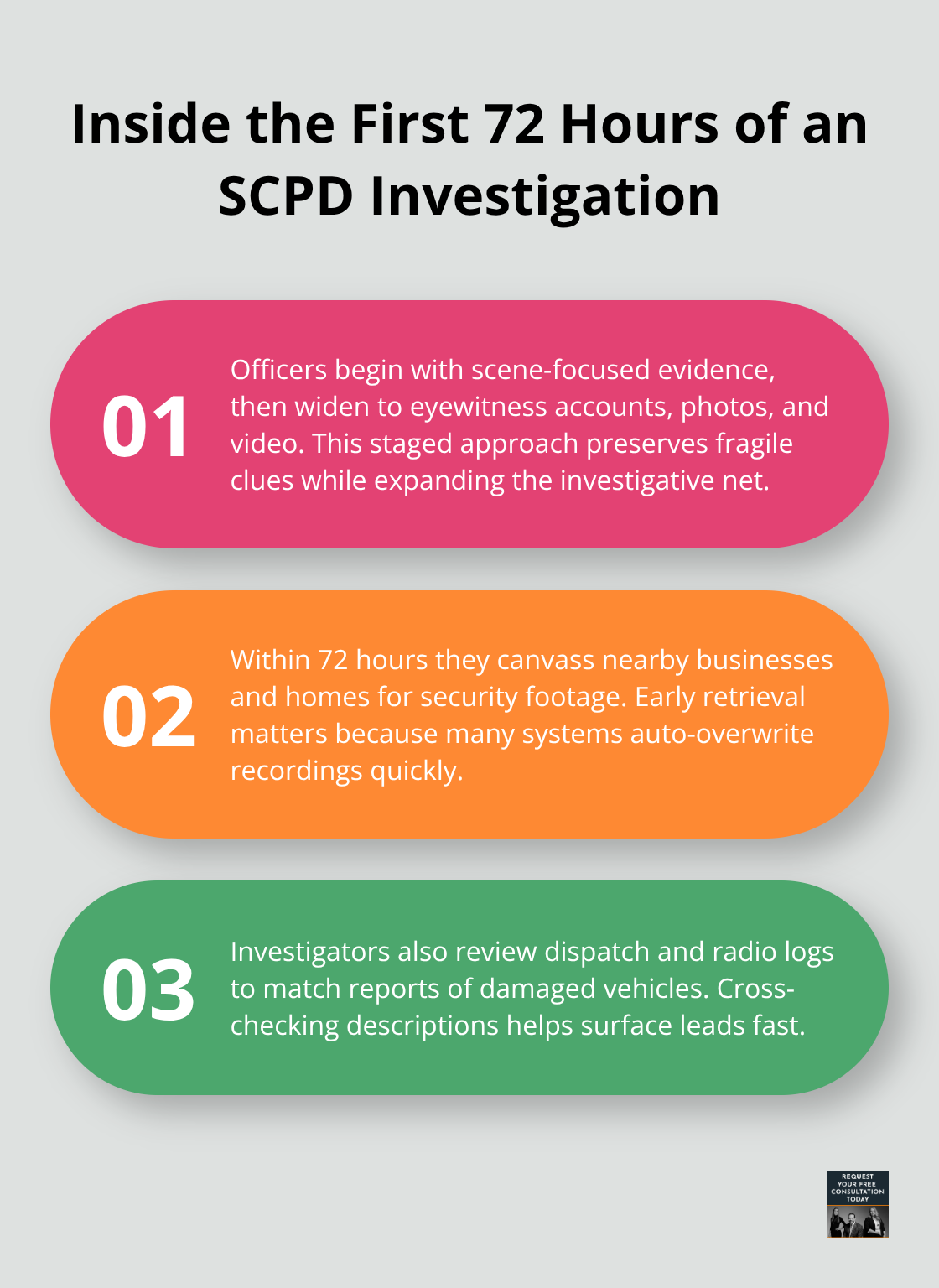
How Investigators Identify the Fleeing Driver
Investigators cross-reference your partial license plate information against vehicle registration databases, narrowing suspects by make, model, and color. They document road conditions, traffic patterns, and sight lines at the crash location to understand whether the fleeing driver could have seen you or should have stopped. Santa Cruz County Sheriff’s Office maintains a Motor Vehicle Accidents data portal where you can track hit-and-run patterns in your area, giving you insight into whether your location is a known crash hotspot. This information helps investigators understand if your crash fits a pattern of reckless driving in that zone.
Strengthen the Investigation Through Witness Outreach
Your role in witness outreach directly strengthens the investigation. Investigators rely heavily on eyewitness statements because they provide independent accounts that corroborate your version of events. If you collected witness names and phone numbers at the scene, contact each person within 24 hours and ask them to call the Santa Cruz Police Department at 831-471-1131 to provide a formal statement. Witnesses often remember details better when prompted immediately after the incident, and their early recollection carries more weight in court or with insurance adjusters. When speaking with witnesses, ask them to describe the fleeing driver’s appearance, the vehicle’s direction of travel, and any sounds or observations they made. Provide investigators with written summaries of witness conversations, including what each person saw and their contact information.
Gather Video and Physical Evidence
Video evidence strengthens your case substantially. If nearby businesses have exterior cameras, visit them in person or call to ask if they recorded the incident time. Many business owners will provide footage directly to police when you explain the situation, but some require a formal police request. For residential security cameras, knock on doors and explain that you were hit by a fleeing driver. Most homeowners cooperate when they understand the urgency. Photographs of vehicle damage, taken from multiple angles and in good lighting, help investigators identify the striking vehicle’s make, model, and damage pattern. Medical records documenting your injuries create a compelling record of impact severity, which influences how aggressively investigators pursue the case. The more evidence you compile and hand to investigators, the higher the likelihood they locate the responsible driver and hold them accountable. Once you’ve gathered this evidence and worked with police, understanding your insurance coverage and legal rights becomes the next critical step in your recovery.
Protecting Your Recovery After a Hit-and-Run
Understanding Your Insurance Coverage Options
When the at-fault driver remains unidentified, your insurance coverage becomes your primary path to compensation. Uninsured Motorist (UM) coverage pays medical expenses and lost wages when the other driver is unknown or uninsured, regardless of whether police locate them. Collision coverage handles vehicle repairs but typically requires you to pay your deductible if the other driver isn’t identified. Medical Payments (MedPay) coverage covers medical bills without deductibles or provider restrictions, making it valuable for immediate injury treatment. If your policy lacks these protections, you face significant out-of-pocket costs while waiting for investigators to identify the fleeing driver.
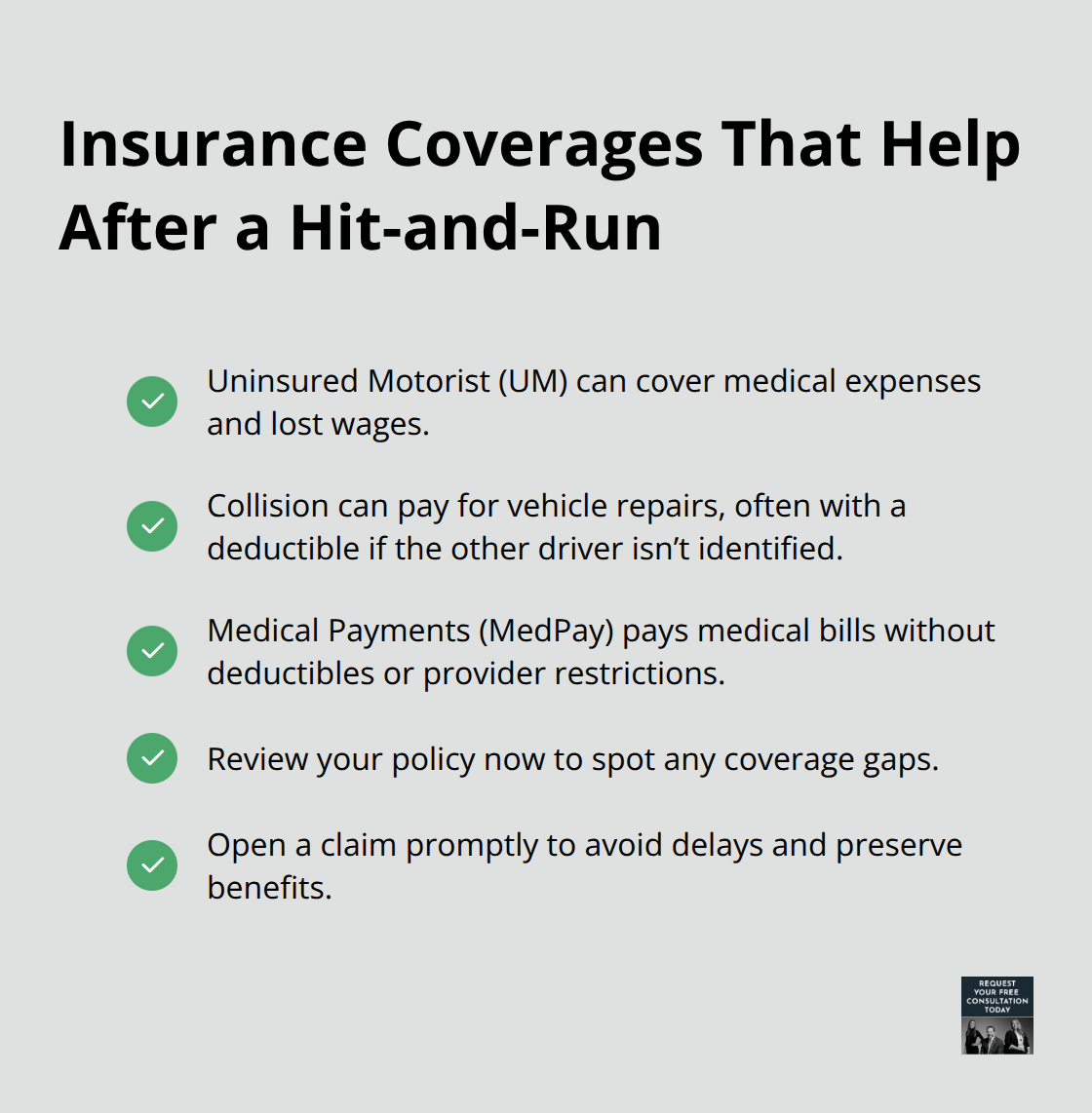
The Gap Between Liability and Recovery
California’s fault-based insurance system requires the at-fault driver to pay for damages, but that responsibility means nothing if you cannot locate them. This gap between liability and recovery is where most hit-and-run victims get stuck without proper legal guidance. Your insurance company may deny claims or offer minimal settlements if you lack comprehensive coverage, leaving you to absorb losses that the fleeing driver should cover.
When You Need Legal Representation
A personal injury attorney becomes essential when medical bills exceed your coverage limits or when the investigation stalls. Attorneys specializing in hit-and-run cases understand how to pressure insurance companies to maximize your claim and can explore alternative compensation sources if police never identify the responsible driver. The legal team at Schaar & Silva LLP stands out for its dedicated client service and in-depth legal knowledge in personal injury law. Our years of experience make us the ideal choice for your case in Santa Cruz County.
How We Help You Recover
We at Schaar & Silva LLP provide medical bill assistance by connecting you with medical lien services that defer payment until your case resolves, easing immediate financial pressure. We evaluate property damage claims to ensure fair valuation of your vehicle loss and connect you with psychological support specialists for emotional trauma that often accompanies hit-and-run incidents. With our support, you can focus on your recovery while we handle the legal intricacies of your situation.
Final Thoughts
A Santa Cruz hit-and-run leaves you with immediate decisions that shape your entire recovery. You now understand how to report the incident to Santa Cruz Police Department, what evidence investigators need, and how your insurance coverage works when the fleeing driver remains unidentified. The reporting process through Coplogic, witness outreach, and evidence collection form the foundation of any successful case, whether police locate the responsible driver or not.
Legal representation matters most when medical bills exceed your coverage limits or when the investigation stalls without identifying the fleeing driver. Insurance companies often minimize settlements for hit-and-run victims, betting that you lack the resources to fight back. An attorney levels this playing field by evaluating your claim fairly, negotiating with insurers, and exploring alternative compensation sources that most victims never discover on their own.
We at Schaar & Silva LLP specialize in helping hit-and-run victims navigate this complex process. Contact our team to discuss your case and explore the compensation options available to you in Santa Cruz County.
