

Car accidents leave physical scars, but the emotional wounds often run deeper. Many Sacramento crash victims experience anxiety, depression, or PTSD long after the collision ends.
We at Schaar & Silva LLP understand that Sacramento emotional support resources are essential to your recovery. This guide connects you with counseling centers, support groups, and practical strategies for documenting your emotional damages for your legal claim.
How Car Accidents Trigger Emotional Trauma in Sacramento
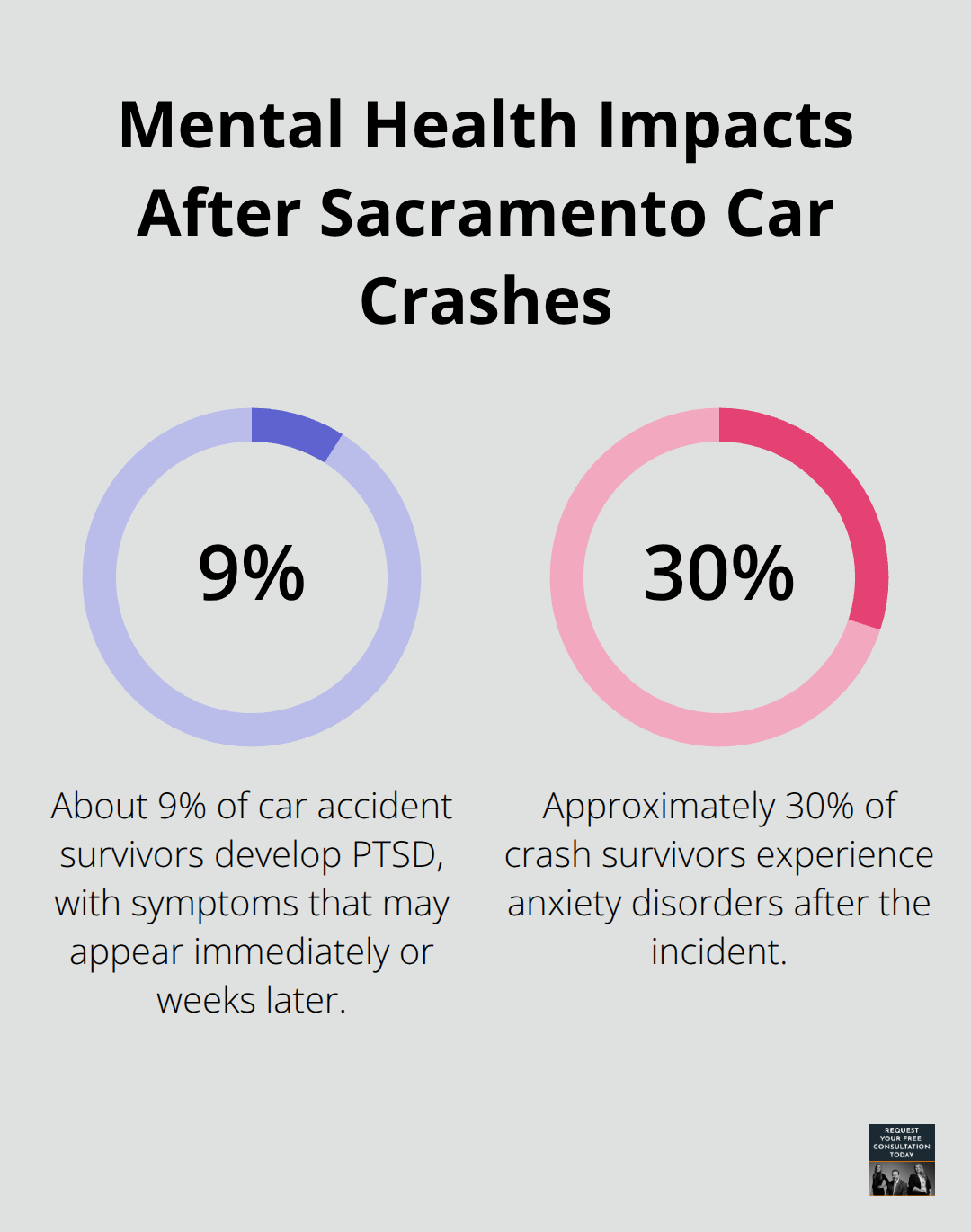
Car crash victims in Sacramento experience measurable psychological changes within hours of impact. The National Institute of Mental Health reports that roughly 9% of car accident survivors develop post-traumatic stress disorder, with symptoms appearing immediately or emerging weeks later. PTSD isn’t the only concern-anxiety disorders affect approximately 30% of crash survivors, and depression rates spike significantly in the months following an accident. These aren’t temporary reactions; they’re documented neurological responses to trauma that require structured intervention.
Immediate Physical and Psychological Responses
Sacramento victims often report intrusive memories, hypervigilance while driving, and avoidance behaviors that restrict their daily lives. Sleep disturbances are nearly universal, with many victims unable to drive past the crash location or sit in traffic without panic. The intensity depends on accident severity, but even minor collisions can trigger lasting emotional responses if the victim felt genuinely threatened. Your nervous system activates a fight-or-flight response during the collision, and this activation can persist long after the physical impact ends.
Recognizing Real Symptoms Beyond Initial Shock
The first days after a crash involve shock and adrenaline, which mask deeper emotional injuries. Sacramento residents should watch for symptoms appearing 2–4 weeks post-accident: persistent anxiety, unexplained anger, difficulty concentrating, or sudden fear responses to driving situations. Emotional distress is a legally recognized form of damage in California that can be compensated separately from physical injuries, but only with proper documentation. Many victims dismiss their emotional responses as weakness rather than injury, delaying treatment and weakening potential claims.
Documentation Creates Legal Credibility
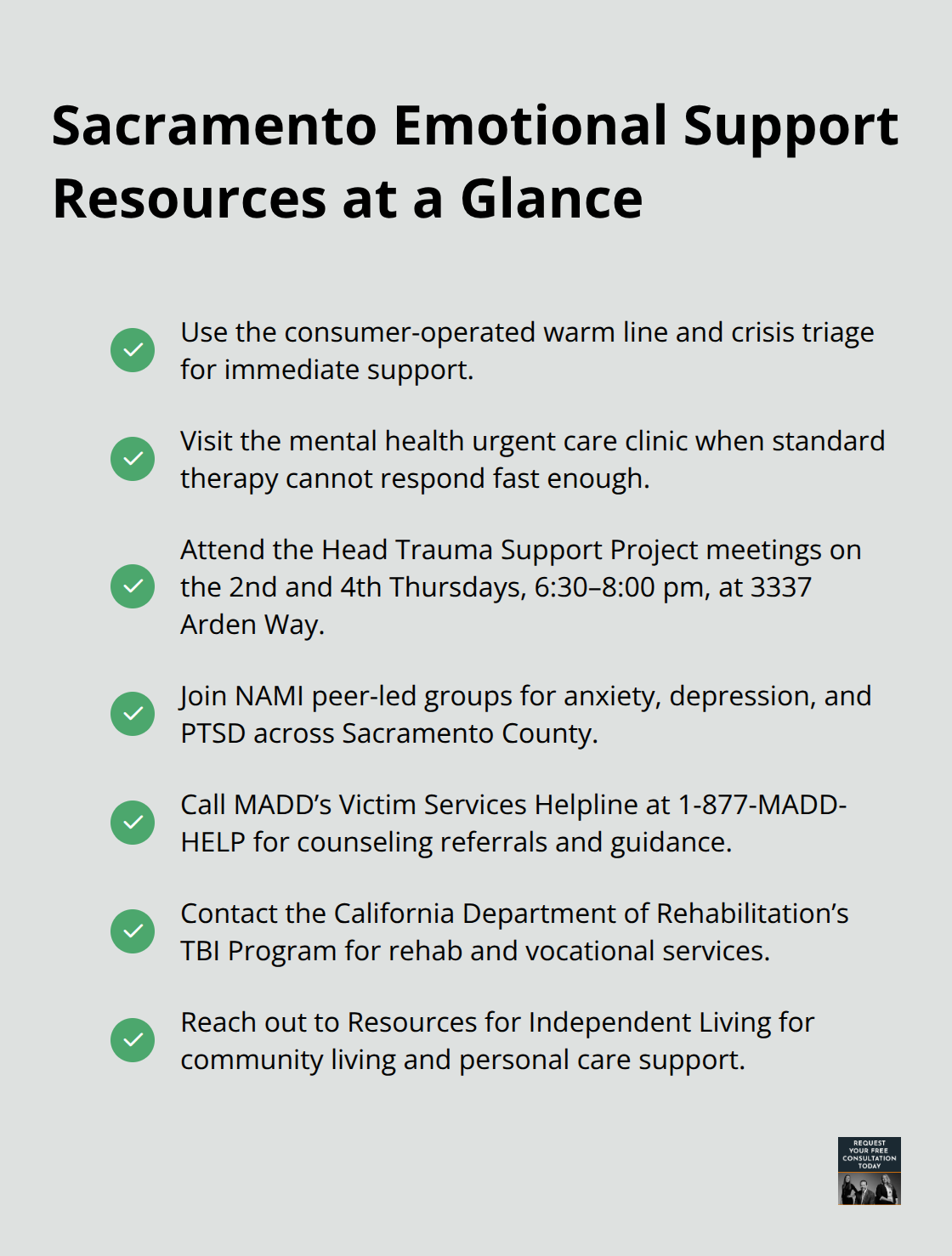
Mental health professionals in Sacramento emphasize that documenting these symptoms immediately-through therapy notes, medical records, and personal journals-creates the evidence needed for compensation. Sacramento County Health Services offers a consumer-operated warm line and crisis triage services specifically designed for trauma responses after accidents. The Head Trauma Support Project runs peer support meetings on the second and fourth Thursdays at 6:30–8:00 pm at 3337 Arden Way, serving brain injury survivors across Sacramento and surrounding counties. Starting treatment early directly affects both your recovery trajectory and your legal claim’s credibility and value.
Your next step involves identifying which Sacramento counseling centers and support groups align with your specific needs and timeline.
Where to Find Mental Health Care in Sacramento
Sacramento County Health Services and Crisis Support
Sacramento County Health Services operates a consumer-operated warm line and crisis triage system specifically designed for trauma responses following accidents. This service provides immediate support when panic or anxiety strikes. The mental health urgent care clinic handles crisis situations when standard appointment-based therapy cannot respond fast enough. Call Sacramento County Health Services at their main line to ask which therapists specialize in motor vehicle accident trauma; waiting lists exist, so placing yourself on them immediately rather than delaying treatment protects both your recovery timeline and your legal claim’s strength.
Peer Support Groups for Accident Survivors
The Head Trauma Support Project meets on the second and fourth Thursdays from 6:30–8:00 pm at 3337 Arden Way and serves brain injury survivors across Sacramento, Placer, Yolo, El Dorado, and San Joaquin counties with free peer and family support groups. These meetings connect you with people who understand crash trauma firsthand, not through textbooks. The National Alliance on Mental Illness runs peer-led support groups for individuals experiencing anxiety, depression, and PTSD, with sessions available across Sacramento County. MADD’s Victim Services Helpline at 1-877-MADD-HELP connects Sacramento residents with counseling resources and helps navigate the emotional aftermath of crashes, especially those involving impaired drivers.
Specialized Rehabilitation and Vocational Services
The California Department of Rehabilitation’s Traumatic Brain Injury Program funds nonprofits across the state to provide outpatient rehabilitation therapies, neuropsychology evaluations, and vocational assessment if your crash caused head injuries affecting your ability to work. Resources for Independent Living provides community living support and personal care assistance for people managing physical or cognitive injuries from accidents. When you contact these centers, ask directly about their experience with motor vehicle accident cases-therapists familiar with crash trauma recognize patterns and symptoms that generalist counselors might miss (this specificity matters significantly for your treatment outcomes).
Building Your Documentation Record
Documentation from early sessions becomes essential evidence that the crash directly caused your emotional distress, not pre-existing conditions or unrelated stressors. Mental health professionals in Sacramento emphasize that therapy notes, medical records, and personal journals create the evidence needed for compensation. Each appointment you attend and each symptom you report to your therapist strengthens your legal position. The connection between your treatment and the accident must appear clear in your medical file, so inform your mental health provider about the specific crash details and how the accident triggered your symptoms.
Your documentation strategy extends beyond therapy sessions-what you record in your personal journal and how you track your daily emotional state directly influences your claim’s credibility and value.
Building Your Evidence Before Speaking With an Attorney
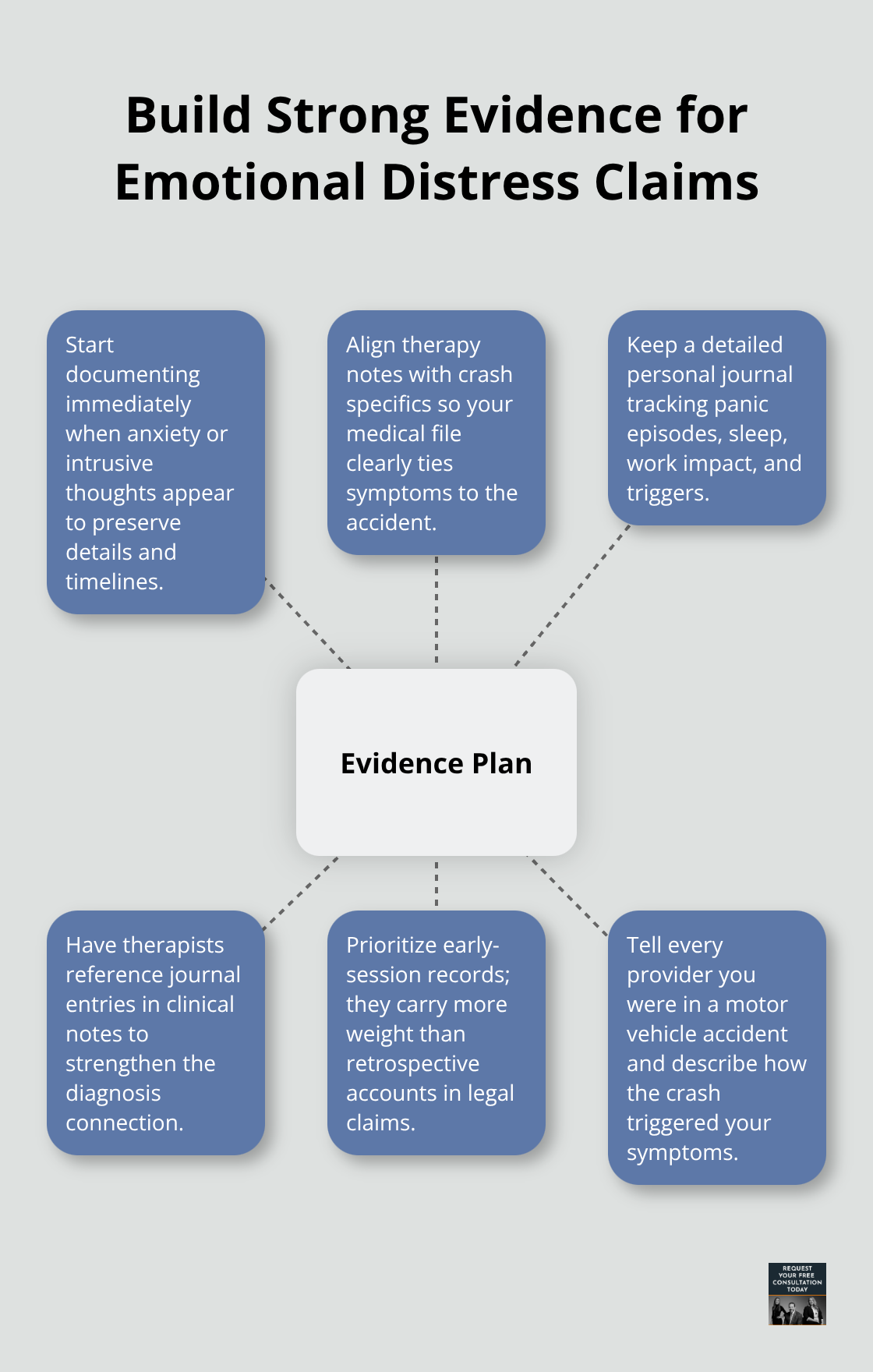
Start documenting emotional damages the moment anxiety or intrusive thoughts appear after your crash, not months later when memories fade and symptoms blur together. Sacramento mental health professionals emphasize that therapy notes from early sessions carry significantly more weight in legal claims than retrospective accounts of suffering. When you contact Sacramento County Health Services, the Head Trauma Support Project, or a private therapist, inform them explicitly that you were in a motor vehicle accident and describe how the crash triggered your current symptoms. This clarity ensures your medical file directly connects your emotional distress to the specific accident event rather than attributing it to general life stress. Therapy notes that document the crash’s role in your anxiety, sleep disruption, or avoidance behaviors become admissible evidence showing causation-the legal requirement that proves the accident caused your distress, not some unrelated factor.
Create a Detailed Personal Journal
Your personal journal functions as a second documentation layer that therapy notes alone cannot provide. Record specific incidents when anxiety strikes: the exact time you felt panic while driving past the crash location, how many hours you slept each night, whether you skipped work due to emotional symptoms, or conversations where family members noticed personality changes. California courts recognize detailed journals as credible evidence of emotional distress severity and duration, particularly when entries span months and show patterns rather than isolated complaints. Avoid vague statements like “I feel bad today”; instead, write “I had a panic attack at the traffic light near the accident site and pulled over shaking for fifteen minutes.” This specificity demonstrates the crash’s ongoing impact on your functioning.
Link Your Journal to Professional Diagnosis
Mental health professionals reviewing your journal during therapy sessions often reference specific entries in their clinical notes, which strengthens the connection between your documented symptoms and professional diagnosis. When you work with a personal injury attorney regarding your claim, this combination of therapy records and detailed journal entries provides the concrete evidence needed to calculate emotional distress damages using either the multiplier method (therapy costs multiplied by 1.5 to 5) or the per diem method (daily value assigned to each day of suffering).
Final Thoughts
Recovery from a car crash extends far beyond physical healing, and Sacramento emotional support resources form the foundation of your long-term recovery. Family members and close friends provide daily encouragement, while peer support groups like the Head Trauma Support Project and NAMI connect you with people who genuinely understand crash trauma. Sacramento County Health Services’ warm line and crisis triage services remain available when anxiety spikes unexpectedly, preventing the isolation that commonly deepens depression in accident survivors.
Maintain regular therapy appointments even when symptoms improve, as therapists help you process trauma patterns that resurface during stressful situations. Continue documenting your emotional state through journal entries and therapy notes, creating an ongoing record that demonstrates your recovery trajectory to both your treatment team and potential legal representatives. Gradually rebuild activities you avoided after the crash-such as driving specific routes or sitting in traffic-under professional guidance rather than forcing yourself through panic.
Your legal claim deserves equal attention to your emotional recovery, and we at Schaar & Silva LLP connect you with mental health specialists who understand how to document crash trauma for legal purposes while handling medical bill management through lien services. Our team negotiates the complex settlements that maximize your compensation for both economic losses and non-economic damages like emotional suffering. Contact us for a free case review to discuss how your documented emotional distress translates into recoverable damages under California law.
