
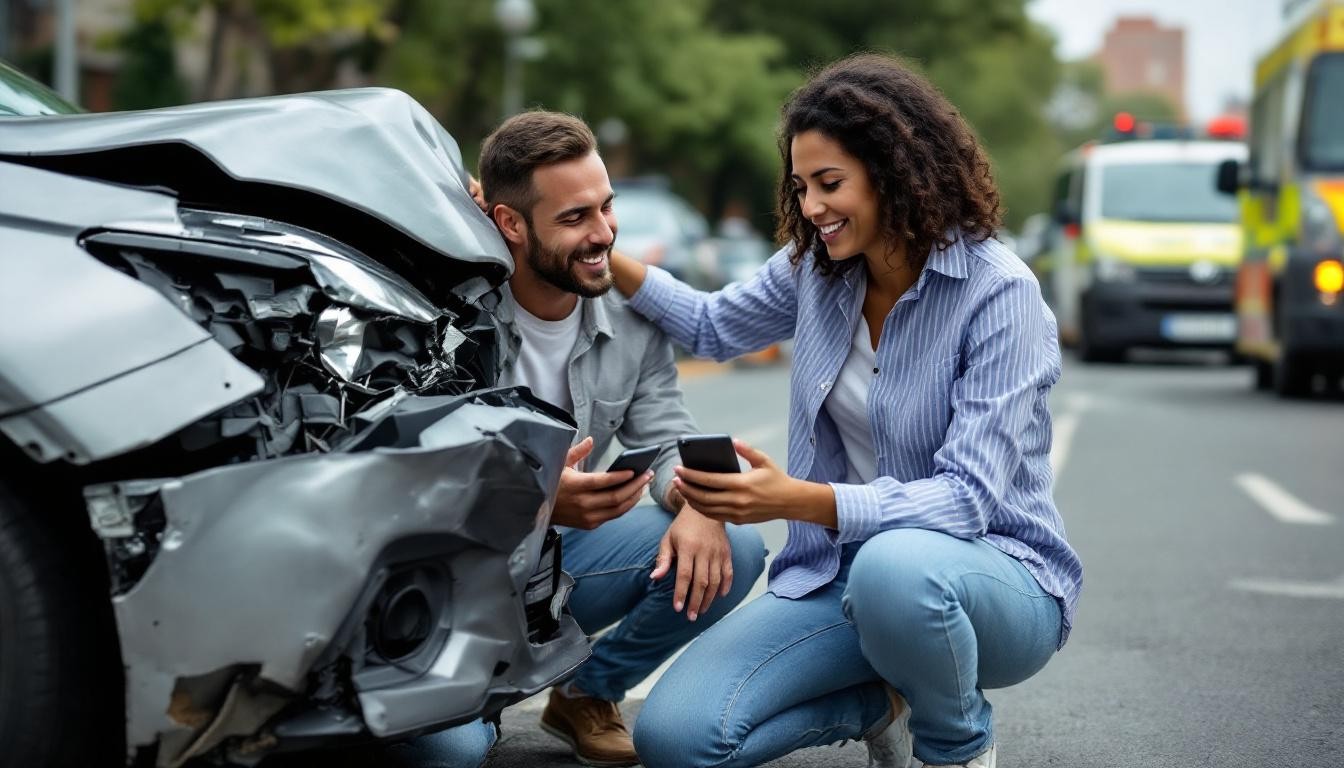
A car accident changes things fast. The physical injuries are obvious, but the emotional weight often catches people off guard-nightmares, anxiety, panic attacks, and a fear of driving again are all common reactions.
We at Schaar & Silva LLP know that emotional support after a crash is just as important as medical treatment. This guide walks you through the professional help available, how to build a support network, and practical steps to reclaim your life during recovery.
What Happens to Your Body and Mind After a Crash
The Immediate Physical Response
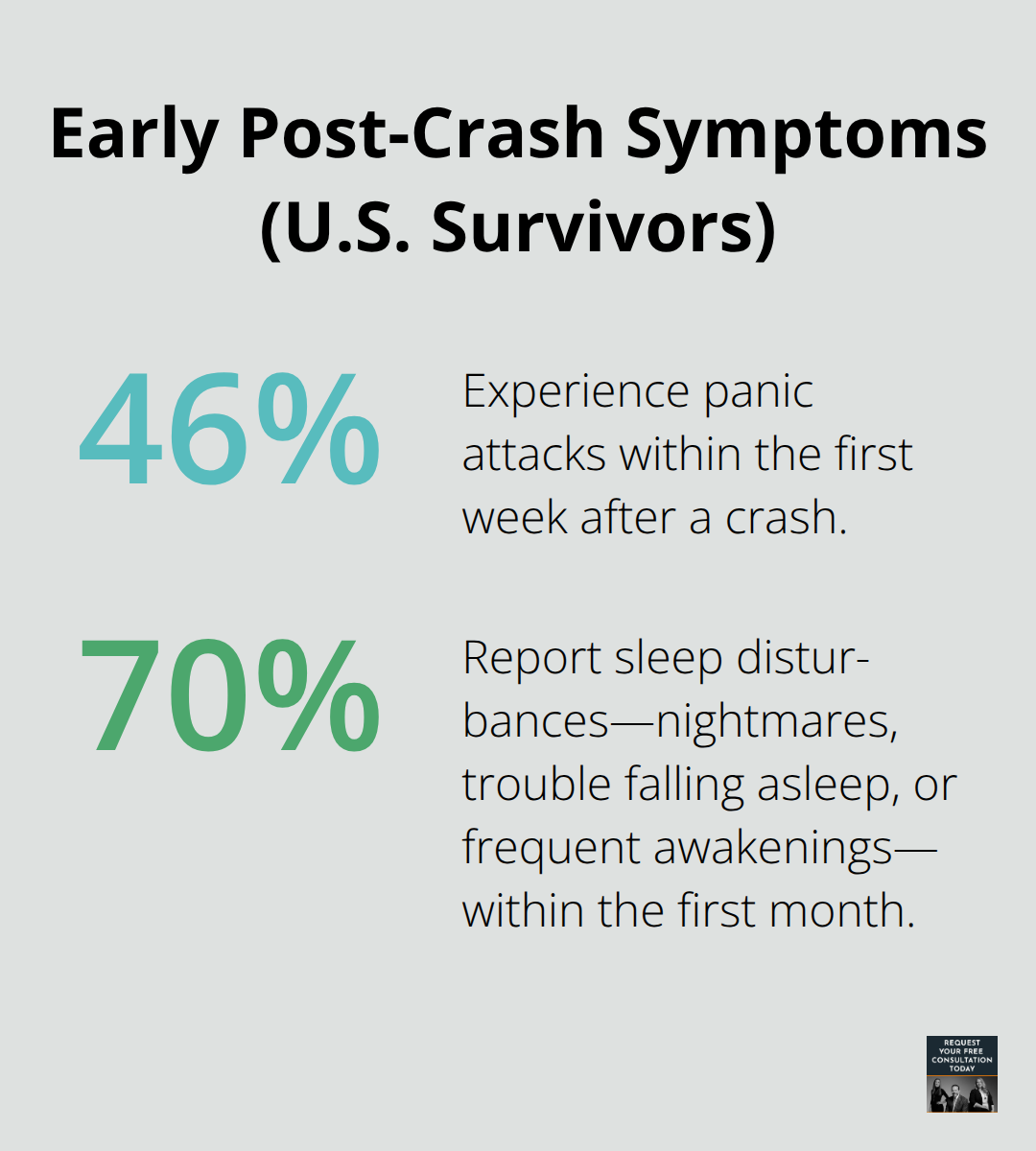
A car accident triggers a cascade of physical and psychological responses that most people don’t anticipate. Your body floods with adrenaline and cortisol, the National Institute of Mental Health confirms, which explains why you might feel numb, shaky, or oddly calm immediately after impact. Within the first week, roughly 46% of survivors experience panic attacks, according to research cited by the American Psychological Association. Sleep becomes difficult-up to 70% of survivors report nightmares, trouble falling asleep, or frequent awakenings in the first month. These aren’t signs of weakness; they’re normal neurological responses to trauma.
Long-Term Psychological Effects
About 32.3% of car accident survivors develop PTSD, making crashes a leading cause of PTSD among U.S. civilians according to the Journal of Clinical Medicine. Women face roughly 2.5 times higher risk of PTSD than men after a motor vehicle crash. Beyond PTSD, anxiety disorders emerge in about 39.2% of survivors within six months, while depression affects 17.4%, often accompanied by concentration problems that impact roughly 70% of those experiencing depression. Avoidance behaviors develop in about 39.2% of survivors within six months-avoiding driving, highways, or situations that remind them of the crash. Intrusive memories and flashbacks occur in roughly 32.3% of survivors, making ordinary tasks feel impossible.
The Pain-Depression Connection
Pain plays a surprisingly powerful role in emotional recovery. Research shows that persistent pain at 6–8 weeks post-crash is the strongest predictor of depression severity at two months. If you blamed yourself for the crash, depression tends to hit harder than if you shared responsibility or blamed others. Pre-crash mental health matters too; if you struggled with anxiety or depression before the accident, post-crash emotional symptoms may be more severe. A longer hospital stay (over seven days) shows a trend toward higher depression at two months.
Why Early Treatment Changes Everything
The good news is that early intervention works. Cognitive behavioral therapy with gradual exposure yields around 85% improvement for travel-related phobias over 12–16 sessions, and EMDR therapy reduces PTSD symptoms in about 77% of accident survivors after 6–12 sessions. Group CBT proves even more effective: one trial found about 88% of participants became PTSD-free after treatment versus 31% in a control group. Start professional help within the first few weeks; brief CBT for acute stress disorder shortly after trauma substantially reduces PTSD risk compared to supportive counseling alone.
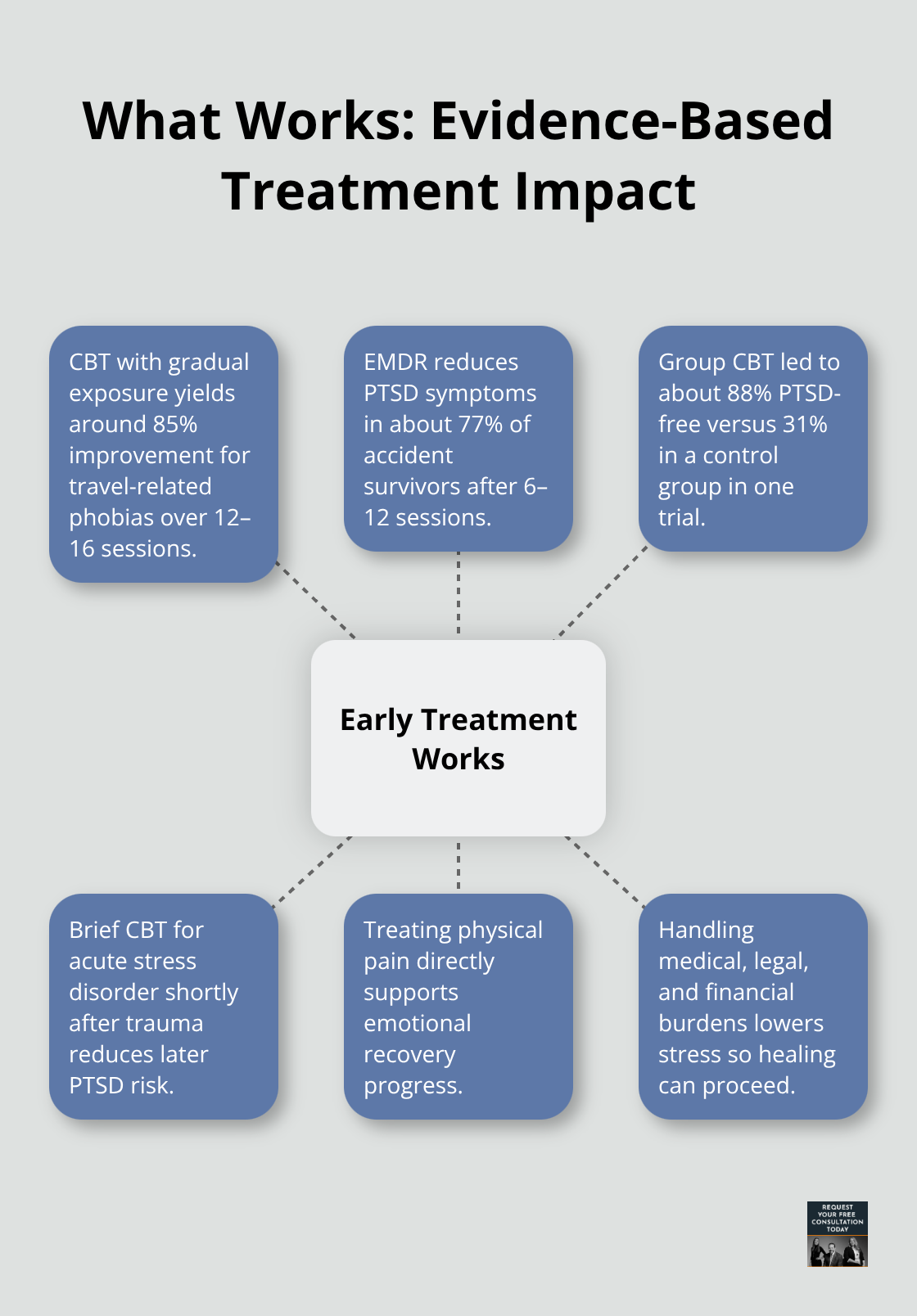
Address your pain aggressively through medical treatment, because reducing physical pain directly supports emotional recovery. Managing medical bills and legal concerns adds stress that keeps your nervous system in threat mode-handling these burdens frees you to focus on healing. We at Schaar & Silva LLP can assist with medical bill navigation and property damage claims in Santa Cruz County, allowing you to concentrate on what matters most: your recovery.
What Kind of Professional Help Works Best
Finding the Right Therapist
Trauma-informed therapists understand how your nervous system responds to a crash and can guide you through evidence-based treatments that actually work. Cognitive behavioral therapy with gradual exposure yields around 85% improvement over 12–16 sessions, while EMDR therapy reduces PTSD symptoms in about 77% of accident survivors after 6–12 sessions. The American Psychological Association documents these results clearly. Psychology Today’s therapist finder lists over 500 trauma and PTSD professionals in Santa Cruz County alone. Look for therapists with credentials like LMFT, PsyD, PhD, or LCSW who mention experience with motor vehicle accident trauma. Major insurers including Aetna, Cigna, Anthem, UnitedHealthcare, Blue Shield, and Medi-Cal accept most practices, and many offer sliding-scale fees if cost presents a barrier. Contact 988 for the Suicide and Crisis Lifeline if you feel overwhelmed while searching for care-immediate support is available 24/7. The Anxiety and Depression Association of America maintains a therapist directory focused on evidence-based treatment providers.
The Power of Support Groups
Support groups create something therapy alone cannot: connection with people who truly understand what you’re experiencing. Group CBT proves remarkably effective (one trial found 88% of participants became PTSD-free after treatment compared to 31% in a control group). Kaiser Permanente Hospital hosts ongoing grief and support groups open to the public in Elk Grove, Roseville, and Sacramento. Sutter VNA Hospice runs a grief support group every other Wednesday from 6:30 to 8:30 pm at the Sutter Cancer Center on L Street in Sacramento. Mercy San Juan Hospital Chaplaincy Services offers grief support on the first and third Wednesdays each month from 6:00–7:00 pm at 6501 Coyle Avenue in Carmichael. University of California Davis Hospice offers six-week grief support groups throughout the year. These hospital and hospice programs are open to the public and provide structured emotional support without requiring a doctor referral.
Medication as Part of Your Recovery Plan
When psychiatric medication becomes necessary, a licensed psychiatrist or your primary care physician can evaluate whether antidepressants or anti-anxiety medications would support your recovery alongside therapy. Research shows medication works best when combined with therapy rather than used alone. Your doctor will assess your specific symptoms and medical history to recommend the right approach for your situation.
Coordinating Your Care
Managing recovery involves more than just therapy and medication. Medical bills, property damage claims, and legal concerns add stress that keeps your nervous system in threat mode. We at Schaar & Silva LLP serve Santa Cruz County and can assist with medical bill navigation and property damage claims, allowing you to concentrate on what matters most: your recovery. With these practical burdens handled, you free yourself to focus fully on healing and rebuilding your life after the crash.
Building Your Recovery Support Network
Your Personal Support Circle Matters
Recovery after a crash isn’t something you handle alone, and the people around you matter more than most realize. Your immediate support network-family, close friends, trusted colleagues-reduces isolation and keeps you engaged in daily life when emotional symptoms pull you inward. Talk openly about what you’re experiencing rather than minimizing your feelings. People who care about you want to understand what you need, but they can’t help if you stay silent about panic attacks, sleep problems, or fear of driving.
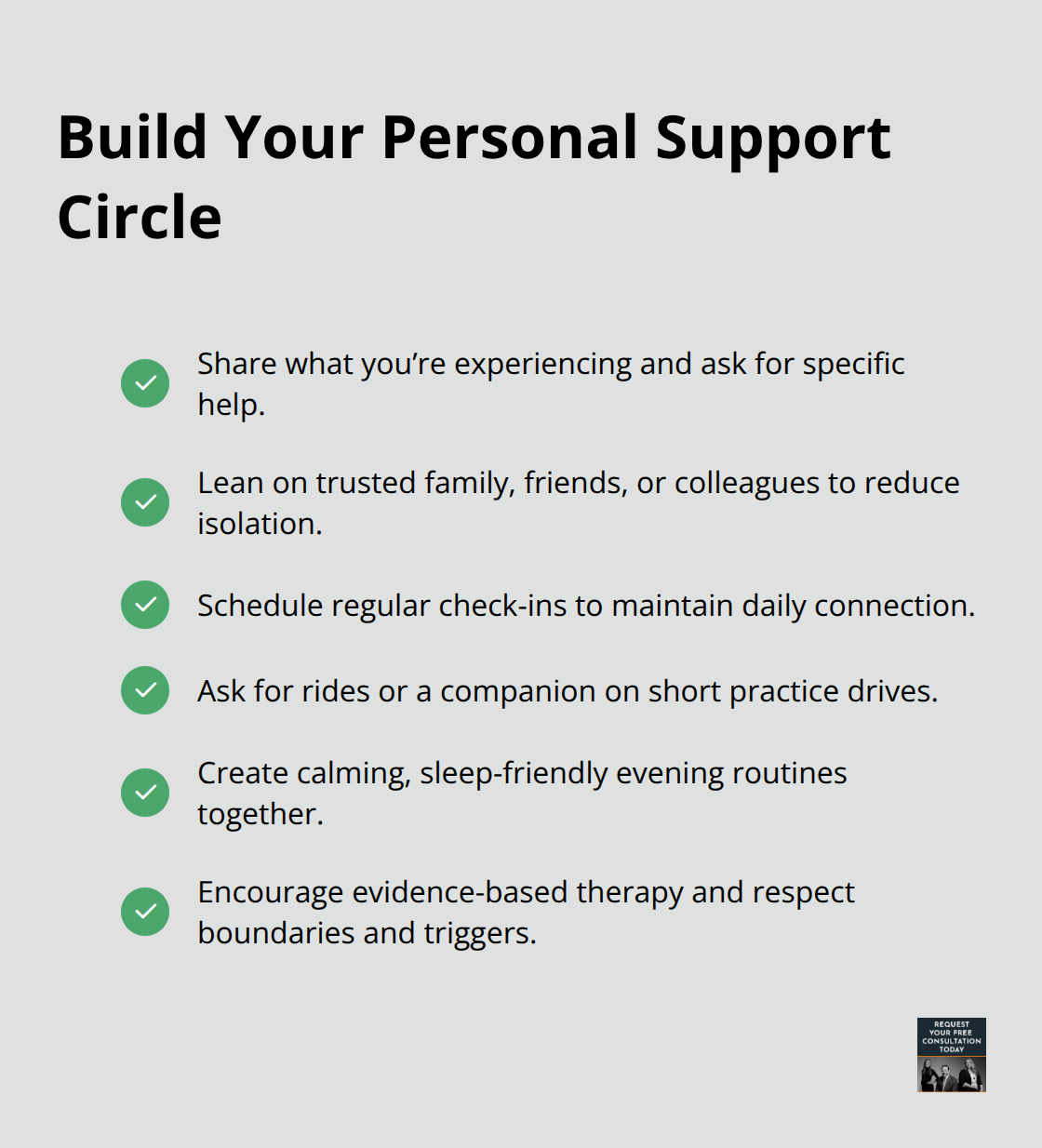
Research consistently shows that social support improves both mental health outcomes and treatment engagement after trauma.
Hospital-Backed Support Groups in Your Area
Beyond your personal circle, Santa Cruz County offers established resources designed specifically for accident survivors. Kaiser Permanente Hospital in Elk Grove and Roseville hosts ongoing support groups open to the public, creating space where you sit alongside others who understand exactly what you’re experiencing. Sutter VNA Hospice runs grief support every other Wednesday from 6:30 to 8:30 pm at the Sutter Cancer Center on L Street in Sacramento. Mercy San Juan Hospital Chaplaincy Services provides structured sessions on the first and third Wednesdays each month from 6:00–7:00 pm at 6501 Coyle Avenue in Carmichael. University of California Davis Hospice offers six-week grief support groups throughout the year. These aren’t informal meetups-they’re hospital-backed programs staffed by trained professionals, and none require a doctor referral to join. Contact the hospital directly to confirm current schedules since times occasionally shift.
Handling Financial Stress Supports Emotional Healing
The practical side of recovery matters just as much as emotional support. Medical bills pile up quickly after a crash, and unresolved financial stress keeps your nervous system locked in threat mode, making emotional healing slower and harder. When legal and financial concerns stay unresolved, your brain stays in crisis response mode-addressing these issues directly supports your emotional healing. Schaar & Silva LLP serves Santa Cruz County and can assist with medical bill navigation and property damage claims, removing these burdens so you can concentrate fully on recovery. We connect you with specialists who can offer psychological support you may require as part of your overall recovery plan.
Creating Your Complete Recovery Foundation
Connecting with local legal support early in your recovery prevents small problems from becoming major obstacles. The combination of therapy, support groups, family connection, and practical legal assistance creates the strongest foundation for rebuilding your life after a crash.
Final Thoughts
Recovery after a car accident unfolds over time, not in a single moment. You now understand that emotional support after a crash matters as much as physical healing, that professional treatments like CBT and EMDR produce measurable results, and that connecting with others who share your experience reduces isolation. The path forward requires action on multiple fronts: finding a trauma-informed therapist, joining a support group, leaning on your personal network, and addressing the practical burdens that keep your nervous system stuck in crisis mode.
Start with one concrete step today. Contact Psychology Today’s therapist finder to locate a trauma professional in your area, or call 988 if you need immediate support. Reach out to Kaiser Permanente, Sutter VNA Hospice, or UC Davis Hospice to join a support group near you. Tell someone you trust what you’re experiencing instead of carrying the weight alone.
The legal and financial side of your accident shouldn’t add to your stress during healing. Medical bills, property damage claims, and unresolved insurance matters drain your emotional energy when you need it most for recovery. Schaar & Silva LLP serves Santa Cruz County and handles these burdens for you, managing medical bill assistance and property damage claims so you can focus entirely on emotional support after your crash. Your life after this accident will be different, but it will be whole again.
