
A car accident police report is one of the most important documents you’ll have after a crash. It shapes how insurance companies view your claim and influences whether you’re found at fault.
We at Schaar & Silva LLP have seen countless claims succeed or fail based on what’s in that report. Understanding what it contains and how to use it can make a real difference in your recovery.
What a Police Report Actually Contains
The Officer’s On-Scene Documentation
A police report documents the immediate facts of your accident through an officer’s observations, driver and witness statements, and physical evidence of damage and injuries. The officer records the date, time, location, weather conditions, road surface, lighting, and directions of travel for each vehicle involved. They note visible injuries, property damage estimates, and any citations issued at the scene. This creates a timestamped, third-party record that insurance companies treat as credible evidence. Most reports become available online within 3 to 10 business days after the 911 call.
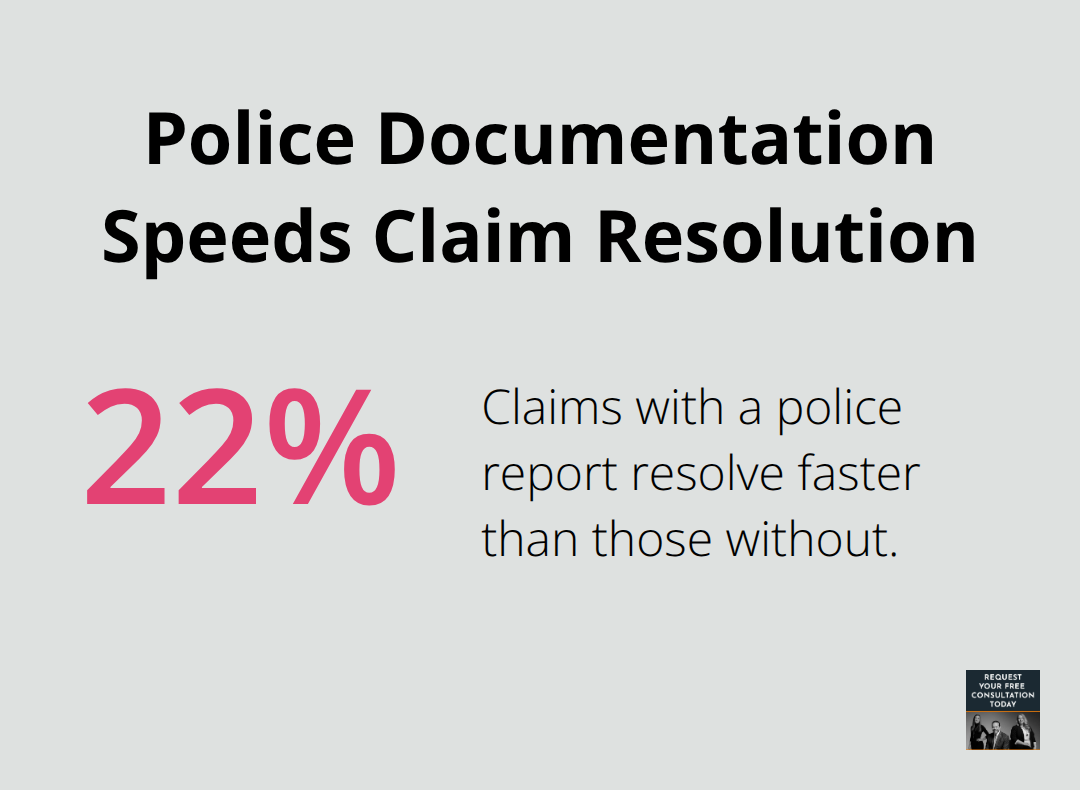
The National Safety Council found that insurance claims involving police documentation are resolved about 22% faster than those without them. This speed directly impacts how quickly you receive compensation for your injuries and vehicle damage.
How Initial Statements Protect Your Claim
A police report locks in initial statements from all parties before memories fade or stories change. The officer documents what each driver and witness said at the moment, capturing details about how the crash happened, who was at fault, and what conditions contributed to it. The report includes vehicle information, insurance details, license plate numbers, and contact information for all involved parties and witnesses.
Officers also note road hazards, traffic signal conditions, and visibility factors that may have played a role in the accident. If the report supports your account of events, it accelerates your claim significantly. If it’s absent or contradicts your version, you face longer delays and potentially lower settlements.
Why Accuracy and Timing Matter
Obtaining your report promptly and reviewing it for accuracy matters far more than most people realize. If the report contains errors (misspelled names, wrong insurance data, incorrect intersections, or conflicting statements), you can file corrections or supplements with the issuing agency. Providing supporting materials strengthens your request for corrections.
The report’s credibility and scope influence how insurers and courts view the facts, especially when accounts differ between parties. This is why the next step-understanding how to request and review your report-becomes essential to protecting your rights.
How Police Reports Shape What Insurers Will Pay You
Insurance Adjusters Demand Third-Party Evidence
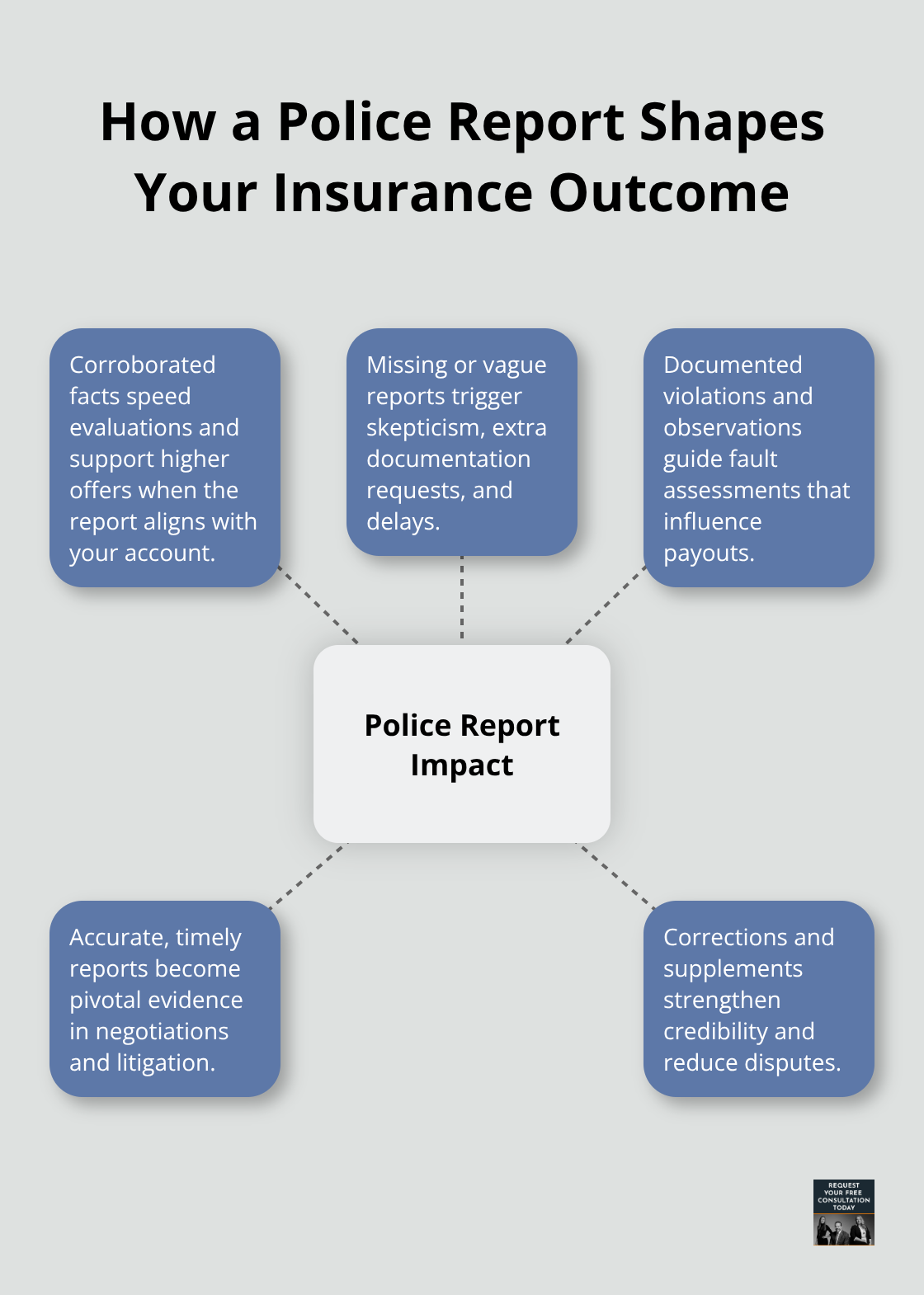
Insurance adjusters reject your word alone about what happened in a crash. They rely on the police report as their first line of evidence because it comes from a neutral third party who documented the scene before anyone altered their story. When a police report supports your account, insurers move faster and pay more. Drivers who report accidents to police receive full compensation without litigation roughly twice as often as those who don’t, according to data from claim outcomes. The report locks in facts like road conditions, weather, visibility, vehicle positions, and what witnesses said at that moment.
If the officer notes that the other driver ran a red light or was speeding, that statement in the report carries weight with your insurer. Conversely, if the report is missing, vague, or contradicts your version of events, adjusters become skeptical. They request additional documentation, delay decisions, and often offer lower settlements because they cannot confirm your liability argument.
What Happens When No Police Report Exists
The absence of a police report forces you to prove fault through other means, which costs time and resources. You must gather photographs, medical records, witness statements, and expert analysis on your own-a burden that falls entirely on your shoulders. Insurers treat missing reports as red flags, interpreting the lack of documentation as a sign that fault remains unclear. This skepticism translates directly into reduced settlement offers and prolonged claim timelines. Without that timestamped, neutral record, adjusters have no independent verification of what happened at the scene.
Fault Determination and Comparative Negligence in California
Fault determination in a police report isn’t legally binding, but it influences everything that follows in your claim. The officer’s observations about traffic violations, road hazards, and driver actions become the foundation that your insurer uses to assign fault percentages. In California, this matters because the state follows comparative negligence rules-meaning even if you’re partially at fault, you still recover damages minus your percentage of liability.
When you pursue legal action for serious injuries or wrongful death, that police report becomes critical evidence in depositions, negotiations, and court proceedings. Attorneys use it to establish timelines, identify witnesses to interview, and build your narrative before trial. The report’s documentation also protects you if the other driver’s story changes later or if they claim injuries that weren’t mentioned at the scene.
Why Timing and Accuracy Determine Your Outcome
Without that timestamped record, courts and juries struggle to determine what actually happened. This is why obtaining your report within days of the crash and reviewing every detail for accuracy matters more than most people realize. If the report contains errors (misspelled names, wrong insurance data, incorrect intersections, or conflicting statements), you can file corrections or supplements with the issuing agency. Providing supporting materials strengthens your request for corrections and ensures the official record reflects the truth.
The report’s credibility and scope influence how insurers and courts view the facts, especially when accounts differ between parties. Once you understand how the police report shapes your claim, the next critical step involves knowing exactly how to request that report from local authorities and what to do if inaccuracies appear in it.
Getting Your Police Report and Fixing Errors
Request Your Report Quickly from Local Authorities
Requesting your police report takes less time than most people think, but waiting too long costs you leverage in your claim. In Santa Cruz County, contact the Santa Cruz Police Department at 155 Center St., Santa Cruz, or call (831) 420-5030 to request your report. Most jurisdictions allow online requests, which speeds access significantly. You’ll need the accident date, time, location, and any case or incident number assigned at the scene. Reports typically become available within 3 to 10 business days after the 911 call. Some departments charge a small fee for copies, usually between $10 and $25. If you lack a computer or prefer in-person assistance, the Santa Cruz Police Department provides a lobby computer at their Center Street location, open Monday through Thursday from 9am to 4pm.
Identify and Document Errors in Your Report
Reviewing your report for mistakes is non-negotiable because errors directly reduce what insurers will pay. Common mistakes include misspelled names, wrong insurance information, incorrect intersection locations, and conflicting witness statements.
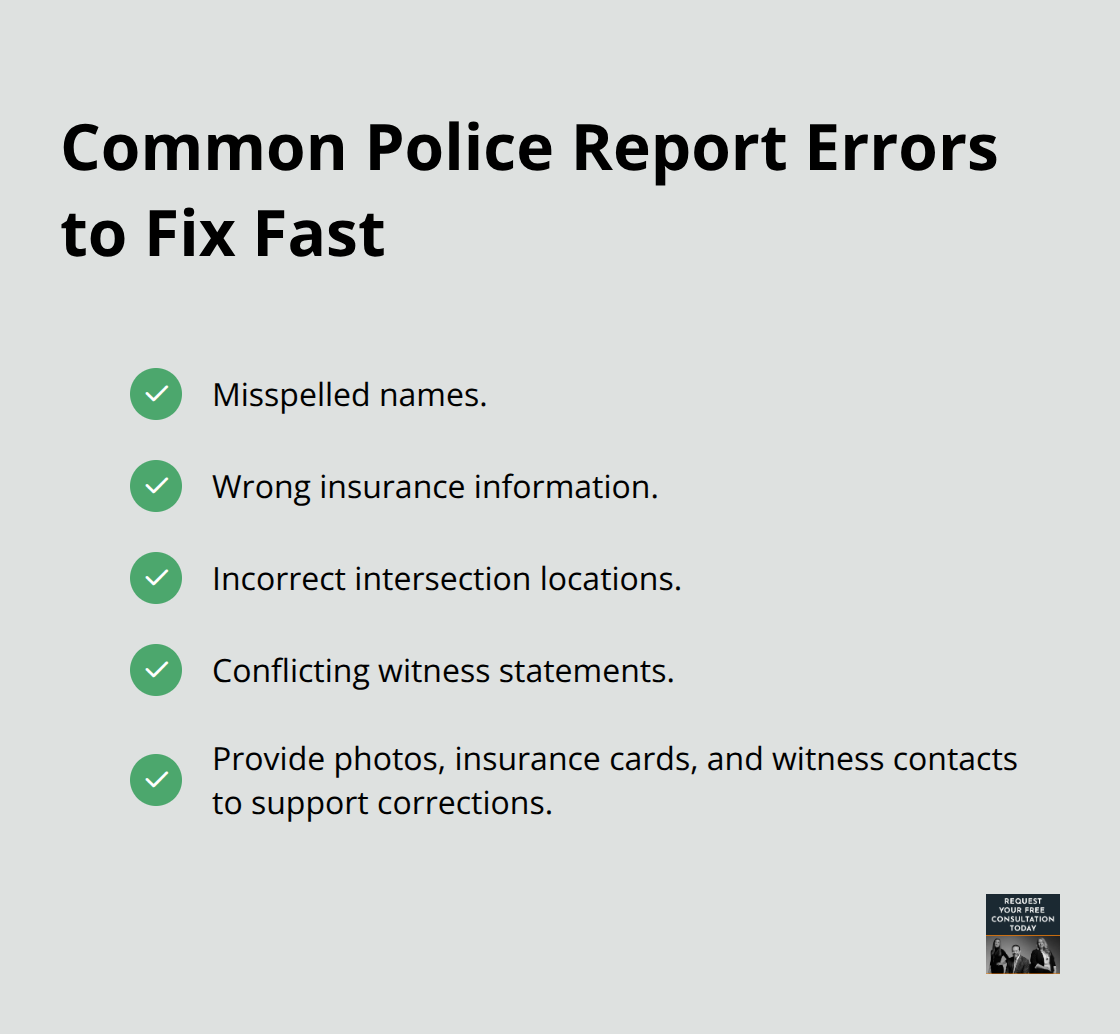
If you spot inaccuracies, contact the issuing agency immediately and provide supporting materials such as photographs, insurance cards, or witness contact information. You can file a supplemental report or request corrections through the department’s system. Police reports are human documents created under time pressure at chaotic scenes, so officers do miss details or record information incorrectly.
Submit Corrections Before Your Insurer Decides
The faster you obtain that report and file corrections, the sooner you can present insurers with verified facts rather than disputed information. When you use a corrected report to support your claim, you eliminate the skepticism that adjusters apply to inaccurate documentation. If serious injuries or wrongful death resulted from the accident, the accuracy of that report becomes even more critical because it establishes the foundation for damages claims. Contact the issuing agency with your supporting materials and request that they update the official record. This step protects your settlement negotiations and strengthens your position if your case moves toward litigation.
Final Thoughts
A car accident police report forms the foundation of your entire claim. It documents facts that insurance adjusters rely on, establishes timelines that protect you if the other driver changes their story, and provides the neutral third-party evidence that courts need to determine fault. Without it, you face delays, skepticism, and lower settlements.
After you obtain your report, review every detail for accuracy because misspelled names, wrong insurance information, or incorrect locations can undermine your claim. File corrections immediately with the issuing agency and provide supporting materials (photographs, insurance cards, or witness contact information). This step takes hours but saves you thousands in settlement disputes.
The severity of your injuries and the complexity of your case determine your next steps. If you sustained significant injuries, lost income, or face long-term medical care, we at Schaar & Silva LLP help people in Santa Cruz County navigate this situation by reviewing your car accident police report for gaps and inaccuracies, connecting you with medical lien services, and evaluating your property damage claim to ensure fair valuation. Contact us to discuss your case and learn how we can help you recover what you’re owed.
