
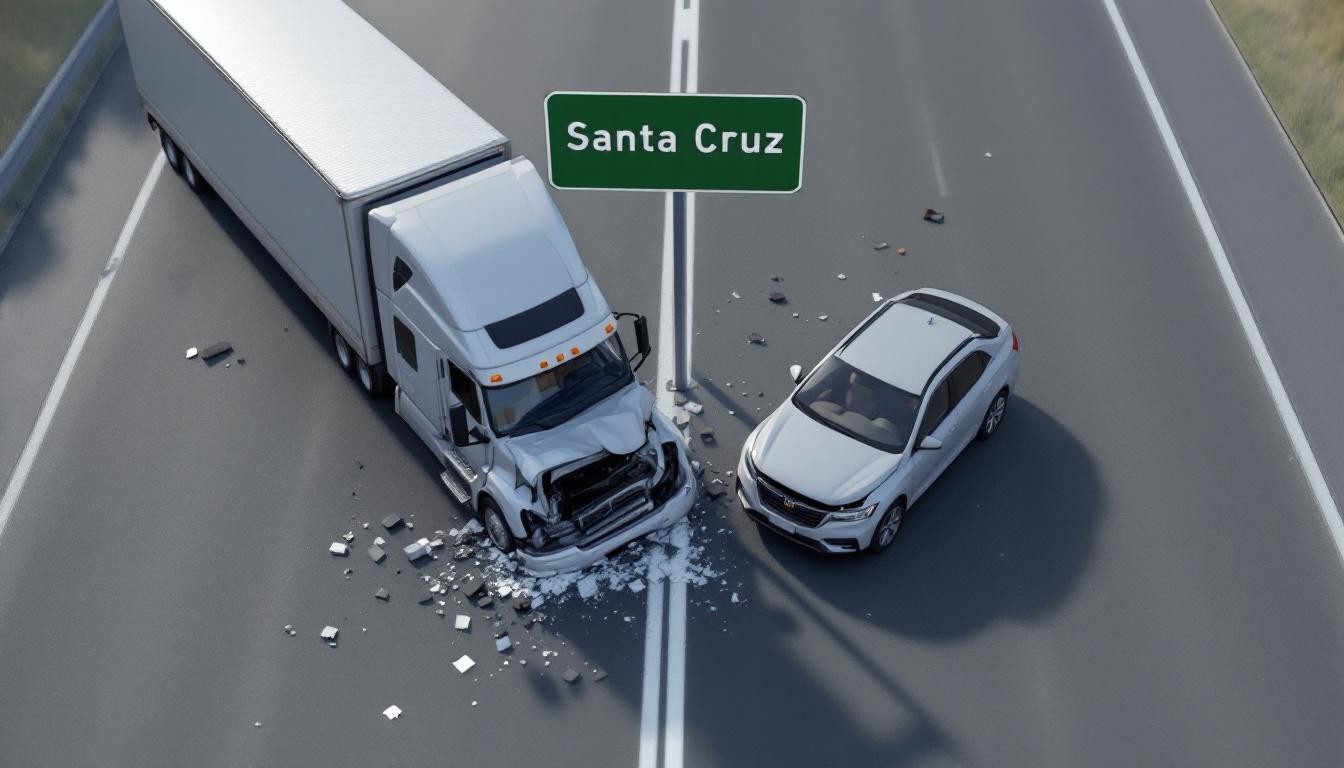
A truck collision in Santa Cruz can leave you facing medical bills, vehicle damage, and uncertainty about your rights. The aftermath is stressful, but understanding your legal options makes a real difference in recovering what you’re owed.
We at Schaar & Silva LLP have helped many Santa Cruz County residents navigate these claims. This guide walks you through the essential steps and protections available to you.
What to Do Right After a Truck Collision
Move to Safety and Call Police
The first hours after a truck collision determine what evidence survives and what gets lost or altered. Move to safety and call for help if possible, then contact Santa Cruz County law enforcement to report the collision. Police reports create an official record that insurance companies and attorneys rely on, and in Santa Cruz County, this documentation becomes part of the public record that you can access later for your claim.
Photograph the Scene Thoroughly
Photograph everything at the scene before vehicles move. Take wide shots showing the overall accident location, close-ups of vehicle damage on all sides, road conditions, traffic signs, weather, and skid marks if present. Capture the truck’s license plate, company name, and any identifying markings. These images provide objective evidence that protects your claim when memories fade or parties dispute what happened.
Collect Driver and Witness Information
Get contact information from the truck driver, including their name, phone number, address, and driver’s license number. Write down the trucking company name and address from the vehicle or driver documents. Collect information from all witnesses present, including their names, phone numbers, and what they saw. In truck collisions, witness accounts often matter more than in standard car accidents because they establish what the commercial driver was doing in the moments before impact.
Report to Insurance and Seek Medical Care
Report the collision to your insurance company within 24 hours to comply with your policy and trigger their investigation process. Be factual and brief when describing what happened; avoid speculation about fault. If you are injured, seek medical attention immediately even if symptoms seem minor. Document all medical visits, prescriptions, and treatment from day one, as these records form the foundation for calculating damages in your case.
Preserve All Evidence
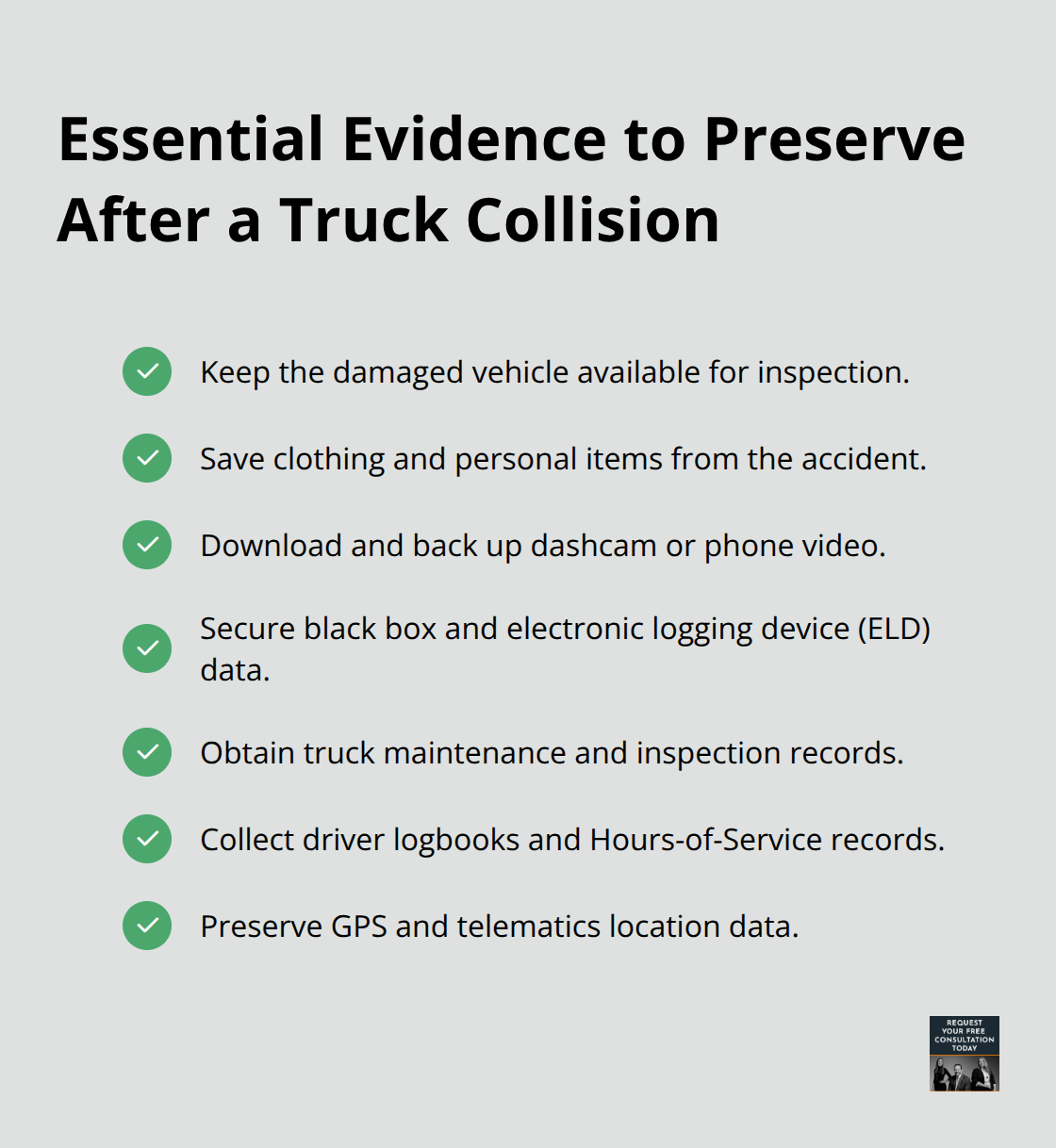
Preserve any physical evidence you have access to, including the damaged vehicle itself, your clothing from the accident, and any dashcam or phone recordings. Commercial truck accidents involve federal regulations around driver hours, vehicle maintenance, and cargo standards that a standard accident investigation might miss. Getting these details documented early gives you leverage when pursuing a fair settlement. Understanding how liability works in these complex cases requires knowledge of both state law and federal trucking regulations.
Who Pays for Your Injuries and Losses
Multiple Liable Parties in Truck Collisions
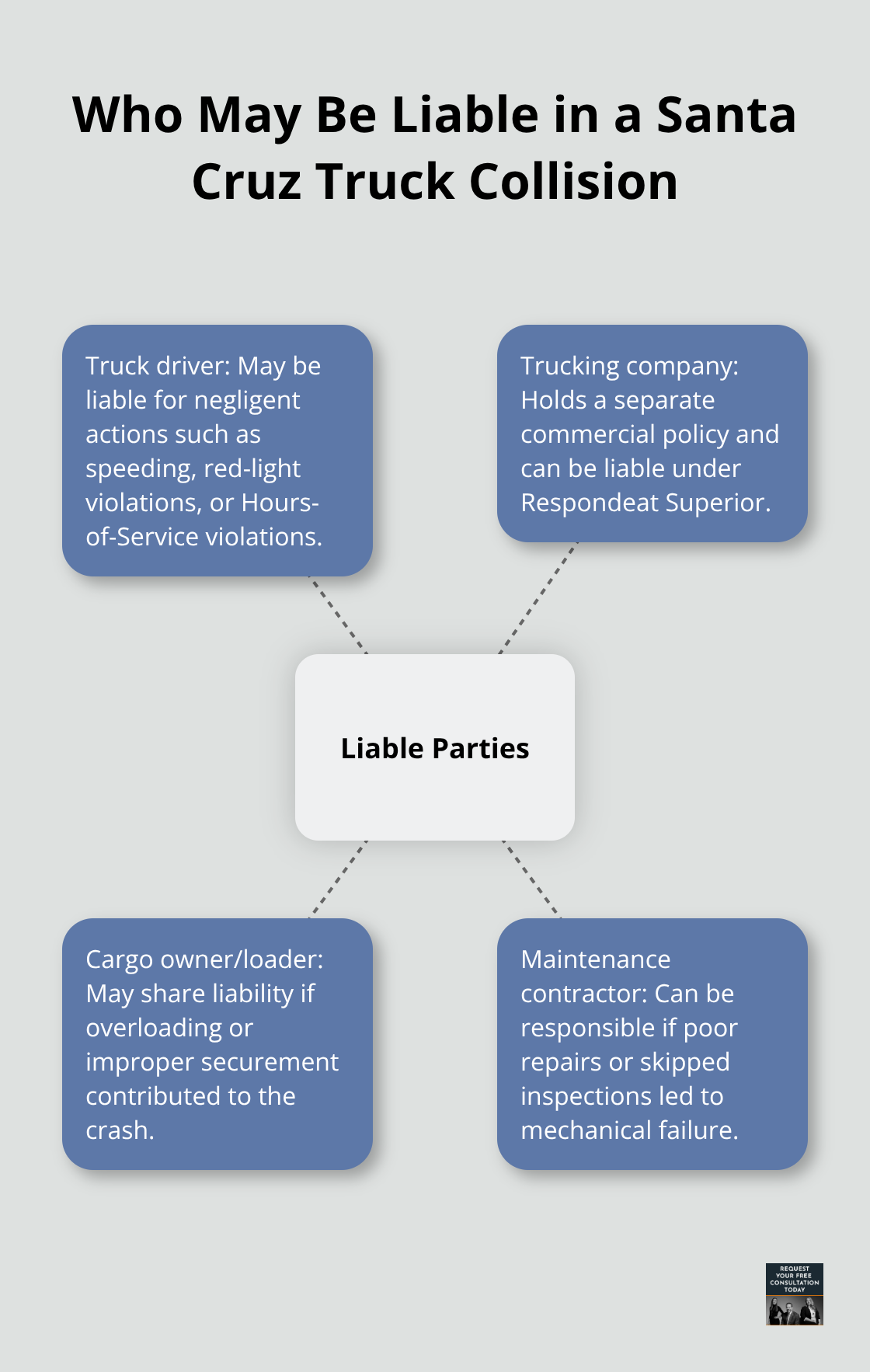
Truck collisions in Santa Cruz involve multiple liable parties, which creates both opportunity and complexity. The truck driver bears responsibility for negligent actions like speeding, running red lights, or violating federal Hours-of-Service rules that limit drivers to 11 hours of driving in a 14-hour workday. However, the trucking company often carries deeper liability under Respondeat Superior, a legal principle that makes employers liable for a driver’s negligence when the driver acts within the course and scope of employment. This matters because trucking companies typically carry insurance policies with much higher limits than individual drivers.
How California’s Comparative Negligence Rule Protects You
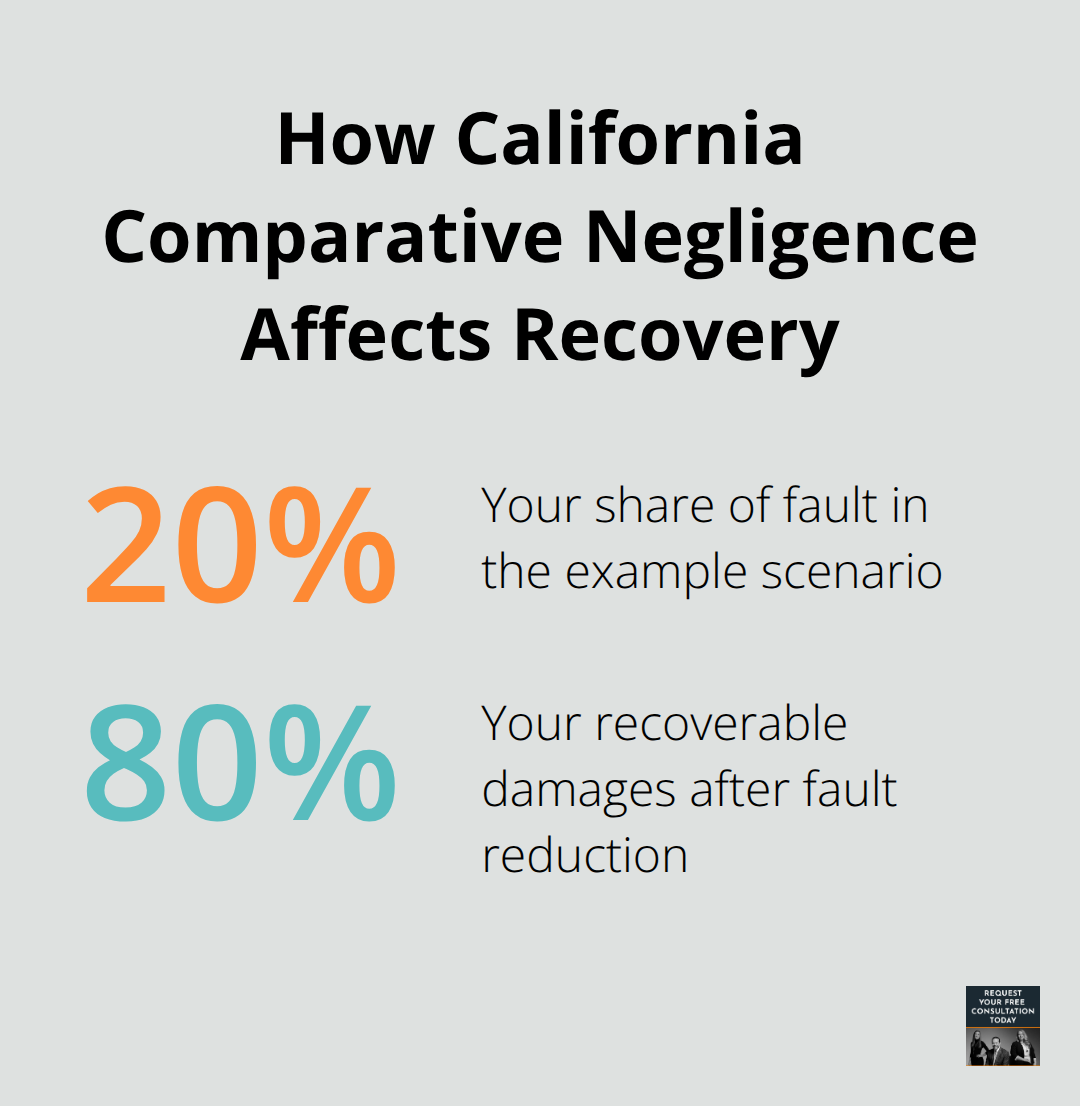
California’s pure comparative negligence rule works in your favor. You can recover damages even if you are partially at fault, though your recovery gets reduced by your percentage of fault. If you are 20 percent responsible for the collision, you still recover 80 percent of your total damages. This rule shifts the advantage toward injured parties and away from insurance companies that try to assign blame to victims.
Direct Liability Through Company Negligence
The trucking company’s maintenance records, driver training files, and safety policies create direct liability pathways beyond the driver alone. If the company ignored mechanical problems, hired unsafe drivers, or pressured drivers to skip rest breaks, you have claims against the company itself. These negligent practices establish that the company failed in its duty to operate safely, making recovery possible even when the driver’s individual actions seem minor.
Economic and Non-Economic Damages
Damages in truck cases fall into two categories: economic and non-economic. Economic damages include medical bills, vehicle repair costs, lost wages, and future medical treatment for long-term injuries like spinal cord damage or traumatic brain injury. Non-economic damages cover pain and suffering, loss of enjoyment of life, and emotional distress. In wrongful death claims, which California law allows for spouses, domestic partners, and children under California Code of Procedure section 377.60, damages include funeral costs, lost financial support, and loss of companionship.
Why You Must Act Fast on Evidence Preservation
Insurance companies will contact you quickly after a collision, but their goal is to minimize payouts, not maximize your recovery. They may offer a settlement within weeks that sounds reasonable but fails to account for future medical needs or reduced earning capacity. Do not accept early settlement offers without understanding your full injury scope. Preserve all evidence immediately: obtain and protect black box or electronic logging device data, maintenance records, driver logbooks, and GPS data before the trucking company has time to alter or erase them. This evidence proves negligence and establishes liability, giving you real leverage during negotiations. The sooner you secure these records, the stronger your position becomes when pursuing fair compensation for your losses.
Why Truck Claims Get Complicated
Multiple Parties Create Fragmented Liability
Truck collisions in Santa Cruz create complications that standard car accidents never face, and insurance companies exploit these complexities to reduce what they pay you. When a commercial truck hits your vehicle, you face multiple liable parties instead of a single driver and one insurance policy. The truck driver carries liability, but the trucking company carries a separate commercial policy with much higher limits. The cargo owner may carry additional liability insurance if the load contributed to the crash. The maintenance contractor who serviced the truck might bear responsibility if mechanical failure caused the collision. Each party has different insurance limits, different legal obligations, and different incentives to shift blame elsewhere.
Insurance adjusters know this fragmentation works in their favor because they can point fingers at other parties while their own client avoids accountability. You must identify every liable party early, which means obtaining the truck’s maintenance records, driver employment files, and cargo documentation before these records disappear or get altered.
Federal Regulations Create Multiple Violation Pathways
Proving fault becomes difficult when federal regulations create multiple violation pathways. A truck driver might have violated Hours-of-Service rules by driving more than 11 hours in a 14-hour workday, which slows reaction time and impairs judgment. Electronic logging device data and logbooks prove these violations, but trucking companies routinely erase or fail to preserve this data after a collision. Overloaded cargo or improper cargo securement can cause a truck to lose control, but inspectors need access to weight records and loading documentation to establish this negligence. Brake maintenance failures emerge from inspection records, but companies sometimes skip safety checks or ignore mechanical problems.
Insurance companies will argue that the other driver was partially responsible, invoking California’s comparative negligence rule to reduce their payout even when the truck driver bears primary fault. The key to countering these tactics is securing evidence immediately and building a factual record that proves the trucking company’s negligence, not splitting liability.
Settlement Pressure Locks You Into Inadequate Compensation
Adjusters contact you within days offering amounts that sound generous but fail to account for future medical treatment, lost earning capacity from catastrophic injuries, or the full scope of non-economic damages like pain and suffering. Accepting early offers locks you into a fixed amount that cannot be increased later, even if your spinal cord injury or traumatic brain injury requires years of rehabilitation and ongoing care. Hold firm and let the adjuster know you are documenting everything and preserving evidence, which signals that you understand the case’s value and will not accept lowball offers.
Final Thoughts
A truck collision in Santa Cruz leaves you with immediate decisions that shape your entire recovery. The steps you take in the first hours and days determine whether you recover full compensation or accept less than you deserve. Document everything, preserve evidence before it disappears, and report the collision to police and your insurance company without delay.
Your legal rights in California are stronger than many people realize. You can recover damages even if you bear partial fault, and multiple liable parties often exist beyond the truck driver alone. The trucking company’s maintenance records, driver training files, and safety policies create direct liability that reaches far deeper than a single driver’s negligence (federal Hours-of-Service violations, overloaded cargo, and mechanical failures all establish company responsibility). Understanding these pathways matters because insurance adjusters count on confusion to reduce settlements.
Acting quickly matters more in truck cases than in standard vehicle accidents. Black box data, electronic logging devices, and maintenance records disappear fast when trucking companies have incentive to erase them, and early settlement offers from adjusters often fail to account for future medical treatment, lost earning capacity, or the full scope of pain and suffering. Contact Schaar & Silva LLP to discuss your truck collision Santa Cruz case and understand your full recovery options.
