

A car crash settlement can feel overwhelming when you’re dealing with injuries, vehicle damage, and mounting bills. This car crash settlement guide walks you through each stage of the process so you understand what to expect.
We at Schaar & Silva LLP have helped Santa Cruz County residents navigate settlements and recover the compensation they deserve. You’ll learn how insurance companies calculate payouts, what documentation matters most, and how to negotiate effectively.
What Settlement Options Exist After a Car Crash
Two Paths to Resolution
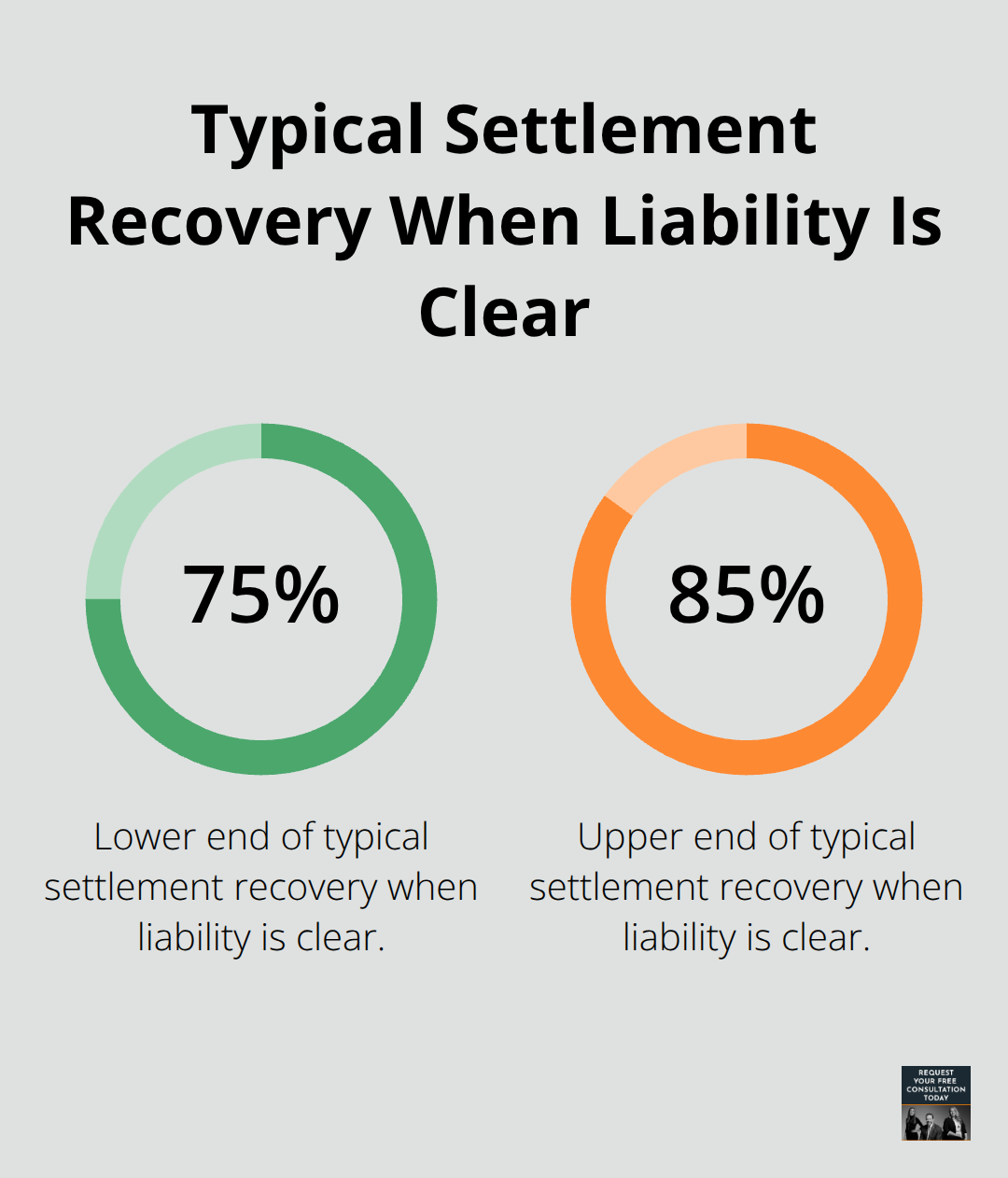
Settlement options fall into two main categories: negotiated settlements with the insurance company and court verdicts if litigation becomes necessary. Most car crash cases in Santa Cruz County settle before trial, typically recovering 75% to 85% of case value when liability is clear, according to the California Judicial Council. A negotiated settlement gives you control over the timeline and outcome, while a court verdict puts the decision in a judge or jury’s hands.
How Insurance Companies Calculate Your Payout
Insurance companies calculate payouts using a formula that multiplies your medical expenses by a factor between 1.5 and 5, depending on injury severity, then adds lost wages and property damage. This multiplier approach means soft tissue injuries often settle lower than catastrophic injuries. A minor neck strain with $3,000 in medical bills might multiply at 1.5 times, yielding $4,500, while a spinal cord injury with the same medical costs could multiply at 4 or 5 times, reaching $12,000 to $15,000 or more. Insurance adjusters know most people don’t understand these calculations, so they often anchor their first offer low, hoping you’ll accept without pushback. The adjuster’s job is to close your claim quickly and cheaply, not to provide fair compensation.
Liability’s Direct Impact on Your Settlement
Liability directly determines your settlement floor. If the other driver is clearly at fault, you have leverage to demand higher compensation. However, California’s pure comparative negligence rule complicates recoveries when fault is shared; you can still recover damages even if partly responsible, but your award shrinks proportionally to your percentage of fault. If you are 20% at fault, your $10,000 settlement drops to $8,000.
Building Your Documentation Strategy
Documentation from day one strengthens your position: medical records showing treatment frequency and provider notes about pain levels, wage loss statements from your employer, repair estimates and actual invoices for vehicle damage, and photos of accident scene conditions all support higher valuations. If medical bills exceed the at-fault driver’s policy limits, you may have underinsured motorist coverage on your own policy that bridges the gap (though this requires immediate notification to your insurer within 24 hours of the crash). Schaar & Silva LLP can assist in evaluating property damage and directing you to medical lien services that handle bill payment during your case, allowing you to focus on recovery rather than creditor calls. Understanding how adjusters work and what documentation matters positions you to negotiate effectively when your claim moves forward.
How to Build Your Case and Negotiate Like You Mean It
Gather Medical Records That Tell Your Story
Medical records form the backbone of any credible claim and determine whether you walk away with fair compensation or accept far less. Request detailed records from every provider you’ve seen, including visit dates, treatment descriptions, provider notes about your pain levels and functional limitations, and any diagnoses or imaging results. Insurance adjusters weight recent medical records heavily because they show ongoing treatment and current impact on your life. If you stopped seeing doctors too early, the adjuster will argue your injuries weren’t serious enough to warrant higher compensation. Many injury victims make this mistake and lose thousands as a result.
Compile Supporting Documentation
Alongside medical records, gather wage loss statements from your employer showing the exact dates you missed work and income lost, repair estimates from body shops along with actual invoices if repairs are complete, and photos of accident scene conditions, vehicle damage from multiple angles, traffic signals, and road conditions. The California Judicial Council data showing settlements at 75% to 85% of case value assumes clear liability backed by solid documentation. Without it, that percentage drops sharply. Organize this documentation into a clear file system so you can locate any piece of evidence within seconds when the adjuster requests it.
Present Your Claim With a Structured Narrative
Presenting your claim effectively means organizing your documentation into a narrative that tells the adjuster why your case is worth more than their opening offer. Create a one-page summary that walks through the accident sequence, explains liability clearly with reference to police report findings, lists all medical providers and treatment dates, quantifies lost wages with employer statements, and itemizes property damage with repair invoices. Then send a formal demand letter that references your summary, calculates damages methodically (medical bills multiplied by severity, plus lost wages, plus property damage), and sets a specific settlement figure grounded in comparable cases. The demand letter should acknowledge any comparative fault honestly rather than overstating your position, because adjusters know when you’re exaggerating and will discount your entire claim.
Counter Common Negotiation Tactics
Insurance adjusters deploy predictable tactics to lower payouts. They anchor low with an initial offer 40% to 50% below what they’ll eventually pay, request you release medical records before discussing settlement so they can find reasons to minimize damages, and claim they need more time to investigate while your mounting bills create urgency. Counter anchoring tactics by refusing to negotiate off their lowball number and instead referencing your documented damages and comparable settlements. Refuse premature medical record releases by telling the adjuster you’ll provide records only after a settlement figure is discussed, protecting yourself from having your own medical history weaponized against you.
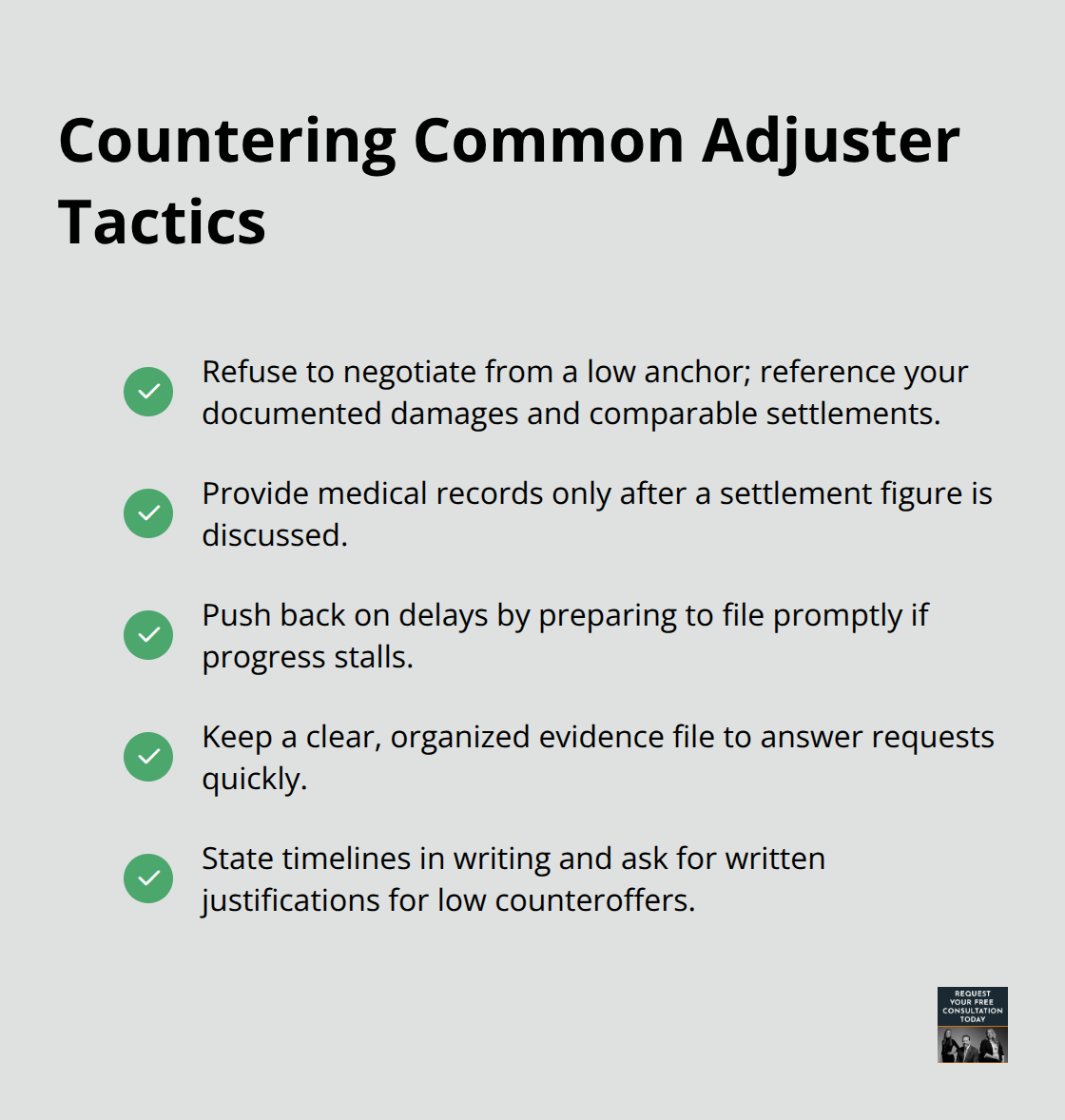
Counter delay tactics by filing a lawsuit promptly, which applies real pressure because litigation costs insurers money in defense attorney fees and increases their risk exposure if a jury awards more than their settlement offer.
Follow Up and Stay Persistent
Follow up with the adjuster within two weeks if they don’t respond to your demand letter, and request a written explanation for any counteroffer below your demand. Adjusters use delay tactics hoping you’ll cave from financial pressure or medical debt, so staying organized and persistent matters more than being aggressive. When negotiations stall and the insurance company refuses to move toward a fair number, the decision to pursue litigation becomes your next leverage point. Understanding when to escalate from negotiation to court action separates those who recover fairly from those who accept inadequate offers.
Medical Bills, Damages, and Compensation
Medical Expenses Add Up Faster Than You Expect
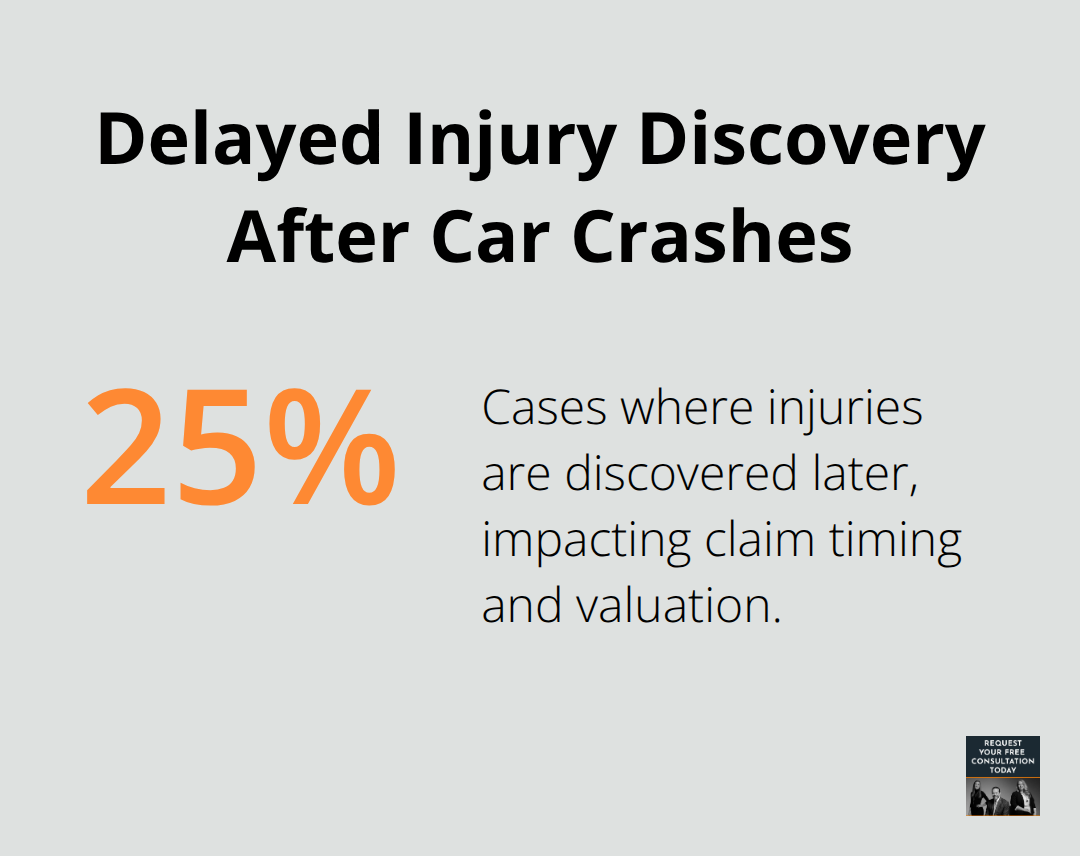
Medical expenses after a car crash extend far beyond the initial emergency room visit. Most accident victims underestimate their total medical costs because injuries reveal themselves over weeks or months, not immediately. According to the National Highway Traffic Safety Administration, delayed injury discovery occurs in approximately 25% of cases, meaning you might not know the full scope of your injuries when you first contact the insurance company. Seeking medical attention within 24 hours of the crash matters, even if you feel fine.
A doctor’s examination creates a baseline record and catches injuries that develop later.
When calculating your claim, include every medical bill: emergency room charges, follow-up appointments, physical therapy sessions, imaging costs, prescription medications, and any ongoing treatment your doctor recommends. Insurance adjusters know that soft tissue injuries often cost $3,000 to $5,000 in treatment but might settle at only $4,500 to $7,500 using their multiplier formula, while catastrophic injuries like spinal cord damage can justify settlements in the six or seven figures when paired with clear liability and strong documentation.
Property Damage and Future Medical Costs
Property damage claims operate separately from injury claims, meaning you can repair your vehicle and still pursue compensation for your injuries through a personal injury claim or lawsuit. Request repair estimates from at least two body shops because estimates vary, and use the higher estimate if the damage is significant. Keep all receipts and invoices if repairs are already complete, as these documents prove your actual costs rather than estimates.
Future medical expenses matter equally to current bills. If your doctor indicates you’ll need ongoing physical therapy, future surgeries, or long-term pain management, include those projected costs in your demand letter. Calculate future costs conservatively but realistically. A spinal injury requiring five more years of physical therapy at $150 per session, twice weekly, totals roughly $78,000. Insurance companies often resist paying for future care, arguing they cannot predict what treatment you’ll actually need, but California law recognizes that serious injuries create ongoing expenses, and your settlement should account for them.
Non-Economic Damages Tell Your Real Story
Non-economic damages like pain and suffering, emotional distress, and loss of enjoyment of life are harder to quantify but often represent the largest portion of your recovery. California recognizes these damages, and they’re not limited to medical bills alone. A clear formula exists in practice: multiply your total medical expenses by a factor between 1.5 and 5 depending on injury severity. A minor whiplash injury with $3,000 in medical costs might multiply at 1.5, yielding $4,500 in pain and suffering compensation. A traumatic brain injury with the same $3,000 in medical costs could multiply at 4 or 5, reaching $12,000 to $15,000 just for non-economic damages.
The multiplier depends on how seriously the injury impacts your daily life, work capacity, and mental health. Document this impact through a day-by-day diary showing how your injuries affected your ability to work, exercise, sleep, and enjoy activities you loved before the crash. Describe specific limitations: I couldn’t lift my child for three weeks, I missed my daughter’s soccer tournament, I couldn’t drive for two months, I lost sleep every night for six weeks. These specific details convince adjusters that your pain and suffering are real and significant. Insurance companies undervalue non-economic damages when you don’t document the impact clearly, so your diary becomes as important as your medical records.
Lost Wages and Earning Capacity
If your injuries prevent you from working, calculate lost wages by multiplying your daily rate by the number of workdays missed. Request a wage loss statement from your employer showing exact dates and income lost. Self-employed individuals should gather tax returns and bank statements showing income patterns before the crash and after.
Lost earning capacity applies when injuries reduce your ability to earn in the future. A hand injury that prevents a carpenter from working full-time represents permanent lost earning capacity, not just immediate wage loss. These damages require careful documentation and often benefit from professional evaluation. We at Schaar & Silva LLP assist in evaluating the full scope of your damages and connecting you with medical lien services that handle bill payment during your case, allowing you to recover without creditor pressure.
Final Thoughts
A car crash settlement guide works only if you act on it. Solid documentation from day one, persistence through negotiation, and willingness to pursue litigation when the insurance company refuses to move toward a reasonable number separate those who recover fairly from those who accept inadequate offers. You now understand how adjusters calculate payouts, what documentation strengthens your position, and how to counter their delay tactics.
After reaching a settlement agreement, review the settlement language carefully before signing. The agreement should specify the exact amount, confirm that all parties release each other from future claims, and outline the timeline for payment. Request written confirmation of the settlement terms and keep copies for your records.
We at Schaar & Silva LLP help Santa Cruz County residents navigate recovery by directing you to lien services that handle medical bill payment until your case resolves, evaluating property damage claims to protect your interests, and connecting you with support when emotional trauma follows physical injuries. If settlement negotiations stall or the insurance company’s offer falls short of your actual damages, contact us for a free case evaluation to discuss whether litigation makes financial sense for your situation.
