
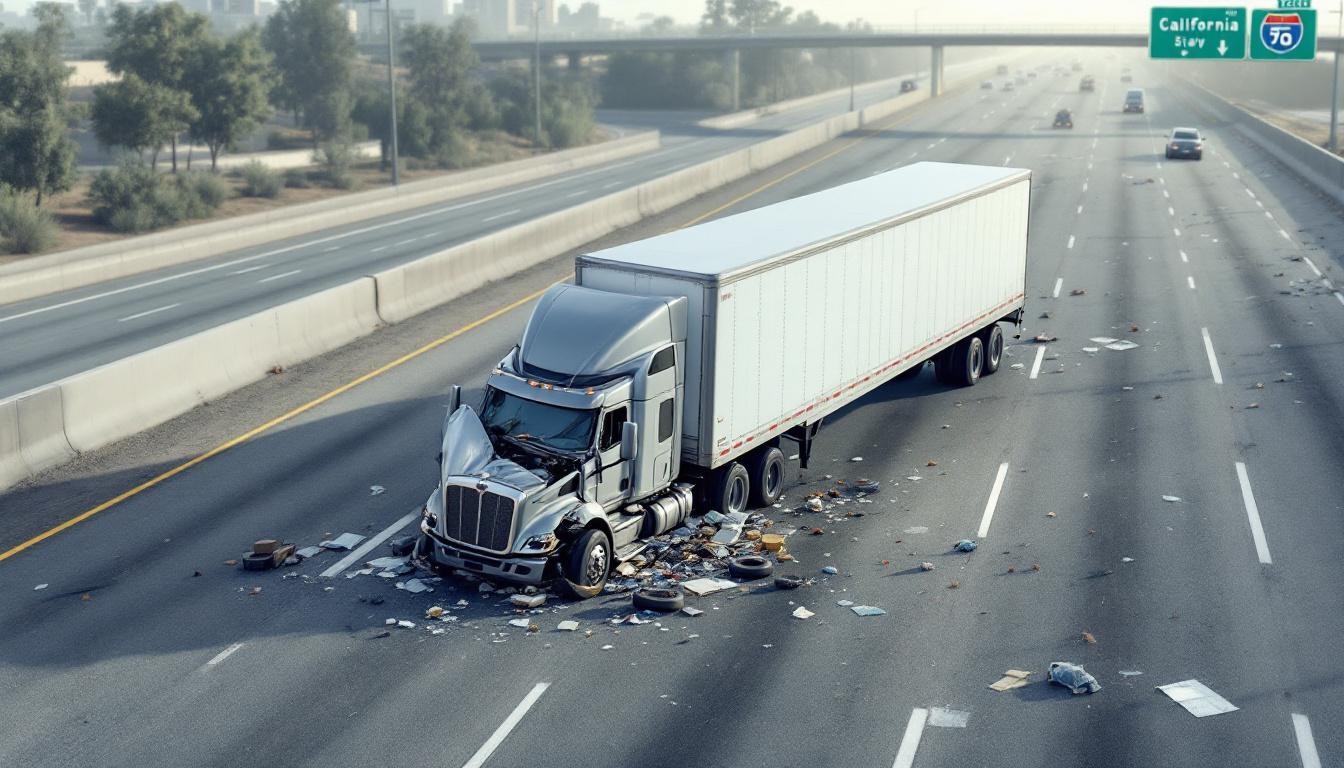
A California truck accident can leave you facing medical bills, lost income, and uncertainty about your future. The recovery process is complex, especially when commercial vehicles and large insurance companies are involved.
We at Schaar & Silva LLP understand what victims go through after these collisions. This guide walks you through the immediate steps to take, how truck accident claims work differently in California, and the compensation options available to you.
What to Do Right After a Truck Accident
Move to Safety and Call for Help
The first minutes after a truck collision determine how much evidence you can preserve and how strong your recovery claim becomes. Most victims feel disoriented after impact, but taking specific actions immediately protects your legal rights and strengthens your case later. Move to safety if the vehicles are mobile and no one is severely injured. Turn on hazard lights, set up warning triangles or flares if you have them, and move away from traffic. Call 911 right away, even for minor injuries. Police reports create an official record that insurers and courts rely on, and the FMCSA requires documentation of commercial vehicle crashes.
Photograph and Document the Scene
While waiting for emergency responders, photograph everything with your phone: the truck’s position, damage to your vehicle, road conditions, weather, traffic signs, and the truck’s license plate and company markings. Take video of the overall scene from multiple angles. These images are time-sensitive because trucking companies often repair vehicles quickly, erasing physical evidence. Capture the truck’s company name and any visible markings on the vehicle itself. Documenting the scene thoroughly protects your ability to prove what happened.
Collect Critical Information
Get the truck driver’s name, phone number, address, and commercial license number. Write down the trucking company name from the truck itself or ask the driver directly. Collect the insurance company name and policy number. Ask for contact information from any witnesses, including other drivers, passengers, or bystanders. Witness statements matter significantly because they corroborate your account when the driver or company disputes fault. Request a copy of the police report once filed, as it documents the officer’s observations and any citations issued to the driver.
Seek Medical Attention Immediately
Seek medical attention immediately after a truck accident, even if you feel fine. Truck collisions cause injuries that appear days later (such as whiplash, internal bleeding, or traumatic brain injury). A medical evaluation creates a documented record linking your injuries directly to the crash, which is essential for your claim. Tell the medical provider exactly how the collision occurred and what symptoms you experience. Keep all medical records, receipts for treatments, and notes about how injuries affect your daily activities.
Protect Your Claim Before Speaking to Insurers
Do not post about the accident on social media, as insurers monitor these accounts and may use your statements against you. Do not give recorded statements to the at-fault driver’s insurance company without consulting an attorney first. Insurance adjusters are trained to minimize payouts and may twist your words. Understanding how truck accident claims work in California requires knowledge of liability rules and the roles that trucking companies and their insurers play in the recovery process.
Why Truck Accidents Demand Different Legal Handling
Truck crashes operate under a completely different liability framework than passenger vehicle collisions, and Santa Cruz County victims need to understand this distinction before negotiating with insurers. The Federal Motor Carrier Safety Administration regulates commercial trucking through hours-of-service rules, vehicle maintenance standards, and driver qualifications that don’t apply to regular cars. When a truck driver violates these federal rules-such as exceeding the 11-hour driving limit in a 14-hour window or skipping the mandatory 30-minute break after 8 hours-that violation becomes direct evidence of negligence in your claim.
Federal Regulations Create Liability
The FMCSA caps truck weight at 80,000 pounds gross vehicle weight, and overweight violations worsen braking distance and steering control, making crashes more severe. California courts treat these federal violations seriously because they show the driver or company knew the rules and ignored them anyway. A violation of hours-of-service limits or weight restrictions strengthens your position significantly when proving fault.
Multiple Parties Share Responsibility
Trucking companies face vicarious liability under a legal principle called respondeat superior, meaning the company is responsible for the driver’s negligence if the violation occurred during work. This matters tremendously for your recovery because the company’s commercial insurance typically carries limits far exceeding a driver’s personal policy-sometimes $1 million or more. The company can also face direct liability for negligent hiring, inadequate training, or pressuring drivers to meet unrealistic deadlines that force violations.
Cargo liability adds another layer: if cargo was improperly secured or loaded, the shipping company, loader, and trucking company may all share fault. Multiple liable parties exist in many cases, and each party carries separate insurance coverage. The key is identifying every responsible party early and preserving evidence like weigh station records, bills of lading, maintenance logs, and electronic logging device data before trucking companies erase or repair critical evidence.
How California’s Negligence Rules Affect Your Recovery
California’s pure comparative negligence rule means you can recover compensation even if you bear some fault, though your award is reduced by your percentage of responsibility. A victim 20% at fault on a $100,000 claim receives $80,000. This framework makes early investigation and aggressive evidence preservation non-negotiable, as does the two-year statute of limitations for personal injury claims in California. Understanding the specific damages available to you-from medical expenses to lost wages to pain and suffering-requires knowledge of how courts calculate compensation in commercial vehicle cases.
What Compensation Can You Actually Recover
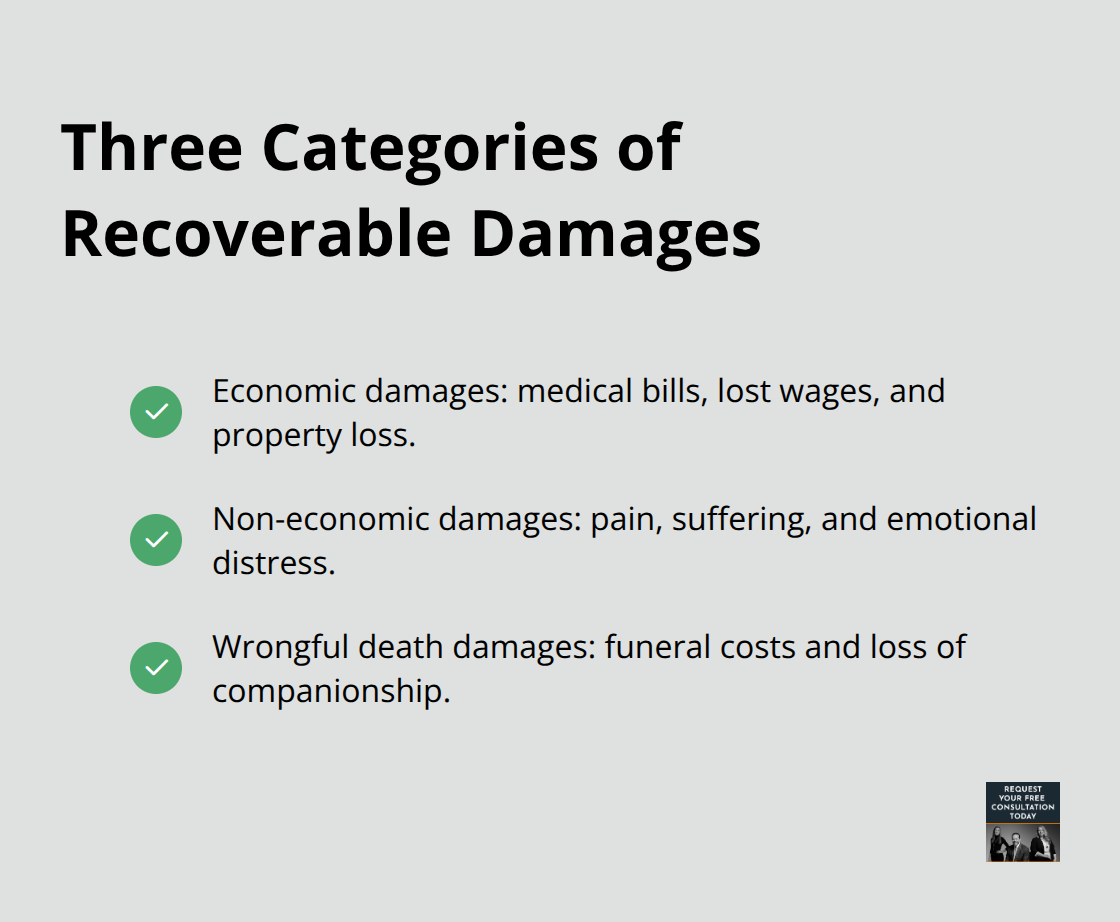
Truck accident victims in Santa Cruz County often underestimate the full range of compensation available to them, which costs thousands in lost recovery. California law recognizes three distinct categories of damages: economic losses (medical bills, lost wages, property damage), non-economic losses (pain and suffering, emotional distress), and in wrongful death cases, loss of companionship and funeral costs.
Economic Damages: Medical Bills, Wages, and Property Loss
Economic damages are straightforward to calculate because receipts and pay stubs document them precisely. Medical bills from truck crashes accumulate fast, and many victims face the burden of paying them while their claim is pending. The legal team at Schaar & Silva LLP can help direct you to medical lien services that facilitate payment of your bills until your case is resolved.
Property damage claims require a fair valuation of your vehicle; we assist in evaluating the extent of property damage and ensure you receive fair compensation for your loss.
Lost wages represent income you cannot earn during recovery. If you miss six weeks of work earning $2,000 weekly, that is $12,000 in lost income the at-fault party owes you. California courts also recognize reduced earning capacity if injuries permanently limit your ability to work in your previous job.
Non-Economic Damages: Pain, Suffering, and Emotional Trauma
Non-economic damages require a different approach than economic losses. California courts allow juries to award substantial sums for pain and suffering, and recent verdicts in trucking cases have exceeded $2 million for catastrophic injuries like traumatic brain injury or spinal cord damage. Emotional trauma is frequently underestimated in settlements, yet psychological injuries from truck accidents are real and documented. We connect you with specialists who can offer the psychological support you may require.
The Long-Term Cost Mistake Most Victims Make
The critical mistake most victims make is settling too quickly without understanding what their injuries will cost long-term. A fractured spine might require surgery now and spinal fusion later, plus years of physical therapy. If you accept a settlement that covers only immediate medical bills, you absorb the cost of future care yourself. This is why documenting every medical expense, treatment plan, and specialist recommendation matters from day one.
Act Fast to Preserve Evidence and Maximize Recovery
The statute of limitations in California gives you two years to file a personal injury claim from the accident date, but evidence deteriorates fast. Trucking companies erase electronic logging device data, repair vehicles, and lose maintenance records within weeks. Acting within the first 30 days after your crash gives you the best chance to preserve critical evidence and secure maximum compensation.
Final Thoughts
A California truck accident creates immediate financial and physical hardship, but understanding your rights transforms that crisis into a path toward recovery. The steps you take in the first hours after impact-documenting the scene, collecting witness information, and seeking medical care-directly determine how much compensation you ultimately receive. Truck crashes differ fundamentally from car accidents because federal regulations, multiple liable parties, and commercial insurance policies create opportunities for recovery that most victims never pursue.
The two-year statute of limitations in California means time works against you, as evidence disappears within weeks when trucking companies repair vehicles and erase electronic logging device data. Settling quickly without understanding your long-term medical costs leaves you paying out of pocket for years of treatment. This is where legal representation becomes non-negotiable, not optional.
We at Schaar & Silva LLP have guided Santa Cruz County victims through this process for years, and our team handles the complexity so you can focus on healing. Contact us for a free consultation to review your specific situation and learn what your claim is worth. Gather your medical records, police report, and photos, then reach out to discuss your case-the sooner you act, the stronger your position becomes.
