

An incapacitating injury crash changes everything in seconds. Medical bills pile up, insurance companies push back, and you’re left wondering what your rights actually are.
We at Schaar & Silva LLP help people in Santa Cruz County navigate exactly this situation. This guide walks you through the immediate steps, medical decisions, and legal options that matter most.
What to Do First After an Incapacitating Injury Crash
The first minutes after an incapacitating injury crash determine whether you protect yourself or compromise your case. If you’re conscious and able to move, your priority is safety, not liability. Move vehicles out of traffic if they’re drivable and it’s safe to do so.
Call 911 Immediately
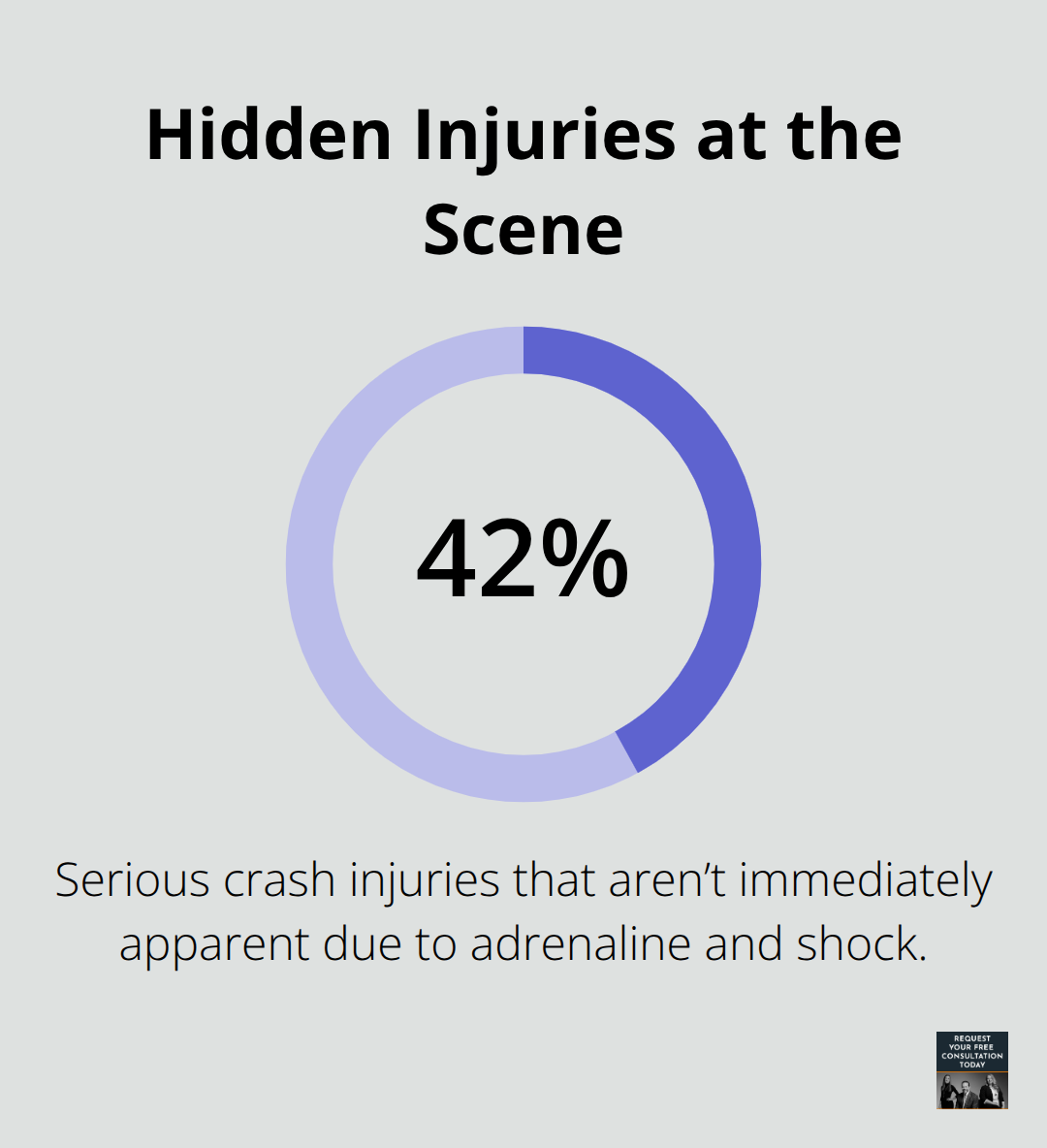
Call 911 right away if anyone shows signs of injury, loss of consciousness, or severe pain. Don’t wait to see if symptoms develop later. According to the National Highway Traffic Safety Administration, about 42% of serious crash injuries aren’t immediately apparent because adrenaline masks pain and shock affects perception. Once emergency services arrive, give them accurate information about what happened, but avoid saying anything that suggests fault.
Insurance adjusters and opposing counsel will scrutinize every word you say at the scene.
Let the Police Report Tell Your Story
The police report becomes your official account of what happened, so let the officer’s investigation speak for itself rather than volunteering opinions about who caused the crash. Request the police report number before officers leave the scene and follow up with the police department the next day to obtain a copy. That report carries significant weight in claims and litigation because it’s based on the officer’s investigation, not just one person’s version of events.
Document the Scene with Photos and Video
Take photos and video of the entire scene before anything moves. Get wide shots showing the road conditions, traffic signals, weather, and vehicle positions. Take close-ups of all vehicle damage, license plates, and the crash impact points. Photograph skid marks, debris, road hazards, and any visible injuries if you’re comfortable doing so. These images matter because insurance companies use them to reconstruct what happened, and memories fade quickly.
Collect Information While Witnesses Are Present
Exchange driver’s license, insurance card, and contact information with other parties involved, then get names and phone numbers from witnesses while they’re still present. Witnesses disappear fast, and their accounts become worthless if you can’t reach them later. This information becomes critical when you work with an attorney to build your case and establish what actually happened at the scene.
Medical Care and Financial Recovery
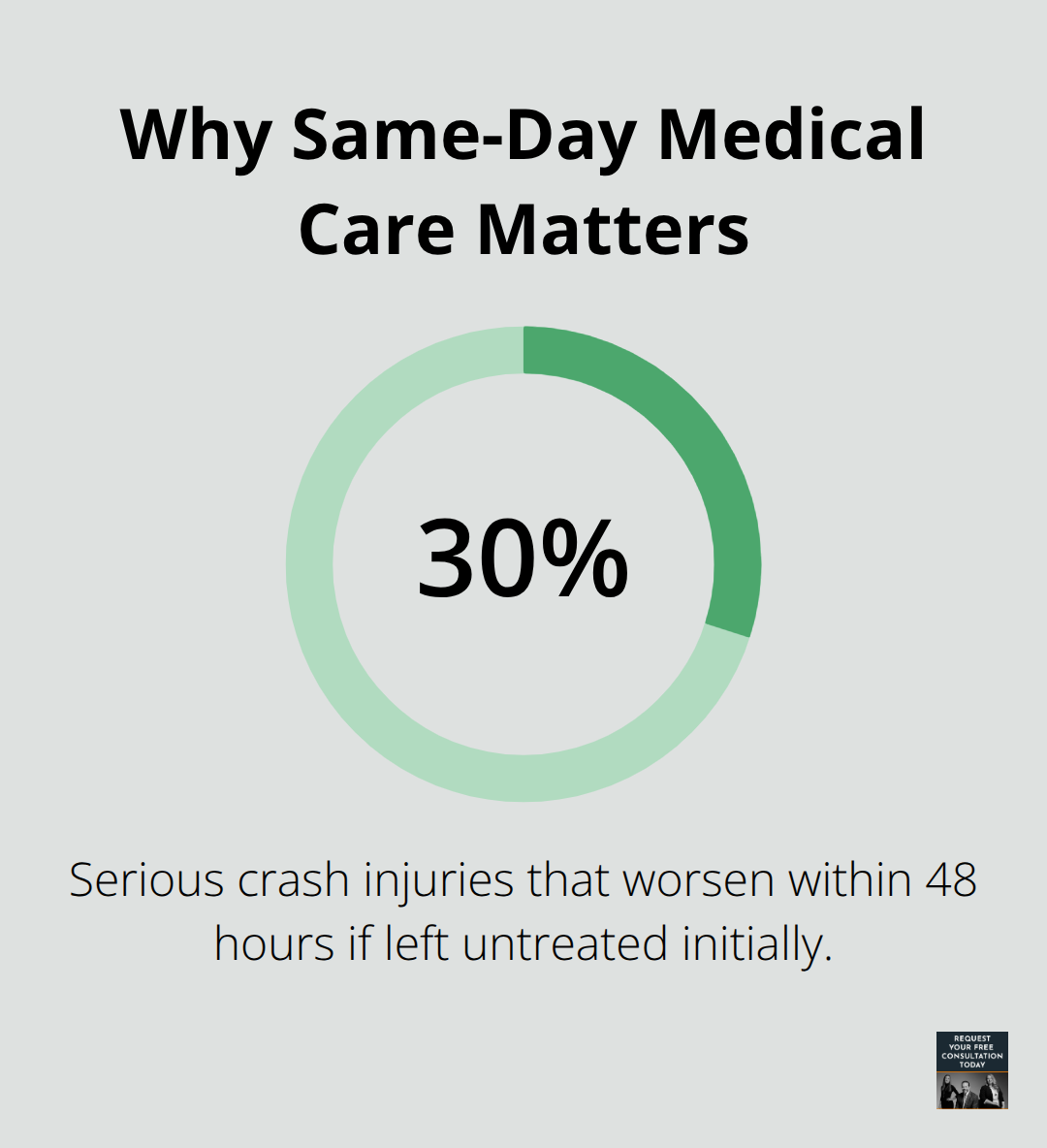
Seeking medical attention within hours of an incapacitating injury crash matters far more than you might think. The American College of Emergency Physicians reports that roughly 30% of serious crash injuries worsen within 48 hours if left untreated initially. Even if you feel relatively okay at the scene, adrenaline suppresses pain signals, and internal injuries don’t always announce themselves immediately.
Get Evaluated the Same Day
Visit an emergency room or urgent care provider the same day of the crash. Tell the physician exactly where you felt impact, what movements cause pain, and any loss of consciousness or confusion you experienced. This medical record becomes your first piece of documented evidence that the crash caused your injuries, which insurance companies will scrutinize heavily when you file a claim.
Choose Continuity in Your Medical Care
After emergency care, select a primary care physician who will see you regularly rather than bouncing between different providers. Continuity matters when building your medical narrative. If you develop ongoing pain, numbness, or neurological symptoms, ask for a referral to an orthopedist or neurologist rather than relying solely on your primary care doctor’s assessment. These specialists document injuries with greater precision, which strengthens your position if your case goes to litigation.
Organize Your Medical Records and Bills
Start collecting and organizing every medical invoice, receipt, and billing statement immediately. Insurance companies will deny claims if documentation gaps exist, and you’ll need complete records to justify compensation amounts. Medical bills from incapacitating injury crashes average between $15,000 and $50,000 depending on injury severity, according to the National Safety Council, so meticulous record-keeping directly protects your financial recovery.
Address Payment Barriers to Your Recovery
Medical lien services can facilitate payment of your bills until your case resolves, which removes the burden of immediate out-of-pocket payments while you heal and pursue your claim. The legal team at Schaar & Silva LLP can direct you to these services, helping you navigate payment options so financial pressure doesn’t interfere with your recovery.
Your medical decisions now set the foundation for what damages you can claim and how much compensation you’ll actually receive.
What Compensation Can You Actually Claim
Incapacitating injury crashes produce damages that go far beyond the repair bill for your vehicle. California law recognizes two categories of damages: economic and non-economic. Economic damages cover medical expenses, lost wages, property damage, and future medical care directly tied to your injuries.

The National Safety Council estimates that serious crash injuries cost victims an average of $70,000 in direct medical and lost income expenses. Non-economic damages compensate for pain and suffering, loss of enjoyment of life, and emotional distress caused by the crash. California courts award substantial non-economic compensation, particularly when injuries are permanent or significantly alter daily functioning. Insurance companies typically undervalue non-economic damages because they lack a clear dollar amount, which is why your medical documentation matters so much. The more detailed your medical records show ongoing pain, mobility restrictions, or psychological impact, the stronger your claim for non-economic damages becomes. Many Santa Cruz County victims accept settlements far below what they’re entitled to simply because they don’t understand what they can claim.
How Fault Gets Determined and Why It Matters
California follows comparative negligence rules, meaning you can recover compensation even if you’re partially at fault for the crash, though your award gets reduced by your percentage of fault. If you’re 20% at fault and damages total $100,000, you’d recover $80,000. Insurance adjusters will aggressively argue that you share responsibility for the crash to lower their payout, so the police report, photos, witness statements, and your medical records become critical evidence to establish who actually caused the collision. The other party’s insurance company will hire investigators within hours of a serious crash to gather evidence and build their defense, which is why immediate legal consultation gives you an advantage. An attorney can review your case before you accept any settlement offer, since insurance companies count on injured people settling quickly without understanding their true claim value. Settlement offers made in the first weeks after a crash almost always underestimate long-term medical needs and permanent disability impacts.
Settlement Versus Going to Court
Most incapacitating injury cases settle before trial, but settlement timing and amount depend entirely on whether you have proper legal representation. Insurance companies make lower offers to unrepresented victims because they know most people will accept anything to cover immediate medical bills. If you go to court, the case takes longer but you gain negotiating power because the insurance company faces potential jury verdicts that could far exceed their settlement offer. California juries in Santa Cruz County have awarded substantial damages in serious injury cases, particularly when medical evidence shows permanent harm. The decision between settlement and litigation depends on your specific injuries, the clarity of fault, and the insurance policy limits available. An attorney can evaluate your case and explain whether settlement negotiations or litigation better serves your recovery goals.
Property Damage Claims and Fair Valuation
Property damage claims run parallel to your personal injury claim, and you deserve fair compensation for vehicle repairs or replacement. Insurance adjusters often undervalue property damage to reduce their overall payout, so documentation of your vehicle’s condition before the crash (maintenance records, photos, or service history) strengthens your position. We at Schaar & Silva LLP assist in evaluating the extent of property damage and work to ensure you receive a fair valuation for your loss. Getting an independent appraisal of repair costs gives you leverage when the insurance company’s estimate falls short of actual repair expenses.
Addressing Medical Bills and Financial Pressure
Medical lien services can facilitate payment of your bills until your case resolves, which removes the burden of immediate out-of-pocket payments while you heal and pursue your claim. The legal team at Schaar & Silva LLP can direct you to these services, helping you navigate payment options so financial pressure doesn’t interfere with your recovery. This support allows you to focus on healing rather than scrambling to cover mounting medical expenses during your case.
Final Thoughts
An incapacitating injury crash forces you to make decisions that affect your health, finances, and legal rights all at once. The steps you take in the first hours and days after the collision determine whether you protect yourself or leave money on the table. Moving vehicles to safety, calling 911, documenting the scene, and gathering witness information form the foundation of a successful claim.
Understanding what damages you can claim separates victims who recover fairly from those who accept inadequate settlements. Economic damages cover medical expenses and lost wages, while non-economic damages compensate for pain, suffering, and permanent disability. California’s comparative negligence rules mean you can recover even if partially at fault, but only if you have evidence supporting your position (the police report, photos, and witness statements become critical weapons in your case).
Contact Schaar & Silva LLP to discuss your case and understand what compensation you actually deserve. We review settlement offers before you sign anything, because insurance companies count on injured people accepting lowball amounts without understanding their true claim value. Your recovery starts with immediate action and continues with informed decisions about medical care and legal representation.
