

Seatbelts save lives, but they can also cause serious injuries during a crash. An injury from a seatbelt in a crash might seem minor at first, yet chest pain, rib fractures, and internal bleeding can develop over days or weeks.
We at Schaar & Silva LLP help accident victims in Santa Cruz County understand their injuries and fight for fair compensation. This guide walks you through the most common seatbelt injuries, what to do immediately after a crash, and how to recover both physically and financially.
What Injuries Does a Seatbelt Actually Cause?
How Seatbelts Transmit Crash Forces to Your Body
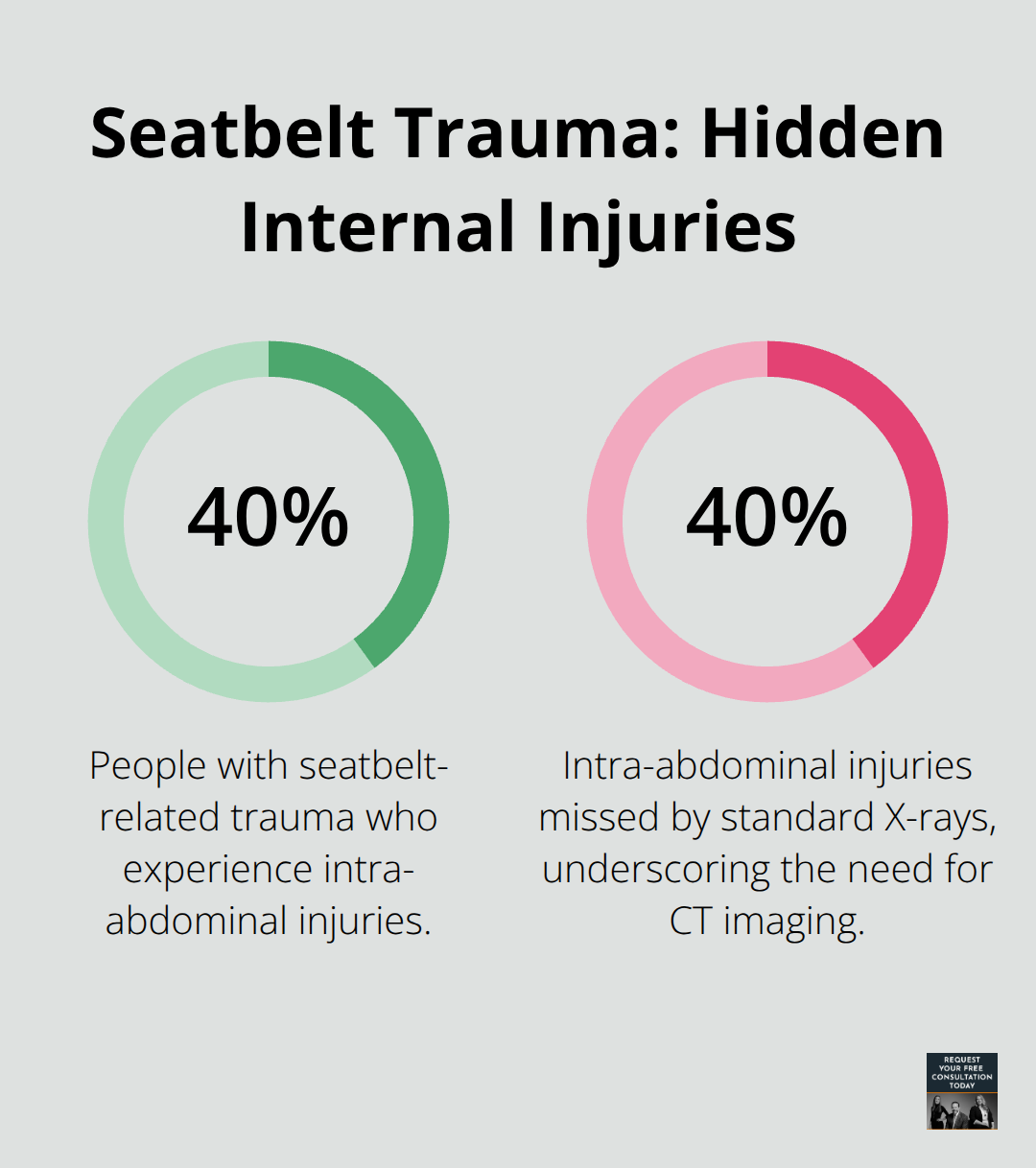
Seatbelt injuries occur because the restraint transmits crash forces directly into your body. The three-point harness-which crosses your shoulder, chest, and lap-concentrates energy at three critical points: your clavicle, chest wall, and hip bones. When a crash happens, these areas absorb tremendous force in milliseconds. Research shows that roughly 40% of people with seatbelt-related trauma experience intra-abdominal injuries, yet many show no visible belt marks on their skin. You cannot rely on what you see in the mirror to determine whether you’re truly injured.
Chest and Rib Injuries
Your ribs take the brunt of the shoulder and chest belt pressure, leading to fractures, contusions, and sometimes damage to the organs beneath. Chest and rib injuries represent the most common seatbelt-related harm. The force that breaks your ribs can also injure your lungs or heart, complications that may not appear immediately after the crash.
Abdominal and Internal Injuries
Abdominal and internal injuries are far more dangerous and often go undetected initially. The lap belt can cause hollow viscus injuries-damage to your bowel or intestines-and mesenteric injuries affecting the tissue that holds your organs in place. These injuries may not show up on standard X-rays and can develop or worsen over 24 to 72 hours after the crash. Internal bleeding or organ damage progresses silently while you feel relatively normal, which is why medical imaging becomes essential even when symptoms seem mild.
Shoulder, Collarbone, and Soft-Tissue Injuries
Shoulder and collarbone injuries occur where the diagonal belt crosses your upper body; the clavicle bears significant stress and can fracture or dislocate. Soft-tissue injuries like whiplash frequently accompany seatbelt trauma, causing pain that may not appear until days after the accident. The combination of musculoskeletal and internal injuries is sometimes called seatbelt syndrome.
Why Early Medical Evaluation Matters
Early medical evaluation matters because delayed diagnosis of internal injuries can lead to serious complications. Seek imaging-including CT scans-if you experience chest pain, shortness of breath, abdominal tenderness, or dizziness after your crash, even if symptoms seem mild at first. Once you understand the extent of your injuries, you’ll need to take immediate steps to protect your health and your legal rights.
Immediate Steps to Take After a Seatbelt Injury
Seek Medical Attention Without Delay
Get medical attention before you leave the crash scene or within hours afterward, even if you feel fine. The National Highway Traffic Safety Administration reports that seatbelt injuries frequently develop or worsen over 24 to 72 hours after a crash, meaning chest pain, abdominal tenderness, or shortness of breath may not appear until days later. When you arrive at the emergency room or urgent care, tell the medical staff exactly how the seatbelt crossed your body during impact-this detail helps doctors identify which organs and tissues may have been injured. Request imaging including CT scans if you have any chest, abdominal, or shoulder pain; standard X-rays miss roughly 40% of intra-abdominal injuries, so cross-sectional imaging protects your health.
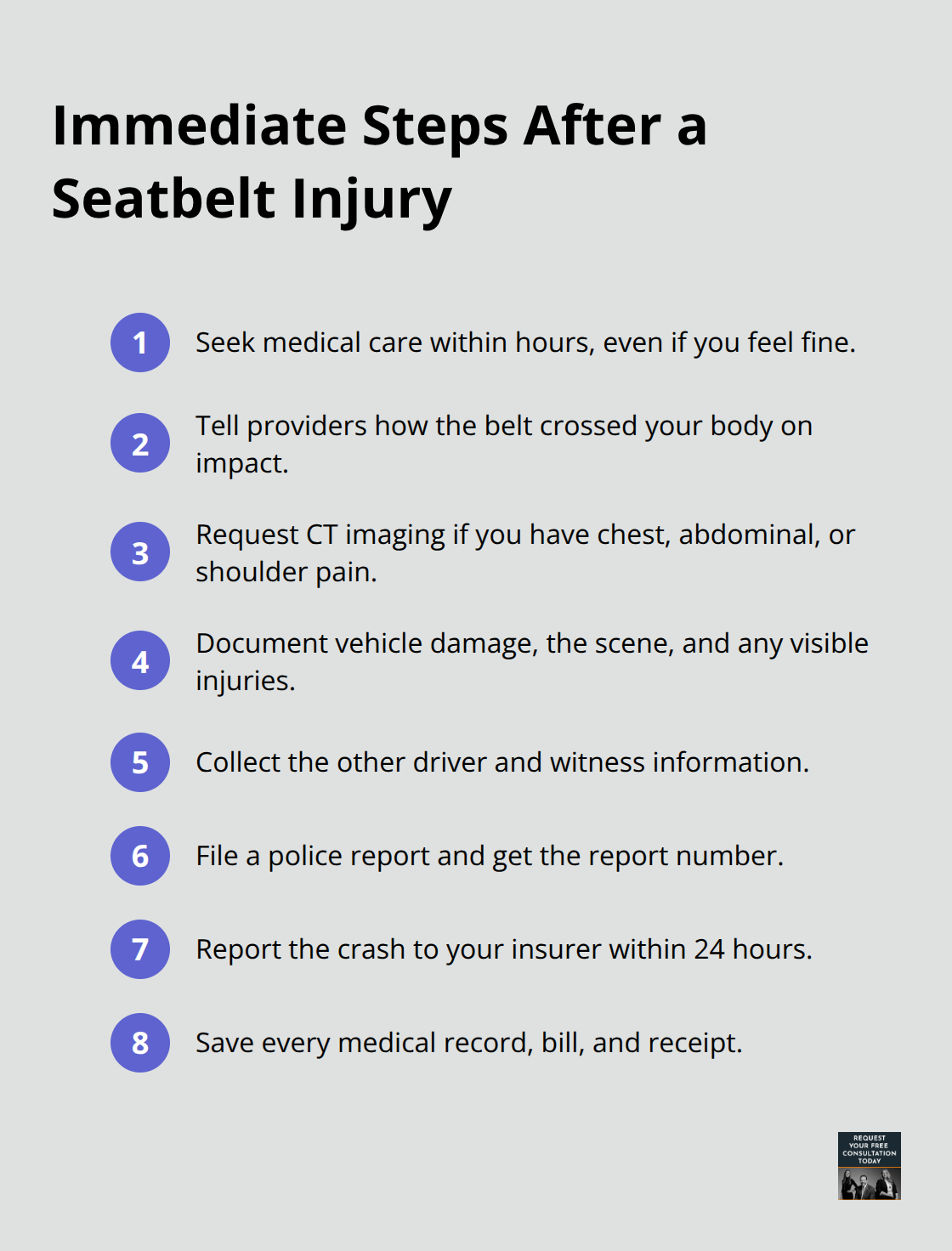
Write down the exact time of the crash, the vehicle speed if you know it, and whether airbags deployed, because this information guides your doctor’s assessment and becomes critical evidence later.
Document the Accident Scene and Your Injuries
Photograph the vehicle damage, the crash scene, the road conditions, and any visible injuries on your body, even if you have no marks (fewer than 5% of seatbelt injury patients show visible belt marks on their skin). Collect the other driver’s name, phone number, address, driver’s license number, vehicle make and model, license plate, and insurance information. Get contact information from any witnesses who saw the crash. File a police report with the California Highway Patrol or local law enforcement; request a Traffic Crash Report number so you can obtain an official copy for your medical and insurance records.
Report to Insurance and Preserve Your Records
Report the accident to your insurance company within 24 hours and provide them with the police report number, medical records, and photographs. Keep every medical receipt, prescription, and bill in a dedicated folder. These documents form the foundation of your claim and demonstrate the full scope of your damages.
Know When to Seek Legal Guidance
If the other driver’s insurance company denies your claim or offers an unreasonably low settlement, contact Schaar & Silva LLP. Our team can evaluate whether your damages are being fairly valued and handle negotiations on your behalf. With our support, you can focus on your recovery while we manage the legal complexities of your situation.
Getting Paid for Your Seatbelt Injuries
Physical Therapy and Recovery Timeline
Recovery from seatbelt injuries requires commitment to physical therapy, which typically starts within days of your injury and continues for weeks or months depending on severity. Rib fractures usually heal in 6 to 8 weeks with rest and pain management, but soft-tissue injuries like whiplash can persist for months or longer. Your doctor will recommend specific exercises to restore chest mobility and shoulder function-follow these recommendations precisely because delayed or incomplete therapy leads to chronic pain and reduced mobility. Track every therapy session, every prescription filled, and every medical appointment in a spreadsheet with dates and costs. Insurance companies scrutinize medical records closely, and gaps in treatment can be used against you to minimize your claim. If you experience chest pain, shortness of breath, or abdominal tenderness that worsens or returns after initial treatment, return to your doctor immediately and document the visit. Many seatbelt injuries worsen 24 to 72 hours after the crash or even weeks later, so ongoing medical attention protects both your health and your legal claim.
Understanding Your Medical Bills
Medical bills from seatbelt injuries mount quickly. Emergency room visits cost between $1,500 and $3,000 depending on imaging and lab work. CT scans alone run $2,000 to $5,000, and if you require surgery for internal injuries, hospital costs can exceed $50,000.
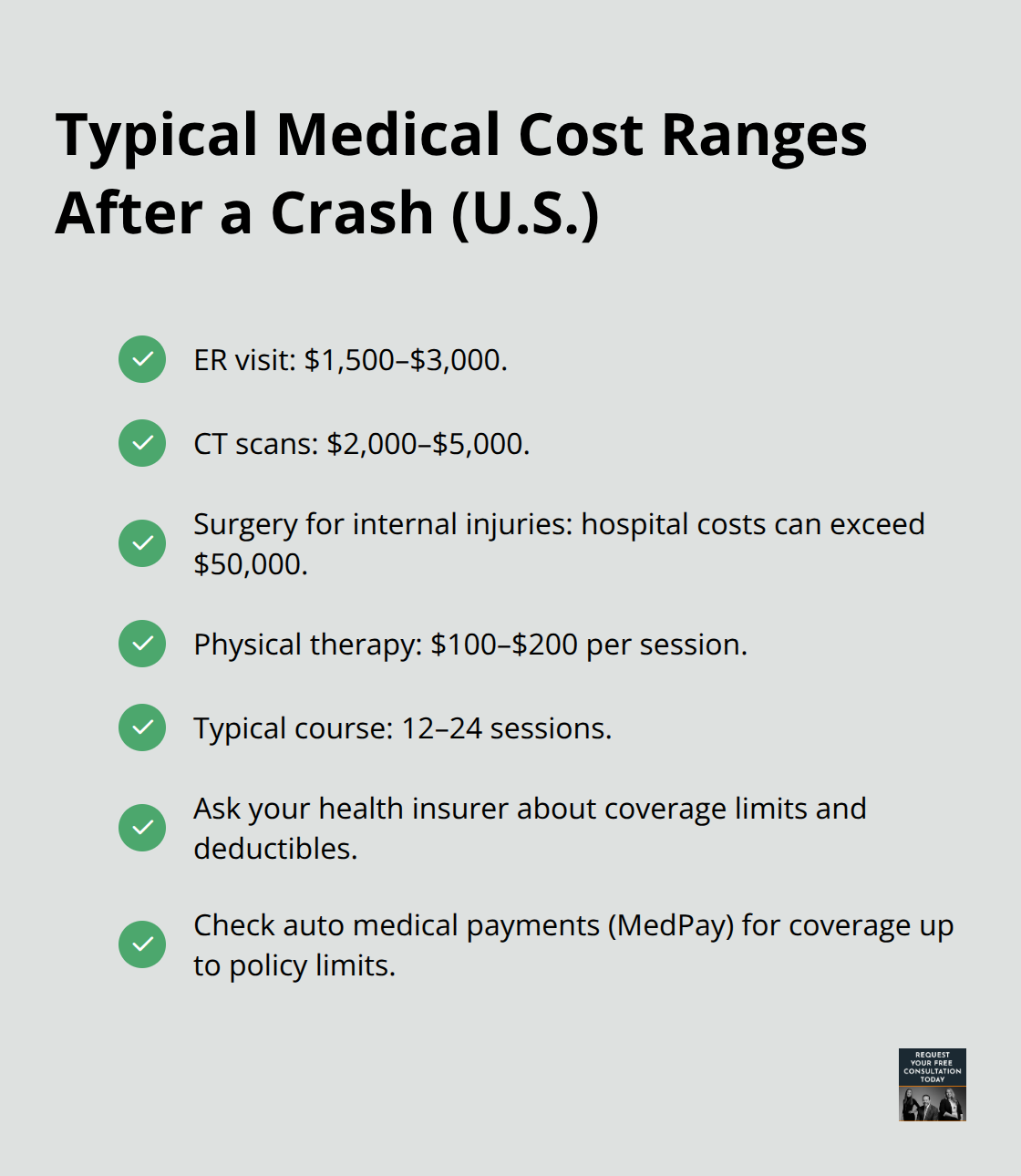
Physical therapy sessions typically cost $100 to $200 per visit, with most patients needing 12 to 24 sessions. Before paying these bills yourself, contact your health insurance company and ask about coverage limits and deductibles. Then notify your auto insurance company’s claims adjuster that you have medical bills pending and request information about medical payment coverage, which may cover costs up to your policy limit regardless of fault.
Filing Your Insurance Claim
When filing a claim with your auto insurance company, provide the police report number, all medical records and bills, photographs of vehicle damage, and a written summary of how the seatbelt crossed your body during impact. If the insurance company’s initial offer falls short of your actual expenses and lost wages, do not accept it immediately. We at Schaar & Silva LLP can help direct you to medical lien services that facilitate payment of your bills until your case is resolved, allowing you to focus on recovery without financial pressure. Our team can also evaluate whether your damages are being fairly valued and handle negotiations with the insurance company on your behalf.
Final Thoughts
Seatbelt injuries after a crash range from visible chest contusions and rib fractures to hidden internal bleeding and organ damage that develops over days or weeks. Recovery requires immediate medical evaluation, thorough documentation, and consistent physical therapy to restore your strength and mobility. The financial burden of treatment-emergency care, imaging, surgery, and rehabilitation-often exceeds what victims expect, which is why understanding your insurance coverage and filing a complete claim matters from the start.
Insurance companies frequently undervalue damages or deny claims outright when victims lack proper documentation. An injury from seatbelt in crash can result in thousands of dollars in medical bills, lost wages, and ongoing pain that deserves fair compensation. We at Schaar & Silva LLP work with accident victims throughout Santa Cruz County to evaluate whether your settlement offer reflects your actual losses and to negotiate with insurance companies on your behalf.
Gather your medical records, police report, and photographs, then contact Schaar & Silva LLP for a free consultation. We handle the legal complexities while you recover, and we only succeed when you receive the compensation you deserve.
