

Car accident body injury claims can feel overwhelming when you’re already dealing with physical pain and recovery. The process involves multiple steps, strict deadlines, and complex insurance negotiations.
We at Schaar & Silva LLP understand that Santa Cruz County residents need clear guidance during this difficult time. This guide walks you through each step to protect your rights and maximize your compensation.
What Injuries Should You Document After Your Car Accident
Car accidents in Santa Cruz County create a wide range of bodily injuries that directly impact your claim value. Whiplash affects 83% of rear-end collision victims according to the National Highway Traffic Safety Administration, while traumatic brain injuries occur in 14% of all motor vehicle crashes.

Soft tissue injuries like sprains and strains represent the most common claims, but insurance companies consistently undervalue these injuries because they don’t appear clearly on X-rays. Broken bones, spinal cord injuries, and internal organ damage create higher settlement values because medical tests provide concrete evidence of harm.
Insurance Companies Use Formulas Against You
Insurance adjusters multiply your medical bills by a factor between 1.5 and 5 to calculate pain and suffering damages, but they start with the lowest multiplier possible. They scrutinize every medical visit and question treatment necessity and duration. Pre-existing conditions become their favorite weapon to reduce payouts, even when your accident clearly worsened existing problems. The adjuster’s first offer typically represents 10-20% of your claim’s true value because they expect negotiation.
California’s Two-Year Deadline Changes Everything
California Code of Civil Procedure section 335.1 gives you exactly two years from your accident date to file a personal injury lawsuit, but delays hurt your case strength. Medical evidence becomes stale, witnesses forget details, and insurance companies assume you weren’t seriously injured if you wait. You should file your insurance claim within 30 days to maximize your leverage because fresh documentation supports your injuries. The discovery rule applies only when injuries manifest later (like with traumatic brain injuries that develop symptoms weeks after impact).
Document Every Medical Visit and Treatment
Your medical records form the foundation of your injury claim, so you must document every doctor visit, physical therapy session, and prescription medication. Insurance companies will request complete medical records from the past five years to search for pre-existing conditions. They often argue that current symptoms existed before your accident, which reduces their liability. Keep detailed notes about your pain levels, mobility limitations, and how injuries affect your daily activities.
The next step involves gathering evidence at the accident scene to strengthen your claim beyond just medical documentation.
What Actions Protect Your Injury Claim Right After the Crash
Get Medical Care Within Hours Not Days
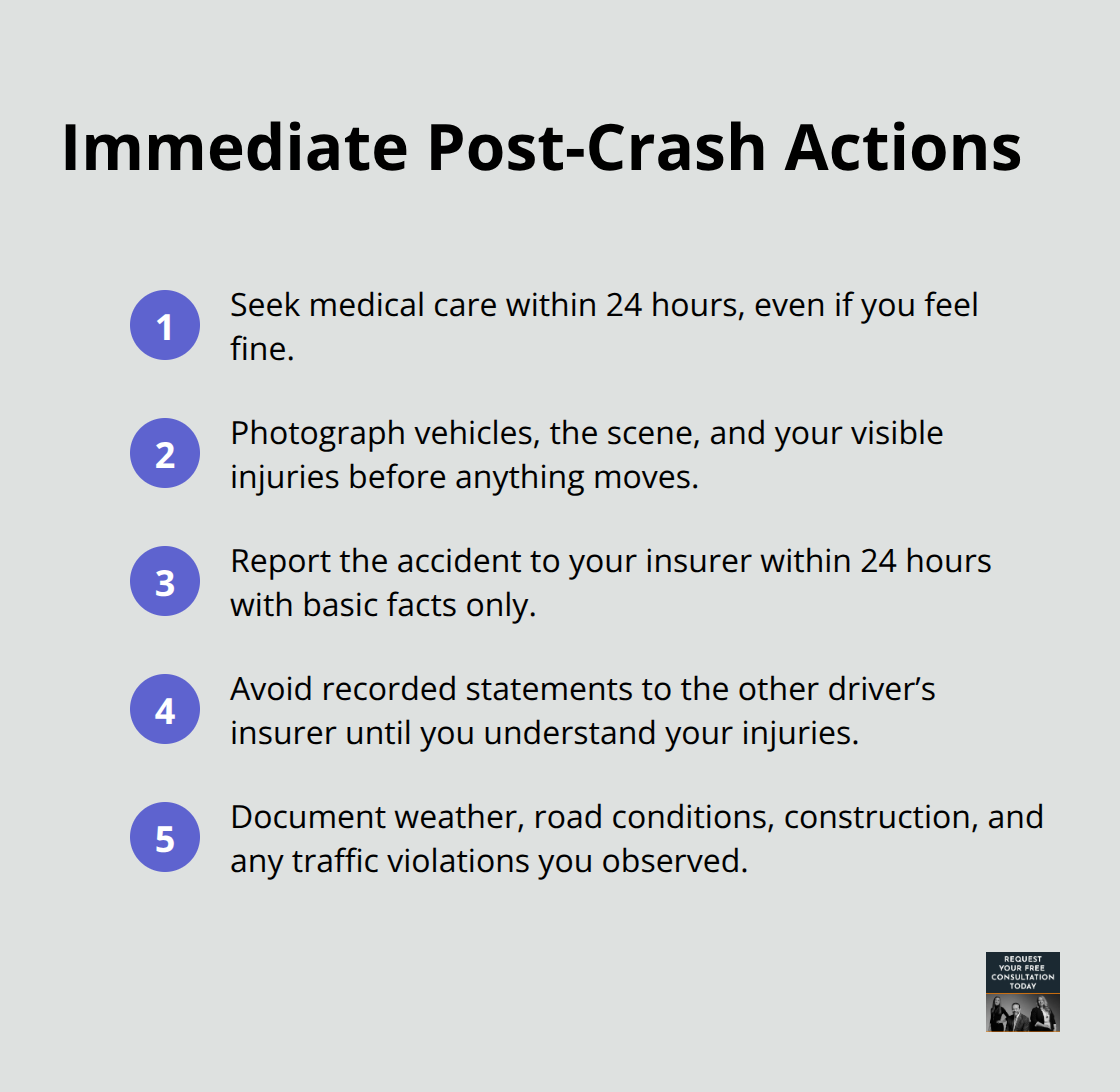
You must seek medical attention within 24 hours of your accident, even if you feel fine. The Insurance Research Council found that delayed medical treatment reduces settlement values by 40% because insurers argue your injuries weren’t serious. Adrenaline masks pain for up to 72 hours after impact, so symptoms like headaches, neck stiffness, and back pain often appear days later. Emergency room visits create the strongest medical documentation because doctors record your injuries immediately after the crash. Walk-in clinics and urgent care centers also work, but avoid waiting until Monday if your accident happens on Friday.
Insurance adjusters specifically look for gaps in treatment to deny or reduce claims.
Photograph Everything Before Vehicles Move
Take photos of all vehicle damage from multiple angles, the accident scene, skid marks, traffic signals, and street signs before anyone moves their car. The Federal Highway Administration reports that 38% of accident scenes get cleared within 30 minutes, so you have a narrow window to capture evidence. Use your phone to photograph your injuries, even minor cuts and bruises that seem insignificant. Get contact information from all drivers, passengers, and witnesses because police reports often miss important details. Write down the other driver’s insurance company and policy number immediately because some drivers provide fake information. Document everything including weather conditions, road construction, and any traffic violations you observed.
Call Insurance Companies Within 24 Hours
Contact your insurance company within 24 hours to report the accident, but limit your statement to basic facts about time, location, and vehicles involved. Insurance companies in California must acknowledge your claim within 15 days and begin investigation within 40 days (according to state regulations). Never admit fault or speculate about causes because adjusters record every conversation. The other driver’s insurance company will contact you quickly, but you’re not required to give them a recorded statement. Stick to factual information about the accident sequence and avoid discussing your injuries until you understand their full extent.
Your immediate actions after the crash set the foundation for your claim, but the real work begins when you start building the strongest possible case for maximum compensation.
How Do You Build the Strongest Financial Case
Track Every Medical Expense and Treatment Session
Your medical documentation determines 70% of your settlement value, so you must maintain meticulous records of every healthcare interaction. The Journal of the American Medical Association found that patients who keep detailed treatment logs receive settlements 45% higher than those with incomplete records. Create a dedicated folder for all medical bills, prescription receipts, physical therapy invoices, and diagnostic test results.

Insurance companies will demand proof of medical necessity for every treatment, so request copies of all doctor notes that explain why each procedure was required. Track your out-of-pocket expenses (parking fees, gas money for medical appointments, and over-the-counter medications) because these costs add up to thousands of dollars over months of treatment.
Calculate Your Lost Income with Pay Stubs and Tax Returns
Lost wages represent the easiest damages to prove because you have concrete documentation of your income history. The Bureau of Labor Statistics reports that car accident victims lose an average of 6.2 weeks of work, but many Santa Cruz County residents underestimate their true lost income capacity. Gather your last three pay stubs before the accident and your previous two years of tax returns to establish your baseline income. Include overtime pay, bonuses, and commission income that you would have earned during your recovery period. If you’re self-employed, compile client contracts, invoices, and bank statements that show your typical monthly income. Factor in lost vacation days, sick leave, and benefits like health insurance contributions that your employer would have covered. Future income capacity becomes relevant if your injuries prevent you from returning to your previous job or limit your ability to work overtime.
Document Pain and Suffering Through Daily Activity Records
Pain and suffering damages often exceed your medical bills and lost wages combined, but insurance companies challenge these subjective claims aggressively. The Insurance Information Institute found that pain and suffering awards average 2.9 times medical expenses in California, but only when plaintiffs provide detailed documentation. Keep a daily journal that describes your pain levels on a scale of 1-10, activities you can no longer perform, and how injuries affect your relationships and mental health. Photograph visible injuries like bruises and scars as they heal because these images provide powerful evidence months later. Track sleep disruption, inability to exercise, missed family events, and household tasks your spouse must now handle because of your limitations because proper documentation becomes your strongest protection when demonstrating the true scope of your damages.
Final Thoughts
Time works against you after a car accident body injury. California’s two-year statute of limitations means you lose claim strength when you wait even six months. Insurance companies track how quickly you act because delayed medical treatment and late claim reports suggest your injuries weren’t serious.
You need legal representation when your medical bills exceed $10,000, when you’ve missed more than two weeks of work, or when insurance companies deny obvious claims. We at Schaar & Silva LLP handle the legal complexities while you focus on recovery. Our team assists with medical bill management, property damage evaluation, and connects you with psychological support when emotional trauma affects your recovery (which happens in 30% of serious car accidents according to the American Psychological Association).
The path forward requires you to balance your physical recovery with protection of your financial future. Document everything, follow your treatment plan consistently, and don’t accept the first settlement offer. Contact our legal team to discuss your case and learn how we can help maximize your recovery while you heal.
