

After a car accident in Santa Cruz County, understanding the car accident injury claim time limit can make the difference between receiving compensation and losing your right to recover damages. California law sets strict deadlines that vary depending on your specific situation.
We at Schaar & Silva LLP see too many accident victims miss these critical deadlines simply because they didn’t know the rules. Acting quickly protects your legal rights and strengthens your case.
What Are California’s Filing Deadlines for Car Accident Claims?
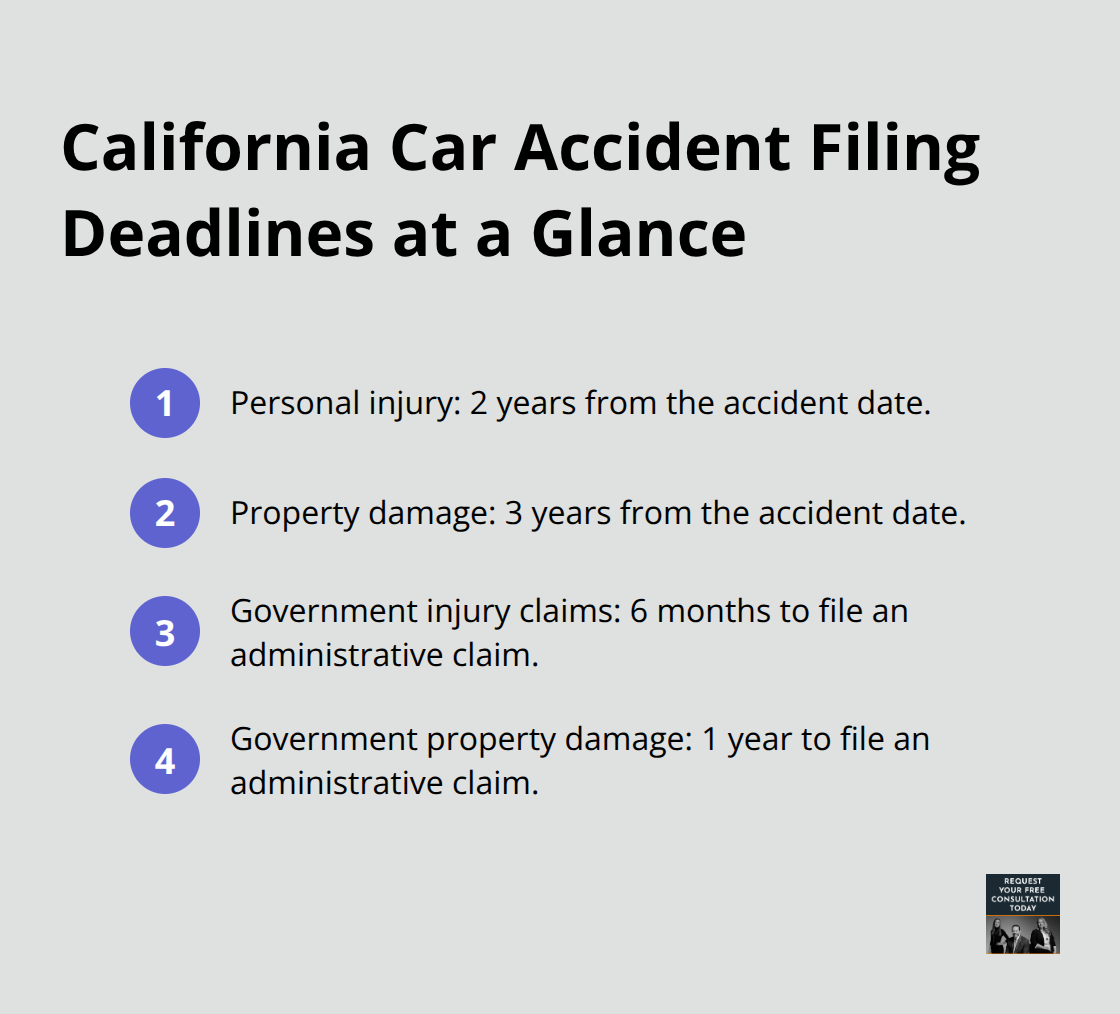
Personal Injury Claims Have a Two-Year Window
California Code of Civil Procedure establishes a firm two-year deadline for personal injury lawsuits after car accidents. This timeline starts the day your accident occurs, not when you receive medical treatment or learn the full extent of your injuries. The California Office of Traffic Safety reports over 250,000 traffic collision injuries annually, yet studies show 40% of accident victims fail to file claims due to missed deadlines.
This deadline creates a permanent bar from court compensation, regardless of injury severity or financial impact. The two-year rule applies strictly across all personal injury cases (including soft tissue injuries, broken bones, and traumatic brain injuries).
Property Damage and Government Claims Follow Different Rules
Property damage claims receive a more generous three-year period under California law. However, accidents that involve government entities operate under much stricter timelines. You have just six months to file injury claims against government agencies and only one year for property damage cases with government vehicles.
California Highway Patrol data shows that many victims miss these shortened deadlines because they assume standard rules apply. Government claim deadlines start from the accident date, and these entities rarely grant extensions. The compressed timeframe makes immediate action absolutely necessary when city buses, county vehicles, or state highway maintenance trucks cause your accident.
Discovery Rule Exceptions Apply in Limited Cases
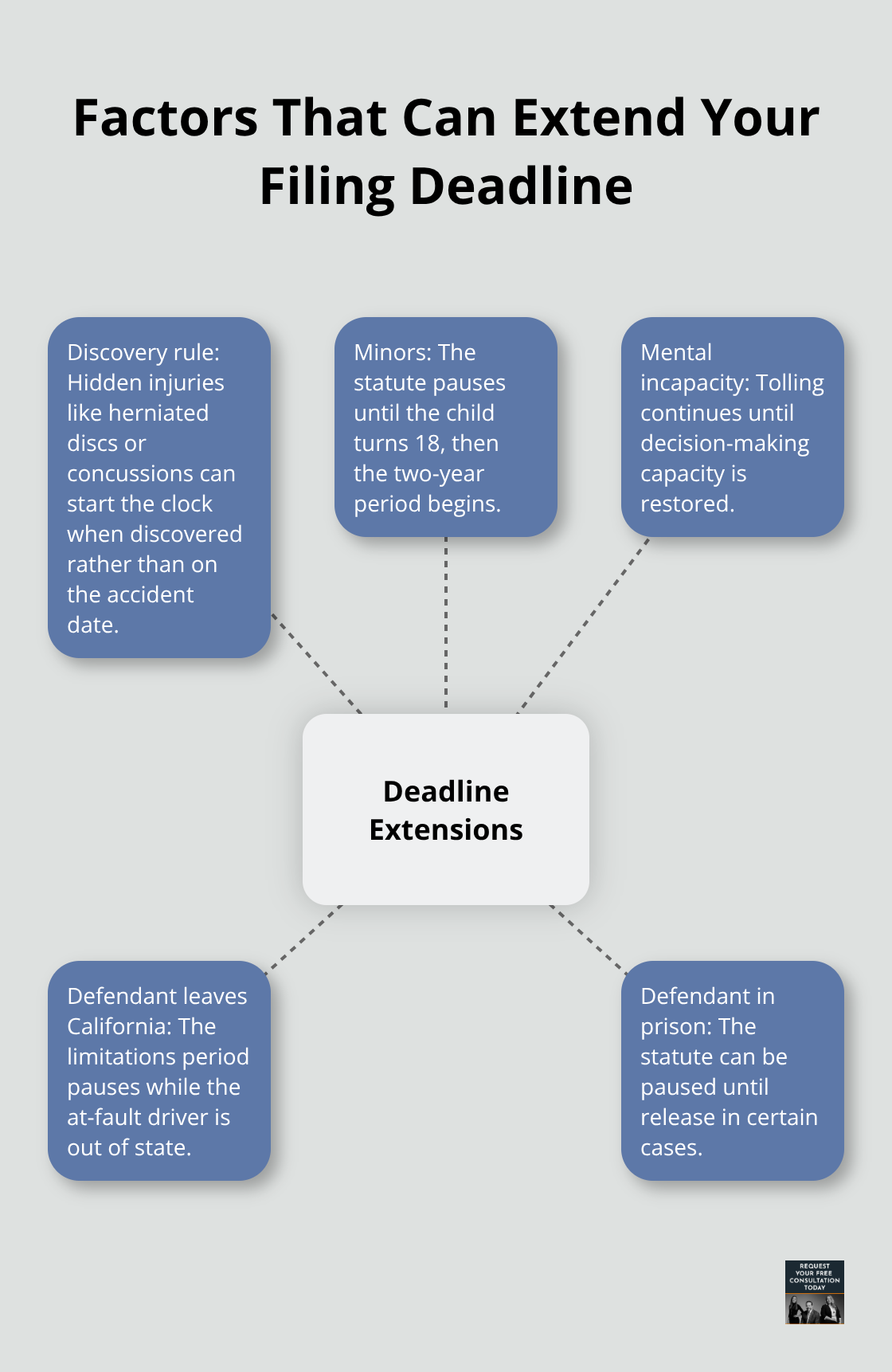
The discovery rule can extend deadlines when injuries don’t appear immediately after your accident. Herniated discs and concussions often take days or weeks to show symptoms, potentially starting the two-year clock from when you discover the injury rather than the accident date.
Medical documentation from emergency room visits within 72 hours carries significantly more weight with insurance companies than delayed treatment. California courts strictly interpret discovery rule applications and require clear medical evidence that injuries were genuinely undetectable at the accident time.
These strict deadlines make it essential to understand what factors might affect your specific case timeline.
What Circumstances Can Extend Your Filing Deadline?
Several specific circumstances can alter the standard two-year deadline for car accident injury claims in California. The discovery rule applies when medical conditions remain genuinely hidden after your accident. Soft tissue injuries like whiplash often don’t show symptoms until 24 to 72 hours after collision, and herniated discs can take weeks to cause noticeable pain.
California courts require clear medical documentation that proves the injury was undetectable at the accident time. Emergency room visits within the first 72 hours carry substantially more weight than delayed medical treatment, as insurance adjusters typically deny claims when treatment begins more than 72 hours after the accident.
When Age and Mental Capacity Affect Deadlines
Minors who are involved in car accidents receive extended protection under California law. The statute of limitations remains paused until the child turns 18, after which the standard two-year period begins. Mental incapacity also tolls the deadline until the injured person recovers their decision-making abilities.
These protections prevent unfair deadline losses when victims cannot reasonably file claims themselves. Parents or guardians can still take immediate action to preserve evidence and protect the minor’s future legal rights.
How Defendant Location Changes Your Timeline
The statute of limitations pauses when the at-fault driver leaves California after your accident. The two-year clock stops until they return to the state (which gives you additional time to pursue your claim). However, tracking defendant whereabouts requires immediate action and professional legal assistance.
Defendants in prison also have their statute paused until release, though this rarely affects typical car accident cases. These location-based extensions protect your rights when the responsible party becomes unreachable through normal legal channels.
Understanding these exceptions helps you recognize when extended deadlines might apply, but immediate action after your accident remains the best strategy to protect your legal rights and build the strongest possible case. Filing an injury claim requires proper documentation and timely action to maximize your compensation potential.
What Actions Should You Take Right After Your Accident
The first 30 minutes after a car accident can significantly affect the strength of your injury claim, with California Highway Patrol data showing that 87% of successful claims have comprehensive scene documentation. You must take at least 20 photos from various angles, including vehicle damage and relevant road signs, as California courts accept smartphone photos as valid evidence. Record a brief video of the accident scene with your narration to provide timestamped evidence that supports your claim, while you collect information from all parties involved (names, insurance details, and driver’s license numbers) to build the foundation for a solid case.
Document Everything at the Scene
Comprehensive scene documentation within the first hour of an accident significantly increases the likelihood of a successful injury claim. Record insurance information and witness statements at the accident scene to strengthen your claims, because witness memories fade after 30 days and immediate documentation becomes essential for a strong case.
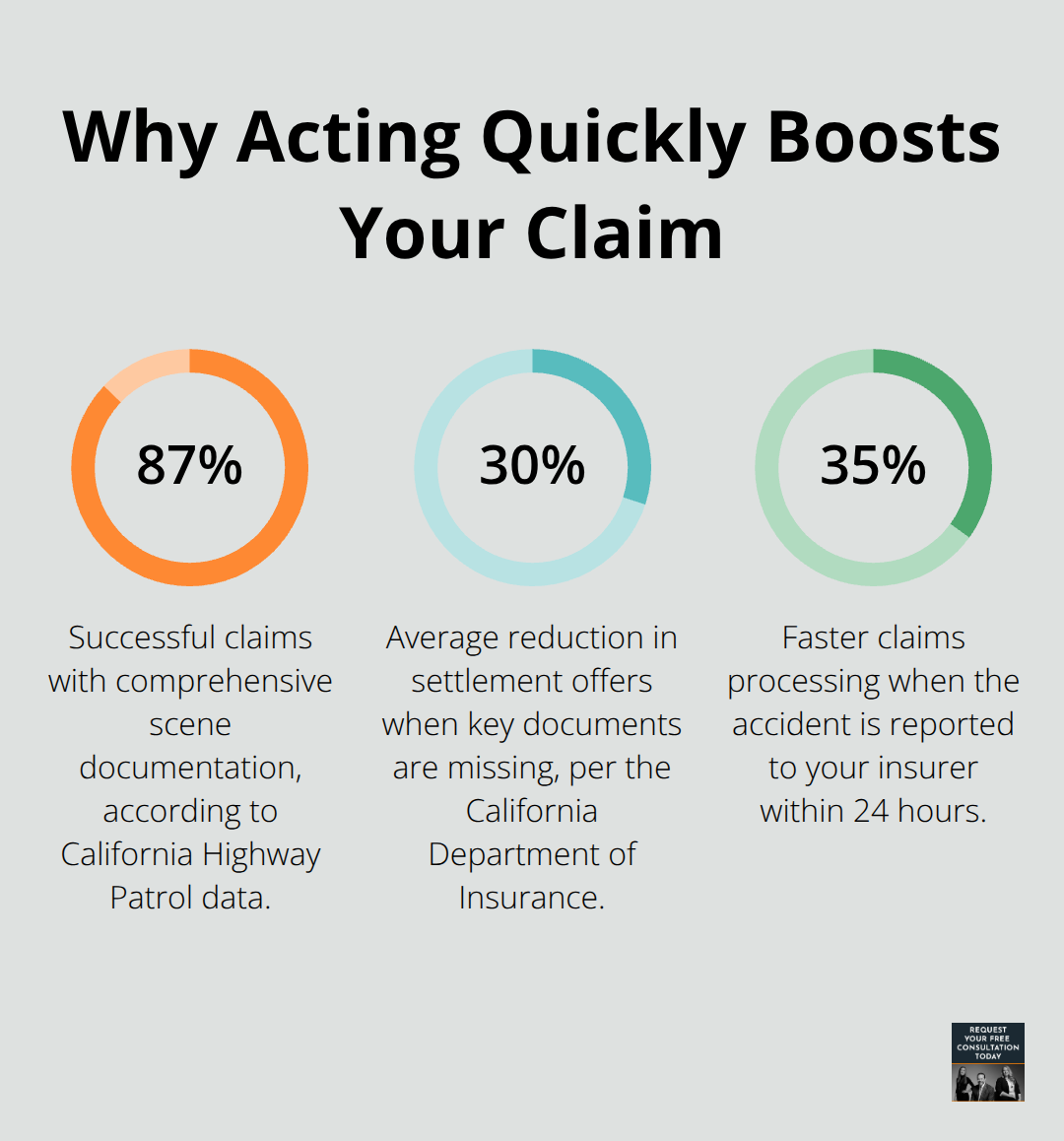
Organize documentation including police reports and medical records, as missing documents can reduce settlement offers by an average of 30% per the California Department of Insurance. Calculate all accident-related expenses, including mileage to medical appointments at the IRS rate of 65.5 cents per mile, to help in accurately assess damages.
Get Medical Care Within 24 Hours
Medical documentation from the first 24 hours is critical, as insurance adjusters typically deny claims with treatment that begins later than 72 hours after the accident. Adrenaline can mask injury symptoms for up to 72 hours, which makes immediate medical attention essential even when you feel fine. Emergency room visits within 72 hours of an accident carry more weight in claims than delayed treatment, and gaps in medical treatment longer than 30 days can weaken a claim as insurers argue the injuries weren’t serious or accident-related.
Contact Your Insurance and Legal Representation
Report your accident to your insurance company within 24 hours to achieve a 35% quicker claims process, but avoid recorded statements until you consult an attorney. Hire a personal injury attorney within the first week to help preserve evidence and prevent delays related to insurance claims, while delays or hesitations in claim submission can lead to permanent loss of rights to compensation under California law.
Final Thoughts
Time works against car accident victims in Santa Cruz County. The car accident injury claim time limit creates a narrow window that closes permanently once deadlines pass. California’s strict two-year rule for personal injury claims and six-month deadline for government entity cases leave no room for delays or second chances.
Early legal consultation provides immediate advantages that strengthen your case from day one. Attorneys can preserve critical evidence, handle insurance company tactics, and protect you from statements that damage your claim. The first week after your accident determines whether you build a strong foundation or face uphill battles later.
We at Schaar & Silva LLP understand the urgency Santa Cruz County accident victims face (and the pressure insurance companies create through delay tactics). Our team handles the legal complexities while you focus on recovery. Contact Schaar & Silva LLP today to protect your rights and maximize your compensation.
