
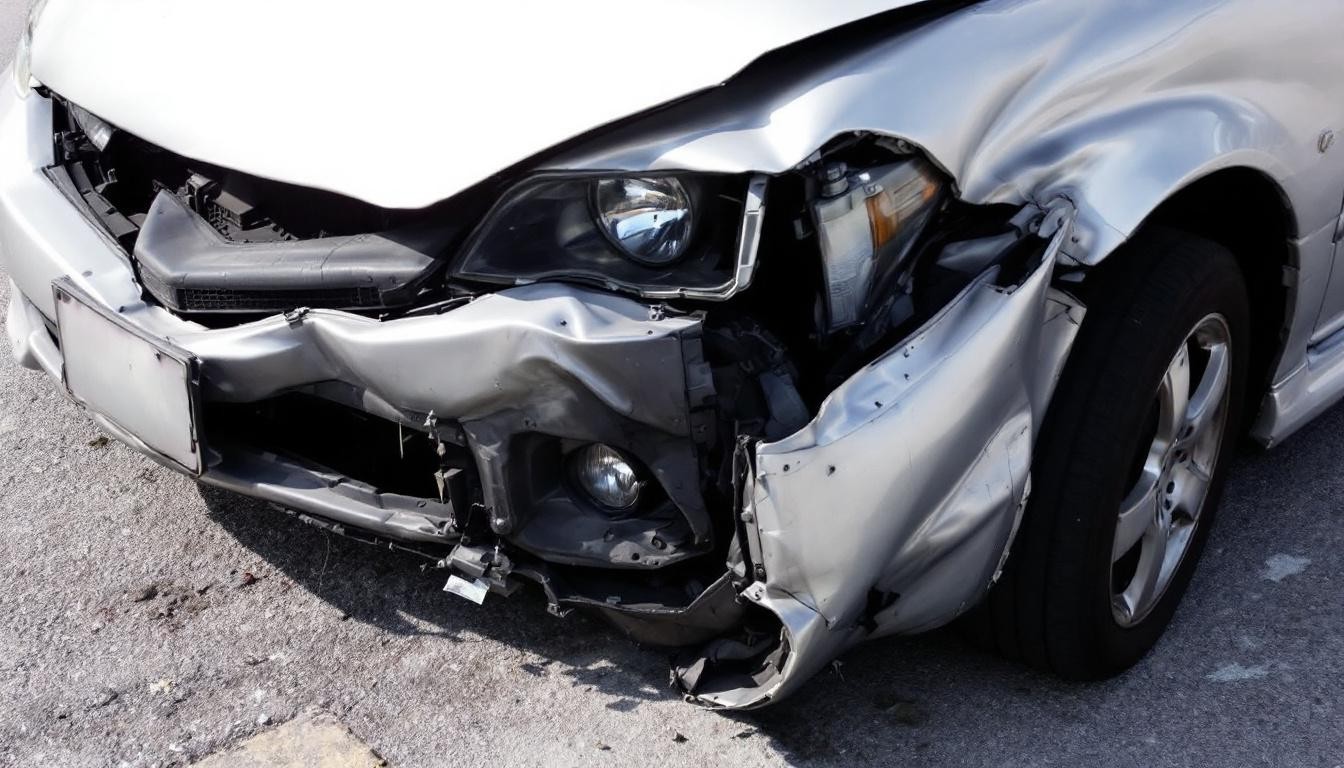
Car accidents happen without warning, leaving victims confused about their legal options. Many people don’t realize they have rights to compensation for medical bills, lost wages, and pain.
We at Schaar & Silva LLP see how insurance companies often minimize car accident personal injury claims. Understanding your rights and taking the right steps immediately can make the difference between a fair settlement and financial hardship.
What Should You Do Immediately After a Car Accident
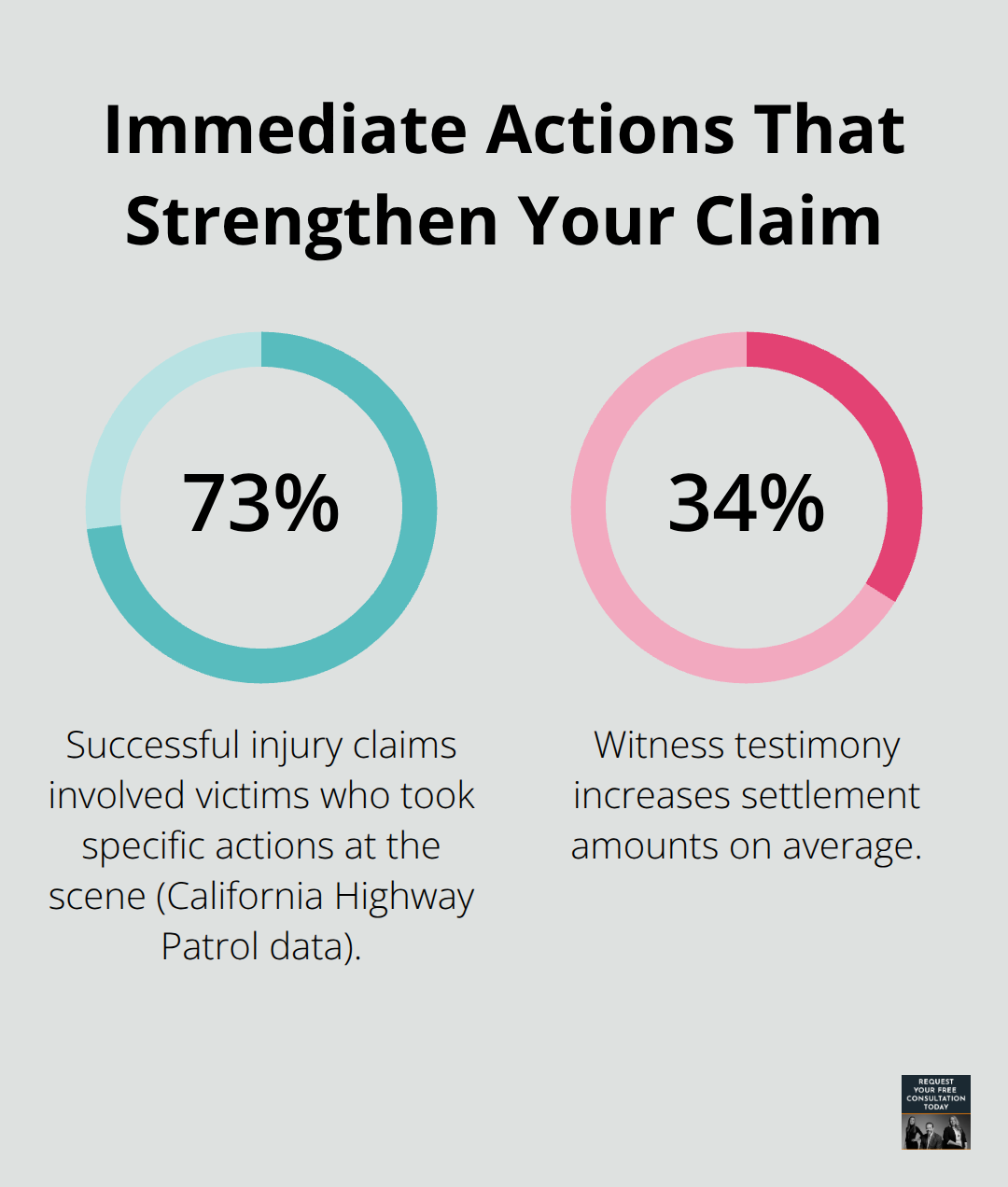
The first 30 minutes after a car accident determine the strength of your personal injury claim. California Highway Patrol data shows that 73% of successful injury claims involve victims who took specific actions at the scene. Your adrenaline will mask pain, but injuries like whiplash and concussion symptoms appear 24-48 hours later.
Seek Medical Attention Even for Minor Injuries
Get medical attention immediately, even if you feel fine. Emergency room visits create medical records that insurance companies cannot dispute later. Many accident victims delay treatment and later struggle to prove their injuries connect to the crash. Medical professionals can identify internal injuries that aren’t immediately visible (like soft tissue damage or mild traumatic brain injuries).
Document Everything Before Vehicles Move
Take photos from multiple angles that show vehicle damage, skid marks, traffic signals, and road conditions. Capture license plates, driver’s licenses, and insurance cards. Record witness contact information – studies show witness testimony increases settlement amounts by 34% on average. Write down the exact time, weather conditions, and traffic patterns. California Vehicle Code requires accident reports for damages over $1,000, but document everything regardless of apparent damage severity.
Contact Police and Insurance Companies Within Hours
Call 911 even for minor accidents – police reports provide neutral documentation that insurance adjusters rely on heavily. The California DMV requires accident reports within 10 days if injuries occur or property damage exceeds $750. Contact your insurance company within 24 hours, but avoid detailed statements until you understand your injuries fully. Insurance companies have 15 days to contact you after you file a claim.
These immediate actions create the foundation for your personal injury claim, but understanding what compensation you can recover requires knowledge of California’s specific laws and your legal rights.
What Compensation Can You Claim After Your Accident
California law provides comprehensive compensation for car accident victims through three main categories of damages. Economic damages include all medical expenses, lost wages, and property damage with no legal limits on recovery amounts. The California Department of Insurance reports that average medical costs for car accident injuries range from $18,000 for minor injuries to $150,000 for severe trauma cases.
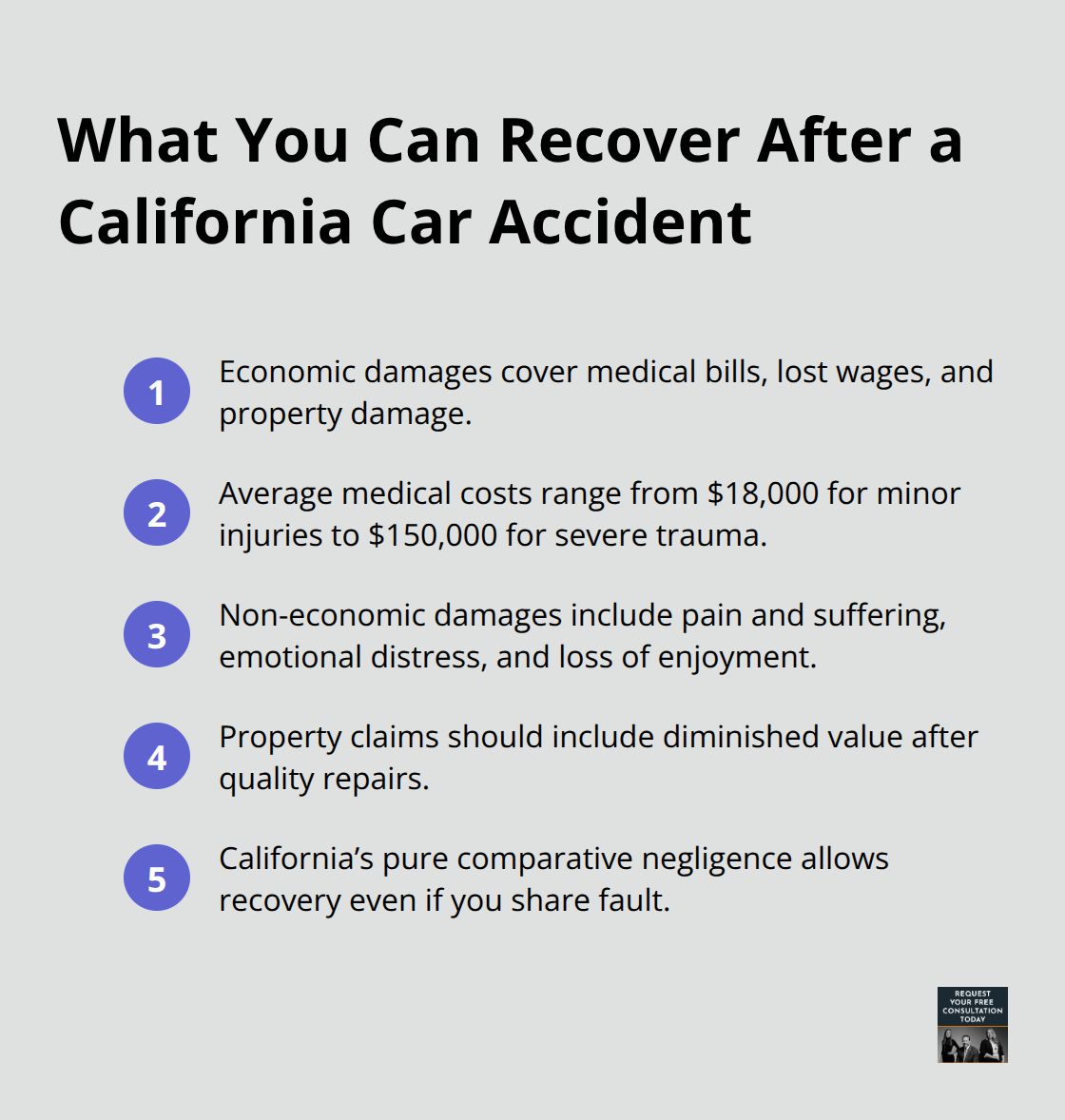
Non-economic damages cover pain and suffering, emotional distress, and loss of life enjoyment. Property damage claims must include diminished value – your vehicle loses 10-25% of its value even after perfect repairs according to Kelley Blue Book data.
California’s Comparative Negligence System Works in Your Favor
California follows pure comparative negligence, which means you can recover damages even if you share partial fault. If you bear 30% responsibility for the accident, you still collect 70% of total damages. Insurance companies exploit this law when they inflate your fault percentage to reduce payouts.
California Civil Code Section 1714 requires courts to determine fault percentages based on actual evidence, not insurance company opinions. The two-year statute of limitations for personal injury claims starts from your accident date, but late-discovered injuries can extend this deadline.
Maximum Recovery Requires Understanding California’s Damage Caps
California places no caps on economic or non-economic damages in car accident cases, unlike medical malpractice claims. This means your pain and suffering compensation depends entirely on injury severity and case presentation quality.
Insurance companies settle 95% of personal injury claims before trial, but court verdicts average 3-4 times higher than initial settlement offers according to California Department of Insurance statistics. Uninsured motorist coverage becomes critical since 16.6% of California drivers lack insurance (based on Insurance Research Council data).
Property Damage Claims Beyond Vehicle Repairs
Property damage extends far beyond repair costs. California law allows recovery for rental car expenses, towing fees, and storage costs. You can choose any repair shop despite insurance company recommendations for preferred providers.
Total loss situations require careful attention to actual cash value calculations versus outstanding loan balances. Gap insurance becomes vital when you owe more than your vehicle’s current market value.
However, insurance companies often use aggressive tactics to minimize these legitimate claims, which makes understanding their strategies essential for protecting your financial recovery.
How Do You Navigate Insurance Companies and Legal Decisions
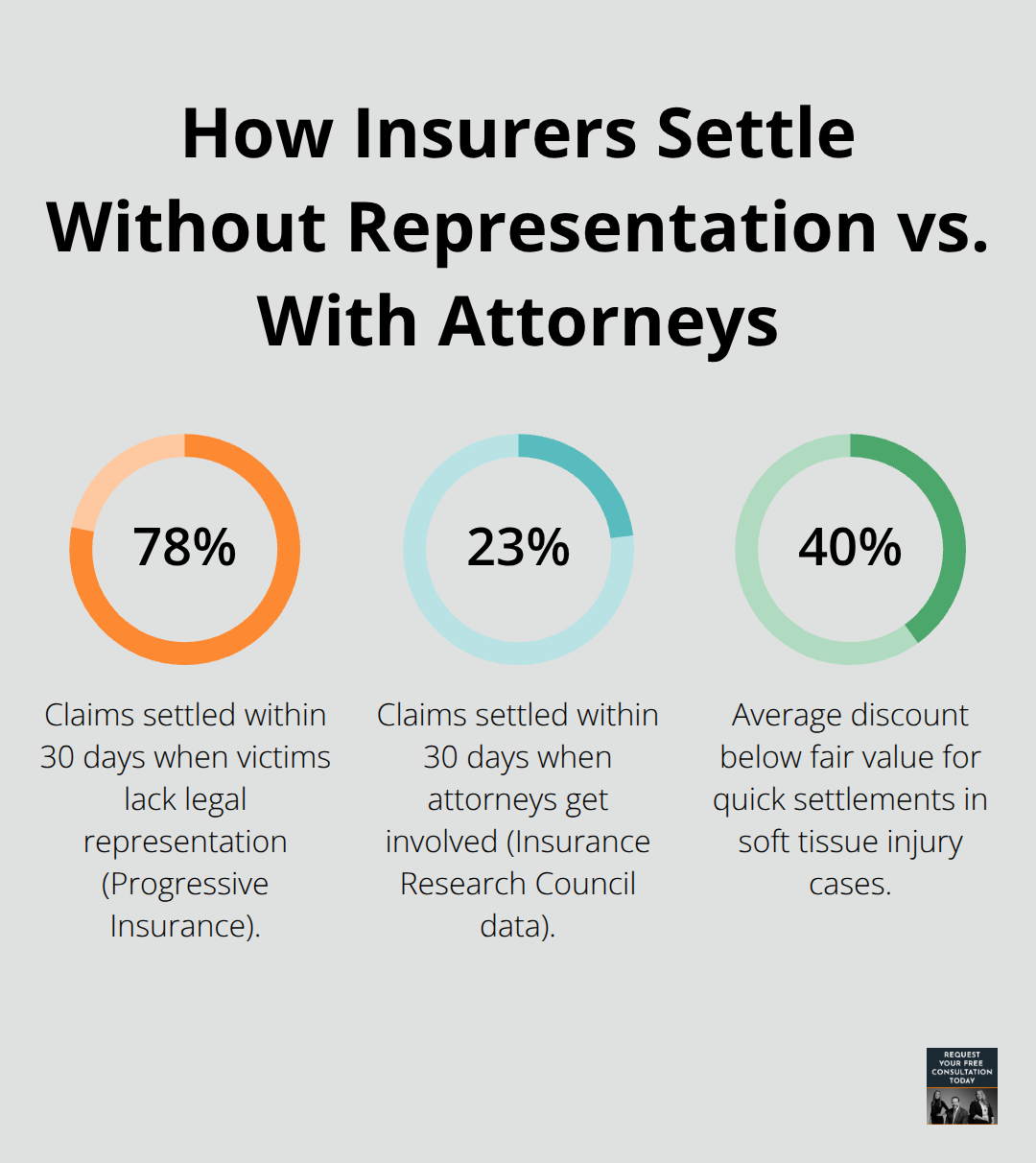
Insurance adjusters receive bonuses when they close claims below predetermined amounts, which creates inherent conflicts with your recovery goals. State Farm’s internal training documents reveal adjusters target 15-20% reductions from initial settlement calculations through delay tactics and fault inflation. Progressive Insurance settles 78% of claims within the first 30 days when victims lack legal representation, but this percentage drops to 23% when attorneys get involved (according to Insurance Research Council data).
Insurance Company Settlement Tactics That Cost You Money
Adjusters request recorded statements within 48 hours of your accident. They hope to capture inconsistencies before you understand your injury extent. They offer quick settlements that average 40% below fair value for cases with soft tissue injuries. The delay-and-deny strategy involves excessive documentation requests, multiple medical examinations, and treatment necessity questions.
Allstate’s computer program Colossus automatically reduces settlement offers based on your attorney’s historical acceptance rates. This system treats your case as a mathematical equation rather than human suffering.
Attorney Representation Changes Settlement Mathematics Dramatically
Cases with legal representation settle for 300% higher amounts than self-represented claims (Insurance Research Council studies confirm this). Attorneys who operate on contingency fees only collect payment when you receive compensation. This aligns their financial interests with maximum recovery.
The litigation threat forces insurance companies to assign senior adjusters who possess actual settlement authority. Self-represented victims typically deal with entry-level staff who have limited authority to make meaningful offers.
Medical Bill Reduction Creates Additional Recovery Value
Medical providers often reduce bills by 30-50% when attorneys negotiate final settlements. This creates additional recovery value that self-represented victims cannot access. Attorneys understand which medical expenses insurance companies will challenge and which documentation strengthens your claim.
Hospital billing departments maintain different rate structures for attorney-negotiated cases versus individual patient accounts. This institutional knowledge translates directly into higher net recovery amounts for represented clients.
Final Thoughts
Car accident personal injury claims demand immediate action and strategic decisions to protect your financial recovery. The evidence you collect in those first critical hours, your medical documentation timeline, and your approach to insurance negotiations directly impact your settlement amount. California’s comparative negligence laws work in your favor, but only when you present your case effectively.
Insurance companies profit from quick, low settlements with unrepresented victims. Their computer systems automatically reduce offers based on predictable patterns, while their adjusters receive bonuses for payment reductions. The statistics show clear advantages for represented clients – 300% higher settlements and access to medical bill reductions that self-represented victims cannot obtain.
Time works against you in multiple ways. California’s two-year statute of limitations creates hard deadlines, while delayed medical treatment weakens your injury claims (insurance companies use delay tactics specifically because they know most people will accept lower offers as financial pressure mounts). We at Schaar & Silva LLP help Santa Cruz County accident victims navigate these challenges through professional legal guidance that levels the playing field against insurance company tactics.
