
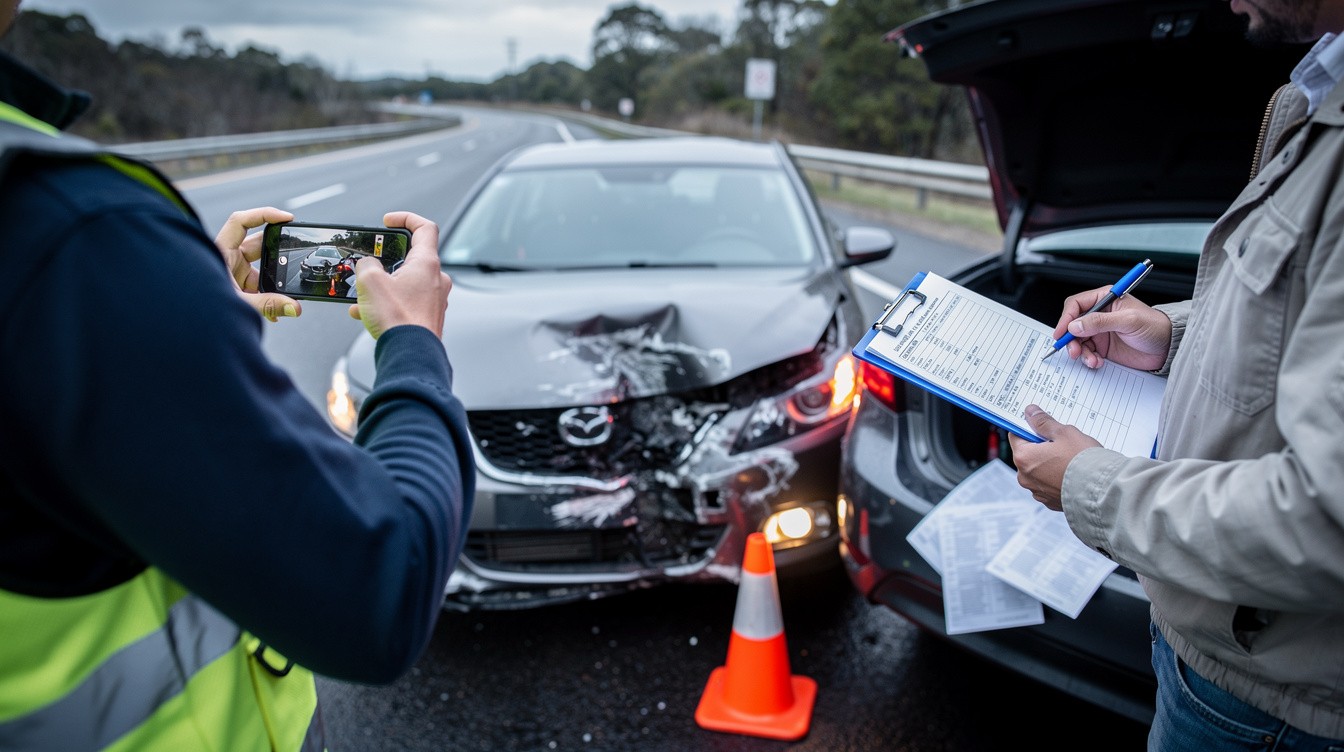
The moments after a car accident are chaotic, but what you do next shapes everything-your recovery, your claim, and your legal protection. A car accident report is your foundation for proving what happened and holding responsible parties accountable.
At Schaar & Silva LLP, we’ve seen how proper documentation makes the difference between a denied claim and fair compensation. This guide walks you through exactly what to document, how to file your report in Santa Cruz County, and why these steps matter for your case.
Why Documentation Protects Your Claim
Documentation Creates an Official Record
Documentation after a car accident isn’t optional-it’s the difference between receiving compensation and fighting an uphill battle. When you file a report, you create an official record that insurers, courts, and opposing parties cannot ignore. Without it, your account of what happened becomes just your word against theirs, and insurance companies exploit that gap constantly. The National Association of Insurance Commissioners reports that claims lacking proper documentation take significantly longer to resolve and often settle for less.
Timing Matters More Than You Think
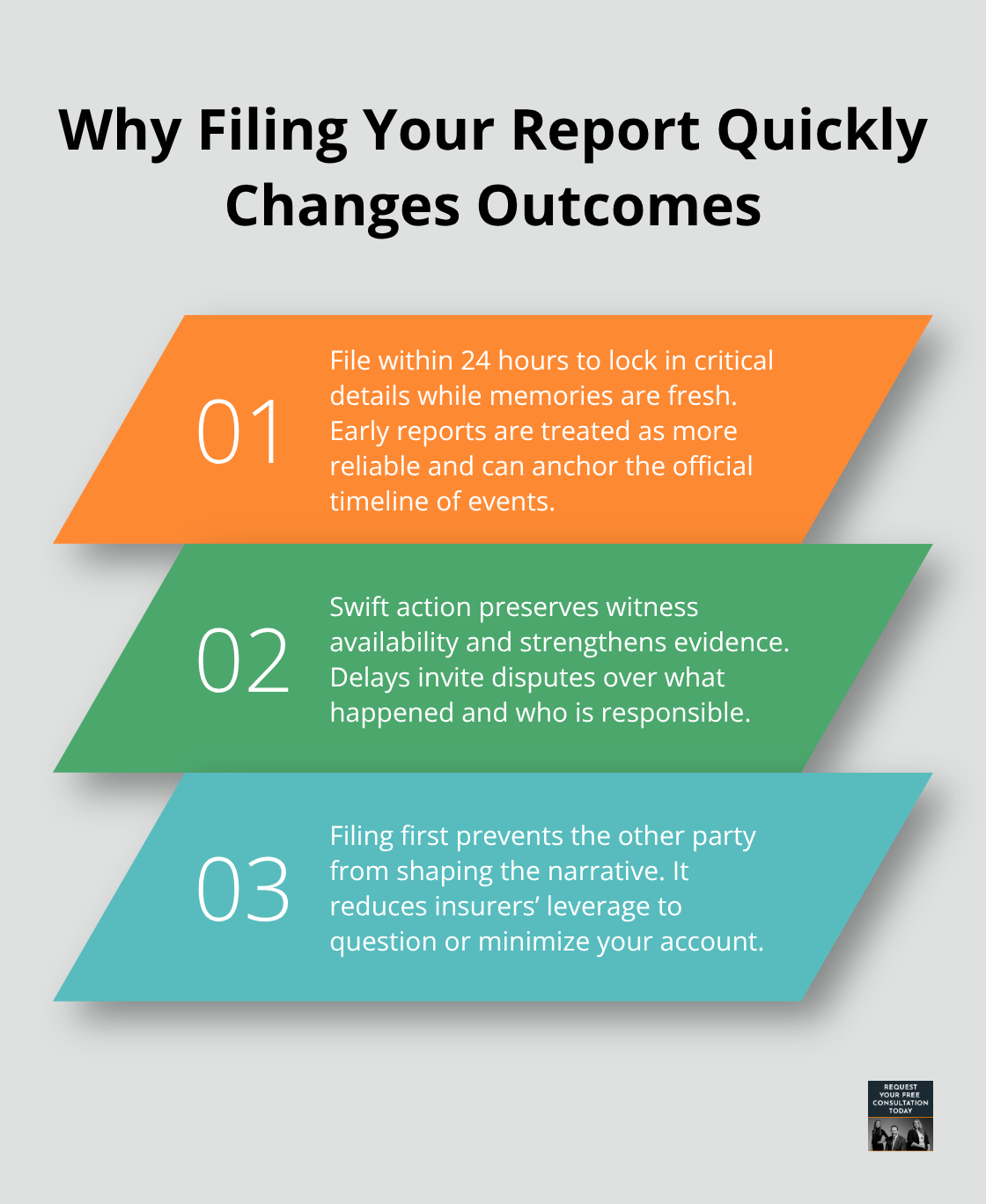
A police report filed within 24 hours carries substantially more weight than one filed weeks later because details fade, memories shift, and witnesses become harder to locate. The moment you’re safe, you need to act. Delaying your report weakens your position and gives the other driver time to construct a different version of events. Insurance companies know this, which is why they pressure accident victims to wait-hoping documentation becomes incomplete or contradictory.
Insurance Companies Require Specific Documentation
Your insurance claim depends entirely on the documentation you provide. Most insurance policies require a police report before they’ll process a claim, and California law mandates that accidents involving injury or property damage over $1,000 be reported to law enforcement. When you file that report, you establish liability and create a timeline that protects you if the other driver later changes their story.
Witness Statements and Evidence Strengthen Your Position
Witness statements matter tremendously-the Insurance Research Council found that corroborating witness testimony increases claim approval rates substantially. Photos and videos that document vehicle damage, road conditions, and scene layout provide irrefutable evidence of impact severity and fault. If you’re dealing with a serious injury claim involving brain or spinal damage, this documentation becomes even more critical because insurers will scrutinize the accident’s force and circumstances to minimize injury payouts. Missing photos or incomplete scene details give them ammunition to argue your injuries weren’t as severe as claimed.
Control the Narrative by Filing First
Filing your report quickly prevents the other party from filing first and controlling the narrative around liability. Once they establish their version of events in an official report, you’re forced to argue against their account rather than presenting your own. The first report filed typically shapes how investigators and insurers view the accident, making speed and accuracy your greatest advantages.
What you include in that report determines whether insurers take your claim seriously or look for reasons to deny it.
What to Document at Your Accident Scene
Collect Driver and Vehicle Information Immediately
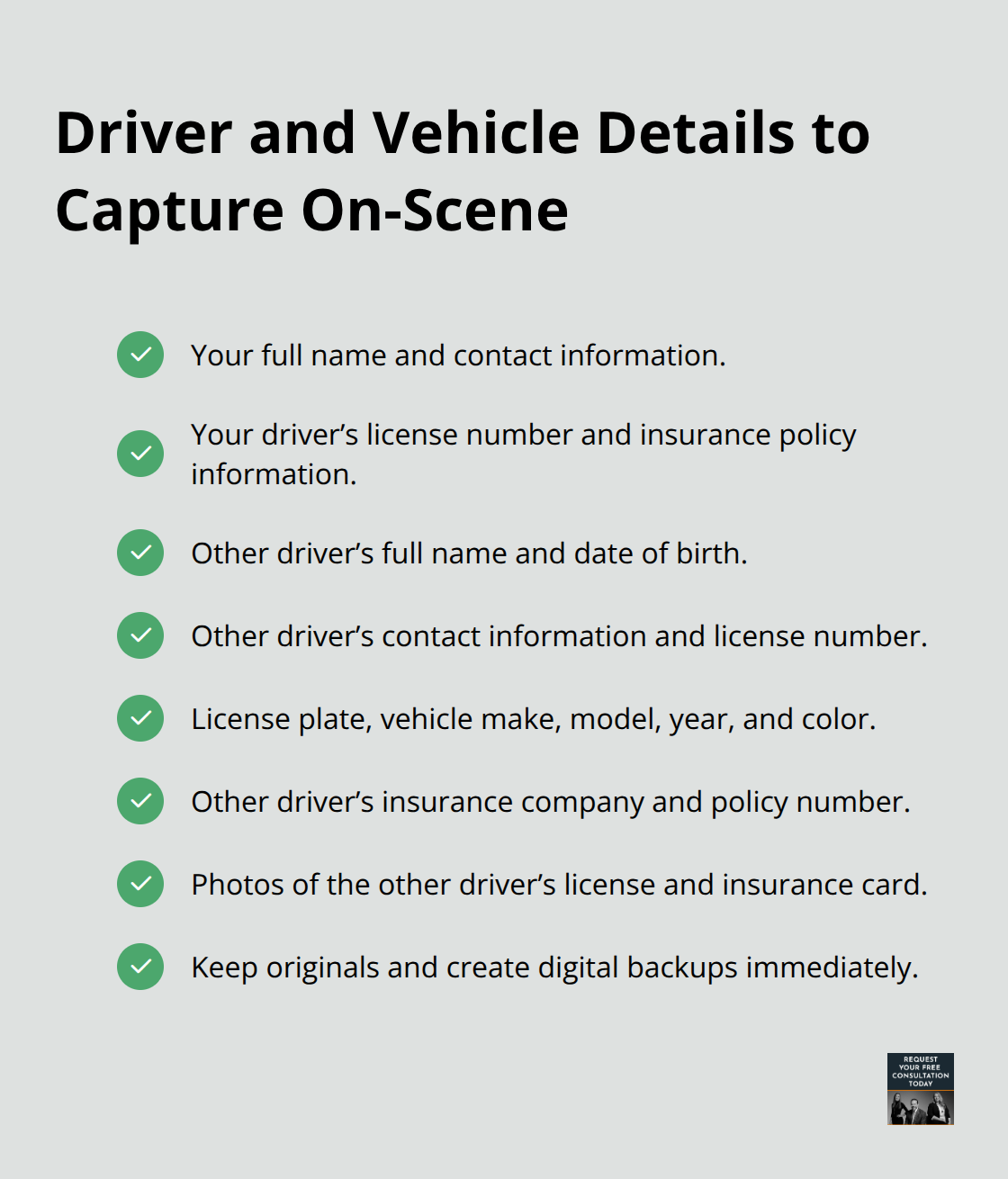
The police officer at your accident scene will ask basic questions, but they won’t capture everything you need for your claim. Start with the essentials: your name, address, phone number, driver’s license number, and insurance policy information. Obtain the same details from the other driver, including their full name, date of birth, address, phone number, driver’s license number, license plate, vehicle make and model, year, color, and their insurance company name and policy number. Photograph their license and insurance card directly rather than relying on the officer to record this information accurately.
California law requires accidents involving injuries or property damage exceeding $1,000 be reported to law enforcement, and that official record will reflect whatever information you and the other driver provide in those first critical minutes.
Document the Accident Scene With Precision
Record the accident circumstances with specificity that extends beyond what initially seems important. Write down the exact location including street names, direction of travel for both vehicles, weather conditions at the time, road surface conditions, traffic signals or signs present, and time of day. Photograph vehicle damage from multiple angles, the overall scene showing road layout and surroundings, skid marks or debris patterns, traffic signals, and street signs. If you sustained injuries, photograph visible marks at the scene and again over the following days as bruising or swelling develops. This documentation prevents insurance companies from later claiming uncertainty about how the accident occurred or how severely your vehicle was damaged.
Capture Witness Information and Video Evidence
Witness statements carry substantial weight in accident claims. The Insurance Research Council found that accidents with corroborating witness statements resolve faster and with higher settlement amounts than those without. Obtain the full name, phone number, email address, and home address of anyone who saw the accident. If witnesses hesitate to provide information, explain that you may need to contact them later if questions arise about liability. Video evidence from dashcams, security cameras on nearby buildings, or traffic cameras proves invaluable; ask nearby businesses if they have footage and request they preserve it immediately.
File Your Police Report With Complete Documentation
When you file your police report, provide all this documentation to the officer so it becomes part of the official record. This level of detail establishes a timeline that protects you if the other driver later changes their story. The information you submit now shapes how investigators and insurers view the accident moving forward. With your documentation complete and filed, you’re ready to navigate the next critical step: understanding how to file your report properly in Santa Cruz County and what happens after law enforcement arrives.
Getting Your Police Report Filed in Santa Cruz County
Call Law Enforcement Immediately After Your Accident
Calling law enforcement immediately after your accident is non-negotiable, but most people make critical mistakes during this process that undermine their entire claim. When you call 911 or the Santa Cruz County Sheriff’s Department for a non-injury accident, response times can stretch from 30 minutes to several hours, and officers sometimes decline to respond to property-damage-only collisions. California Highway Patrol responds to accidents on interstate highways and major routes, while local police handle city streets. Know which agency covers your location before you call-this prevents delays and confusion.
Provide Complete Documentation to the Responding Officer
When the officer arrives, provide them with all the documentation you collected: driver information, photos, witness names and contact details, and your detailed account of how the accident happened. The officer’s report becomes the official record that insurers rely on, so accuracy matters enormously. Don’t argue with the other driver in front of the officer or accept blame for anything; simply state the facts calmly. Request the police report number before the officer leaves, and ask how long the report takes to become available-typically 5 to 10 business days in Santa Cruz County.
Request and Review Your Police Report
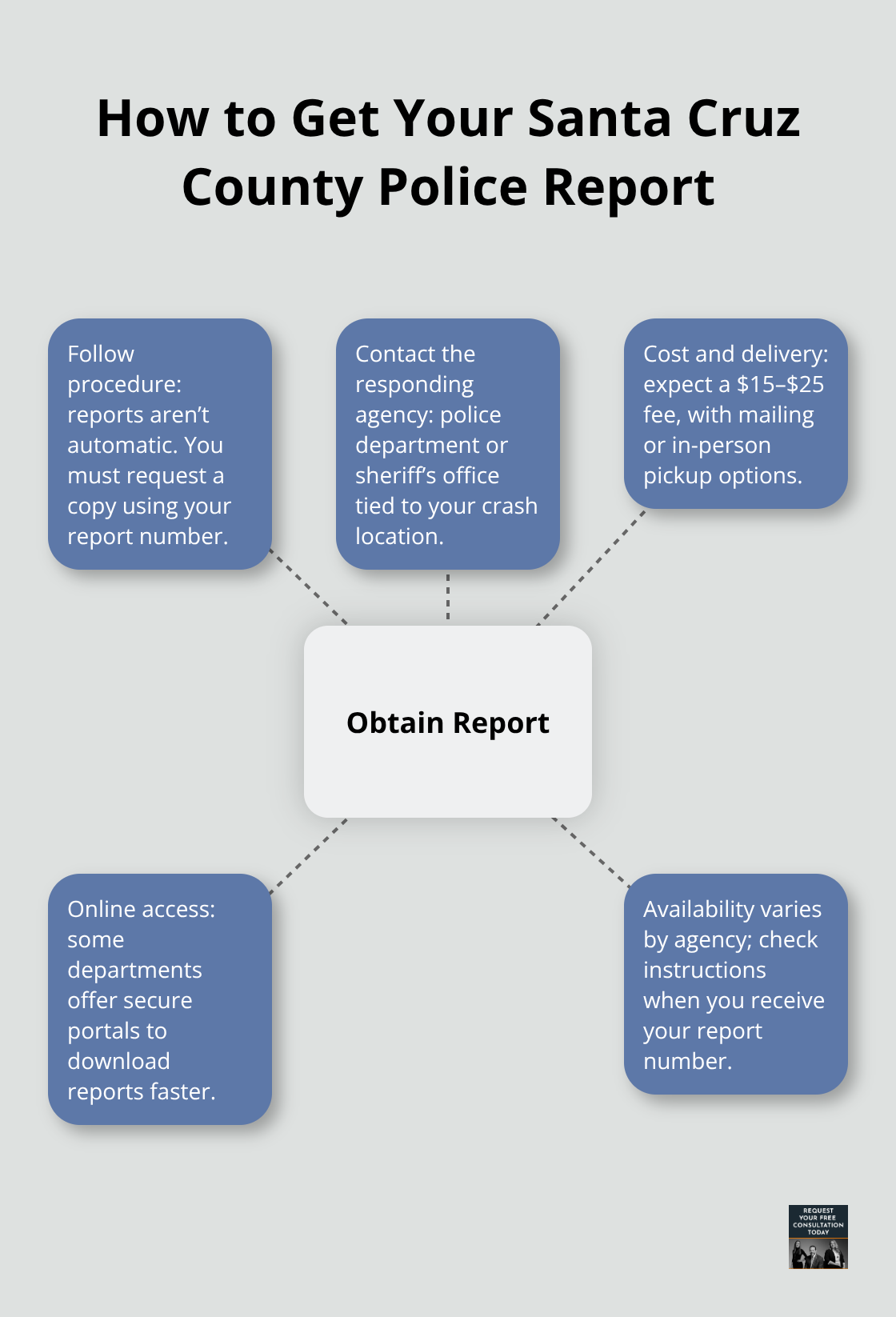
Obtaining your completed police report requires following the correct procedure, as reports aren’t automatically sent to you. Contact the police department or sheriff’s office that responded to your accident and request a copy using the report number you received. Most agencies charge between $15 and $25 for a report copy and can mail it or allow you to pick it up in person. Some departments now offer online access through their websites, which speeds up the process considerably.
Submit Your Report to Your Insurance Company
Once you have the report, file it immediately with your insurance company along with your claim forms and all documentation you collected at the scene. Your insurer will review the police report to establish liability and begin processing your claim. If the police report contains errors or omits critical details, contact the department and request corrections before submitting it to your insurer-correcting errors after your claim is filed becomes far more complicated. For serious injuries, the police report’s accident reconstruction details become essential for demonstrating injury severity to the insurance company.
Final Thoughts
Your car accident report now sits in the system, your documentation is complete, and you’ve taken the steps that separate successful claims from denied ones. Contact your insurance company within a few days to confirm receipt and ask for a claim number and assigned adjuster. Request a timeline for their coverage decision and maintain detailed records of every conversation and document you exchange.
For accidents involving serious injuries-particularly brain or spinal damage-medical documentation matters as much as your accident report. Obtain copies of all medical records, imaging results, and treatment plans, then provide these to your insurer promptly. Insurance companies will scrutinize every detail, looking for gaps in your documentation to justify lower settlements or denials.
Professional legal guidance makes a measurable difference when insurance companies attempt to minimize payouts. We at Schaar & Silva LLP assist with medical bill management, evaluate property damage claims for fair valuation, and connect you with support when emotional trauma accompanies physical injury. Contact us to discuss your case and learn how we can help you move forward with confidence.