

A whiplash injury from a car accident can cause pain that lasts for months or even years. Many people in Santa Cruz County don’t realize how much their whiplash settlement should be worth.
We at Schaar & Silva LLP help accident victims understand what their claim is actually worth and how to get fair compensation. This guide walks you through the settlement process step by step.
Understanding Whiplash Injuries and Their Impact
What Happens to Your Body During a Whiplash Injury
Whiplash occurs when your head and neck snap backward and forward rapidly during a collision. The force of impact stretches your neck muscles, ligaments, and tendons beyond their normal range of motion. In Santa Cruz County car accidents, rear-end collisions cause whiplash most frequently, though front-end and side-impact crashes also produce these injuries. The severity depends on vehicle speed, whether you saw the impact coming, and your neck’s position at the moment of collision. Research from the Journal of Orthopaedic & Sports Physical Therapy shows that impacts as low as 5 mph can trigger whiplash symptoms, even when vehicles show minimal damage. This matters for your settlement because insurance companies often undervalue claims when property damage appears minor.
Symptoms Appear Immediately and Evolve Over Time
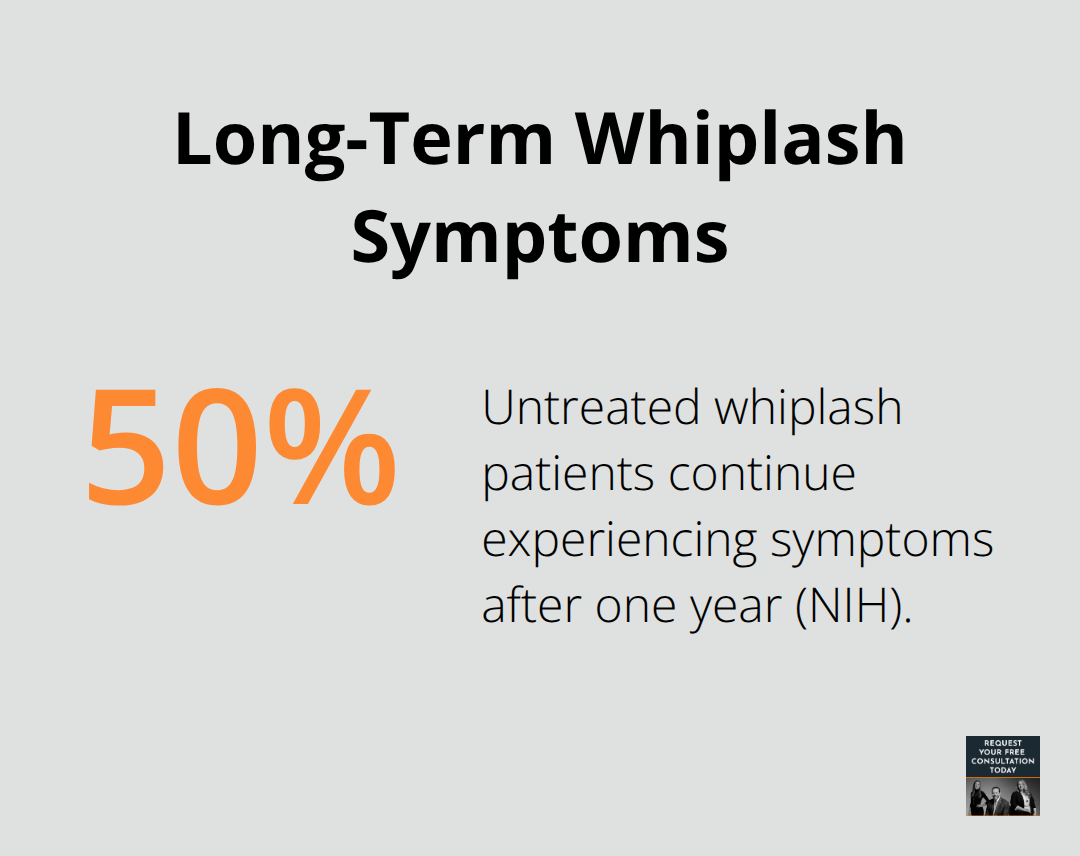
Most whiplash victims experience neck pain and stiffness within 24 hours of the accident. You might also feel headaches, shoulder pain, or tingling in your arms and hands. Some people develop cognitive issues like difficulty concentrating or memory problems. The National Institutes of Health reports that roughly 50 percent of untreated whiplash patients continue experiencing symptoms after one year. This long-term impact directly affects how much your settlement should be worth. If you wait weeks before seeking medical attention, insurance companies will argue your injury wasn’t serious.
Document your symptoms immediately after the accident, even minor ones, because they establish the injury timeline and severity. Keep detailed records of when pain worsens, what activities aggravate it, and how it affects your daily life.
Medical Records Build Your Settlement Foundation
Proper medical documentation is non-negotiable for a strong claim. Visit your primary care doctor or an urgent care facility within days of the accident. Request imaging tests like X-rays or MRI scans to show structural damage. Physical therapy records carry significant weight in settlement negotiations because they demonstrate ongoing treatment needs and recovery progress. Insurance adjusters scrutinize gaps in medical care, so consistent treatment throughout your recovery period strengthens your position. Treatment options range from conservative care like physical therapy and chiropractic care to prescription medications for pain management. Some accident victims benefit from cervical collars during early recovery, though prolonged immobilization can actually slow healing. Your medical records form the foundation that supports fair compensation, which is why the next section examines how these documents influence the actual settlement amount you receive.
What Determines Your Settlement Amount
Medical Expenses Form Your Claim’s Foundation
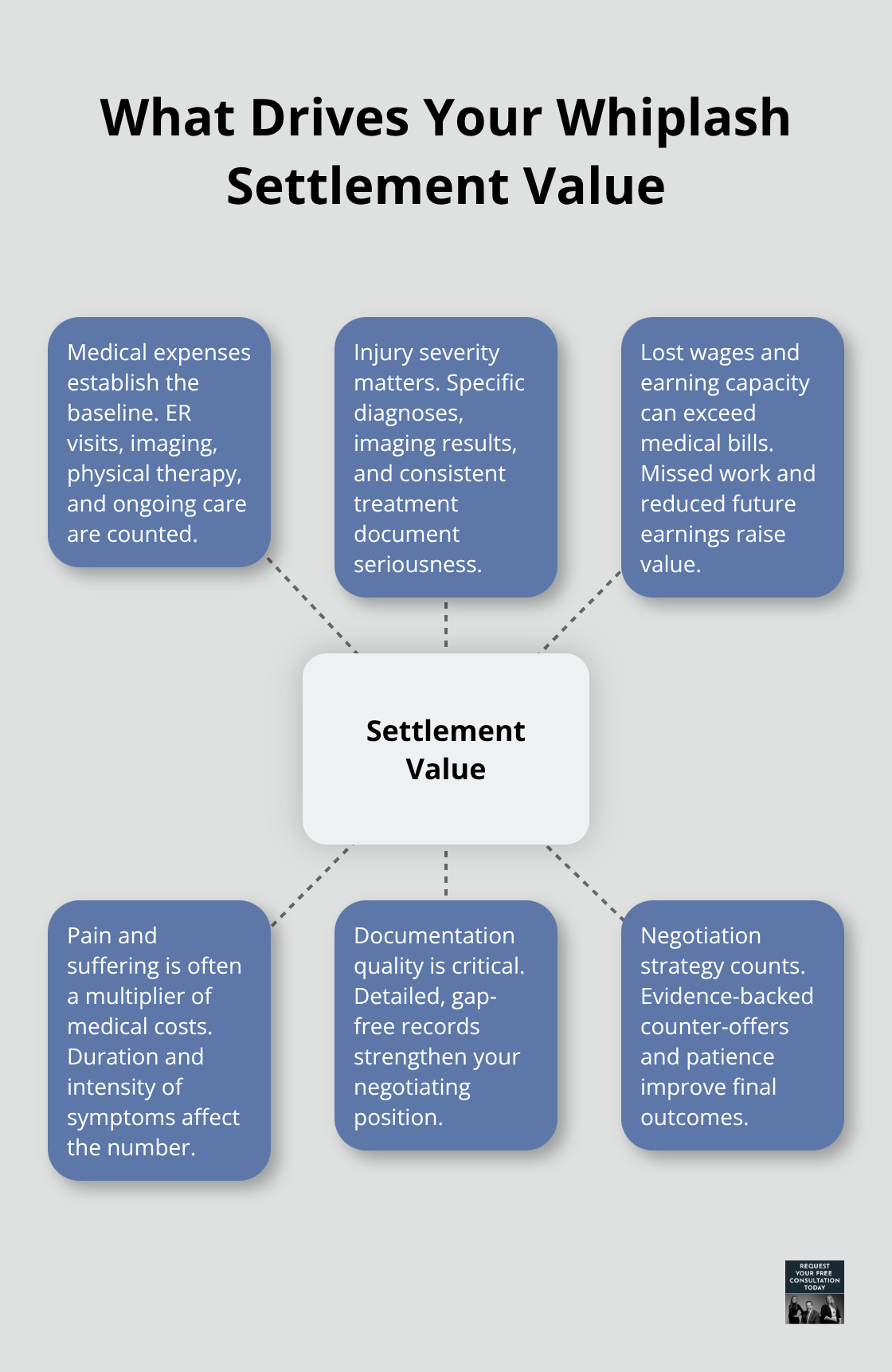
Insurance companies calculate whiplash settlements using medical expenses as their starting point, but that’s only one piece of the puzzle. Your actual settlement depends on how thoroughly you document your injury, lost income, and the impact on your quality of life. Medical bills from emergency room visits, diagnostic imaging, physical therapy, and ongoing treatment form the foundation of your claim. A study published in the Journal of Orthopaedic Surgery and Research found that whiplash treatment costs averaged between $10,000 and $15,000 for comprehensive care over a full recovery period. However, insurance adjusters often try to minimize these figures by questioning whether all treatments were necessary.
Keep every receipt, medical invoice, and explanation of benefits document because gaps in your paper trail give insurers ammunition to reduce your settlement.
Severity of Your Injury Directly Affects Settlement Value
The severity of your injury directly correlates to settlement value, so detailed medical records showing your specific diagnosis, imaging results, and treatment progression are essential. Your medical documentation must clearly establish what happened to your body during the accident and how treatment addressed those specific injuries. Insurance adjusters scrutinize medical records to identify any inconsistencies or gaps that might suggest your injury wasn’t as serious as you claim. Consistent treatment throughout your recovery period strengthens your position significantly. Treatment options range from conservative care like physical therapy and chiropractic care to prescription medications for pain management. Some accident victims benefit from cervical collars during early recovery, though prolonged immobilization can actually slow healing. Your medical records form the foundation that supports fair compensation in settlement negotiations.
Lost Wages and Earning Capacity Often Exceed Medical Expenses
Lost wages and reduced earning capacity frequently exceed medical expenses in your final settlement. If your whiplash prevented you from working during recovery, you’re entitled to compensation for those lost paychecks. Request written statements from your employer documenting the dates you missed work and your hourly rate or salary. For self-employed individuals in Santa Cruz County, bank statements and tax returns become critical proof of lost income. Some whiplash victims experience lingering symptoms that prevent them from returning to their previous job or working the same hours, which qualifies as loss of earning capacity. This is where settlements grow substantially because you’re compensating for long-term financial impact, not just immediate medical costs.
Pain and Suffering Compensation Reflects Your Overall Impact
Pain and suffering compensation accounts for the physical discomfort, emotional distress, and lifestyle limitations caused by your injury. Insurance companies typically calculate this as a multiplier of your medical expenses, usually between 1.5 and 5 times your documented medical costs, depending on injury severity and duration. A whiplash victim with $12,000 in medical bills and six months of ongoing symptoms might receive $18,000 to $60,000 in pain and suffering compensation. Document how your injury affects daily activities, sleep quality, ability to exercise, and relationships because these details support higher pain and suffering awards. The more thoroughly you establish the scope of your injury’s impact on your life, the stronger your position becomes in settlement negotiations. Insurance companies will attempt to minimize these figures unless you present compelling evidence of how whiplash changed your daily existence.
Building Your Documentation Strategy
Your settlement amount ultimately reflects the quality of evidence you present to insurance adjusters. Comprehensive documentation prevents insurers from undervaluing what your whiplash injury actually cost you in medical care, lost income, and quality of life. The next section examines how the settlement process actually works in Santa Cruz County, including negotiation strategies and timelines you should anticipate.
The Settlement Process in Santa Cruz County
Insurance Adjusters Test Your Resolve With Lowball Offers
Insurance adjusters in Santa Cruz County follow predictable patterns when evaluating whiplash claims, and understanding their tactics gives you significant leverage. Most adjusters start by offering 30 to 50 percent below what your claim is actually worth, testing whether you’ll accept a lowball offer without pushback. They’ll scrutinize your medical records for any gaps in treatment, question whether certain procedures were necessary, and argue that your pain and suffering damages are inflated. Your response strategy matters enormously here.
Respond to their initial offer with a detailed counter-proposal that cites your medical expenses, lost wages, and specific ways the injury impacted your daily life. Include copies of your strongest medical documents, employment records showing missed work, and any evidence of ongoing treatment needs. Insurance companies respond to documentation, not emotion, so present facts methodically.
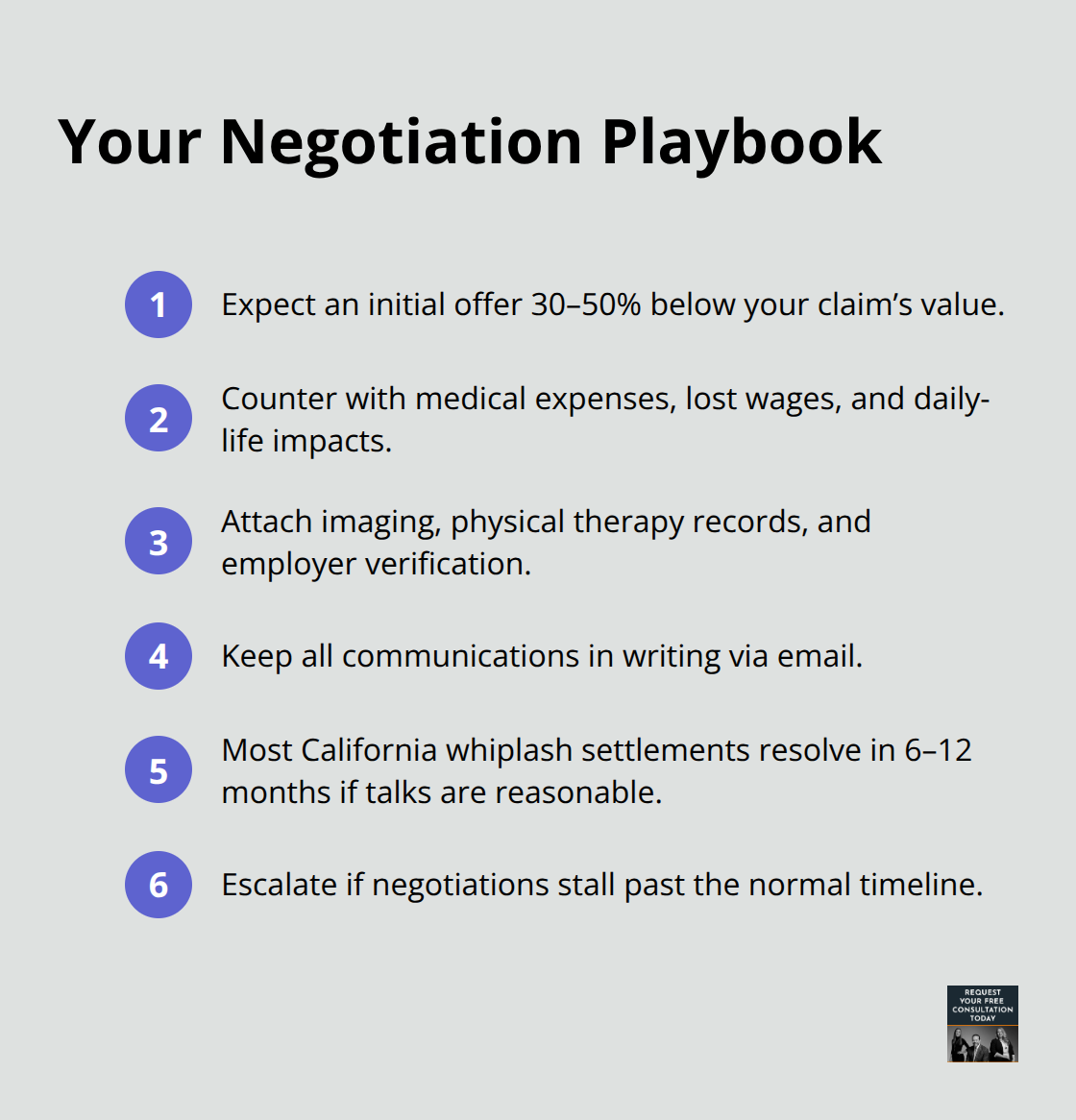
Most whiplash settlements in California resolve within 6 to 12 months when both sides negotiate reasonably. If your case stalls beyond this timeline, that’s a red flag suggesting the adjuster isn’t taking your claim seriously.
Negotiation Strategy Determines Your Settlement Value
Present your case with organized, factual evidence rather than emotional appeals. Insurance adjusters evaluate claims based on documented damages, medical records, and lost income calculations. When you submit a counter-offer, attach supporting documents that substantiate every figure you claim. Medical bills, imaging reports, physical therapy records, and employment verification letters all strengthen your position significantly.
The insurance company will likely counter your counter-offer, and this back-and-forth continues until you reach agreement or decide to pursue litigation. Stay patient during this process because rushing into a settlement often costs you thousands in undercompensation. Track all communications with the insurance company in writing (email works best) so you maintain a clear record of what was discussed and offered.
Court Action Becomes Necessary When Settlement Stalls
The decision to pursue a lawsuit depends entirely on what the insurance company offers versus what your claim is genuinely worth. If their settlement offer falls significantly below your documented damages, court action becomes the logical next step. Santa Cruz County courts handle personal injury cases, and a jury trial introduces real risk for insurance companies because they can’t control the outcome the way settlement negotiations do. This reality often prompts better settlement offers once you file a lawsuit.
However, litigation extends your timeline substantially, typically adding 12 to 24 months to your case, and court costs increase your expenses. You’ll need to weigh whether a potentially higher award justifies the extended wait and increased stress. Insurance companies know most accident victims need money quickly for medical bills and living expenses, which is why they sometimes lowball offers early. Don’t let financial pressure force you into accepting inadequate compensation.
Evaluating Settlement Offers Against Your Actual Damages
If you’re uncertain whether an offer reflects your claim’s true value, consult with someone experienced in personal injury law who can evaluate your specific situation and advise whether settlement or court action serves your interests better. At Schaar & Silva LLP, we handle these negotiations directly with insurance companies, removing the pressure from you to negotiate while recovering from your injury. Our team can help direct you to medical lien services that facilitate payment of your bills until your case is resolved, and we assist in evaluating property damage claims to ensure you receive fair valuation for your loss.
Final Thoughts
Whiplash injuries from car accidents create financial and physical consequences that extend far beyond the initial impact. Your settlement should reflect your medical expenses, lost wages, pain and suffering, and any long-term earning capacity loss. Insurance companies will test your resolve with lowball offers, so comprehensive documentation of your injury and its impact becomes your strongest negotiating tool.
The settlement process in Santa Cruz County typically takes six to twelve months when both sides negotiate reasonably. Start by collecting every medical bill, imaging report, physical therapy record, and employment document that proves your damages. Respond to insurance offers with organized counter-proposals backed by solid evidence rather than emotional arguments.
If the insurance company’s offer falls significantly below your documented damages, court action may be necessary to secure fair compensation for your whiplash settlement Santa Cruz claim. We at Schaar & Silva LLP handle these negotiations directly with insurance companies, removing that burden from you while you focus on healing. Contact us to discuss your specific situation and determine whether your current settlement offer reflects what your claim is genuinely worth.
