
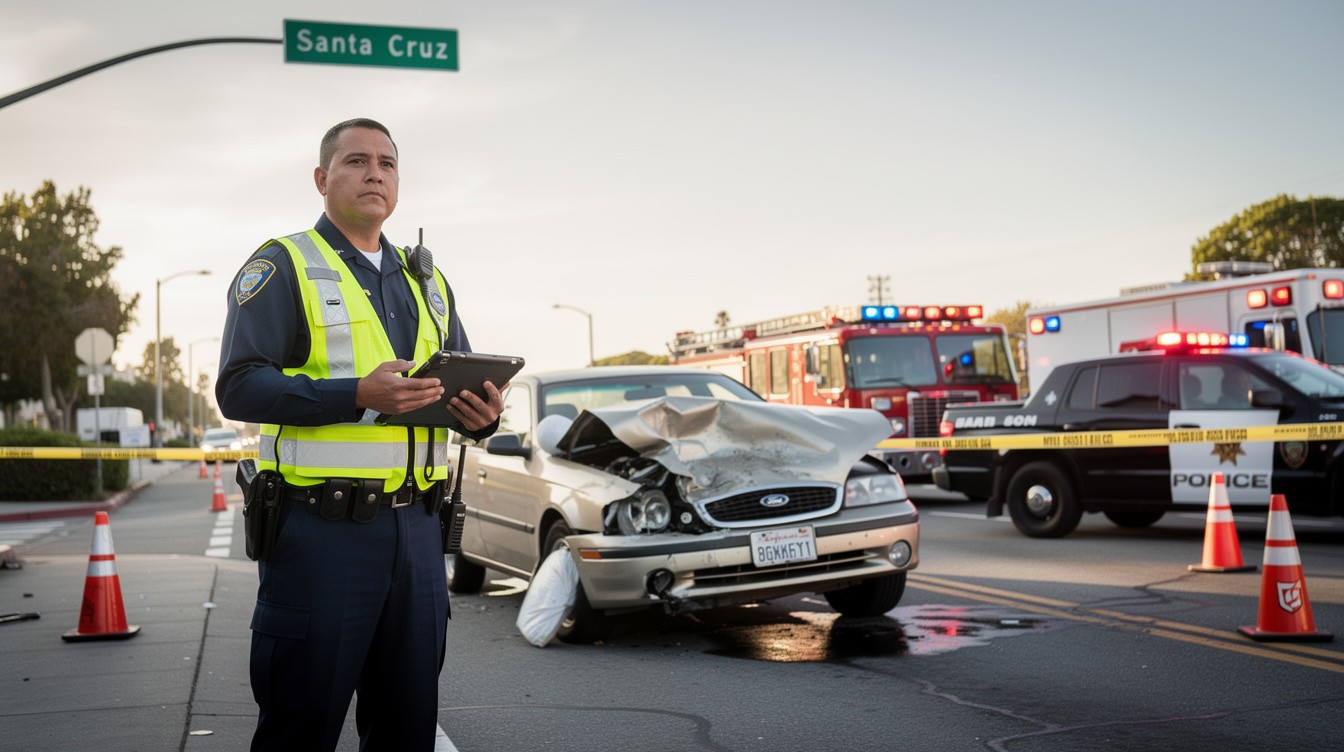
Every emergency responder accident in Santa Cruz County puts first responders at serious risk. These men and women face legal, physical, and emotional challenges that many people don’t fully understand.
At Schaar & Silva LLP, we believe it’s important to shine a light on the protections and resources available to those who run toward danger to help others. This guide covers the legal shields, support systems, and community resources that protect first responders in our county.
What Legal Protections Shield First Responders in California
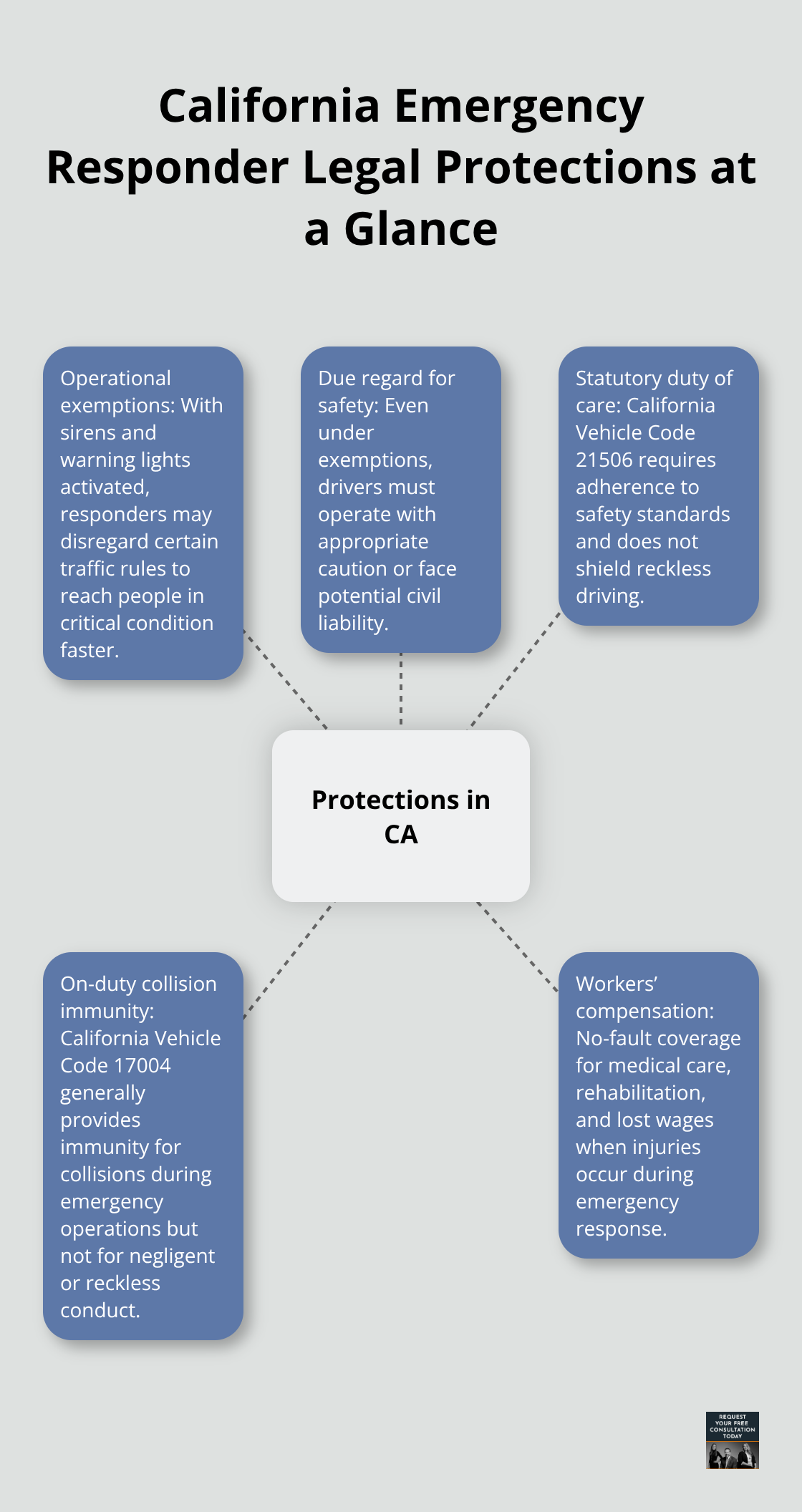
California Vehicle Code 21055 grants emergency vehicles significant operational exemptions during active emergencies. When sirens are activated and warning lights are displayed, first responders can disregard certain traffic rules to reach people in critical condition faster. This exemption covers police cars, ambulances, fire trucks, and other designated emergency vehicles under California Vehicle Code 165. However, this legal protection comes with a strict requirement: responders must still exercise due regard for public safety. A failure to drive with appropriate caution can expose responders to civil liability, even when they operate under emergency exemptions. California Vehicle Code 21506 explicitly requires this duty of care, meaning responders cannot use their exemptions as a shield for reckless driving. The practical reality is that responders face a balancing act between speed and safety, and the law holds them accountable for that balance.
Immunity From On-Duty Collisions
California Vehicle Code 17004 provides another critical protection: first responders are generally immune from civil damages for collisions that occur while they work on duty. This immunity exists because public policy recognizes that rapid emergency response saves lives. If a first responder’s ambulance or fire truck is involved in a crash while responding to an emergency call, the responder typically cannot face a lawsuit for damages. However, this immunity is not absolute. If a responder acted negligently or recklessly, or failed to exercise due regard for safety, the immunity protection can evaporate. This means the legal system acknowledges that responders need protection from frivolous lawsuits, but it does not protect reckless behavior. If you have been injured in an accident involving an emergency vehicle, the determination of whether immunity applies hinges on whether the vehicle was engaged in an actual emergency operation and whether the driver exercised appropriate care.
Workers Compensation and Occupational Coverage
First responders injured during emergency operations receive protection through workers compensation systems that cover medical treatment, rehabilitation costs, and lost wages. Santa Cruz County maintains these protections for its employees, ensuring that responders who suffer physical injuries on the job receive medical care without bearing the costs themselves. This coverage extends to injuries sustained during vehicle accidents, on-scene incidents, and occupational exposures. The system operates on a no-fault basis, meaning responders do not need to prove negligence to receive benefits. When a responder is injured during an accident while responding to an emergency, workers compensation activates automatically to cover treatment and lost income during recovery. These protections form a foundation, but first responders also face physical and psychological challenges that extend beyond what legal shields alone can address.
What Injuries Do First Responders Sustain in Santa Cruz Accidents
Physical Injuries From Vehicle Impacts
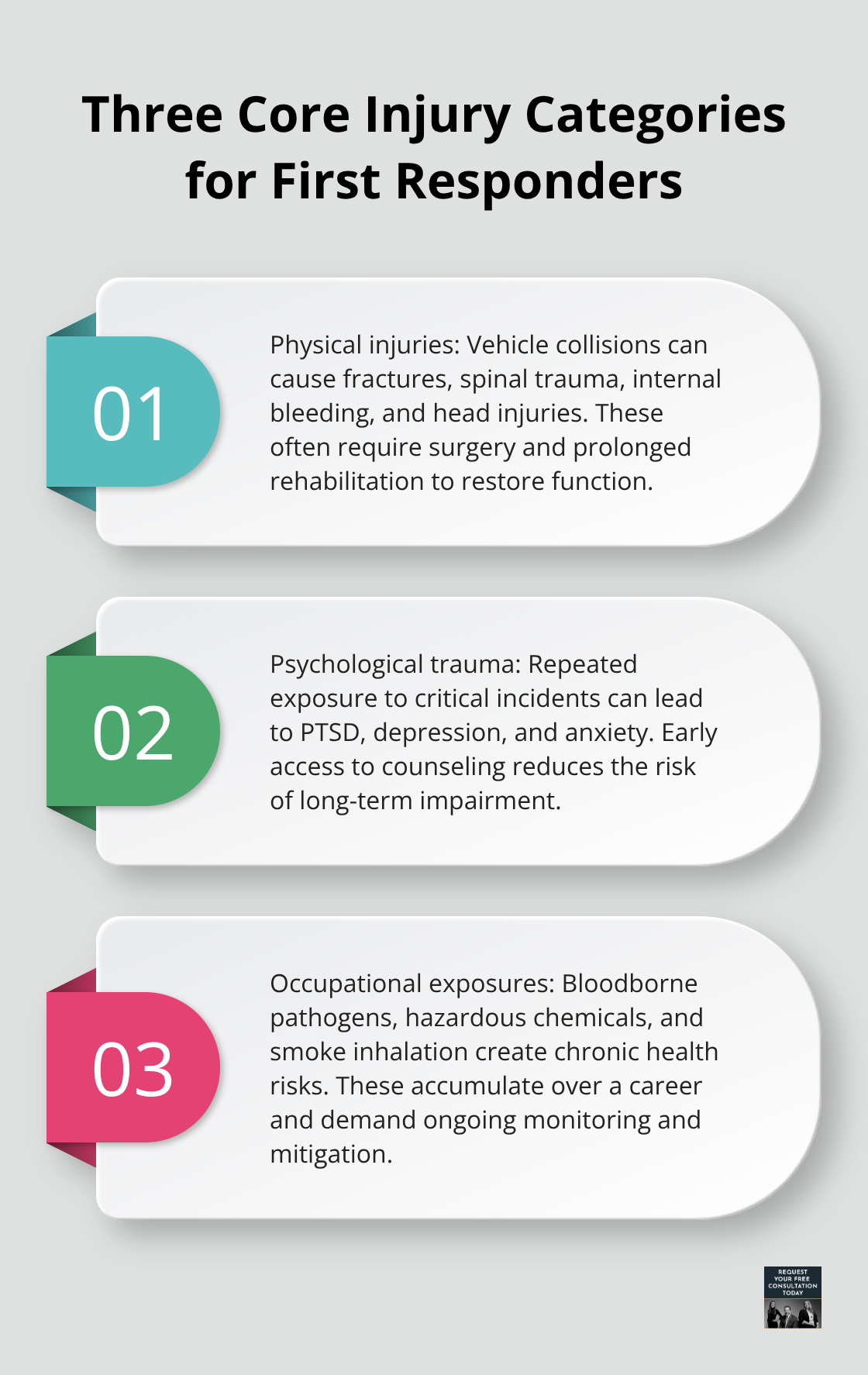
First responders in Santa Cruz face three distinct categories of injury when vehicle accidents occur on the job. Blunt force injuries from vehicle impacts represent the most visible threat. Responders suffer broken bones, spinal damage, internal bleeding, and head trauma when their ambulances, fire trucks, or patrol cars collide with other vehicles or obstacles. These injuries often require surgery and extended rehabilitation. The National Institute for Occupational Safety and Health reports that emergency responders experience higher rates of motor vehicle crashes than the general driving population, and the consequences can be severe. A responder exiting an ambulance on a Santa Cruz highway faces the same crushing forces as any accident victim, but with the added complication that they may struggle to call for help immediately or may delay seeking treatment to continue assisting others.
Psychological Trauma and Mental Health Effects
Beyond the physical impact, first responders absorb psychological damage that frequently goes unaddressed. Repeated exposure to trauma scenes, witnessing deaths, and managing their own accident injuries creates lasting mental health effects. Post-traumatic stress disorder develops in responders who experience serious accidents, and depression and anxiety often follow.
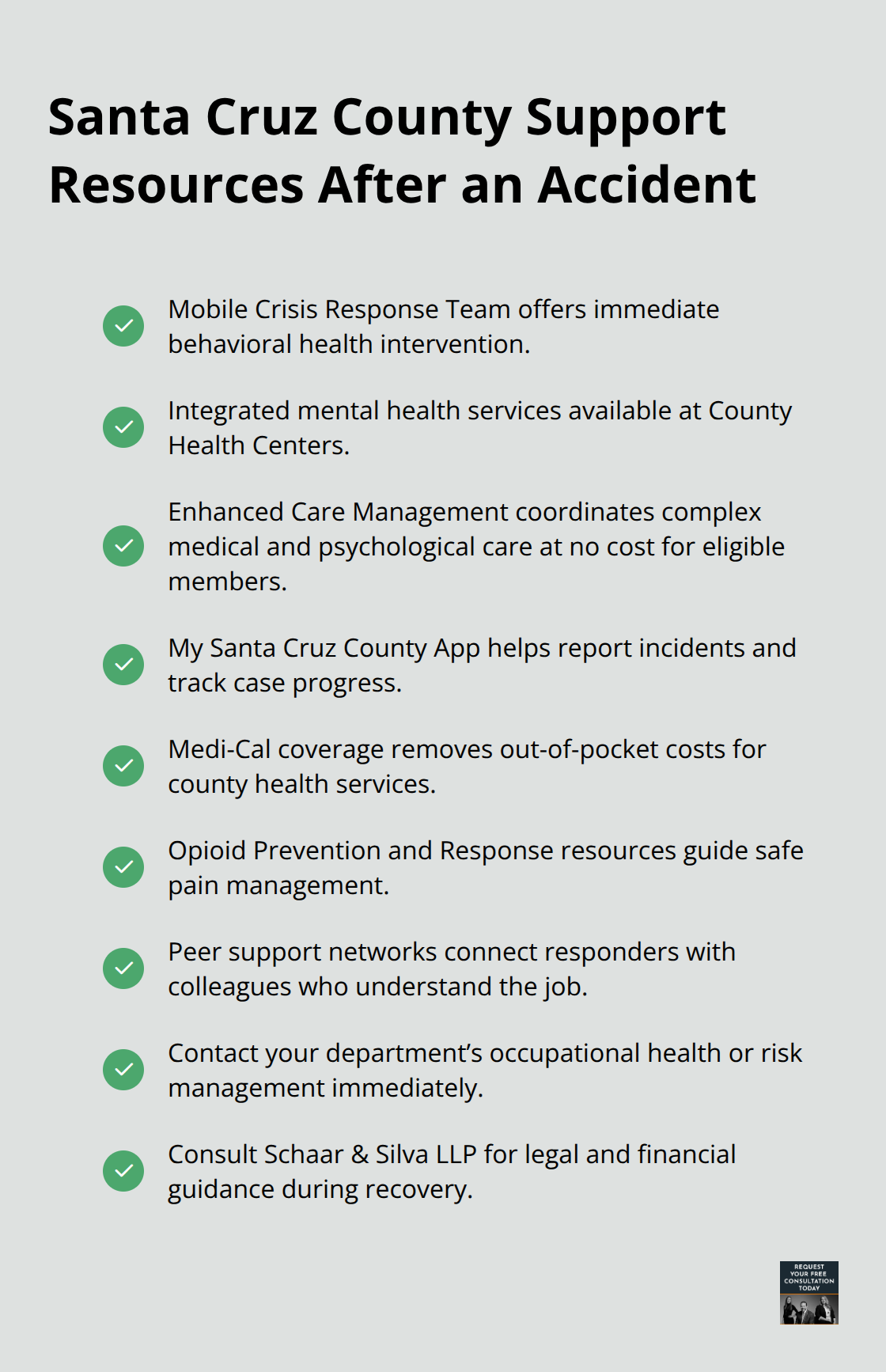
The Occupational Safety and Health Administration recognizes that first responder mental health crises have become a significant occupational health issue. Santa Cruz County Health Services Agency operates a Behavioral Health division with a Mobile Crisis Response Team and integrated mental health services through its Health Centers, providing local resources, though many responders hesitate to access them due to stigma or fear of career consequences.
Occupational Exposures and Chronic Health Risks
Occupational exposures present another serious threat that accumulates over years of service. Responders contract bloodborne pathogens during accident scenes, encounter hazardous chemicals from vehicle fluids or cargo, and face respiratory hazards from vehicle fires or damaged industrial equipment. Environmental Health oversight in Santa Cruz County addresses some hazard reduction, but first responders remain exposed to risks that persist throughout their careers. The combination of acute injuries, psychological trauma, and chronic occupational exposures means that recovery from a single accident often extends far beyond the initial emergency response and workers compensation claim. These physical, mental, and occupational challenges create a complex recovery process that requires support systems beyond legal protections alone.
Where First Responders in Santa Cruz Find Real Support
Santa Cruz County Health Services Agency operates the resources that first responders actually need after accidents, though many responders don’t know these services exist or hesitate to use them. The Behavioral Health division runs a Mobile Crisis Response Team that provides immediate intervention, and the Health Centers offer integrated mental health services alongside primary care-meaning responders can address psychological trauma without separate appointments across multiple locations. The agency’s Behavioral Health 3-Year Plan shows ongoing investment in mental health infrastructure, signaling that Santa Cruz County recognizes responder mental health as a priority.
Mental Health and Recovery Services
Enhanced Care Management provides no-cost extra services for eligible members with complex medical and psychological needs, covering the gap between initial emergency treatment and long-term recovery. This matters because responders frequently skip follow-up care due to cost or schedule conflicts; no-cost enhanced management removes that barrier. The My Santa Cruz County App lets responders report incidents and track progress, creating accountability and documentation that supports workers compensation claims and disability evaluations. Responders with Medi-Cal coverage access the full suite of county health services at no out-of-pocket cost, eliminating the financial friction that prevents treatment-seeking.
Pain Management and Substance Support
The county’s Opioid Prevention and Response resources provide specific guidance for responders managing pain medication after serious injuries, reducing the risk of dependency that can complicate recovery. This targeted support addresses a real challenge that responders face when they sustain injuries requiring pain management during their recovery period.
Peer Support Networks
Community organizations like fire department peer support networks and law enforcement associations operate informal support systems where responders connect with colleagues who’ve survived similar accidents-these networks carry weight that professional counseling alone cannot match because they come from people who understand the job. Responders recover faster when they access mental health services within weeks of an accident rather than months later; delayed treatment increases the risk of chronic PTSD and depression that can derail careers.
Taking Action After an Accident
First responders in Santa Cruz should contact their department’s occupational health office or risk management coordinator immediately after an accident to activate available protections and learn which county services apply to their situation. If you’ve been injured in an accident while responding to an emergency, Schaar & Silva LLP can help you navigate the legal and financial aspects of your recovery while you focus on healing.
Final Thoughts
First responders in Santa Cruz County operate under legal protections that shield them from frivolous lawsuits and provide workers compensation coverage when injuries occur. California Vehicle Code 17004 grants immunity for on-duty collisions, and the county’s workers compensation system covers medical treatment and lost wages without requiring responders to prove fault. These legal frameworks matter, but they represent only the foundation of what responders actually need after an emergency responder accident.
The real protection comes from support systems that address the physical, psychological, and financial aftermath of serious injuries. Santa Cruz County Health Services Agency provides mental health services, Enhanced Care Management for complex recovery needs, and Opioid Prevention resources that help responders manage pain medication safely. Responders who contact their department’s occupational health office immediately activate available protections and learn which county services apply to their situation.
If you’ve been injured in an accident while responding to an emergency, Schaar & Silva LLP can help you navigate the legal and financial aspects of your recovery. Our team assists with medical bill support, property damage claims, and connecting you with psychological resources so you can focus on healing while we handle the legal complexities of your situation.
