

At Schaar & Silva LLP, we understand the importance of timely action after a car accident in California. The statute of limitations for car accidents in California sets a critical deadline for filing a lawsuit.
This time limit can significantly impact your ability to seek compensation for injuries and damages. In this post, we’ll break down the key aspects of California’s statute of limitations for car accidents and why it matters for Santa Cruz County residents.
What’s a Statute of Limitations?
Definition and Importance
The statute of limitations sets a legal time limit for filing a lawsuit after an incident occurs. In California, this deadline plays a critical role for car accident victims seeking compensation. If you miss this deadline, you risk losing your right to pursue legal action.
Purpose in Legal Cases
Time limits in legal cases serve multiple functions. They ensure that evidence remains fresh and reliable (as memories fade and physical proof can deteriorate over time). These limits also provide closure for all parties involved, preventing the threat of lawsuits from hanging indefinitely.
California’s Car Accident Statute
In California, the general statute of limitations for car accident cases is two years from the date of the incident. This means you have 24 months to file a lawsuit for personal injuries sustained in a car crash. For property damage claims only, the time limit extends to three years.

Government Vehicle Considerations
If your accident involved a government vehicle, the timeline shrinks significantly. You must file an administrative claim within six months of the incident. This tight deadline highlights the need for swift action after an accident.
The Importance of Prompt Action
Many people wait too long to take action, believing they have ample time. This mistake can cost you your right to compensation. The sooner you start the legal process, the better your chances of a favorable outcome. If you’ve been in a car accident in Santa Cruz County, don’t delay in seeking legal advice to protect your rights within the statute of limitations.
As we move forward, let’s examine the specific time limits for different types of car accident claims in California and the exceptions that might apply to these rules.
When Can You File a Car Accident Lawsuit in California?
The Standard Two-Year Rule
California law sets a strict two-year deadline for filing personal injury lawsuits after car accidents. This means if you experience a crash on August 30, 2025, you must initiate legal action by August 30, 2027. Courts rarely make exceptions to this rule, so it’s essential to act promptly.
Extended Time for Property Damage Claims
For vehicle damage or other property losses, California offers a more generous timeline. You have three years from the accident date to file a property damage lawsuit. This additional year can prove valuable when negotiating with insurance companies or pursuing settlements.
Exceptions to the Statute of Limitations
Certain circumstances can pause (or “toll”) the statute of limitations:

The Government Vehicle Exception
Accidents involving government vehicles (such as city buses or police cars) have a much shorter timeline. You must file an administrative claim within six months of the incident. This tight deadline underscores the importance of swift action in these cases.
Consequences of Missing the Deadline
Filing after the statute of limitations expires can have severe repercussions. Courts will likely dismiss your case, regardless of its strength, leaving you without recourse for compensation (including medical bills, lost wages, and pain and suffering).
The complexities of these timelines highlight the importance of seeking legal counsel promptly after an accident. An experienced attorney can ensure you meet all necessary deadlines and protect your right to compensation. As we explore further, let’s examine how specific factors can influence the statute of limitations in car accident cases.
How Special Circumstances Affect Your Filing Deadline
The statute of limitations for car accidents in California isn’t always straightforward. Several factors can influence when your filing deadline occurs. Understanding these nuances protects your right to compensation.
The Discovery Rule
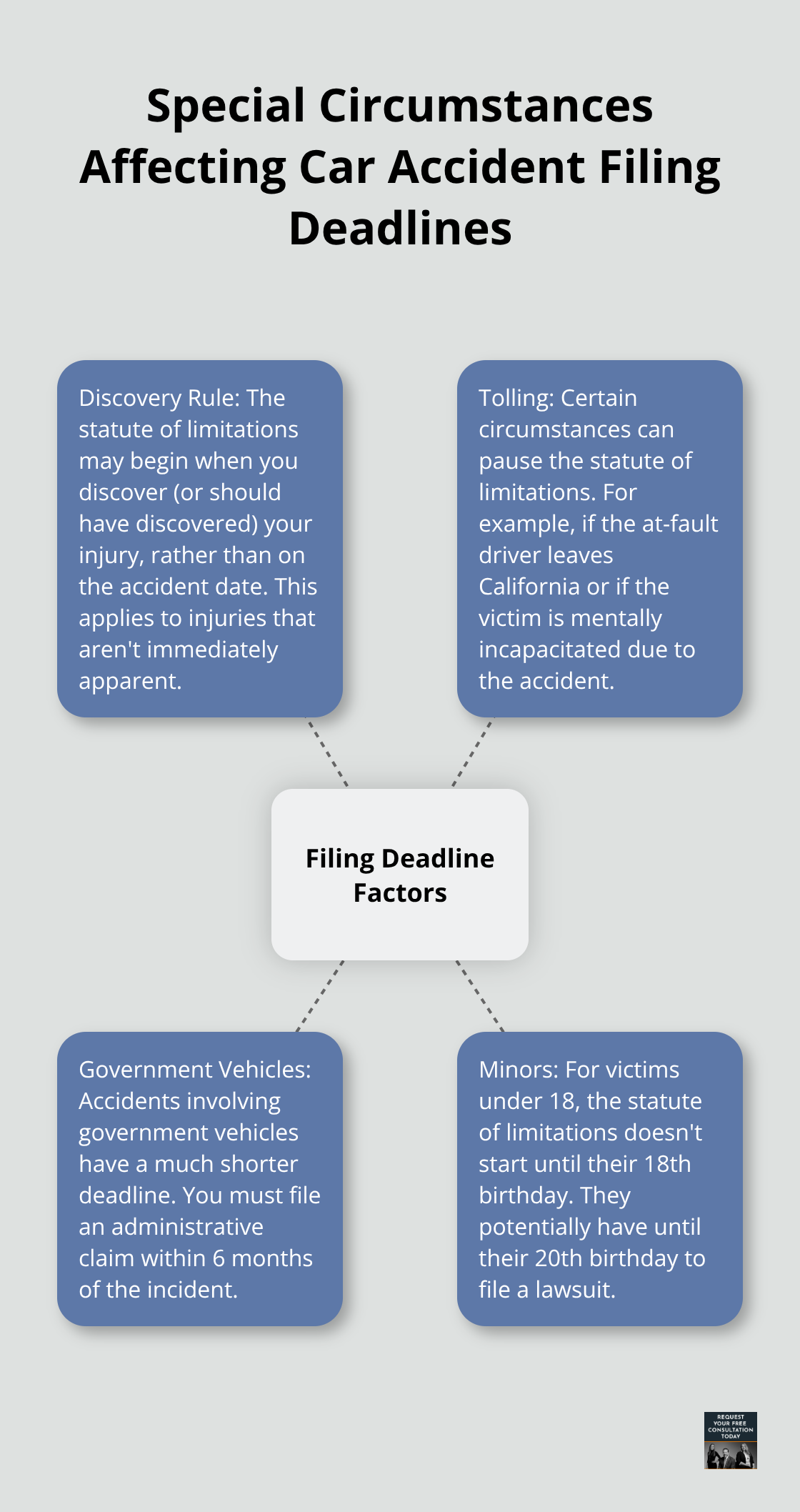
Injuries from a car accident aren’t always immediately apparent. California law recognizes this through the “discovery rule.” This rule allows the statute of limitations to begin when you discover (or reasonably should have discovered) your injury, rather than on the accident date.
For example, if you develop chronic back pain months after a crash, your two-year window might start from when a doctor diagnoses the injury as accident-related. However, this rule isn’t automatic. You must prove that you couldn’t have reasonably discovered the injury earlier.
Tolling the Statute of Limitations
Certain circumstances can pause, or “toll,” the statute of limitations. If the at-fault driver leaves California after the accident, the clock may stop until they return. This prevents defendants from avoiding lawsuits by fleeing the state.
Mental incapacity resulting from the accident can also toll the statute. If severe injuries leave you unable to understand your legal rights, the deadline may pause until you regain capacity.
Government Vehicles and Shortened Deadlines
Accidents involving government vehicles come with much stricter deadlines. You have only six months to file an administrative claim. If you miss this window, you’ll likely lose your right to compensation (regardless of how severe your injuries are).
This short timeline catches many people off guard. If you’re in an accident with a city bus, police car, or any other government vehicle in Santa Cruz County, contact a lawyer immediately.
Minors and Extended Deadlines
For victims under 18, the statute of limitations works differently. The clock doesn’t start ticking until their 18th birthday. This means a child injured in a car accident potentially has until their 20th birthday to file a lawsuit.
However, waiting isn’t always advisable. Evidence can disappear, and witnesses’ memories fade. Parents or guardians should consider taking action on behalf of a minor much sooner.
These factors can dramatically impact car accident cases in Santa Cruz County. The complexities of these rules underscore why you should seek legal advice promptly after an accident. An experienced attorney can evaluate your specific situation and ensure you don’t miss critical deadlines.
To file a personal injury claim, you must collect all relevant documentation, including medical records, police reports, and witness statements.
Final Thoughts
The statute of limitations for car accidents in California sets a strict timeline for legal action. You must file personal injury claims within two years and property damage claims within three years of the accident date. Missing these deadlines can result in the permanent loss of your right to pursue compensation, regardless of your case’s strength.
Swift action after an accident preserves evidence, maintains witness reliability, and protects your legal rights. This becomes even more important in cases involving government vehicles, where the window for action shrinks to six months. Every car accident case presents unique challenges (such as delayed injury discovery or mental incapacity), which can alter standard timelines.
We at Schaar & Silva LLP offer support to car accident victims in Santa Cruz County. Our team can help you understand your case’s nuances, meet critical deadlines, and fight for fair compensation. Don’t let time slip away-take action today to safeguard your rights and future.
