
After a car accident in Santa Cruz, figuring out what your vehicle damage is actually worth can feel overwhelming. Insurance companies use specific methods to calculate these values, and understanding their process puts you in a stronger position.
We at Schaar & Silva LLP help accident victims navigate vehicle damage valuation in Santa Cruz so you know exactly what your claim should be worth. This guide walks you through how insurers assess damage, how to document yours, and how to negotiate fairly.
How Insurance Companies Value Your Vehicle Damage
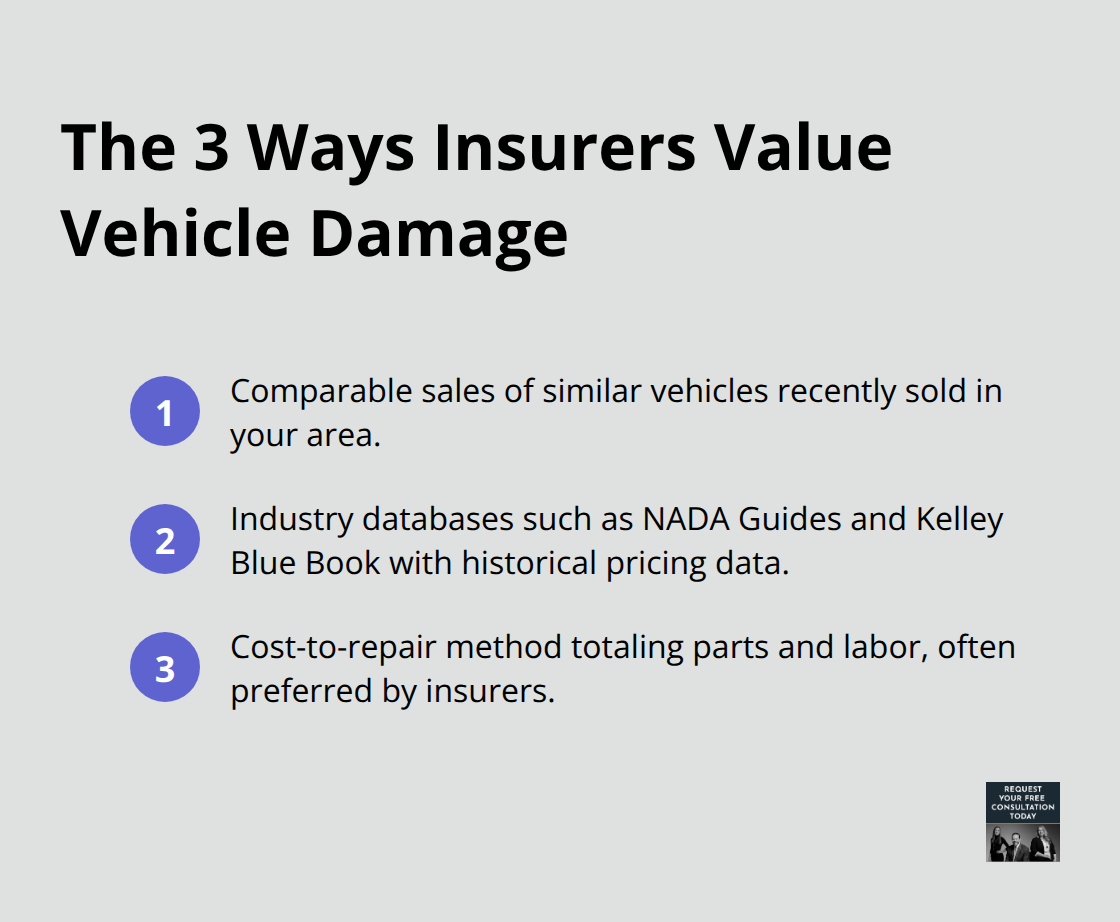
Insurance adjusters in Santa Cruz rely on three primary approaches when calculating vehicle damage. The first method compares your vehicle to similar models sold recently in your area, known as the comparable sales approach. The second uses industry databases like NADA Guides or Kelley Blue Book, which track historical pricing data across thousands of vehicles. The third, the cost-to-repair method, adds up the price of replacing damaged parts plus labor. Most insurers favor the cost-to-repair approach because it directly reflects what body shops charge in Santa Cruz County.
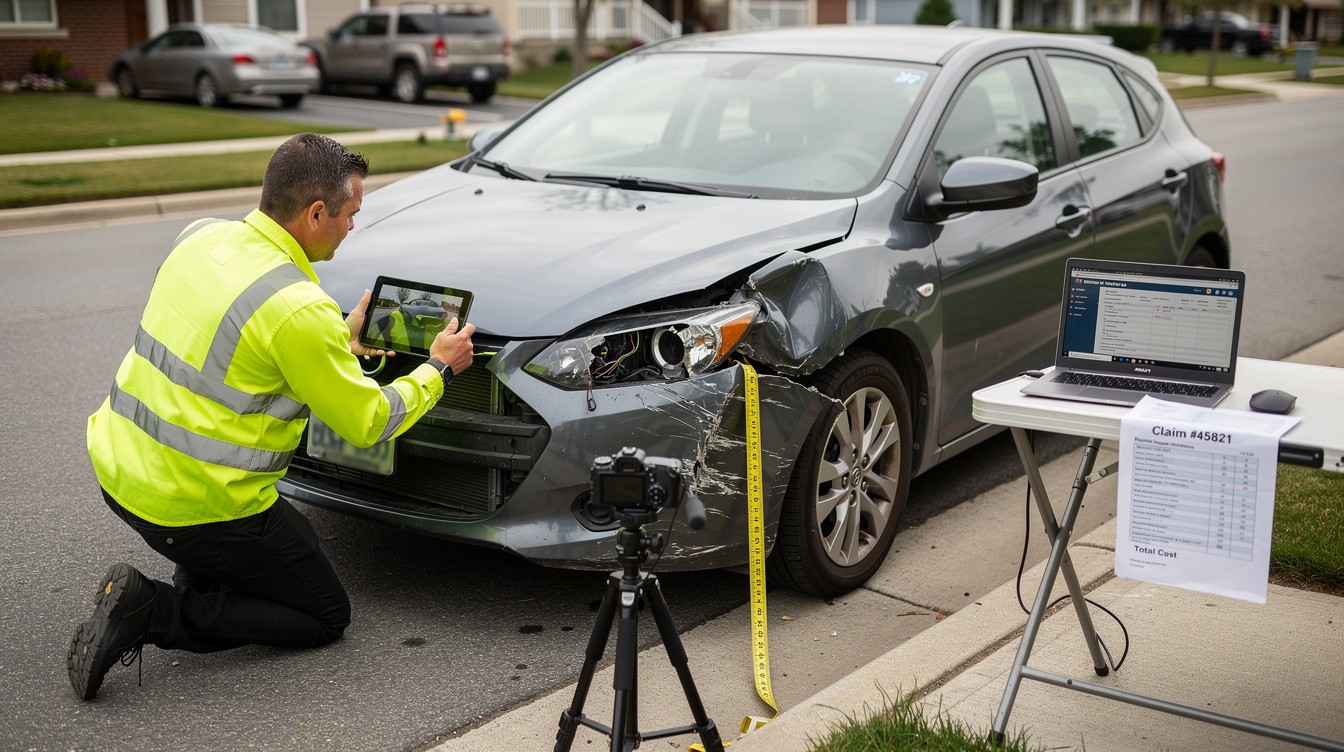
According to data from the National Association of Insurance Commissioners, insurers typically complete initial damage assessments within 10 to 14 days, though complex cases take longer. An adjuster will physically inspect your vehicle, take photographs, and run the vehicle identification number through their valuation software to determine a baseline value. Documentation becomes your strongest tool at this stage. If you have maintenance records, recent service work, or upgrades you made to your vehicle, these factors increase its assessed value. Adjusters often underestimate damage on first inspection, which is why getting independent repair estimates matters significantly.
What Adjusters Actually Look For
Insurance adjusters focus on three specific areas during inspection: structural damage, mechanical damage, and cosmetic damage. Structural damage affects the frame or unibody and costs the most to repair. Mechanical damage impacts the engine, transmission, or suspension. Cosmetic damage includes dents, scratches, and broken glass. Adjusters use software like CCC One or Mitchell that cross-reference repair costs from local Santa Cruz body shops. These programs pull real pricing data from your area, not national averages, which is why local repair shops matter when you gather estimates.
Identifying Undervaluation in Your Assessment
If your adjuster’s valuation seems low compared to quotes from reputable Santa Cruz shops, request a detailed breakdown showing which repairs they excluded or underpriced. Many adjusters reduce estimates by 10 to 15 percent on their first pass, expecting negotiation. The insurance company’s goal is to minimize payouts, so understanding their methodology helps you identify where they cut corners. When you spot discrepancies between the adjuster’s estimate and local shop quotes, you have grounds to challenge their numbers. This is where your documentation and independent estimates become powerful negotiating tools for your claim.
Building Your Damage Documentation
Photograph Every Detail Immediately After the Accident
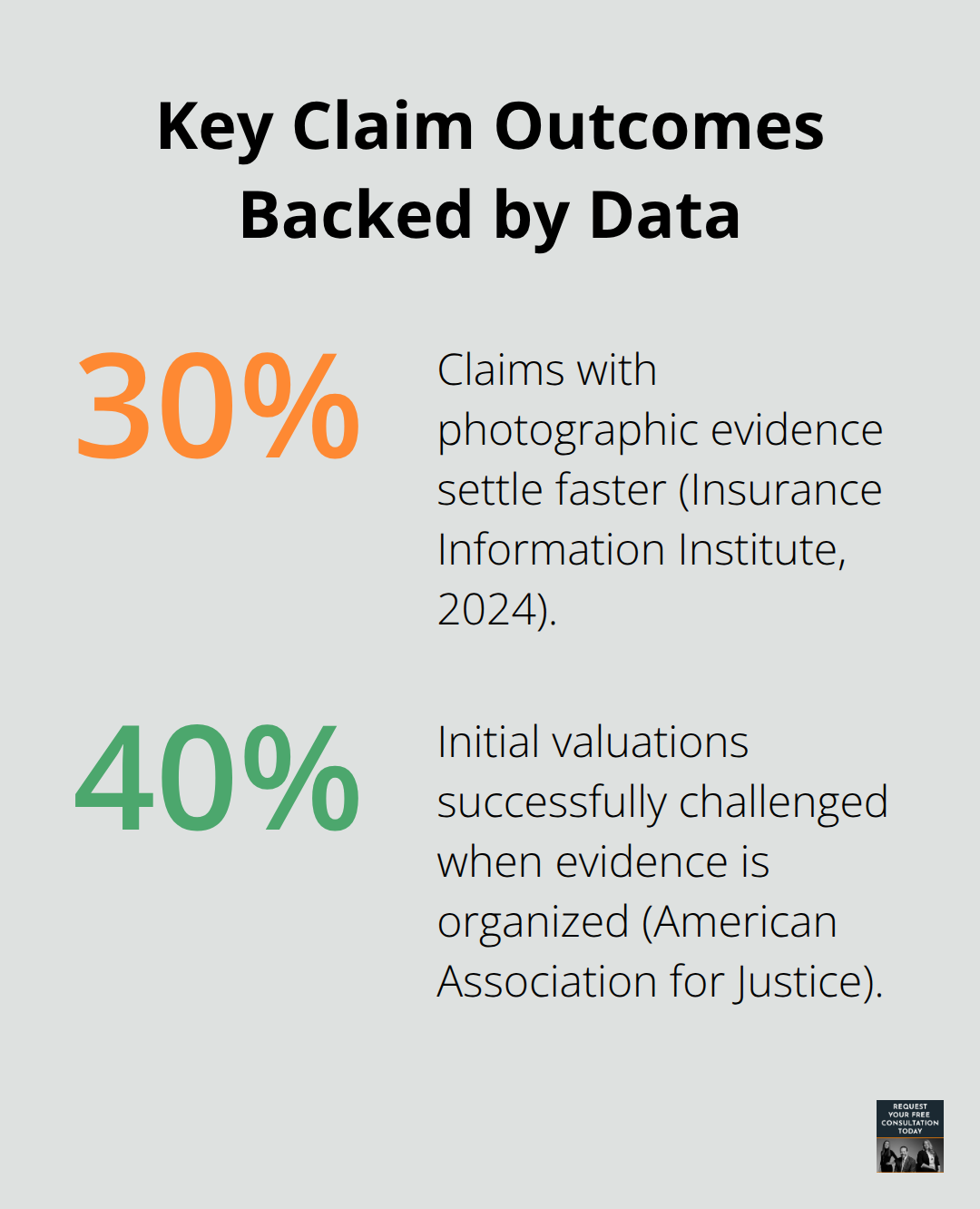
The photos you take right after your accident matter far more than you might think. Insurance adjusters review thousands of claims yearly and move quickly through documentation. Capture multiple angles of every damaged area-close-ups of dents, scratches, and broken glass, plus wide shots showing the overall damage pattern. Natural daylight works better than flash, which obscures details. Include photos of the accident scene itself, showing road conditions and vehicle positions. According to a 2024 report from the Insurance Information Institute, claims with photographic evidence settle 30 percent faster than those without. Store these photos in cloud storage immediately after the accident, not just on your phone. If your vehicle sits in a repair shop for weeks before assessment, take additional photos to document any secondary damage or rust formation that develops.
Gather Written Estimates from Multiple Santa Cruz Body Shops
Repair estimates from Santa Cruz body shops become your negotiating foundation against the insurance adjuster’s initial valuation. Contact at least three different shops and request written estimates that itemize every repair, parts replacement, and labor hour. Body shops in Santa Cruz County typically charge between $65 and $95 per labor hour, so compare labor rates alongside parts pricing. The estimate should specify whether parts are OEM (original equipment manufacturer) or aftermarket-this affects cost significantly. When you present these estimates to your insurance company, highlight any repairs your adjuster omitted entirely. Many adjusters exclude paint matching, undercoating, or alignment checks that reputable shops include in their quotes. Keep digital copies of every estimate, along with contact information for each shop’s manager. If your insurer’s valuation falls more than 10 percent below the average of your three estimates, you have solid grounds to request reconsideration.
Track All Accident-Related Expenses Separately
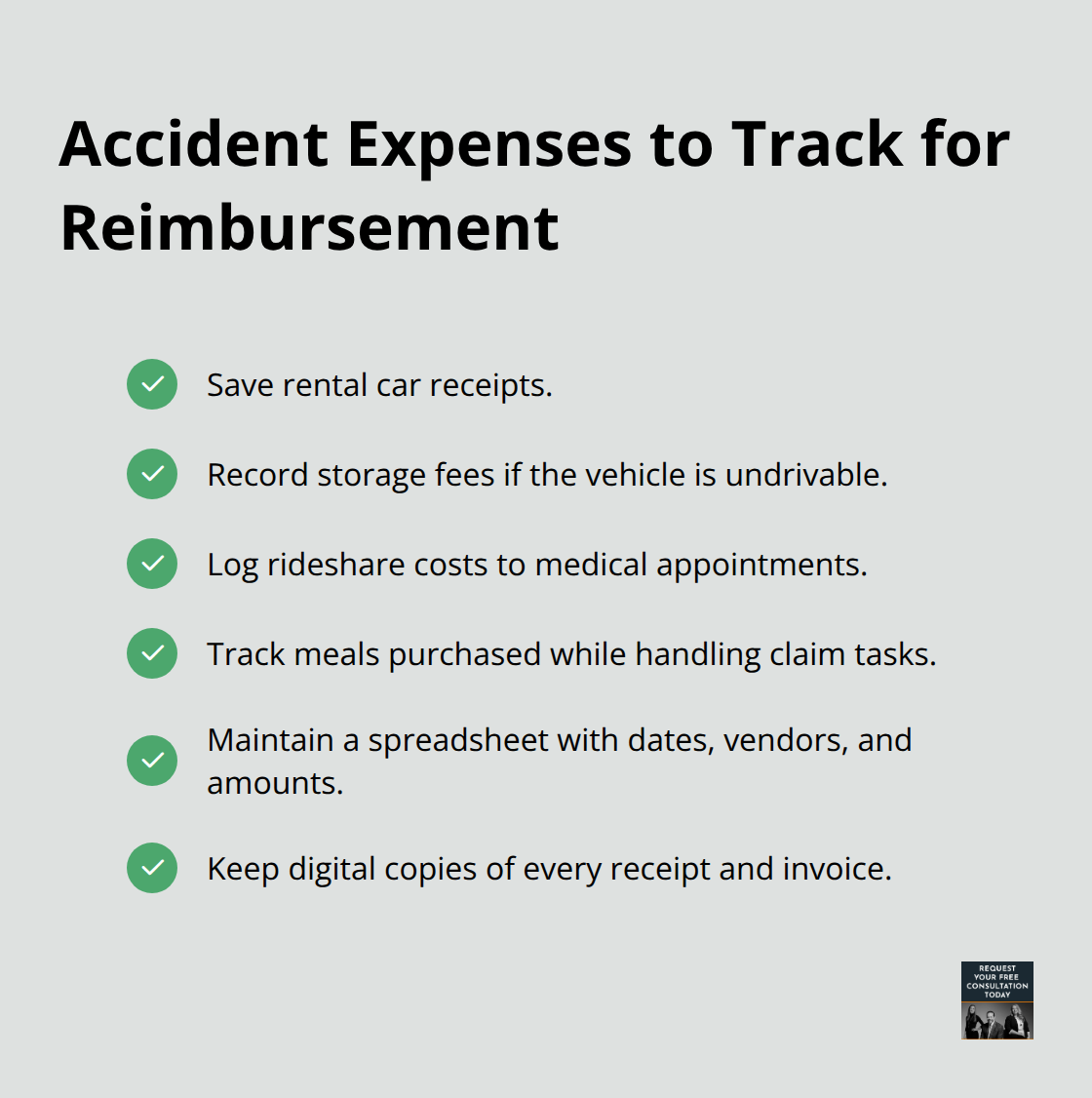
Document all accident-related expenses: rental car receipts, storage fees if your vehicle cannot be driven, rideshare costs to medical appointments, and even meals purchased while handling claim matters at body shops or insurance offices. These secondary expenses often go uncompensated unless you specifically document and request reimbursement. Insurance companies frequently overlook these costs because claimants fail to present them systematically. Creating a spreadsheet with dates, vendors, and amounts makes your reimbursement request harder to dismiss.
Once you have compiled your photographs, repair estimates, and expense documentation, you stand ready to present a comprehensive valuation package to your insurance company.
Negotiating Your Claim Settlement
Your insurance policy sets a ceiling on what the company will pay, but most Santa Cruz accident victims don’t understand their actual coverage limits until after an adjuster delivers their initial offer. Review your declarations page right now if you haven’t already-it lists your collision coverage limit, which is the maximum your insurer will pay for vehicle damage. If your vehicle sustained $15,000 in damage but your collision coverage maxes out at $10,000, the insurer will only pay that limit regardless of your documentation. Knowing this number before negotiation prevents wasting time pursuing a higher payout than your policy allows.
Understanding Your Coverage Limits and Deductibles
Deductibles matter equally-if you carry a $1,000 deductible, that amount comes directly out of your settlement check. The Insurance Institute for Highway Safety reports that the average collision claim in California runs between $8,000 and $12,000, so understanding where your claim falls relative to your coverage becomes your first strategic move. Your declarations page shows both numbers clearly, and you should reference them throughout your negotiation with the insurance company.
Presenting Your Evidence Strategically
Presenting your repair estimates, photographs, and expense documentation to your insurance adjuster requires a structured approach that makes dismissal difficult. Send everything via email with a clear subject line referencing your claim number and the phrase “supporting documentation for damage valuation.” Attach a one-page summary that lists each repair your adjuster excluded or underpriced, then references the specific line item from your body shop estimates that contradicts their valuation.
When an adjuster quoted you $6,500 but three local shops averaged $7,200, that $700 gap warrants explanation. Request a written response within ten business days addressing each discrepancy you’ve identified. If the adjuster refuses to budge after this exchange, contact their supervisor and repeat your documentation package.
When Negotiations Stall
Approximately 40 percent of initial insurance valuations get successfully challenged when claimants present organized evidence, according to data from the American Association for Justice. When negotiations stall despite your evidence, involving an attorney becomes worthwhile.
We can assist in evaluating property damage claims and work to achieve fair valuations that reflect what Santa Cruz body shops actually charge for repairs. Our team can review your claim and help you understand your next steps.
Final Thoughts
Vehicle damage valuation in Santa Cruz follows a predictable process once you understand how insurance companies calculate what they owe you. Adjusters rely on repair cost methods, industry databases, and comparable sales data to reach their initial numbers, and these offers frequently undervalue your claim by 10 to 15 percent. Your photographs, repair estimates, and expense documentation shift the balance in your favor when you present them strategically to your insurer.
After you receive your settlement check, verify that the amount matches your policy coverage limits and accounts for your deductible. If the payout falls short of what your documentation supports, request reconsideration or escalate to the insurance company’s supervisor. Many claimants accept lowball offers without realizing they left thousands on the table through simple negotiation.
When negotiations stall or the insurance company refuses to acknowledge discrepancies in their valuation, contact our team to discuss your vehicle damage valuation in Santa Cruz and understand what your claim should actually be worth. We at Schaar & Silva LLP help accident victims evaluate property damage claims and work toward fair valuations that reflect actual repair costs. Beyond vehicle damage, we connect you with medical lien services and psychological support specialists for your recovery.