

A car accident turns your world upside down in seconds. Medical bills pile up, insurance companies call, and you’re left wondering what happens next.
The legal process after an auto accident doesn’t have to feel overwhelming. We at Schaar & Silva LLP have guided countless accident victims through every step, from gathering evidence at the scene to negotiating settlements that reflect what you’ve actually lost.
What to Do Right After Your Accident
Move to Safety and Call Police
The first hour after an accident determines how strong your claim becomes. Most accident victims make critical mistakes in those initial moments that weaken their position later. The National Highway Traffic Safety Administration reports that nearly 42,500 fatal crashes occurred in 2022, and in many of these cases, proper documentation at the scene made the difference in recovery outcomes. Your immediate actions directly impact what compensation you can recover.
Start by moving to safety if possible. If you’re in a vehicle on a busy road, turn on hazard lights and move to the shoulder or a safe area away from traffic. California law requires you to report accidents involving injury or property damage exceeding $1,000 to local police, so call 911 or the non-emergency line right away.
Document Everything at the Scene
While waiting for police, photograph everything: vehicle damage from multiple angles, road conditions, traffic signs, weather, and the accident scene layout. Capture the other driver’s license plate, vehicle identification number, and insurance card in your photos. Write down the other driver’s name, phone number, address, insurance company, and policy number immediately.
Obtain contact information from at least two independent witnesses-not passengers in either vehicle. The Insurance Information Institute found that witness statements significantly strengthen claims, yet many victims skip this step. Note the time, date, location, and weather conditions in your phone right away.
Seek Medical Evaluation Without Delay
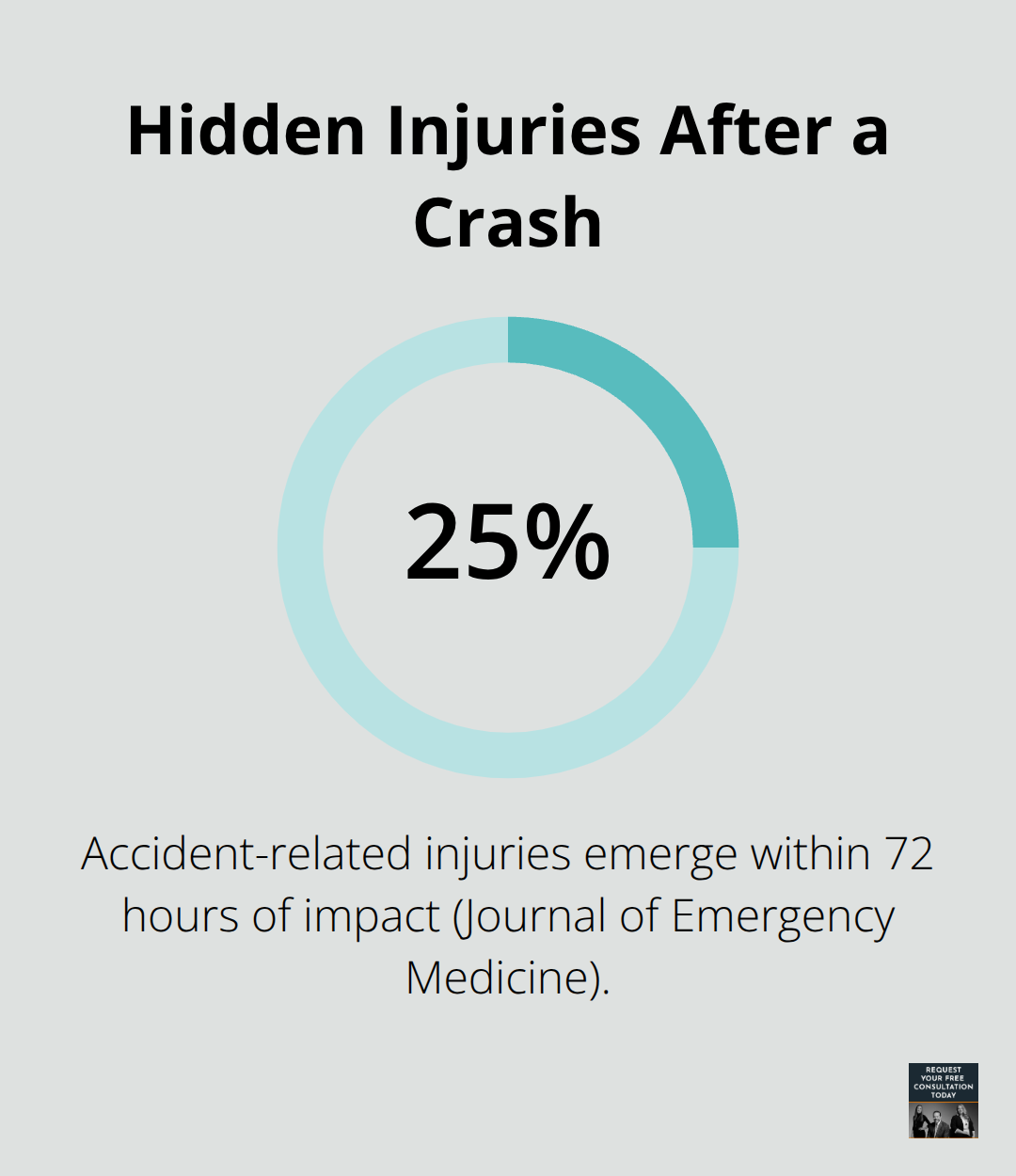
Medical attention cannot wait, even if you feel fine. Many accident injuries like whiplash, internal bleeding, and traumatic brain injuries don’t show symptoms immediately. The Journal of Emergency Medicine reports that 25% of accident-related injuries emerge within 72 hours of impact.
Go to an emergency room or urgent care clinic as soon as possible and get a full medical evaluation.
Tell medical providers about every pain point, no matter how minor it seems, because your medical records become your evidence of injury severity. Request copies of all medical reports and diagnostic imaging results before leaving the facility.
Report to Your Insurance Company and Consider Legal Counsel
Contact your insurance company within 24 hours and report the accident, providing only factual information about what happened. Avoid admitting fault or speculating about causes. Give your insurer the police report number and the other driver’s information.
If you were injured, contact an attorney before accepting any settlement offer, as insurance companies often undervalue claims in the initial stages. Understanding what damages you can actually claim requires knowledge of California law-information that shapes every negotiation ahead.
Understanding Your Legal Rights and Options
Types of Damages You Can Claim
California law gives you the right to recover two distinct categories of damages, and understanding the difference determines how much compensation you should pursue. Economic damages cover your measurable financial losses: medical bills, lost wages, vehicle repair costs, and future medical treatment. Non-economic damages compensate for pain and suffering, emotional distress, loss of enjoyment of life, and permanent scarring or disfigurement.
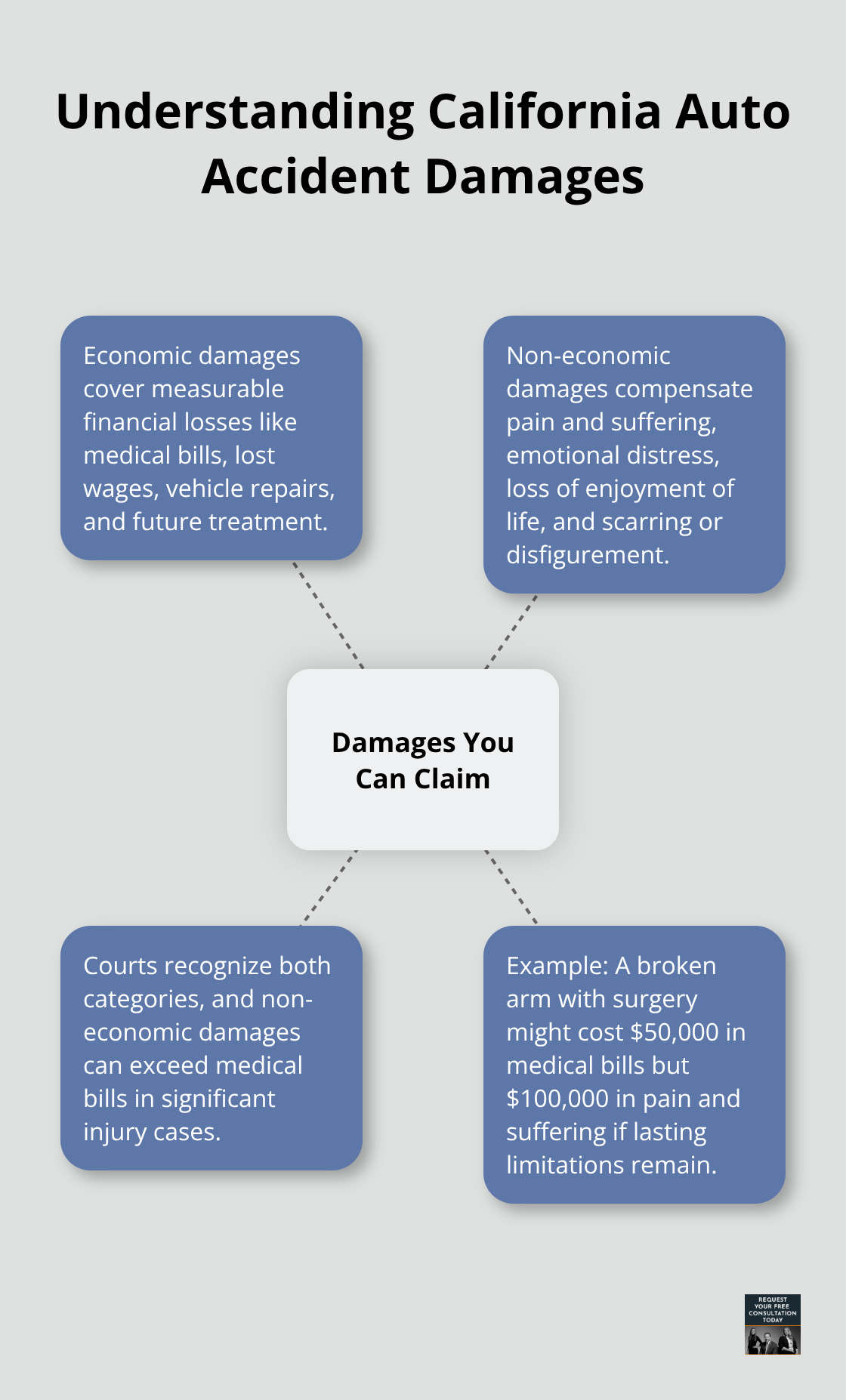
Courts in California recognize both categories as legitimate, but many accident victims focus only on medical bills and miss substantial recovery opportunities. The California Civil Jury Instructions make clear that non-economic damages deserve full compensation just like your hospital receipts. If you suffered a significant injury, non-economic damages often exceed your economic losses. A broken arm with surgery might generate $50,000 in medical costs but $100,000 in pain and suffering damages if the injury caused lasting functional limitations.
Statute of Limitations in California
Your window to file a claim in California is strictly limited. You have two years from the accident date to file a personal injury lawsuit against the at-fault driver, according to California Code of Civil Procedure Section 335.1. If the accident resulted in wrongful death, your family has two years from the date of death to file.
Insurance settlements often happen within this timeframe, but the two-year deadline is absolute-missing it means losing your right to recover anything. Acting quickly protects your legal rights and prevents the statute of limitations from running out on your claim.
How Fault Determination Works in California
Fault determination in California follows a pure comparative negligence rule, meaning you can recover compensation even if you were partially responsible for the accident. If you were 30 percent at fault and the other driver was 70 percent at fault, you can still recover 70 percent of your damages.
Insurance adjusters use police reports, medical records, witness statements, and accident reconstruction evidence to assign fault percentages. California Vehicle Code Section 20001 requires the at-fault driver’s insurance to cover your damages up to their policy limits. Getting legal representation before accepting any settlement offer protects your rights under these California-specific rules and ensures adjusters don’t undervalue your claim based on incomplete evidence.
Getting Your Claim Paid
File Your Claim Immediately
File an insurance claim immediately after police involvement creates an official record that strengthens your position during negotiations. Contact your insurance company within 24 hours and provide only factual details: date, time, location, and what happened. Do not speculate about fault or apologize, as anything you say gets documented and used against you later. Your insurance adjuster will request medical records, police reports, and repair estimates. Provide these documents promptly but never sign anything without reading it completely.
Understand Why Representation Matters
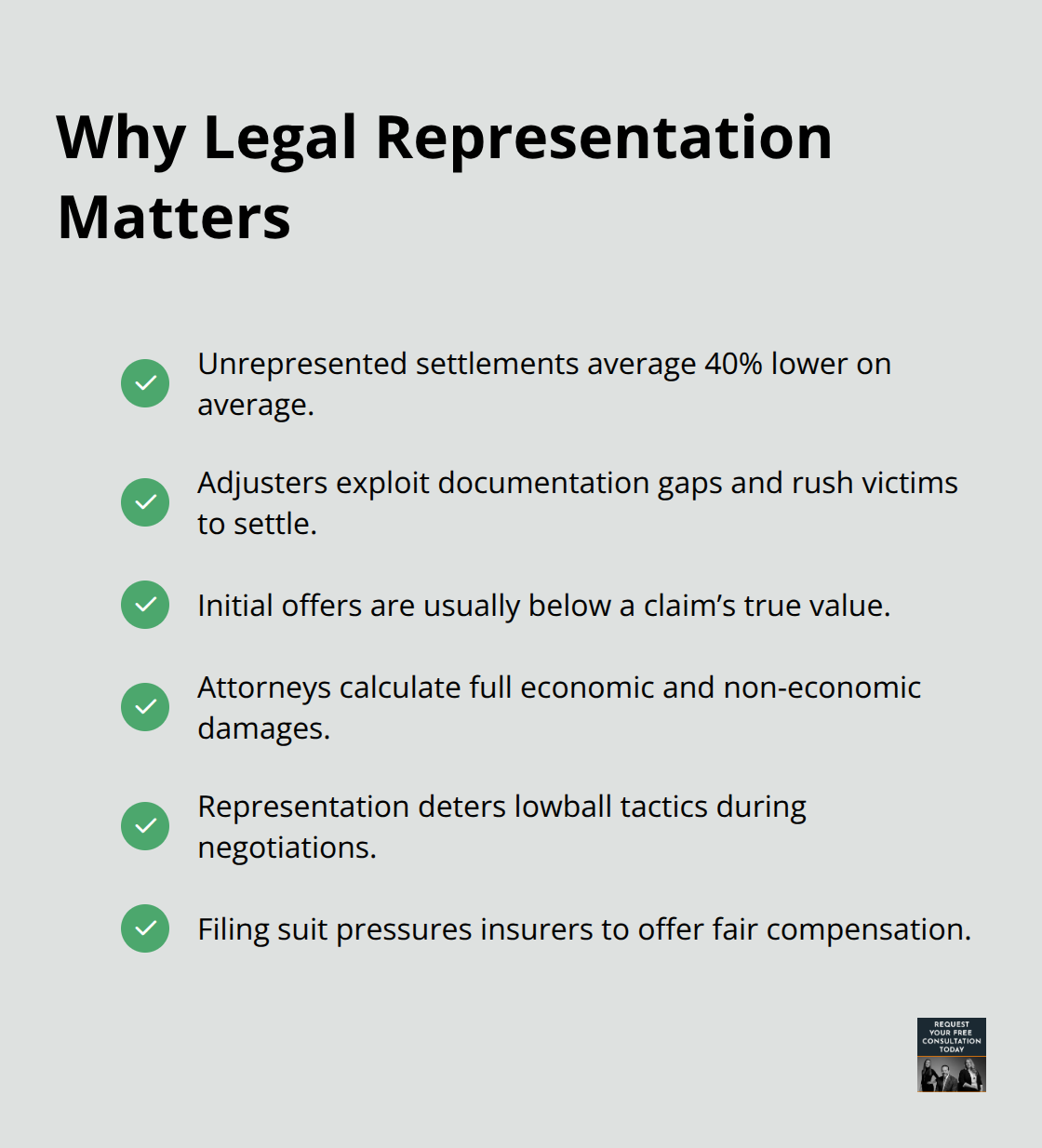
The American Association for Justice reports that unrepresented claimants receive settlements averaging 40 percent lower than those with legal representation, because adjusters exploit gaps in documentation and pressure victims to settle quickly. When an adjuster calls with an initial offer, that number is almost always below what your claim is actually worth. Insurance companies rely on victims accepting their first offer without understanding California’s comparative negligence rules or calculating non-economic damages properly.
Many accident victims in Santa Cruz County, Sacramento, and Oakland make the mistake of handling claims alone, thinking they’ll save money on attorney fees. This strategy backfires when the adjuster’s low offer leaves you short on recovery after medical bills and lost wages are paid.
How Legal Representation Changes Negotiations
An attorney shifts the power dynamic completely during settlement negotiations. Legal representation handles all communication with insurance adjusters, eliminating the pressure tactics they use on unrepresented victims. Your attorney calculates your actual damages by documenting every medical expense, lost wage, and non-economic loss you’ve suffered. During settlement negotiations, most adjusters will increase their offers when they see serious legal representation involved, because they know unrepresented claims are easier to undervalue.
If the insurance company refuses a fair settlement, your attorney files a lawsuit and takes your case to trial, which forces them to justify their lowball offer to a judge or jury. The California Department of Insurance data shows that represented claimants recover three times more compensation than those negotiating alone.
Timing Your Settlement Correctly
Settlement discussions typically take 30 to 90 days once all medical treatment is complete, because insurance companies won’t negotiate seriously while you’re still receiving care. Accepting any settlement before your injuries have fully resolved means you can’t claim additional compensation later if complications develop. This is why waiting for maximum medical improvement before finalizing a settlement protects your long-term recovery and financial security.
Final Thoughts
The legal process auto accident claims require immediate action, proper documentation, and strategic decision-making at every stage. You now understand how to protect yourself at the scene, what damages California law allows you to recover, and why accepting the first insurance offer almost always leaves you undercompensated. The victims who recover the most act quickly, document thoroughly, and obtain legal representation before negotiating with adjusters.
Insurance companies have financial incentives to pay you as little as possible, and they count on unrepresented victims accepting lowball offers without understanding California’s comparative negligence rules or calculating non-economic damages correctly. The data shows that represented claimants recover three times more compensation than those handling claims alone. Your recovery depends on recognizing this imbalance and taking action to protect your rights.
Contact Schaar & Silva LLP for a free consultation about your accident and bring your police report, medical records, and insurance information. We’ll review your case, explain what your claim is actually worth under California law, and handle all negotiations with the insurance company so you can focus on healing. The sooner you reach out, the stronger your position becomes in recovering what you’ve lost.
