
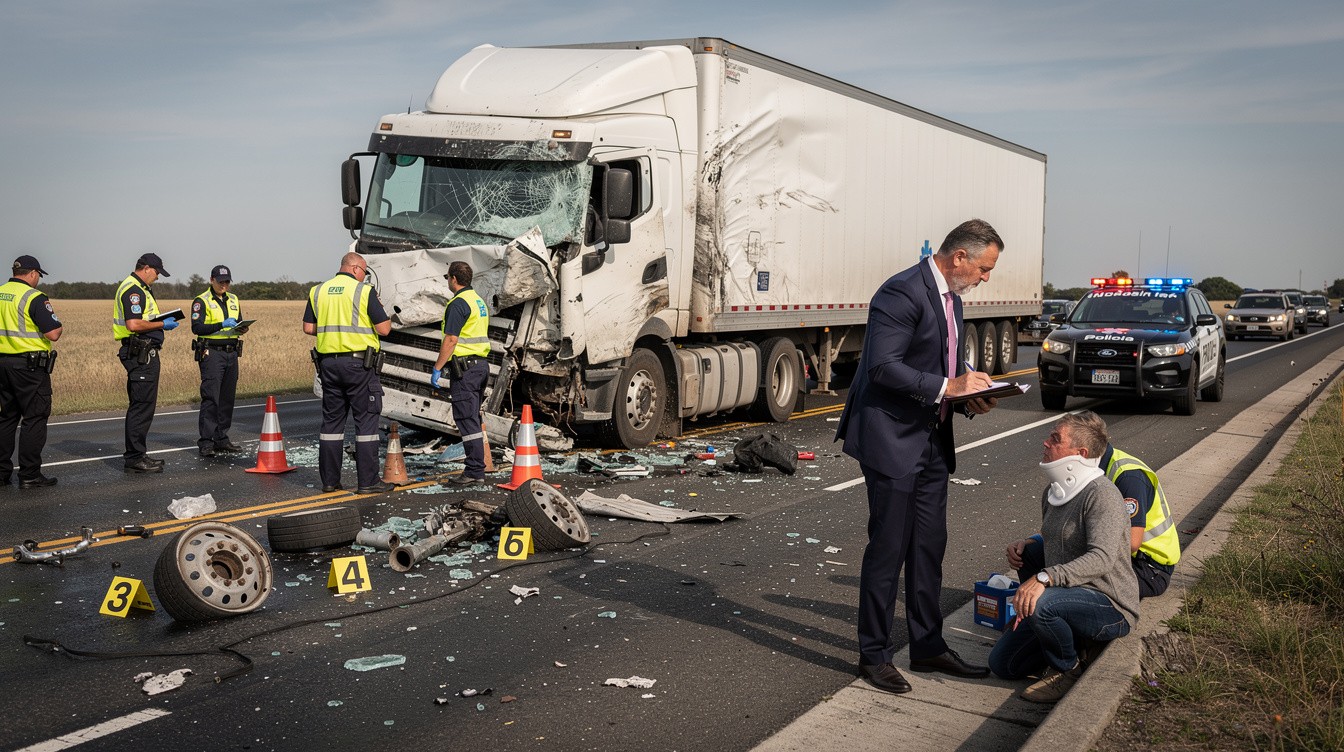
A truck crash in Santa Cruz can leave you facing medical bills, lost wages, and uncertainty about what happens next. The stakes are higher when a commercial truck is involved-liability rules are different, and insurance companies play hardball.
We at Schaar & Silva LLP help accident victims in Santa Cruz County understand their rights and fight for fair compensation. This guide walks you through liability, the claims process, and your legal options.
Why Truck Accidents Hit Differently Than Car Crashes
Federal Regulations Change Everything
Truck crashes in Santa Cruz County follow different legal rules than standard car accidents, and this distinction matters enormously for your case. When a commercial truck is involved, federal regulations from the Federal Motor Carrier Safety Administration govern everything from driver hours to vehicle maintenance. A truck driver who violates these regulations and causes a crash gives you a stronger legal position than you’d have in a typical car accident. Insurance companies know this, which is why they fight harder and deploy more resources when trucks are involved.
The Physics of Truck Collisions
The size difference alone changes liability calculations-a fully loaded semi weighs up to 80,000 pounds compared to a standard car at 3,500 pounds, meaning the damage and injuries are typically more severe. Santa Cruz’s coastal highways and mountain roads create specific hazards for trucks: steep grades on Highway 17, sharp curves near the beaches, and heavy seasonal traffic during summer months all contribute to crashes that wouldn’t happen elsewhere. Brake failure on downhill sections, improper load securing, and driver fatigue account for a significant portion of truck accidents in our region.
Multiple Parties Share Liability
Determining responsibility in a truck crash requires investigating multiple parties, not just the driver. The trucking company itself can be liable for inadequate driver training, failure to maintain the vehicle, or pressuring drivers to violate hours-of-service rules. Maintenance records, logbooks, and dispatch communications become critical evidence that a standard car accident investigation wouldn’t uncover. The driver’s employment status matters too-owner-operators versus company employees create different liability chains.
Insurance Limits Reflect the Risk
Federal regulations require trucks to carry higher insurance limits than regular vehicles, typically $750,000 to $5 million depending on cargo type, which means compensation potential is substantially greater if you know how to access it. These higher limits exist because the potential for serious injury and property damage increases dramatically with commercial vehicles. Understanding who carries what coverage and how to file claims against multiple policies separates victims who recover fully from those who settle for far less than they deserve.
Building Your Case After a Truck Crash
Act Fast to Preserve Evidence
The first hours after a truck crash are when evidence disappears fastest. Photographs of skid marks fade in rain, debris gets cleared by road crews, and witness memories blur. You should take photos of the entire accident scene from multiple angles, including vehicle damage, road conditions, traffic signals, and any visible cargo spillage. Document the truck’s license plate, company name, and unit number clearly. Request the accident report from the Santa Cruz County Sheriff’s Office within 48 hours, as these reports contain officer observations about road conditions and preliminary fault assessments that strengthen your position. The National Highway Traffic Safety Administration data shows that accidents documented within 72 hours have significantly stronger evidentiary value than those investigated weeks later. You should collect contact information from at least three witnesses, ideally those not connected to either vehicle. Ask witnesses to describe what they saw, not their opinions about who was at fault.
Navigate Insurance Company Tactics
Insurance companies handling truck claims operate differently than those handling standard car accidents. The trucking company’s insurance adjuster will contact you quickly, often within 24 hours, and their goal is to minimize liability and settlement amounts. You should avoid providing a recorded statement to any insurance company without speaking to an attorney first, as statements can be twisted to undermine your claim. Request written communication instead of phone calls whenever possible. This creates a paper trail that protects you if disputes arise later.
Document Medical Treatment Thoroughly
Medical documentation must be thorough and immediate because gaps in treatment create opportunities for insurers to argue your injuries weren’t serious. You should obtain medical records from every provider you visit, including emergency room visits, follow-up appointments, physical therapy sessions, and any diagnostic imaging like CT scans or MRIs. Keep receipts for all out-of-pocket medical expenses, transportation costs to medical appointments, and prescription medications. These records directly connect your injuries to the accident and establish the full scope of your damages.
Prove Your Financial Losses
You should document lost wages with written statements from your employer showing dates missed and hourly rates. If you’re self-employed, provide tax returns and client communications showing income loss. The Federal Motor Carrier Safety Administration requires trucking companies to maintain maintenance records and driver logbooks for at least three years, and these documents often reveal negligence that multiplies your recovery potential. Maintenance failures, violations of hours-of-service rules, and inadequate driver training all appear in these records when you know where to look.
Uncover Hidden Liability
Determining responsibility in a truck crash requires investigating multiple parties, not just the driver. The trucking company itself can be liable for inadequate driver training, failure to maintain the vehicle, or pressuring drivers to violate hours-of-service rules. Maintenance records, logbooks, and dispatch communications become critical evidence that a standard car accident investigation wouldn’t uncover. The driver’s employment status matters too-owner-operators versus company employees create different liability chains. Once you’ve gathered this evidence, you’re ready to understand what compensation you can actually recover.
What Compensation Can You Actually Recover
Economic Damages: Calculating Your Financial Losses
Truck crash victims in Santa Cruz County can recover several categories of damages, and understanding the difference between them directly impacts your settlement value. Economic damages cover tangible financial losses: medical expenses, lost wages, vehicle repair or replacement, and transportation costs. If you earned $65,000 annually and missed three months of work due to injury, that’s $16,250 in lost income you can recover. Property damage claims should reflect fair market value, not what the insurance company initially offers-request independent appraisals to support your valuation. Medical bills accumulate quickly after serious truck accidents, and you should obtain itemized statements from every provider to establish the full scope of your losses.
Non-Economic Damages: Compensation for Pain and Suffering
Non-economic damages compensate for pain and suffering, permanent scarring, reduced quality of life, and emotional distress from the accident. Courts in Santa Cruz County typically calculate non-economic damages as a multiple of your economic damages, often ranging from two to five times depending on injury severity. A victim with $50,000 in medical bills and lost wages could reasonably pursue $100,000 to $250,000 in pain and suffering damages. Permanent injuries that affect your ability to work or enjoy daily activities justify higher multipliers. Documentation from mental health professionals strengthens these claims considerably.
Punitive Damages: When Negligence Was Reckless
Punitive damages apply when the trucking company’s negligence was egregious-driver records showing repeated violations of hours-of-service rules, maintenance records revealing ignored safety problems, or evidence of deliberate pressure to break regulations all justify punitive claims. These damages aren’t capped in California, meaning they can significantly exceed your actual losses when negligence was willful or reckless. Evidence of cost-cutting measures that sacrificed safety creates strong punitive damage arguments.
Settlement Versus Trial: Strategic Considerations
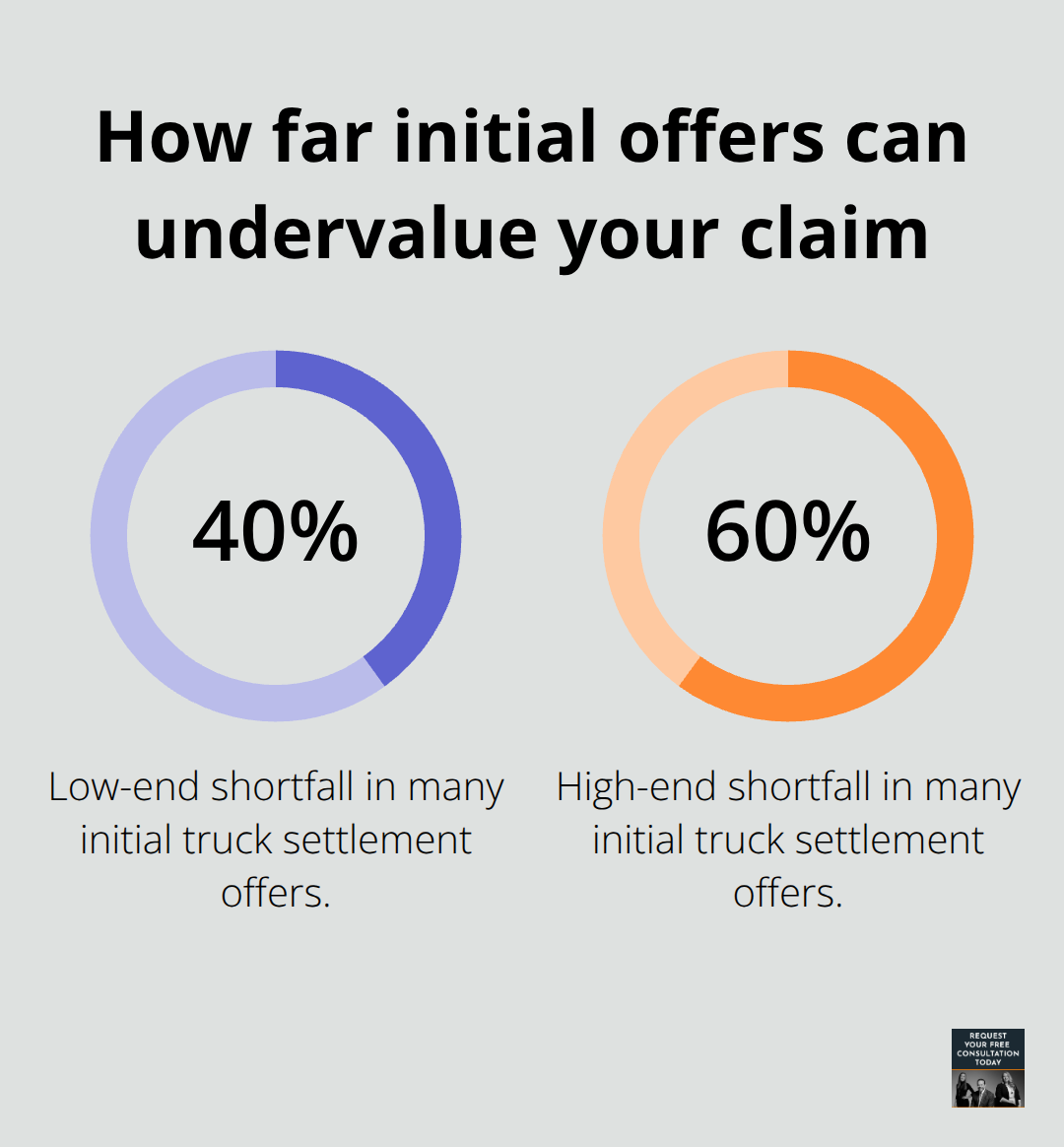
Most truck accident claims settle within 12 to 18 months, but cases that proceed to trial often take three to five years to resolve. Insurance companies know this and use delay tactics hoping you’ll accept less money out of financial desperation. Settlement offers typically arrive after your attorney completes the investigation and presents evidence of liability. Initial settlement offers in truck cases are almost always 40 to 60 percent below what the case is worth-rejecting them positions you for stronger negotiation.
Negotiation leverage increases as trial approaches because insurers face jury uncertainty and higher legal costs.
When Trial Makes Financial Sense
If your case involves catastrophic injuries or death, trial becomes more valuable because juries award significantly higher damages for severe harm than adjusters initially propose. Medical documentation showing permanent disability, expert testimony about future care costs, and evidence of reckless corporate behavior all strengthen trial positioning. The decision to settle or litigate depends on your financial situation, injury severity, and willingness to endure the trial process. Victims with stable income and moderate injuries often settle faster, while those with permanent injuries or clear corporate negligence benefit from taking cases to trial.
Final Thoughts
A truck crash in Santa Cruz County disrupts your life in ways a standard car accident never does. The medical bills mount faster, the injuries run deeper, and the legal complexity multiplies because multiple parties share responsibility. Protecting your rights means acting immediately to preserve evidence, documenting every medical visit and expense, and understanding that initial insurance offers undervalue your claim by 40 to 60 percent.
The investigation phase determines your case’s strength, as maintenance records, driver logbooks, and dispatch communications reveal whether the trucking company cut corners on safety or pressured drivers to violate regulations. These documents transform a straightforward accident into evidence of corporate negligence that justifies higher compensation and sometimes punitive damages. Without thorough investigation, you’ll never know what your case is actually worth.
Local representation matters because Santa Cruz County’s specific geography and traffic patterns create unique truck accident dynamics (Highway 17’s steep grades, coastal road conditions, and seasonal traffic surges all factor into liability analysis). We at Schaar & Silva LLP help accident victims in Santa Cruz move forward with confidence by connecting you with medical lien services, evaluating property damage fairly, and linking you with psychological support for trauma. Contact us today to discuss your truck crash case and learn what compensation you can realistically pursue.