

Truck accidents leave victims facing medical bills, lost income, and life-altering injuries. The path forward requires understanding the truck crash litigation steps that will help you recover what you’ve lost.
At Schaar & Silva LLP, we guide clients through each phase of the legal process so you know exactly what to expect.
What To Do Immediately After a Truck Crash
The Critical First Hours Shape Your Case
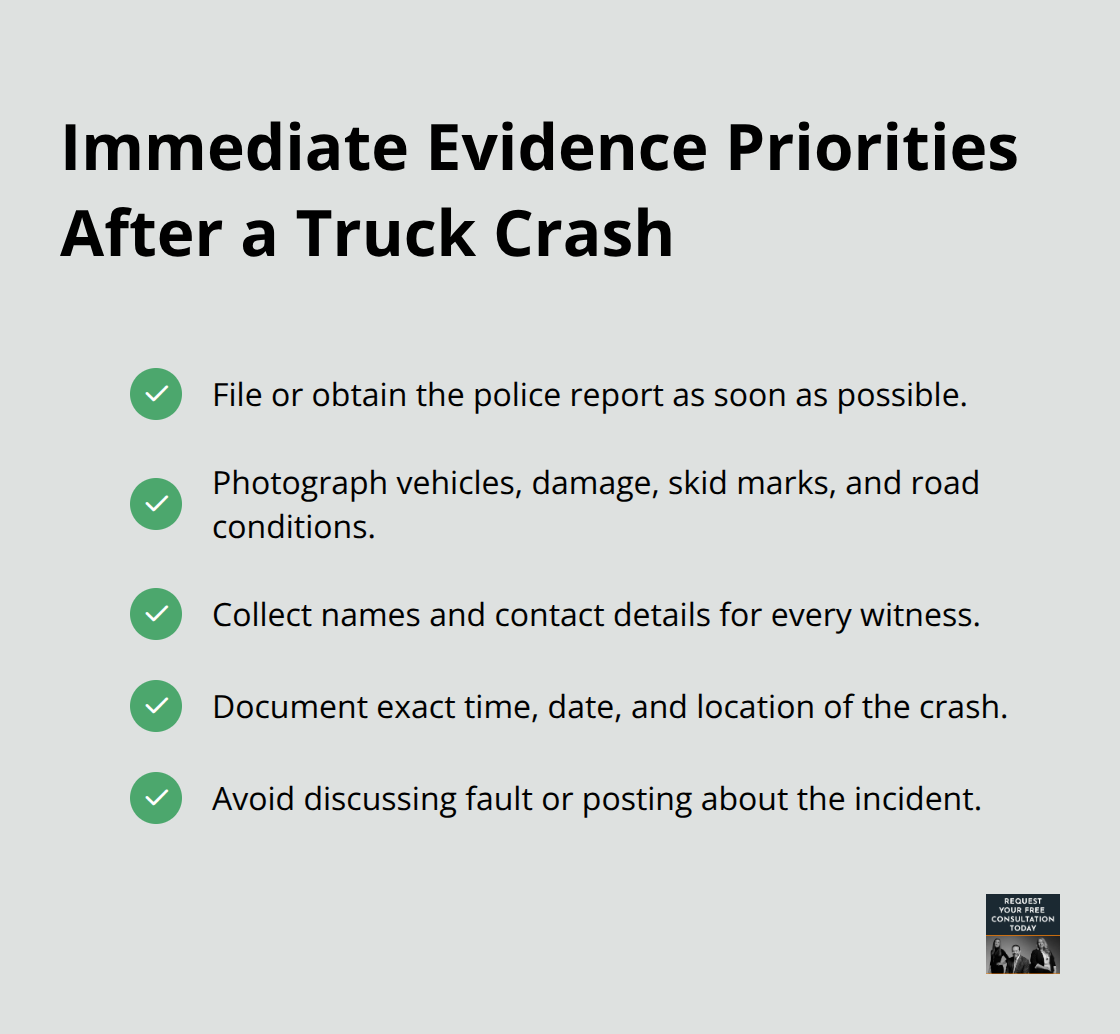
The first hours after a truck accident determine the strength of your case. Most truck crash victims make critical mistakes during this window-mistakes that undermine their ability to recover damages later. Police reports filed within hours carry more weight than those filed days later. Witness memories fade rapidly; studies show that witness recall drops significantly after 48 hours. Your photographs of the scene, vehicle damage, and road conditions become your strongest evidence when memories conflict in depositions months down the road.
Document Everything at the Scene
You must photograph the truck’s position, your vehicle’s damage from multiple angles, skid marks, debris fields, road conditions, weather, and traffic signals. Obtain the truck driver’s name, company, license plate, vehicle identification number, insurance information, and phone number. Write down the exact location, time, and date. If police arrive, obtain the officer’s name and badge number; request the case or incident number. This number becomes your reference point throughout litigation. Collect names and contact information from every witness-other drivers, pedestrians, store clerks from nearby businesses, or residents. Ask each witness for a brief statement about what they saw. Do not discuss fault or blame with anyone at the scene; insurance companies monitor social media and statements to undermine claims.
Seek Medical Care and Report the Accident
You must seek medical attention immediately, even if injuries seem minor. Truck crash injuries often manifest days or weeks after impact; delayed treatment weakens your damages claim because insurers argue the injuries weren’t serious. Medical records from the day of the accident establish causation between the crash and your injuries. Report the accident to police and your insurance company without delay. File a police report regardless of fault; this creates an official record. When speaking with insurance adjusters, stick to facts only-do not speculate about fault, liability, or injury severity. Insurance companies use recorded statements against claimants in settlement negotiations.
Protect Your Claim From the Start
Your actions in the first 24 hours shape whether you recover full compensation or settle for far less than your losses warrant. The decisions you make now-what you say to adjusters, which statements you give, how thoroughly you document the scene-directly affect your ability to hold the truck driver and their company accountable. Once you understand what happened at the accident scene and have secured medical records, the next phase involves building your case with the help of investigators and determining who bears legal responsibility for your injuries.
Building Your Truck Accident Case
Establishing Liability Through Evidence and Regulations
Liability in truck accidents turns on whether the driver or company violated traffic laws, safety regulations, or their duty of care toward others on the road. Federal Motor Carrier Safety Administration regulations govern truck operations; violations of these rules create strong evidence of negligence. If the truck driver exceeded hours-of-service limits set by the FMCSA, that violation demonstrates the company knowingly allowed fatigue to endanger the public. Police reports document traffic violations at the scene, but investigators uncover deeper liability issues that officers may miss.
How Accident Reconstructionists Prove What Happened
Accident reconstructionists analyze vehicle positions, damage patterns, and skid marks to determine pre-impact speeds and driver reaction times. This technical analysis proves causation when the defense claims the crash resulted from unavoidable circumstances. Their findings translate complex physics into clear evidence that juries understand. The reconstructionist’s report often becomes the turning point in settlement negotiations because it removes speculation from the liability question.
Documenting Every Financial Loss
Calculating damages requires documentation of every financial loss: medical bills, lost wages, rehabilitation costs, and vehicle repairs. Medical records establish the severity of injuries and ongoing treatment needs. Pay stubs and tax returns quantify lost income.
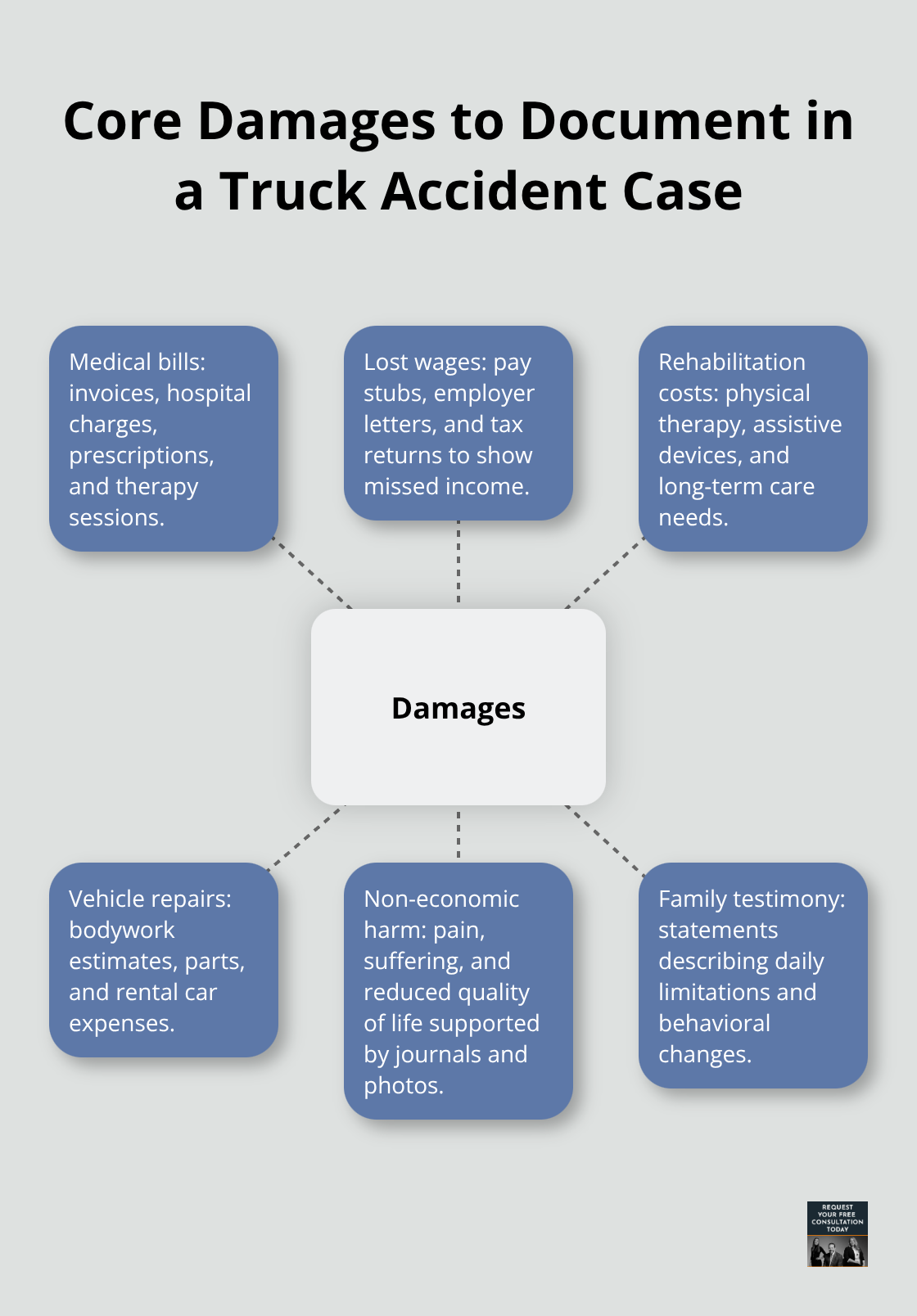
Non-economic damages-pain, suffering, and diminished quality of life-demand careful documentation too (injury journals describing daily struggles, photographs of scars, and testimony from family members about behavioral changes strengthen these claims).
Negotiating Against Insurance Company Tactics
Trucking companies carry substantial insurance policies; the adjuster assigned to your case works to minimize what they pay. Insurance adjusters pressure victims to accept settlements far below what their injuries warrant. They use recorded statements, social media posts, and medical gaps to argue injuries were less severe than documented. When you face these negotiations alone, you accept inadequate settlements that fail to cover long-term care or permanent disability. The strength of your case depends on thorough documentation from day one, professional investigation of the crash mechanics, and realistic damage calculations based on your actual losses rather than insurance company estimates. Once you have established liability and calculated your damages, the formal legal process begins-and understanding the steps ahead helps you prepare for what comes next.
The Legal Process and Settlement Negotiations
Filing Your Claim and Understanding Court Timelines
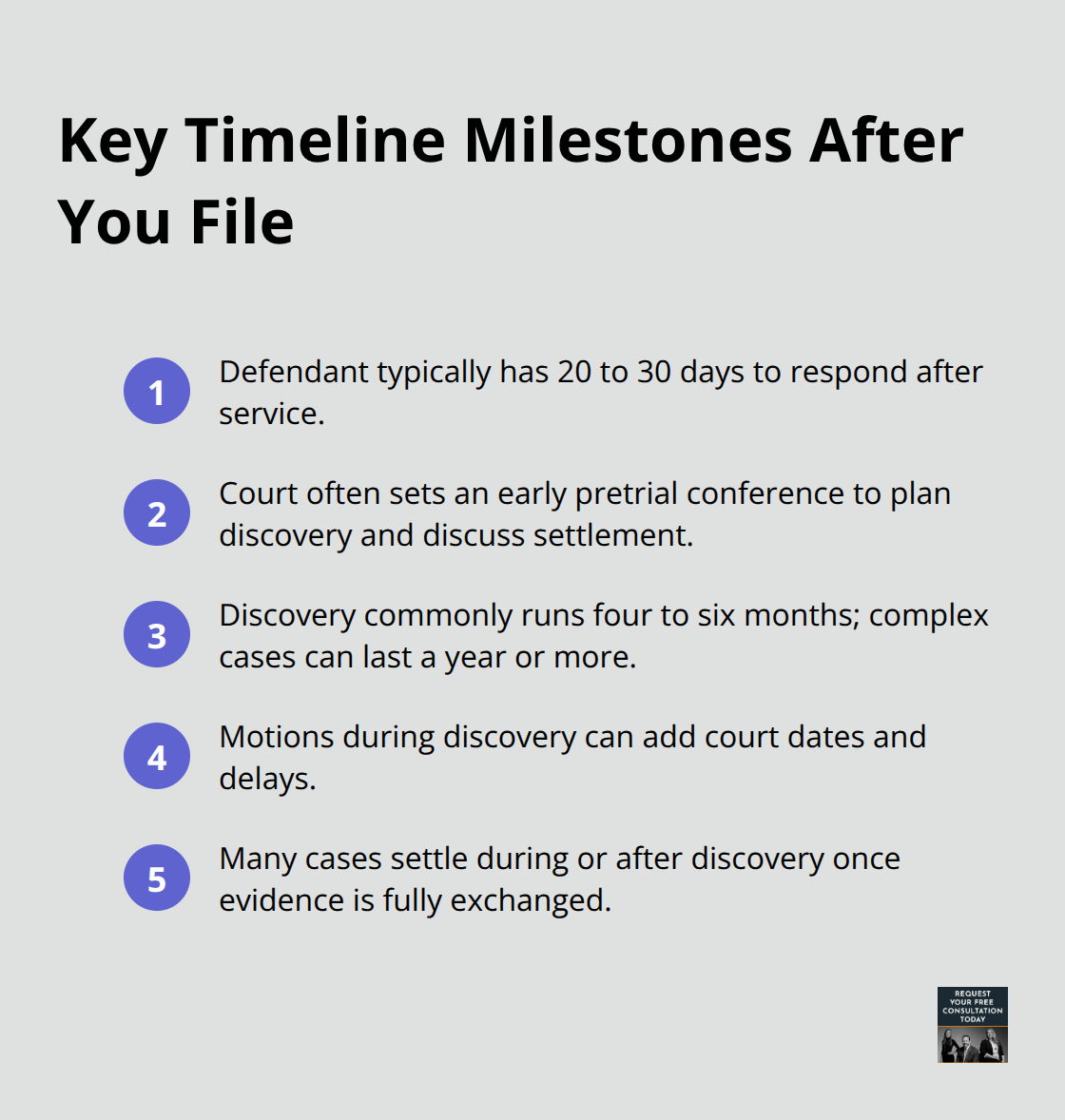
Filing your claim initiates the formal legal process, and timing matters more than most victims realize. Once you file a complaint with the court clerk, you start the clock on multiple deadlines that will govern the next months or years of your case. The defendant receives service of process, which legally notifies them of the lawsuit and triggers their obligation to respond within a specific timeframe-typically 20 to 30 days depending on California court rules. During this early phase, the court usually schedules a pretrial conference where both sides meet to discuss settlement possibilities, identify key issues, and establish a discovery plan. This initial meeting sets the trajectory for your entire case; courts that manage cases actively tend to resolve disputes faster than those that allow parties to move at their own pace.
The Federal Rules of Civil Procedure, combined with local court rules and individual judge preferences, create a framework that varies significantly between Santa Cruz County, Sacramento, and Oakland courts. Some judges issue standing orders that accelerate discovery deadlines or require early mediation; others allow broader latitude for case development. Understanding your specific judge’s approach early gives you a strategic advantage because you can prepare documents and evidence according to their expectations rather than scrambling to meet unexpected requirements.
Discovery and Evidence Exchange
Discovery is where the real work of litigation unfolds, and this phase determines whether you have sufficient evidence to win or sufficient leverage to negotiate a strong settlement. Both sides exchange documents, respond to written questions called interrogatories, and produce evidence that supports their position. Insurance companies and trucking firms use discovery to identify weaknesses in your case, locate contradictions in witness statements, and gather ammunition for trial.
Your legal team uses discovery to obtain the truck company’s maintenance records, driver training files, hours-of-service logs, and prior complaints about unsafe practices that establish a pattern of negligence. The discovery process typically lasts four to six months, though complex cases involving catastrophic injuries or wrongful death can extend discovery for a year or longer. During discovery, either party can file motions to compel production of documents, challenge the scope of requests, or seek protective orders for sensitive information. These motions create additional court dates and can delay resolution, which is why many cases settle during or immediately after discovery when both sides have complete information about the other’s position.
Negotiating with Insurance Companies and Defendants
Settlement negotiations intensify once discovery reveals the strength or weakness of evidence. Insurance adjusters who initially offered minimal settlements often increase their offers substantially once accident reconstruction reports, medical records, and regulatory violations become part of the discovery file. The insurance company’s willingness to settle reflects their calculation of trial risk; when evidence strongly supports your liability claim and damages are well-documented, their exposure at trial becomes too high to justify continued defense.
Insurance companies and trucking firms use recorded statements, social media posts, and medical gaps to argue injuries were less severe than documented. They pressure victims to accept settlements far below what their injuries warrant. When you face these negotiations alone, you accept inadequate settlements that fail to cover long-term care or permanent disability. Strong settlement demands backed by concrete evidence-rather than speculation-shift negotiations in your favor and typically result in faster resolution and higher compensation than cases built on incomplete information.
Final Thoughts
Truck crash litigation steps follow a clear path from the accident scene through settlement or trial, but the journey demands precision at every stage. The decisions you make in the first hours after impact, the evidence you gather, and the professionals you hire determine whether you recover full compensation or accept far less than your losses warrant. Liability must be proven through documentation, accident reconstruction, and regulatory violations, while damages must be calculated with accuracy, accounting for medical expenses, lost income, and the permanent changes to your quality of life.
Trucking companies and their insurers have teams of lawyers and adjusters working to minimize what they pay. When you navigate truck crash litigation alone, you face opponents with vastly more resources and experience in these cases. Professional legal representation transforms your case from a collection of documents and medical records into a compelling narrative backed by evidence and strategy.
Contact Schaar & Silva LLP to discuss your case. We serve Santa Cruz County, Sacramento, and Oakland, and we understand the specific court procedures, judge preferences, and local factors that affect outcomes in your area. The sooner you begin building your case with professional guidance, the stronger your position becomes in settlement negotiations or trial preparation.