
A truck crash can leave you facing medical bills, lost income, and overwhelming stress. Understanding the truck crash claim process helps you protect your rights and recover what you’re owed.
At Schaar & Silva LLP, we’ve guided countless accident victims through each stage-from the scene to final judgment. This guide walks you through the exact steps you need to take.
Immediate Steps After a Truck Accident
The first hours after a truck accident determine the strength of your claim. Most people freeze or panic, which costs them thousands in settlements. You need to act with purpose while adrenaline is still high, because evidence disappears fast and memories fade within days.
Document the Scene and Gather Evidence
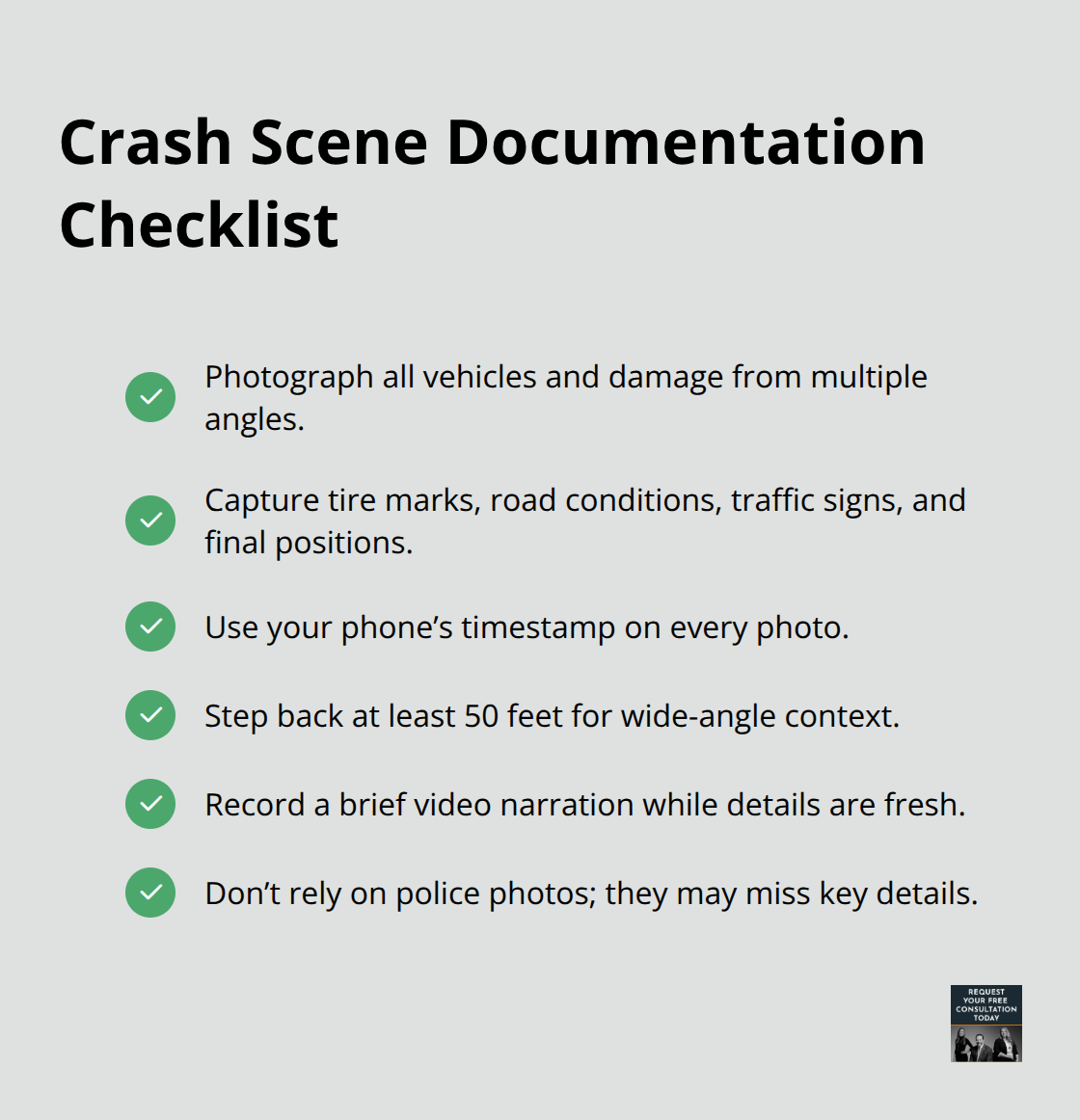
Photograph everything at the scene before anything moves. Take pictures of vehicle damage from multiple angles, tire marks on the pavement, road conditions, traffic signs, and the final resting positions of all vehicles involved. The National Highway Traffic Safety Administration reports that truck accidents result in an average of 4,000 deaths annually, and these incidents often involve multiple vehicles or pedestrians, making scene documentation critical for establishing what actually happened.
Use your phone’s timestamp feature and photograph the accident scene from at least 50 feet away to capture the overall context. If you’re injured but able to move safely, record a brief video describing what happened while details are fresh. Don’t wait for police to arrive-officers often don’t photograph scenes thoroughly, and their reports may omit details that help your case.
Collect Information from Drivers and Witnesses
Get the truck driver’s full name, phone number, address, insurance company name, policy number, and license plate. Request the same information from any other drivers involved. Write down the truck’s company name if visible on the vehicle, along with any logos or identification numbers. This information directly identifies who’s financially responsible for your injuries.
Collect contact information from every witness present, including their phone numbers and addresses. Witnesses typically disappear within weeks, and their statements become invaluable if the insurance company disputes liability. Ask witnesses to describe what they saw, and jot down their exact words rather than paraphrasing.
Seek Medical Attention and Report the Accident
Seek medical attention immediately, even if you feel fine. Truck accident injuries often develop over hours or days-internal bleeding, spinal damage, and traumatic brain injuries frequently don’t show symptoms right away. Medical records create an official timeline linking your injuries directly to the accident, which insurance companies use to evaluate claim value.
Report the accident to police and request a copy of the police report number. If you’re unable to gather information due to severe injury, ask a family member or friend to handle documentation while you receive medical care. The information you collect now-photos, witness statements, and medical records-forms the foundation for determining who caused the accident and what compensation you deserve.
Building Your Truck Crash Claim
Liability determination comes first, and this requires connecting the truck driver’s actions directly to your injuries. Insurance adjusters will argue about fault aggressively, so you need documentation that leaves no room for debate. The truck driver’s logbook, dashcam footage, and police report form the foundation, but you’ll also need records showing the driver violated hours-of-service regulations, maintenance logs proving the truck was poorly maintained, or communications between the trucking company and driver about unsafe practices.
Identifying All Responsible Parties
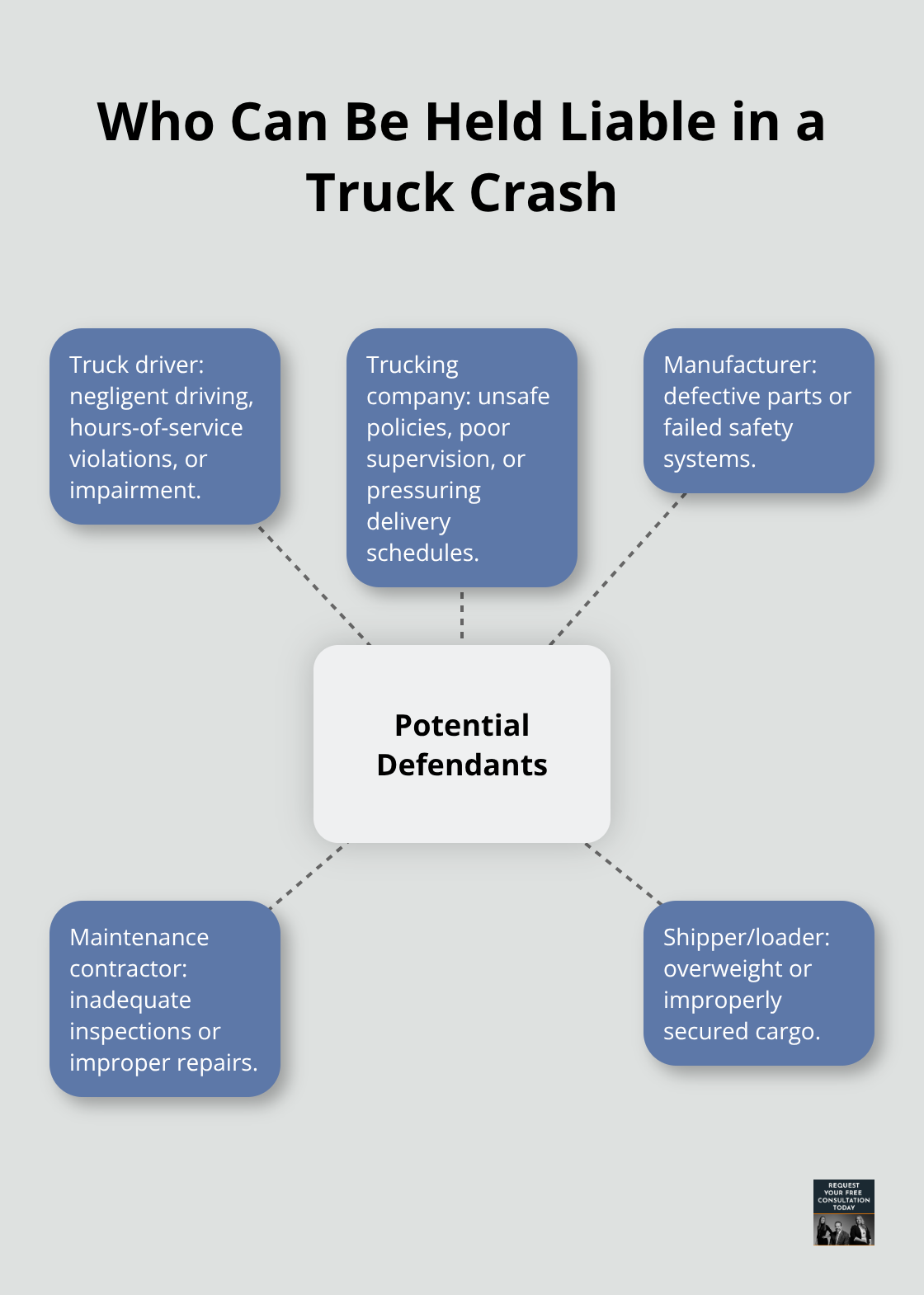
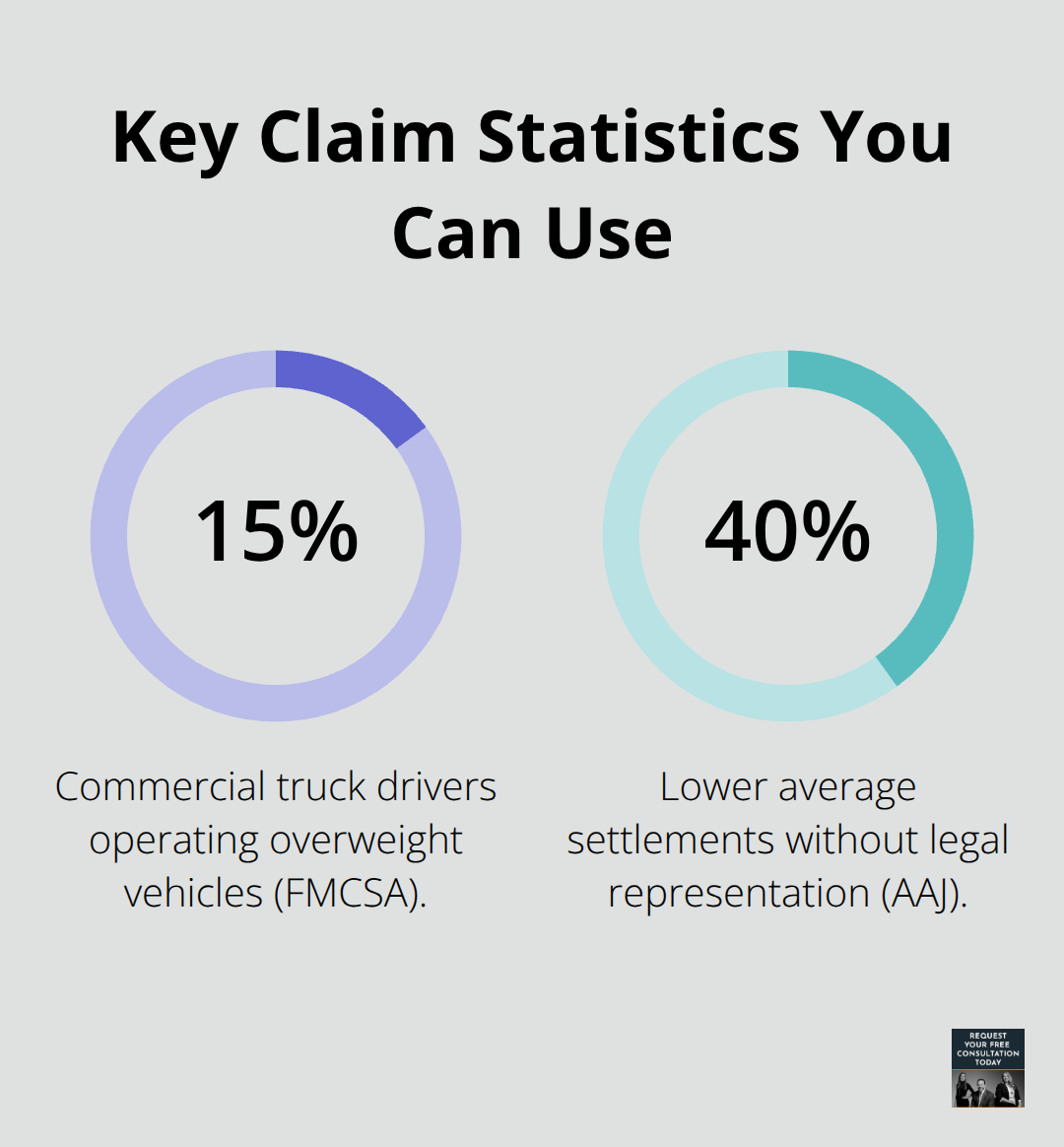
The Federal Motor Carrier Safety Administration reports that approximately 15% of commercial truck drivers operate vehicles that violate weight regulations, which directly impacts accident severity and liability. You must identify every party who bears responsibility-the driver, the trucking company, the truck manufacturer if equipment failed, the maintenance contractor, or the shipper if improper loading caused the crash. Each responsible party carries insurance coverage, and pursuing multiple parties increases your total recovery significantly.
Documenting Medical Expenses
Medical expenses include not just emergency room bills but also ongoing physical therapy, imaging studies, medications, and future surgeries your doctors anticipate. You must obtain itemized bills from every healthcare provider who treated you. Request written statements from your treating physicians describing your prognosis, whether you’ll recover fully, and what limitations you’ll face long-term. Complete medical documentation directly influences how adjusters value your claim, making the quality of medical records your most powerful negotiating tool.
Calculating Lost Wages and Earning Capacity
Lost wages cover both time off work while recovering and reduced earning capacity if injuries prevent you from returning to your previous job. The Bureau of Labor Statistics shows that workers injured in traffic accidents lose an average of 20 workdays annually, which translates to thousands in lost income before your case settles. Document lost wages with pay stubs, tax returns, and written statements from your employer confirming your salary and time away from work.
Valuing Pain, Suffering, and Permanent Changes
Pain and suffering, permanent disfigurement, and reduced quality of life carry significant value in truck crash claims because the injuries are typically severe. Medical professionals must document the severity of your injuries through detailed exam notes, diagnostic imaging results, and functional capacity evaluations that explain how your life changed. These assessments establish the foundation for what you’ll present to insurance adjusters during negotiations.
Settling Your Truck Crash Claim
Insurance adjusters use predictable tactics designed to minimize what they pay you, and understanding these strategies protects your financial recovery. Adjusters typically start negotiations 30-40% below what your claim is actually worth, banking on you accepting quickly due to medical bills and lost income. They’ll request your social media accounts, question whether your injuries are truly permanent, and suggest that your medical treatment was excessive. The American Association for Justice reports that claimants who negotiate without representation accept settlements worth 40% less than cases handled with legal guidance. Your job is to counter these tactics with documentation so solid that adjusters can’t argue against your numbers.
Organizing and Presenting Your Evidence
Present your claim by organizing medical records chronologically with a clear summary showing the link between the accident and your injuries. Include itemized medical bills, prescription receipts, and written statements from your doctors describing your prognosis and permanent limitations. Add your wage loss documentation, photographs of vehicle damage, the police report, and any evidence showing the truck driver violated hours-of-service regulations or safety standards. When you meet with adjusters, lead with your strongest evidence first.
Insurance companies track settlement patterns for similar injuries in your region, so your documentation must show your case is worth more than the typical settlement. If the adjuster claims your injuries don’t match the damage to your vehicle, counter with medical imaging showing spinal injuries or traumatic brain injury (which frequently occur without severe vehicle damage in truck accidents).
Setting Deadlines and Creating Urgency
Submit your settlement demand in writing with a deadline, typically 21-30 days. This creates urgency and prevents adjusters from delaying indefinitely. Adjusters often increase offers when they see you’ve done thorough analysis and won’t accept lowball numbers.
Evaluating Settlement Offers Carefully
Evaluate any settlement offer against your actual damages, not against what you hoped to receive. Calculate total medical expenses you’ll face over the next five years, add documented lost wages, then assign a reasonable value to permanent scarring, reduced mobility, or chronic pain based on similar cases in California courts. If the offer falls short by more than 15-20%, reject it and explain why in writing.
Recognizing When Litigation Makes Sense
If negotiations stall after multiple exchanges, this signals that pursuing litigation will likely yield better results than continued settlement discussions.
Final Thoughts
The truck crash claim process demands organization, documentation, and persistence. You’ve now seen how evidence collected at the scene, medical records, wage loss documentation, and strategic negotiation directly determine what you recover. Most accident victims settle for far less than their claims are worth because they lack this roadmap or underestimate their injuries’ true value.
Pursuing legal representation makes financial sense when settlement negotiations stall or when the insurance company’s offer falls significantly short of your documented damages. We at Schaar & Silva LLP have guided countless accident victims through this exact journey, and professional guidance increases recovery amounts substantially. Our team handles the legal complexities while you focus on healing, and we assist with medical bill management through lien services, property damage evaluation, and connecting you with psychological support if trauma affects your recovery.
If you’ve received a settlement offer that seems low, if multiple parties share responsibility for the accident, or if your injuries are severe with long-term consequences, contact us to review your truck crash claim process at no cost. We serve Santa Cruz County and surrounding areas, and we’re ready to protect you from further financial loss while your body heals.
