
Truck accidents in California often leave victims facing overwhelming medical bills, lost income, and complex legal processes. At Schaar & Silva LLP, we help people in Santa Cruz County, Sacramento, and Oakland understand their rights and fight for fair compensation.
A truck accident settlement in California depends on many factors-from injury severity to insurance company tactics. This guide walks you through each step so you can make informed decisions about your case.
What Happens After a Truck Accident in California
Act Immediately at the Scene
The first 24 hours after a truck accident determine how strong your settlement position becomes. At the accident scene, photograph everything before vehicles move-the truck’s position, skid marks, road conditions, traffic signals, and all vehicle damage from multiple angles. Collect contact information and statements from every witness you can find; their accounts matter far more than you might think because trucking companies aggressively challenge liability claims. If police arrive, request a copy of the accident report number and follow up within days to verify it was filed correctly.
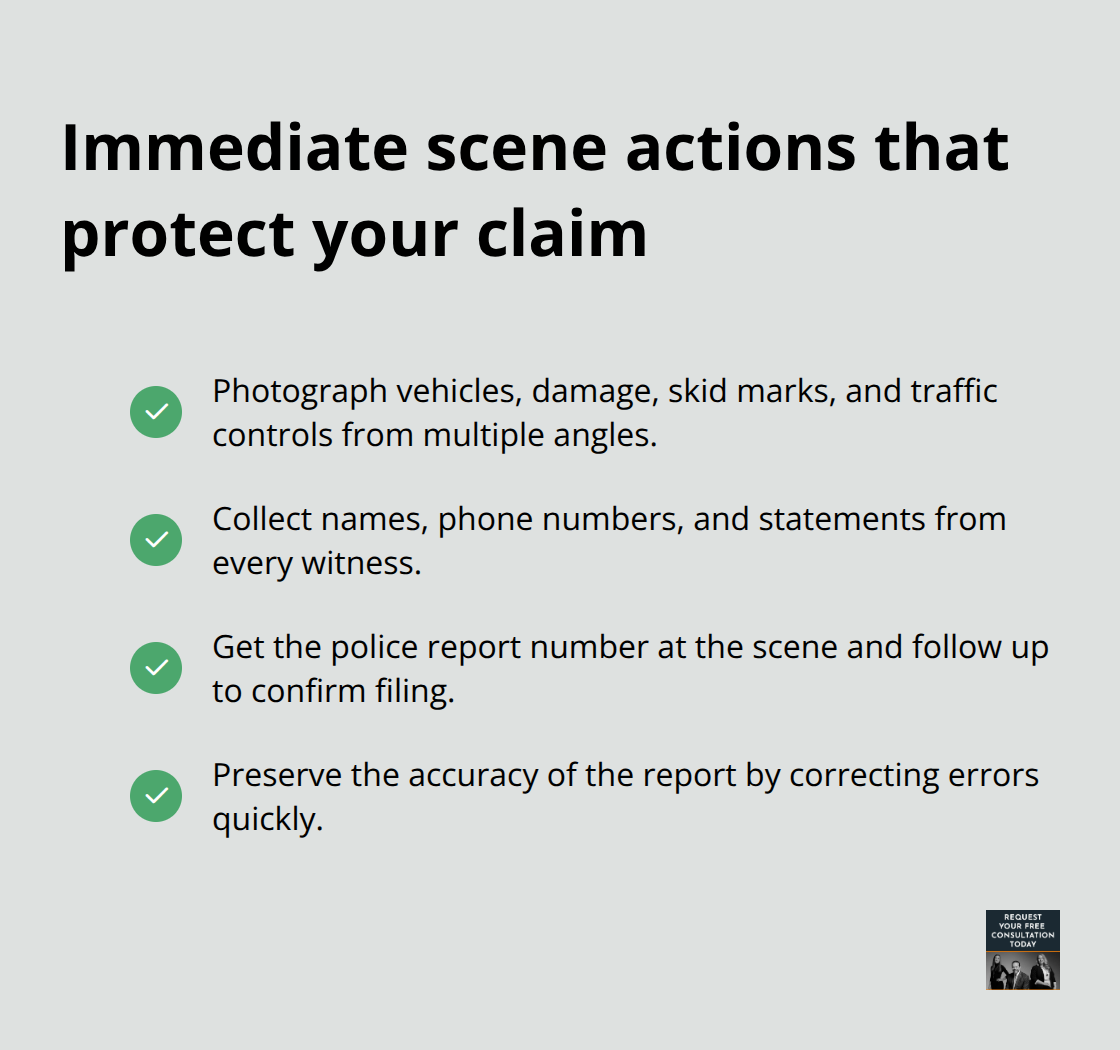
Many accident reports contain errors or omissions that weaken claims later.
Document Your Injuries and Expenses
Take photos of your injuries immediately and continue documenting them as they heal; insurance adjusters rely on visual evidence to assess pain and suffering damages. Keep every receipt-medical bills, prescriptions, transportation costs, lost wages. California law gives you two years from the accident date to file a personal injury claim, but waiting costs you leverage because evidence degrades and memories fade.
Understand California’s Comparative Negligence System
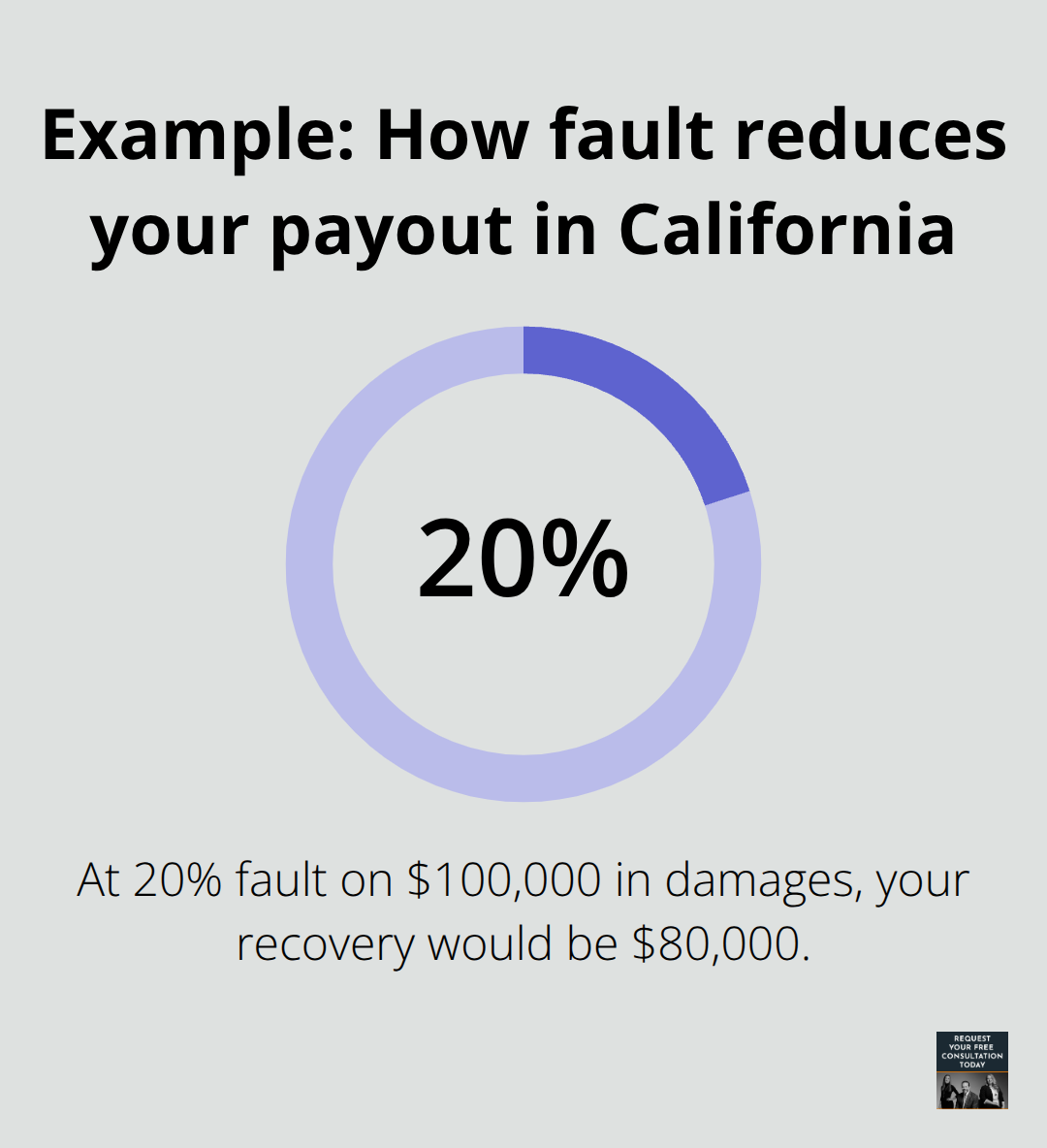
Truck accidents operate under California’s comparative negligence system, which means you can recover damages even if you’re partially at fault. The state allows recovery as long as you’re less than 50% responsible for the crash. However, your compensation reduces by your percentage of fault; if you’re 20% at fault and damages total $100,000, you receive $80,000. This is why gathering evidence immediately matters so much-you need to establish that the truck driver or trucking company bears primary responsibility.
Request Federal Compliance Records
Federal Motor Carrier Safety Administration regulations require trucking companies to maintain detailed records on driver hours, vehicle maintenance, and cargo securement. Violations of these regulations strengthen your claim significantly because they demonstrate negligence. Request these records early through your attorney; companies often resist disclosure, but documented violations (like hours-of-service breaches or failed inspections) directly support your position. Insurance adjusters count on injured people accepting quick settlements without understanding California’s comparative negligence rules.
Understanding how fault allocation affects your case value before you sign anything away sets the foundation for what comes next-determining exactly how much your settlement should be worth.
What Determines Your Settlement Value
Medical Expenses Form Your Foundation
Medical bills from a truck accident stack up fast, and California courts recognize both past and future medical expenses as compensable damages. If you suffered a broken leg requiring surgery, physical therapy, and ongoing orthopedic care, those documented costs form the foundation of your settlement demand. Insurance adjusters often dispute medical bills by claiming treatments were unnecessary or excessive, which is why you need itemized invoices and medical records that connect each procedure directly to the accident. A 2019 study by the National Highway Traffic Safety Administration found that crashes involving large trucks resulted in over 4,000 fatalities nationwide, and survivors typically faced medical expenses exceeding $50,000 for serious injuries.
Vehicle Valuation Requires Independent Assessment
Property damage calculations matter equally-California courts require fair market value for your vehicle at the time of loss, not the depreciated value insurance companies initially offer. If your vehicle was worth $25,000 and the truck destroyed it completely, demand that amount, not the $18,000 a claims adjuster might propose. Get an independent appraisal if the insurance company’s valuation seems low; dealership records and Kelley Blue Book valuations support your position.
Lost Wages Extend Beyond Immediate Time Off
Lost wages represent another critical component that many accident victims underestimate. If you earned $60,000 annually and the accident kept you from work for six months, your lost wage claim reaches $30,000 before accounting for reduced earning capacity if injuries prevent you from returning to your previous job. Document every missed day with employer statements, payroll records, and medical restrictions that explain your inability to work.
Long-Term Disability Impacts Future Earnings
Long-term disability impacts settlement value substantially-if a spinal injury limits your future earning potential or forces you into lower-paying work, California allows you to claim the difference over your remaining work life. Insurance adjusters routinely undervalue future earnings losses, offering settlements that seem adequate today but leave you financially compromised years ahead. This is where professional representation becomes essential because the calculation of lifetime earning capacity requires detailed analysis that most injured people cannot perform alone.
Building Your Settlement Case
Collect Documentation Immediately
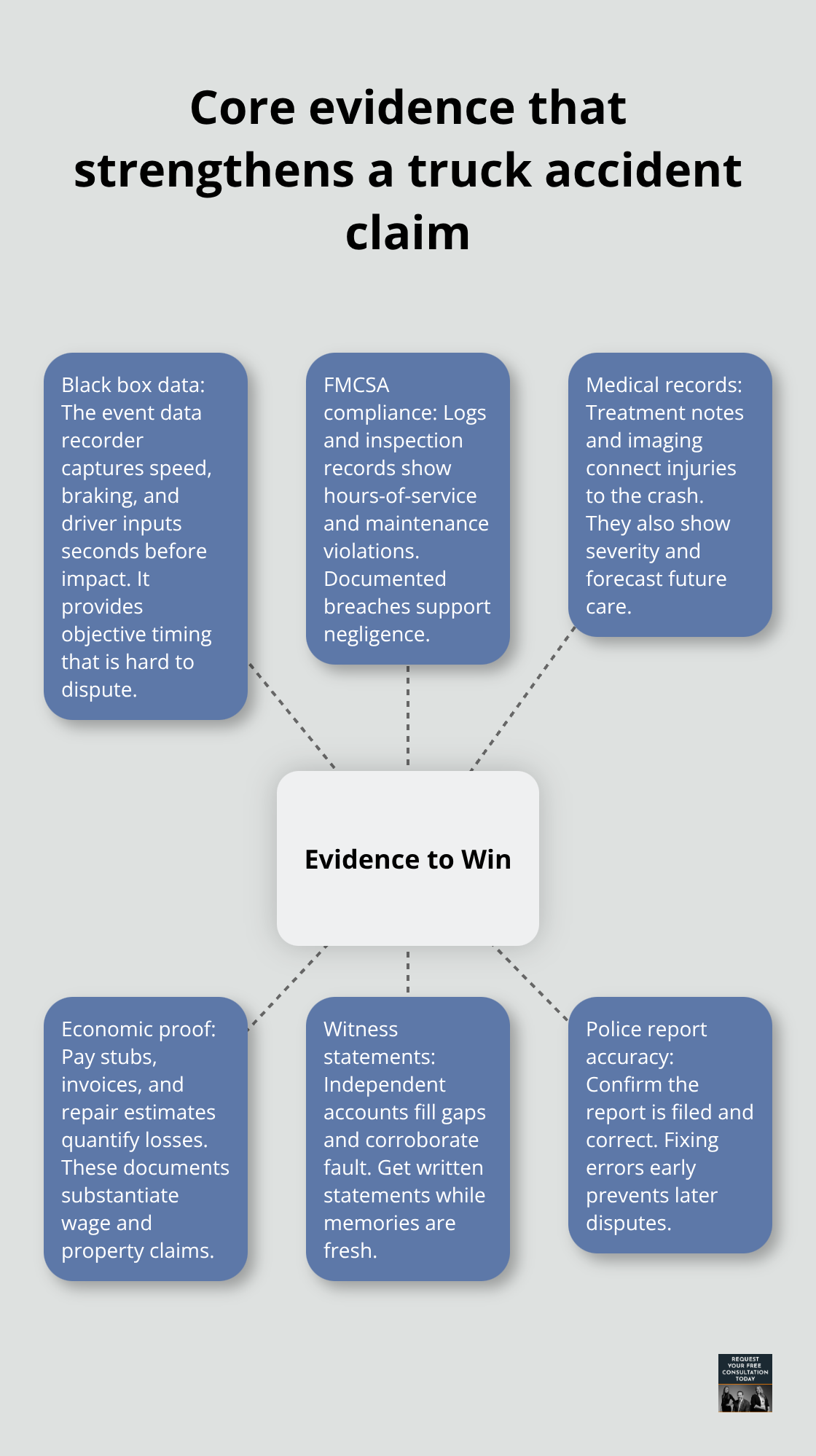
Insurance companies representing trucking firms move quickly to minimize payouts, so you must gather solid evidence before they contact you. Start documenting everything right away: medical records from every provider you visit, repair estimates for your vehicle, pay stubs showing lost wages, and photographs of injuries as they progress. Request the police report within five days of the accident and verify its accuracy because errors in the report become ammunition for insurance adjusters to dispute liability. Contact witnesses while memories remain fresh and ask them to provide written statements; insurance companies count on witnesses becoming unavailable or changing their stories over time.
Obtain Critical Evidence from the Truck
Obtain the truck’s black box data through your attorney-this event data recorder captures speed, braking patterns, and driver behavior in the seconds before impact, and it’s difficult for trucking companies to challenge objective electronic evidence. Federal Motor Carrier Safety Administration records reveal whether the driver violated hours-of-service rules or whether the company failed required vehicle maintenance inspections. The strongest cases combine medical evidence proving injury severity, economic documentation showing financial losses, and regulatory violations demonstrating negligence.
Respond to Settlement Offers Strategically
Insurance adjusters will contact you offering settlements that sound reasonable but fall far short of what your case actually warrants. Never accept the first settlement offer or sign anything without understanding the full scope of your damages. Provide written responses to settlement proposals rather than verbal discussions because companies use casual conversations to dispute later claims about what was agreed. If the adjuster pressures you for a quick decision, that’s a signal the offer undervalues your case-legitimate settlements require time to evaluate properly.
Understand What Damages You Can Claim
California courts recognize both economic damages like medical bills and lost wages plus non-economic damages for pain and suffering, yet insurance companies routinely ignore non-economic components in their initial proposals. When negotiations stall or offers remain unreasonably low, litigation becomes necessary. Filing a lawsuit signals that you’re serious about fair compensation and shifts leverage significantly because trucking companies face trial costs and jury verdicts that often exceed their settlement authority.
Know When to Pursue Court Action
An attorney experienced in truck accidents understands how juries in Santa Cruz County, Sacramento, and Oakland view catastrophic injuries from 80,000-pound vehicles and can articulate damages in ways that resonate with jurors far better than accepting inadequate settlement checks.
Final Thoughts
Truck accident settlement California cases succeed when you act decisively from the moment of impact. The evidence you gather in those first hours-photographs, witness statements, medical documentation-directly determines whether you recover fair compensation or accept an inadequate check from an insurance company protecting a trucking firm’s bottom line. Your settlement value depends on proving injury severity, documenting financial losses, and establishing that the truck driver or company violated safety regulations.
Professional legal representation transforms your position fundamentally because insurance adjusters count on injured people accepting quick offers without understanding their full damages or the leverage that evidence provides. An attorney handles communication with insurance companies, obtains critical records like black box data and federal compliance violations, and knows when settlement proposals fall short of what juries would award. We at Schaar & Silva LLP help people in Santa Cruz County, Sacramento, and Oakland navigate these complexities while you focus on healing.
Contact us for a free consultation to discuss your truck accident settlement California case and understand what your case is worth. We work on contingency, meaning you pay nothing unless we recover compensation for you, and the two-year deadline to file a personal injury claim in California moves closer every day.
