

Truck accidents cause serious injuries and financial losses that demand immediate action. The legal process can feel overwhelming, but understanding the truck accident litigation steps helps you protect your rights and build a strong case.
At Schaar & Silva LLP, we guide clients through each phase of this process. This guide walks you through what happens after the accident, how to build your case, and when settlement makes sense.
Immediate Actions After a Truck Accident
The First Hours Matter Most
The first hours after a truck accident determine how strong your case becomes. Most people freeze or make decisions they regret later. Truck accidents involve multiple parties, complex insurance policies, and evidence that vanishes fast. Your actions in those critical moments directly impact your ability to recover damages.
Document the Scene Thoroughly
Start by photographing everything at the scene before anyone moves vehicles. Take wide shots showing the accident location, road conditions, and vehicle positions, then close-ups of all vehicle damage, license plates, and visible injuries. Photograph skid marks, debris, and any environmental factors like weather or lighting. Obtain the truck driver’s name, phone number, address, commercial driver’s license number, and employer information. Write down the trucking company’s name and any visible company logos or markings on the vehicle. Collect contact information from at least three witnesses, including their names, phone numbers, and what they saw. If anyone refuses to provide information, note their appearance and vehicle details. Record a video walkthrough narrating what happened from your perspective.
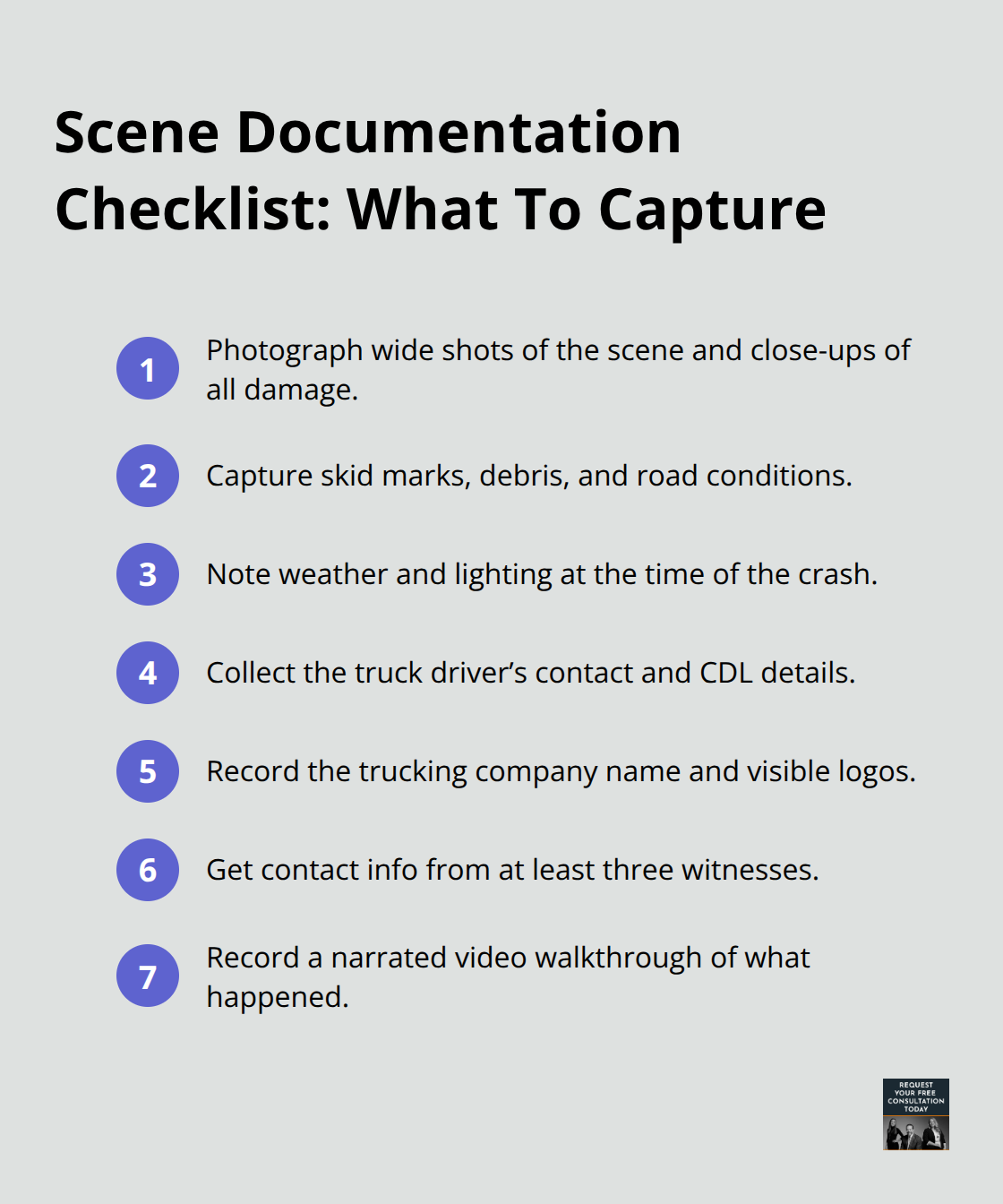
All of this documentation becomes critical evidence later, and memories fade quickly while photos remain permanent.
Seek Medical Care and Report the Accident
Call 911 immediately if anyone is injured, regardless of how minor the injury seems. Truck accident injuries often develop over hours or days after impact, so obtain medical evaluation even if you feel fine. Request a police report at the scene and obtain the officer’s name and badge number. Report the accident to your insurance company within 24 hours, but stick to facts only. Do not admit fault, speculate about causes, or discuss injuries in detail with the insurance company. Provide only what happened, when, where, and who was involved.
What Comes Next
With your documentation complete and medical care underway, the next phase involves building your case through police reports, witness statements, and medical records. These materials form the foundation for identifying liable parties and understanding the full scope of insurance coverage available to you.
Building Your Truck Accident Case
Obtain the Police Report Immediately
Police reports form the backbone of your truck accident claim, and obtaining them quickly matters more than most people realize. Contact the police department that responded to your accident within 48 hours and request the official report by case number. The National Highway Traffic Safety Administration reports that police documentation includes specific details like vehicle positions, road conditions, and officer observations that significantly strengthen liability arguments. When you receive the report, verify it contains the truck driver’s commercial driver’s license number, the trucking company name, and any citations issued. If the report contains errors or omissions, file a correction request immediately with the police department.
Collect Witness Statements While Memories Are Fresh
Witness statements carry enormous weight in truck accident cases because they provide independent perspectives on how the accident occurred. Contact the witnesses you identified at the scene within one week while their memories remain fresh. Ask specific questions about the truck’s speed, traffic signals, visibility conditions, and the truck driver’s actions immediately before impact. Request written statements or record their responses, then have them sign and date the documentation. If witnesses resist providing written statements, at least obtain their contact information so we can reach them later if needed for depositions or trial testimony.
Gather Medical Records and Hire an Expert
Medical records and accident reconstruction reports transform your case from a simple he-said-she-said dispute into documented evidence of injury and fault. Obtain copies of all emergency room records, imaging results, and treatment notes from every healthcare provider you visited after the accident. The CDC reports that truck accident victims face injury rates significantly higher than passenger vehicle accidents, making comprehensive medical documentation essential for damage calculations. Request medical records within 30 days of treatment while providers still have them readily available in their systems.
Accident reconstruction experts analyze vehicle damage, skid marks, and physics to determine how the collision occurred and who caused it. Hire an accident reconstruction expert within 60 days of the accident, as evidence deteriorates quickly and expert availability varies by region. These experts typically charge between 3,000 and 8,000 dollars for comprehensive analysis, but their testimony often proves decisive in settlement negotiations or trial.
Identify All Liable Parties and Their Insurance
Truck accidents frequently involve multiple responsible parties beyond the driver. The truck driver’s employer bears liability for negligent hiring, inadequate training, or failure to maintain the vehicle. Insurance companies often carry different policies for the driver personally, the vehicle, and the trucking company (each with separate coverage limits). Request the truck driver’s personnel file through discovery, which reveals hiring practices and safety violations. Check the Department of Transportation’s Safer database to review the trucking company’s safety history and any previous accidents or violations.
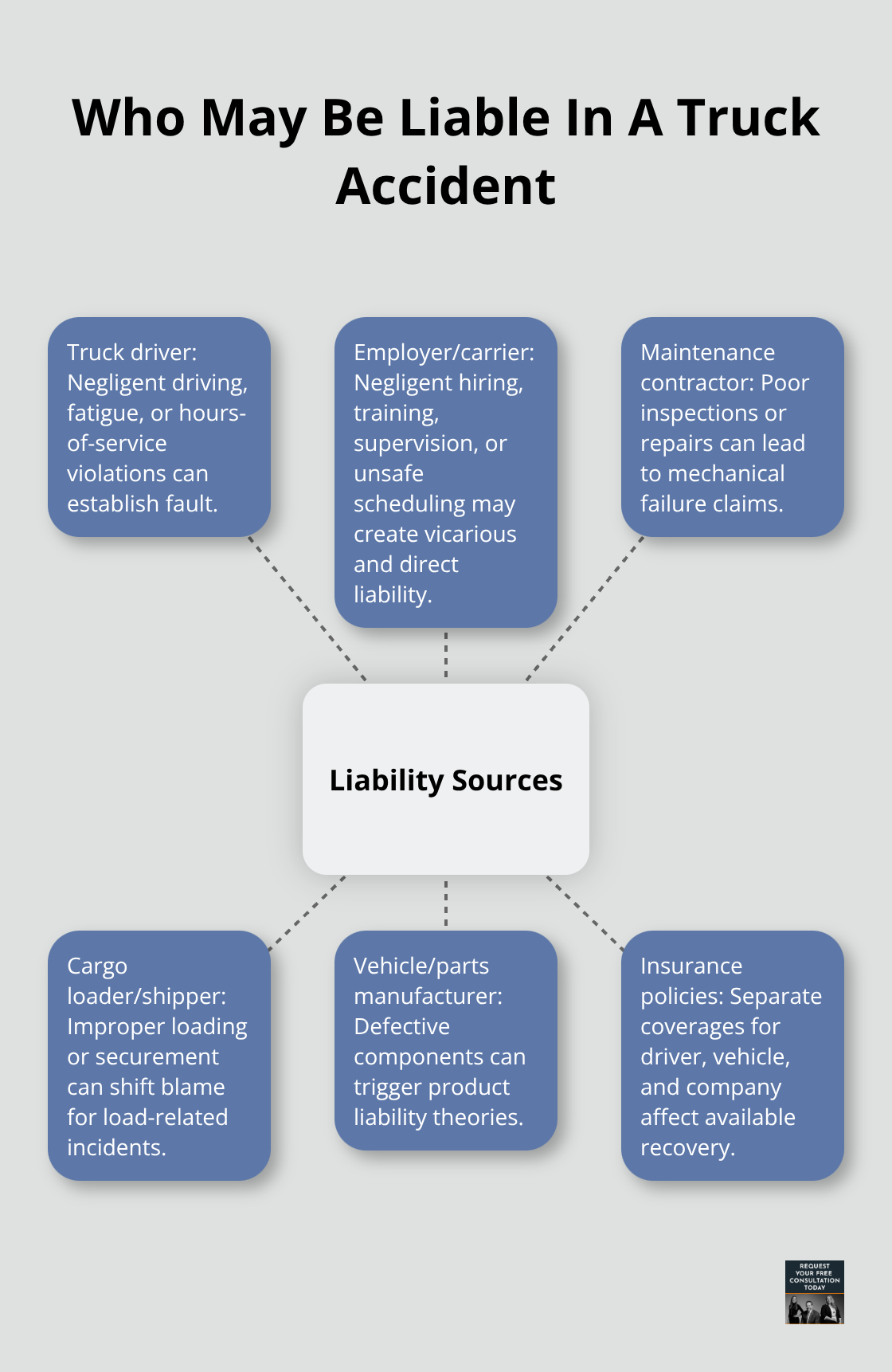
Understanding these multiple layers of liability and insurance coverage positions you to negotiate from strength when settlement discussions begin.
Negotiation and Settlement Strategies
Insurance Adjusters Work Within Financial Targets
Insurance adjusters operate with specific financial targets and want to close your claim for the lowest possible amount. They know most accident victims lack experience negotiating settlements. The adjuster’s first offer typically sits 30 to 40 percent below what your case actually merits, according to settlement data from the American Association for Justice.

Your response to that initial offer determines everything that follows.
Reject Lowball Offers and Counter With Documentation
Reject lowball offers immediately and counter with documentation supporting higher demands. A demand letter should include your medical bills, lost wages, property damage repair costs, and pain and suffering calculations based on your specific injuries. Calculate pain and suffering by multiplying your total medical expenses by a factor of 1.5 to 5, depending on injury severity (use the higher multiplier for truck accident victims with serious injuries). Include copies of medical records, wage loss documentation, repair estimates, and photos of vehicle damage in your demand package. Send this via email or certified mail so you have proof of delivery. Insurance adjusters respond to organized, detailed documentation far more readily than vague requests for money.
Navigate the Counter-Offer Phase Strategically
Most adjusters will counter your demand with a lower figure, initiating a negotiation process that typically takes 4 to 8 weeks. During this phase, never accept their second or third offer without careful analysis. Track every counter-offer in writing and establish your minimum acceptable settlement amount before negotiations begin. If the adjuster’s offers plateau below your minimum, this signals they won’t move further without legal pressure. Filing a lawsuit becomes your leverage at this point. Many cases settle within 30 days after you file suit because litigation costs the insurance company money for attorneys and court fees.
Understand Release Requirements Before Signing
Accepting any settlement requires you to sign a release waiving all future claims related to that accident, so verify your medical treatment is complete before signing. If you develop complications months later, you cannot reopen the case or request additional funds. Have legal counsel review any settlement offer before you sign, particularly for truck accidents involving serious injuries where long-term complications frequently emerge. This step protects you from accepting inadequate compensation that fails to cover future medical needs.
Final Thoughts
Truck accident litigation steps follow a predictable path once you understand what happens at each stage. You document the scene, build your case with police reports and medical records, then negotiate from a position of strength backed by solid evidence. The process takes time, but rushing into a settlement before your injuries stabilize costs you thousands in uncompensated damages.
Insurance companies deploy adjusters trained to minimize payouts, and they count on accident victims lacking the knowledge to push back effectively. We at Schaar & Silva LLP handle the negotiation burden so you can focus on healing. Our team evaluates your case, identifies all liable parties, and calculates what your claim actually merits based on your specific injuries and losses.
If you were injured in a truck accident in Santa Cruz County, contact Schaar & Silva LLP to discuss your truck accident claim and learn how we can guide you through the legal process from start to finish. We offer medical bill assistance through lien services that cover your treatment costs until your case resolves, and we evaluate property damage claims to guarantee fair valuations for your vehicle. A strong settlement or judgment provides financial stability while you rebuild your life.