

Truck accidents in California cause devastating injuries and financial losses that can upend your life. At Schaar & Silva LLP, we understand the complexity of truck accident litigation in California and the urgent need for clear guidance.
This guide walks you through liability rules, state regulations, and the practical steps to build a strong case. You’ll learn what evidence matters, how to document damages, and why legal representation can make a real difference in your outcome.
What Actually Causes Truck Accidents and Who’s Liable
Driver Fatigue and Hours of Service Violations
Truck accidents rarely happen because of a single factor. The Federal Motor Carrier Safety Administration reports that driver error causes roughly 87% of truck accidents, but that statistic masks the real picture. Multiple failures stack together in most cases, and understanding these layers is essential for building liability.
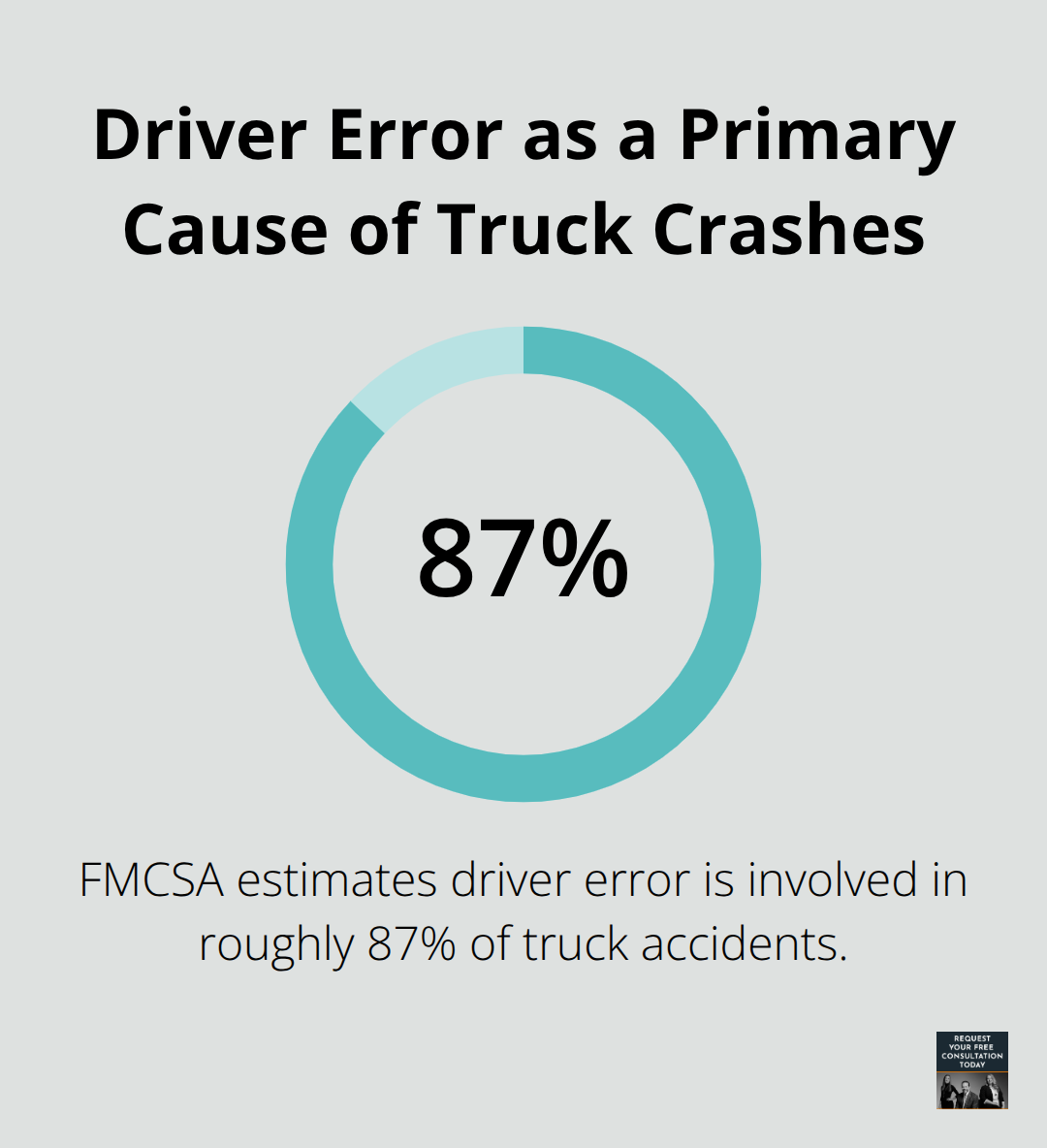
Driver fatigue tops the list of preventable causes. The FMCSA Hours of Service regulations limit drivers to 11 hours of driving per 14-hour work day, with mandatory 10-hour off-duty periods, yet violations remain common. When a truck driver has been awake for 18 hours or more, their reaction time matches someone with a blood alcohol level of 0.08%, according to the National Transportation Safety Board. This means drowsy driving isn’t just dangerous-it’s predictable and preventable.
If your accident involved a driver who logged excessive hours without proper rest, that’s a concrete liability trail. Accident reconstruction can reveal speed and braking patterns at impact, which often correlate with fatigue-related crashes.
Mechanical Failures and Maintenance Negligence
Mechanical failures represent the second major category, and here the liability shifts to the trucking company and maintenance contractors. Worn brake pads, tire blowouts, and steering failures don’t happen overnight. Regular inspections under federal regulations should catch these problems before they cause accidents.
When maintenance records show gaps or ignored warning signs, you have evidence that negligence caused your crash. The trucking company bears responsibility for keeping vehicles safe, and failure to do so creates direct liability. Police reports and trucking company records provide documentation of violations that prove negligence.
Negligent Hiring and Training Practices
Trucking companies must verify driving records and conduct background checks, yet some hire drivers with histories of safety violations or DUI convictions. If the driver who hit you had prior incidents the company should have caught, that’s corporate negligence. Additionally, inadequate training on vehicle handling, cargo securement, or weather-specific driving creates liability.
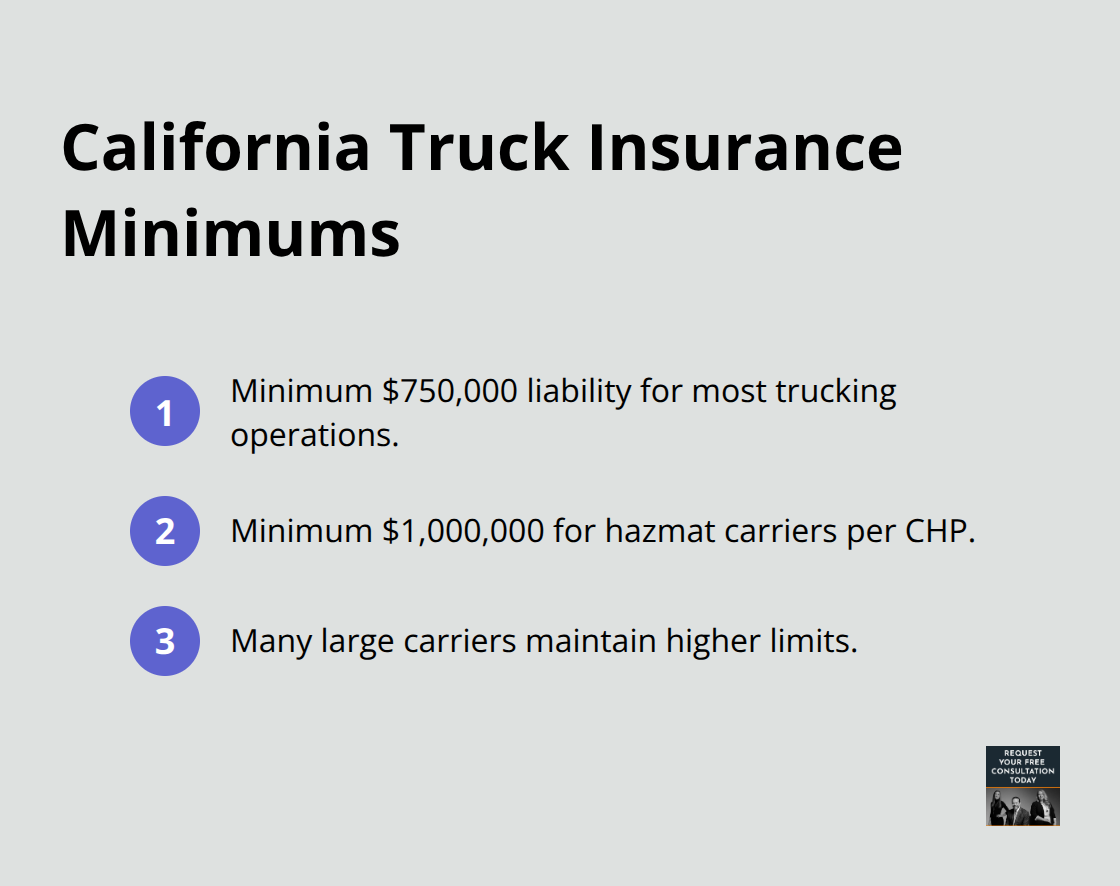
Insurance requirements for commercial trucks in California mandate at least $750,000 in liability coverage for most operations, which means recovery potential exists. Medical records documenting your injuries create the damages foundation for your claim.
The complexity isn’t in understanding these causes; it’s in proving which one applies to your specific accident. Each failure-driver error, mechanical neglect, or hiring negligence-requires different evidence and points toward different defendants. Identifying the right liability path determines your case strategy and recovery potential.
California Truck Accident Laws and Regulations
Commercial Vehicle Safety Standards
California imposes strict regulatory requirements on commercial trucking operations, and these rules create the legal foundation for holding companies accountable when accidents happen. The state enforces federal safety standards through its own Department of Transportation, meaning violations at either level strengthen your case. Understanding what these requirements are helps you identify when a trucking company has cut corners, and that negligence directly connects to your injuries.
Commercial vehicles over 10,001 pounds must meet specific safety standards established by the Federal Motor Carrier Safety Administration. Trucks operating in California need regular inspections documented in maintenance records, brake system compliance verified through annual inspections, and tire conditions meeting federal thickness standards of at least 4/32 of an inch tread depth. When a truck involved in your accident had bald tires or failed brake inspections, those records prove the company prioritized cost over safety. California also requires trucks to display proper placarding for hazardous materials, and violations of these standards indicate systemic neglect.
Insurance Requirements for Truck Operators
Insurance requirements mandate minimum liability coverage of $750,000 for most trucking operations and $1 million for hazmat carriers, according to the California Highway Patrol. This coverage exists specifically to compensate injured people, and knowing the required limits tells you the minimum recovery available. Many larger carriers carry substantially more coverage, which increases your potential compensation.
The insurance mandate creates a direct path to recovery. When a truck company fails to maintain required coverage, that violation adds another layer of negligence to your claim. Verification of active insurance policies happens through state records, and gaps in coverage expose additional corporate liability.
Statute of Limitations and Evidence Preservation
California gives you two years from the accident date to file a personal injury lawsuit for truck accidents, though this deadline is critical and cannot be extended except in rare circumstances. For wrongful death claims, the two-year clock starts from the date of death. If a truck company is also at fault through negligent hiring or maintenance violations, you can file administrative complaints with the California Public Utilities Commission, which can support your civil case even after the statute expires.
Acting quickly matters because evidence deteriorates, witness memories fade, and accident scene conditions change. Police reports and trucking company records become harder to obtain as time passes, and medical documentation of your injuries establishes the damages foundation your case requires. The first weeks after your accident determine what evidence you can still recover and what witnesses you can still locate.
With liability pathways identified and regulatory violations documented, the next step involves building the actual case through evidence collection and professional analysis.
How to Build a Strong Truck Accident Case
The weeks immediately following your truck accident determine whether you’ll have the evidence needed to win. Most people focus on their injuries and miss critical opportunities to document what happened. The physical evidence at the crash scene degrades quickly, witnesses scatter, and trucking companies begin their own investigation to protect themselves. You need a systematic approach to evidence collection that starts before you leave the hospital and continues through the legal process.
Photograph and Document the Scene
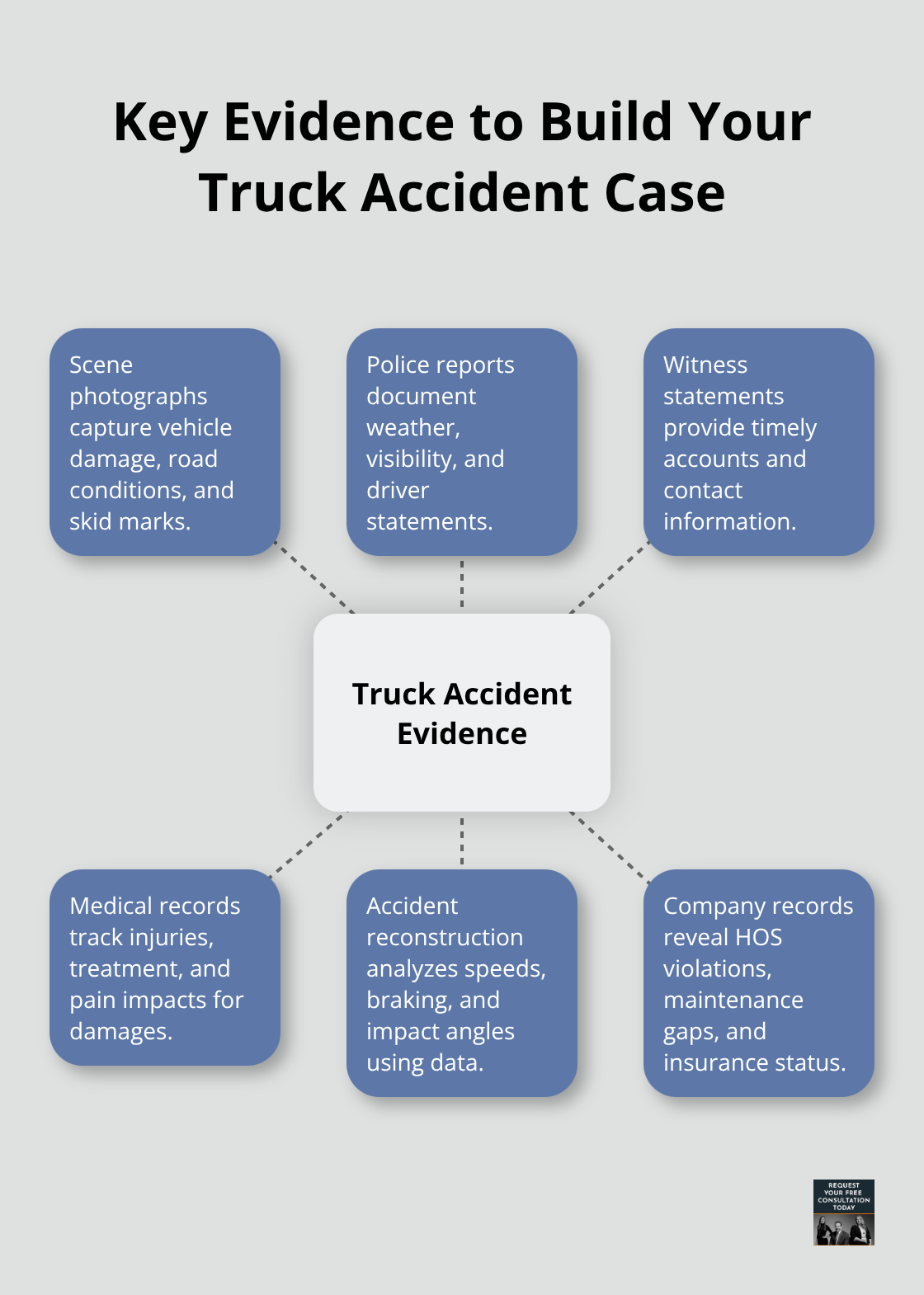
Photographs of vehicle damage, road conditions, and skid marks provide concrete proof of impact force and vehicle positioning. Police reports contain officer observations about weather, visibility, and driver statements, though these reports often lack detail about mechanical failures or maintenance records. Request the full accident report from the California Highway Patrol within two weeks, as agencies sometimes withhold supplemental documents initially.
Contact witnesses while their memories remain sharp. Obtain their names and phone numbers at the scene if possible, and document their account in writing. These statements often contain details that police reports miss, particularly observations about driver behavior or vehicle condition before impact.
Build Your Medical Documentation Foundation
Medical records create the foundation for your damages claim, so maintain detailed documentation from your first emergency room visit through ongoing treatment. Hospital records from the initial impact often contain observations about injury severity that correlate with accident reconstruction data. Your medical bills establish economic damages, while records showing ongoing pain, mobility limitations, or psychological effects support claims for non-economic damages.
Photographs of your injuries taken over time create visual evidence of recovery or ongoing effects. Wage loss documentation proves economic damages when injuries prevent you from working. These records collectively demonstrate the full scope of harm the accident caused.
Obtain Accident Reconstruction Analysis
Accident reconstruction specialists analyze vehicle damage patterns, tire marks, and physics calculations to determine vehicle speeds, braking points, and impact angles. These specialists compare their findings against maintenance records and driver logbooks to identify whether fatigue, mechanical failure, or driver error caused the crash. The National Highway Traffic Safety Administration maintains databases on truck design defects and common failure points, which reconstruction specialists reference when mechanical issues appear involved.
This analysis transforms physical evidence into legal proof. Reconstruction reports carry significant weight in settlement negotiations and at trial because they rely on objective data rather than witness recollection.
Access Trucking Company Records
Trucking company records reveal whether drivers exceeded hours of service limits, whether vehicles passed required safety inspections, and whether maintenance was deferred due to cost concerns. These documents require formal discovery processes through an attorney, as companies rarely voluntarily provide information that shows negligence. Insurance records show whether the trucking company maintained required liability coverage and whether prior accidents involved the same driver or vehicle.
Maintenance logs, driver logbooks, and inspection reports often expose patterns of negligence that individual accident details alone cannot reveal. A driver with multiple prior violations or a vehicle with repeated mechanical failures strengthens your liability case substantially. These records transform your accident from an isolated incident into evidence of systemic corporate negligence.
Final Thoughts
Truck accident litigation in California demands immediate action and strategic planning. The first hours after your accident determine what evidence survives and what witnesses remain available. Photograph the scene, collect contact information from anyone who saw what happened, and seek medical attention even if injuries seem minor.
Your recovery depends on proving liability, and that proof requires evidence most people don’t know how to gather. Trucking company records, maintenance logs, and driver logbooks reveal patterns of negligence that strengthen your case. Accident reconstruction analysis transforms physical evidence into objective proof of what caused the crash, and these elements combined create the foundation for fair compensation.
Legal representation changes your outcome significantly. Insurance companies employ adjusters trained to minimize payouts, and trucking companies have their own legal teams working to shift blame. Contact Schaar & Silva LLP to discuss your accident and learn what your case is worth, as your two-year statute of limitations window is closing and every day that passes makes evidence harder to recover.