

After a car accident, one of your biggest questions is likely how long you’ll wait for compensation. The settlement timeline for an auto crash varies widely depending on your specific situation.
At Schaar & Silva LLP, we’ve helped countless accident victims navigate this process. Understanding what to expect at each stage removes uncertainty and helps you plan your recovery.
How Long Does a Settlement Actually Take
Settlement timelines for auto accidents range from a few weeks to several months, and the variation depends almost entirely on how quickly you gather evidence and how clear liability is from the start. If you have a straightforward case with obvious fault, a police report, witness statements, and dashcam footage, you could see a settlement offer within 4 to 8 weeks. Messy cases with disputed liability, multiple vehicles, or serious injuries routinely stretch to 6 months or longer. The insurance company’s negotiation pace matters far less than you might think; what really moves things forward is solid documentation ready immediately after the crash. Medical bills, repair estimates, wage loss records, and clear photos of vehicle damage form the foundation that allows insurers to make faster decisions. Clients who waited months unnecessarily often failed to organize their claim file early, while others resolved cases in under two months by treating documentation seriously from day one.
Liability Clarity Determines Speed More Than Anything Else
When the at-fault driver is clearly identified and their insurance company accepts responsibility without argument, your settlement moves quickly. If a driver ran a red light and multiple witnesses saw it happen, the insurer knows they will lose in court and often moves toward settlement within 8 to 12 weeks. Comparative fault situations, where both drivers share some blame, add significant time because the insurer will demand more investigation to reduce their payout proportionally. Accidents with unclear fault-like rear-end collisions where the other driver claims they were hit first, or multi-vehicle pile-ups where causation is complex-can stall for months while adjusters gather police records, traffic camera footage, and expert analysis.
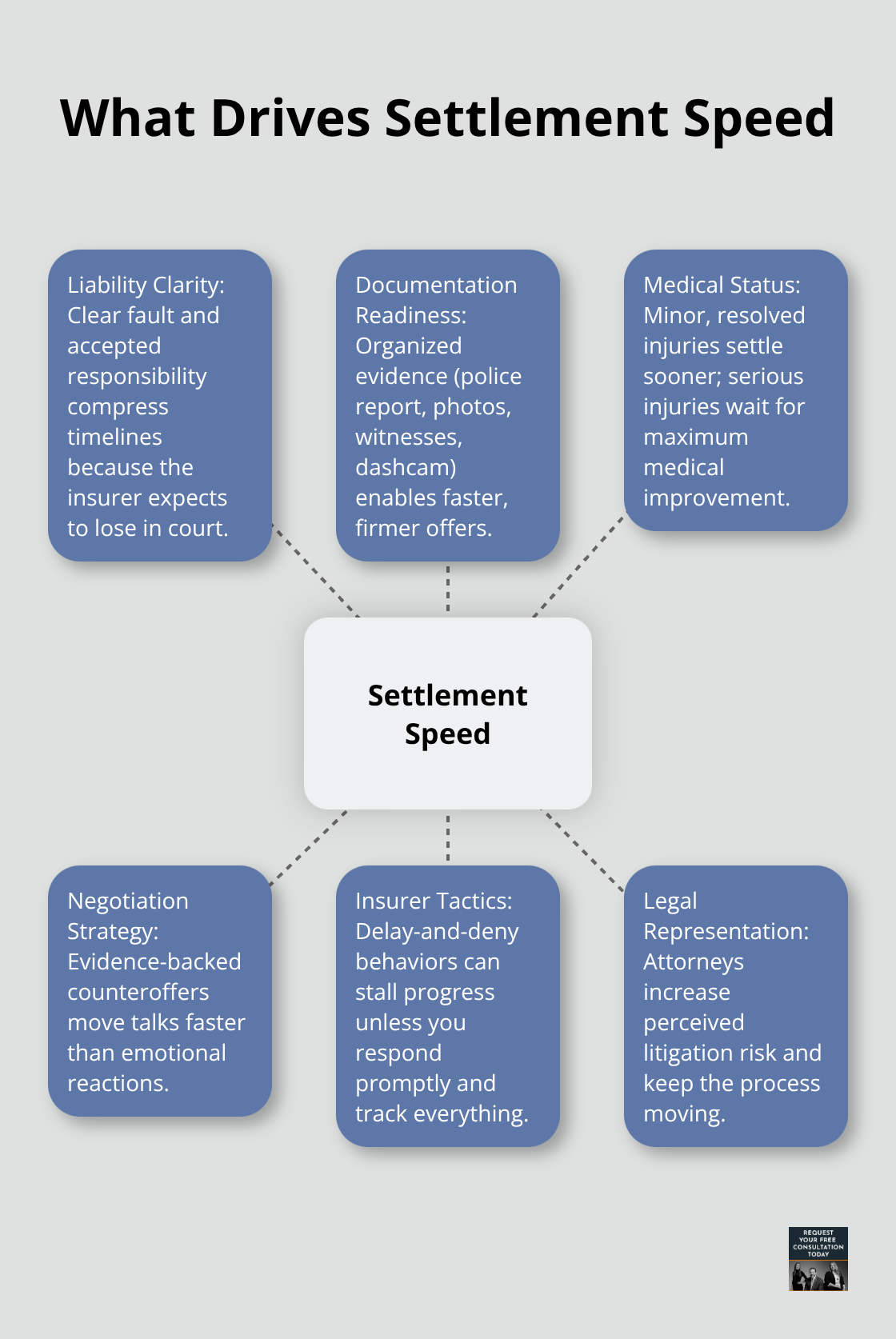
If liability is crystal clear, push hard on documentation and negotiation; if liability is murky, accept that the timeline will stretch and use that time to build the strongest possible case.
Medical Status and Future Treatment Costs Control Final Resolution
Your medical situation directly impacts when you can actually settle. If you suffered minor injuries that resolved within weeks, settlement can happen relatively quickly because medical costs are final and predictable. Serious injuries that require ongoing physical therapy, surgery, or long-term care create delays because insurers want certainty about your future medical expenses before writing a check. Maximum medical improvement-the point at which your condition stabilizes and doctors say you won’t improve further-becomes the realistic settlement trigger for significant injuries. Rushing to settle before reaching maximum medical improvement often means accepting far less compensation than your case warrants, because you haven’t yet learned the full scope of your injury or its long-term impact on your ability to work and enjoy life. If your injuries are severe, expect the settlement process to take 6 to 12 months or longer, and view that timeline as protection rather than frustration.
What Happens Next in Your Settlement Journey
The speed of your settlement depends on how you act in these early weeks and months. Your next step involves organizing every piece of evidence and understanding exactly where your case stands on the liability spectrum.
What Happens Inside the Settlement Process
File Your Claim With Complete Documentation
You must contact the at-fault driver’s insurance company within days of the accident, not weeks, and provide only factual information about the crash itself. Avoid admitting fault or speculating about injuries during this initial contact. Simultaneously, collect your police report number, photograph all vehicle damage from multiple angles, record witness contact information, and request dashcam footage or traffic camera recordings from nearby businesses. Medical documentation starts the moment you receive treatment, so maintain every receipt, lab result, prescription record, and therapy invoice in a single organized file. Insurance adjusters respond faster when you hand them a complete claim package rather than trickling information over weeks.
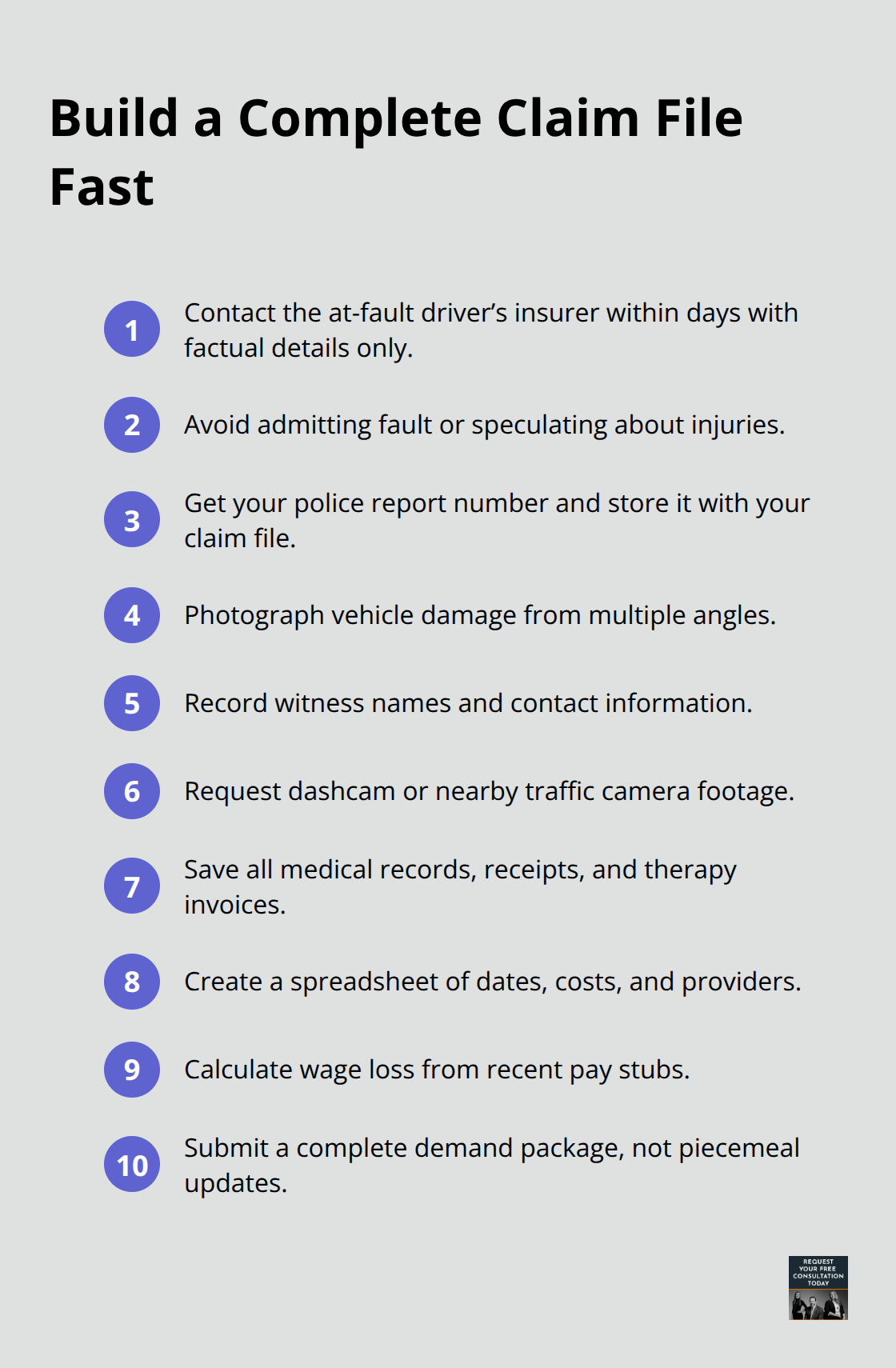
Create a spreadsheet with dates, costs, and descriptions of all economic damages: vehicle repair or replacement value from AutoZone repair estimates or dealership quotes, medical expenses organized by provider and date, and wage loss calculated from recent pay stubs showing hours missed. This foundation determines whether your case resolves in 8 weeks or stretches to 8 months.
Navigate the Negotiation Phase Strategically
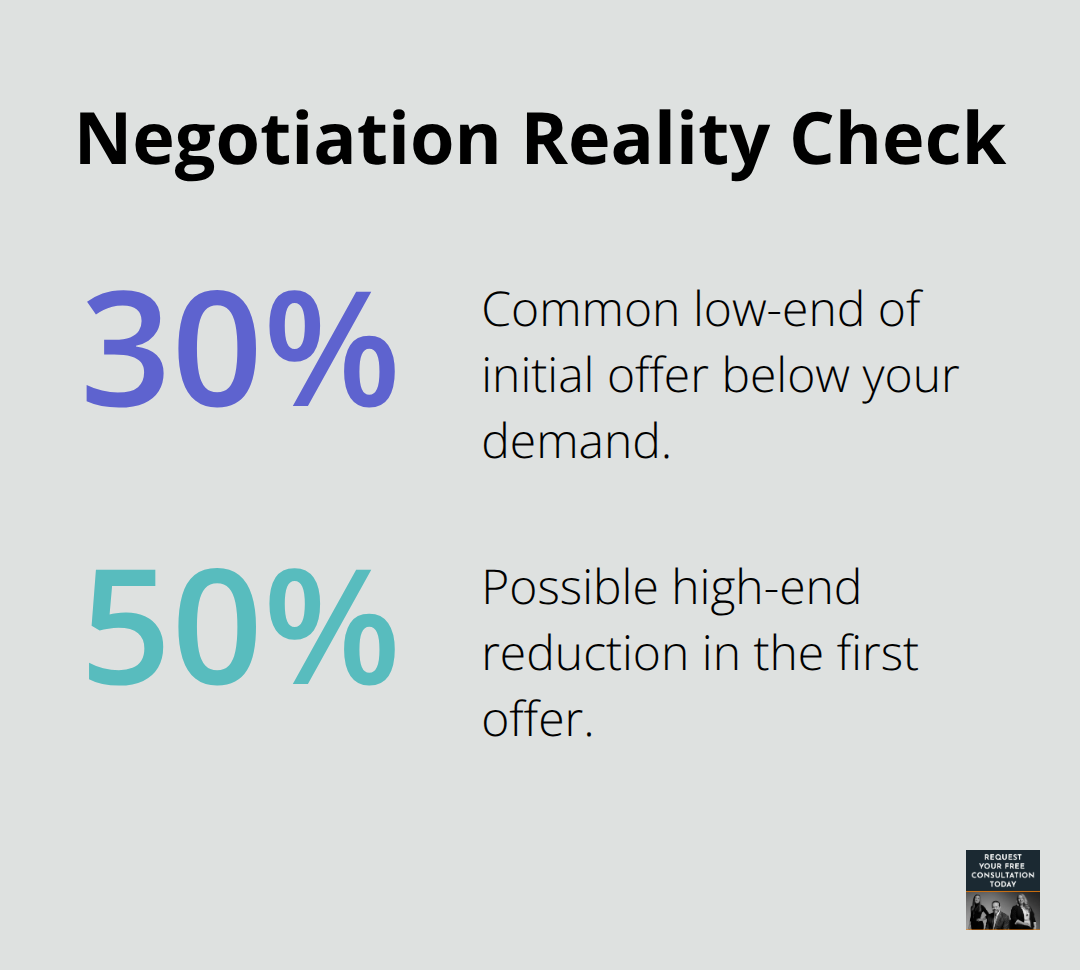
Negotiation begins once the insurer receives your demand package, and this phase requires patience and strategic thinking rather than emotional reaction. Most insurers respond with an initial offer significantly lower than your demand-often 30 to 50 percent below what you’re asking-because they expect you to counter. Do not accept their first offer, and do not become frustrated by this standard tactic. Instead, send a written response that cites specific medical evidence, wage loss documentation, and comparable injury settlements to justify your position.
If liability is clear, emphasize the strength of your evidence and the insurer’s litigation risk. If your injuries are serious, reference medical expert opinions about long-term prognosis and functional limitations. Most auto accident claims settle during this back-and-forth phase within 4 to 6 exchanges over 6 to 12 weeks.
Finalize the Settlement and Receive Payment
Once you reach an agreement on the settlement amount, the insurer sends a release form that extinguishes your legal rights in exchange for payment. Before you sign, verify that all medical liens from healthcare providers, government programs like Medicare or Medicaid, and any attorney fees have been accounted for and will be paid from the settlement. Request itemized documentation showing exactly how the settlement amount is allocated. Payment typically arrives within 10 to 21 days after you sign the release, though some insurers take longer. The release document represents your final step in the settlement process, but what happens after payment requires attention to potential complications that many accident victims overlook.
What Slows Down Your Settlement
Disputed liability stands as the single biggest cause of settlement delays, and it happens far more often than accident victims expect. When both drivers claim the other caused the crash, or when a police report lists comparative fault percentages, the insurer enters investigation mode and timelines stretch dramatically. A rear-end collision seems straightforward until the at-fault driver claims they were pushed into your vehicle by a third car, suddenly requiring the insurer to reconstruct the accident, interview additional witnesses, and potentially involve multiple insurance companies. In Santa Cruz County, where coastal roads and heavy tourist traffic create complex multi-vehicle scenarios, liability disputes can add 3 to 6 months to your settlement timeline. The harsh reality is that insurers use liability uncertainty as leverage to pressure you into accepting lower settlements; they know that the longer your case drags, the more financial pressure you face and the more likely you’ll accept their inadequate offer just to end the situation.
Medical Treatment and Future Care Costs Create Predictable Delays
Outstanding medical treatment creates the second major delay, and this one requires you to make strategic decisions about your recovery versus your compensation timeline. If you’re still undergoing physical therapy, receiving injections, or waiting for surgery, the insurer will refuse to settle because they cannot predict your final medical costs. Accident Analysis & Prevention, a journal affiliated with the Association for the Advancement of Automotive Medicine, publishes research showing that serious injuries routinely require 6 to 12 months of treatment before reaching maximum medical improvement. Settling before that point means accepting a compensation amount based on incomplete information about your actual injury. Many victims feel pressure to settle quickly and make the mistake of signing a release while still in active treatment, only to face unexpected medical bills months later with no recourse against the insurer. The insurer’s refusal to settle during ongoing treatment isn’t obstruction; it’s their way of protecting themselves from future claims. Your protection requires patience and a clear medical prognosis from your treatment providers about when your condition will stabilize.
Insurance Company Tactics That Deliberately Exploit Uncertainty
Insurance company tactics deliberately exploit both liability confusion and medical uncertainty to wear down accident victims. Some adjusters employ delay-and-deny strategies, requesting the same documentation multiple times, losing your submitted records, or claiming they never received information you sent weeks earlier. Others make unreasonably low settlement offers hoping you’ll accept out of frustration, then use your acceptance to justify refusing higher demands later. A few insurers will threaten litigation and claim they’re prepared to fight your case in court, knowing that most accident victims fear the uncertainty and expense of trial. The reality is that fewer than 5 percent of auto accident cases actually reach trial; most settle because litigation is expensive and unpredictable for both sides. When an insurer threatens litigation, they’re often bluffing to pressure you into accepting their offer. If your case has clear liability and documented injuries, litigation risk actually favors you, not them. Treat settlement negotiations as a business transaction rather than an emotional conflict, maintain detailed records of every communication with the insurer, and respond to requests promptly but without volunteering unnecessary information.
Final Thoughts
Your settlement timeline for an auto crash depends far more on your actions than on insurance company goodwill. Accident victims who gather police reports, medical records, wage loss statements, and repair estimates immediately after the crash move through negotiation in weeks rather than months, while those who delay documentation watch their cases stall indefinitely. Liability clarity matters enormously, and so does your medical status-if fault is obvious and your injuries are minor, expect resolution within 8 to 12 weeks, but if liability is disputed or your injuries require ongoing treatment, plan for 6 to 12 months and use that time to build an unshakeable case.
Legal representation changes the settlement timeline equation significantly because insurance adjusters respond differently when they know an attorney is involved and understand litigation risk increases. Attorneys handle the tactical elements that accident victims often mismanage: they know when to push hard on negotiation, when to hold firm on your demand, and when to threaten litigation credibly, while also managing medical liens and ensuring you don’t sign a release prematurely. They carry the emotional burden of negotiation so you can focus on recovery.
Organize every document related to your accident and injuries into a single file, then contact the at-fault driver’s insurance company with your claim information without discussing settlement amounts or accepting offers without legal guidance. If liability is clear and your injuries are documented, reach out to Schaar & Silva LLP to discuss your case and navigate the settlement timeline for your auto accident claim while you focus on healing.
