
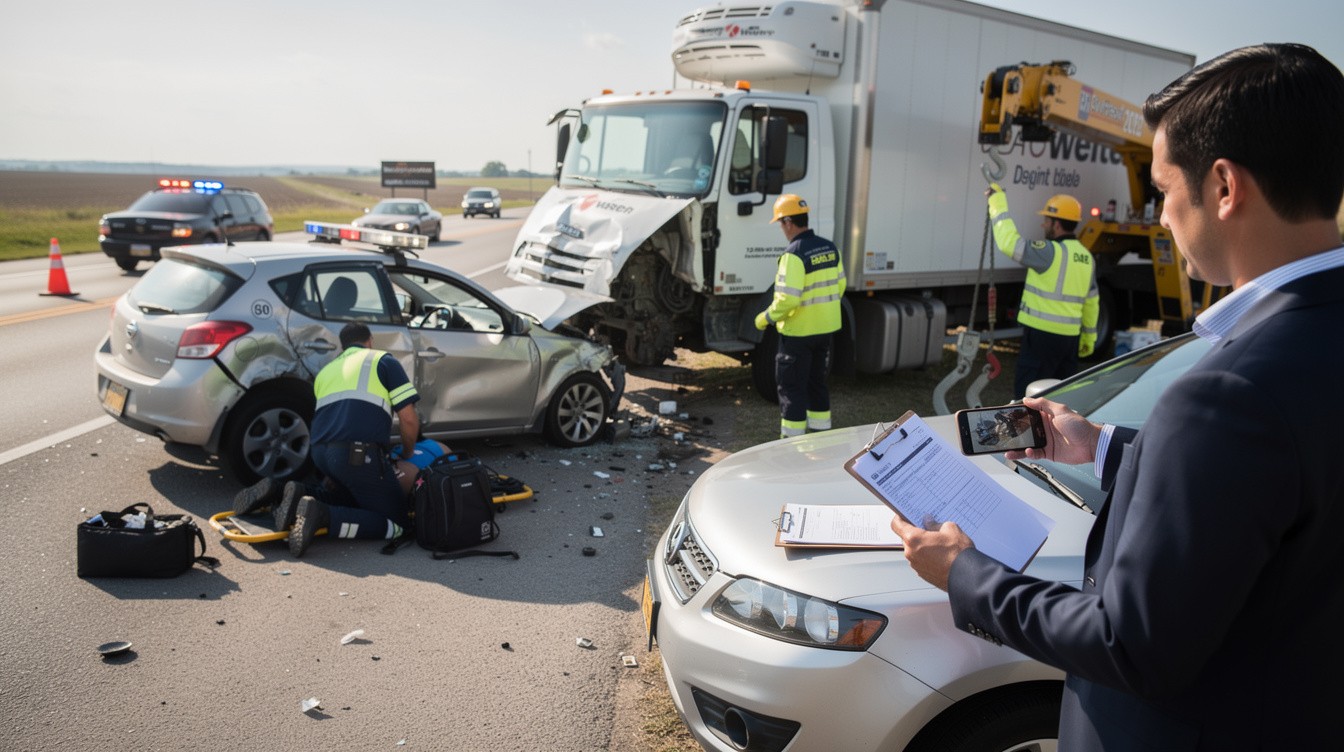
A Santa Cruz truck accident can leave you facing serious injuries, mounting medical bills, and uncertainty about what comes next. The path to recovery involves specific legal steps that differ significantly from standard car accident claims.
We at Schaar & Silva LLP have guided many Santa Cruz County residents through this process. This guide walks you through the immediate actions, legal options, and litigation process so you understand exactly what to expect.
What to Do Immediately After a Truck Accident
Move to Safety and Document the Scene
The first hours after a truck accident in Santa Cruz County determine the strength of your case. Most people freeze or focus only on injuries, but the evidence you gather at the scene directly impacts your ability to recover damages later. Start by moving to safety if possible.
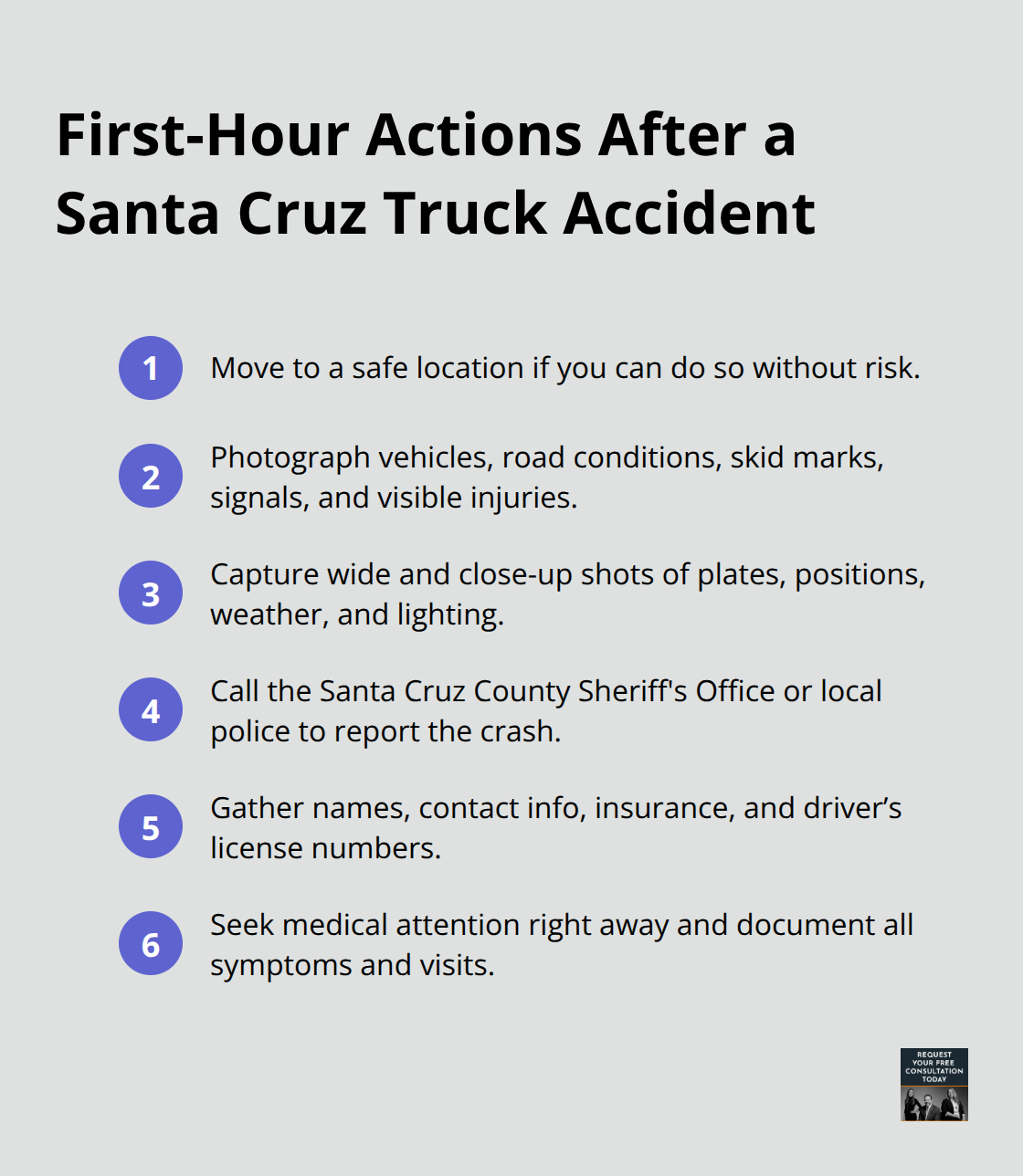
If you can do so without risk, take photos of the accident scene from multiple angles-vehicle damage, road conditions, skid marks, traffic signals, and any visible injuries. Use your phone to capture wide shots and close-ups of license plates, vehicle positions, and environmental factors like weather or lighting. These photos become critical evidence that insurance companies and courts rely on.
Report the Accident to Police
Call the Santa Cruz County Sheriff’s Office or local police immediately, even if injuries seem minor. California law requires accident reporting, and the official police report creates an independent record of what happened. Request the report number at the scene and follow up within days to verify accuracy. The police report protects you by establishing an objective account before memories fade or stories change.
Collect Information from Witnesses and Other Parties
While waiting for police, collect names, phone numbers, addresses, insurance information, and driver’s license numbers from the other driver and any passengers. Get contact details from at least two witnesses who saw the accident occur. Bystanders often disappear quickly, so don’t assume you’ll find them later. If anyone witnessed the accident, ask them directly if they’ll speak with your attorney.
Seek Medical Attention Immediately
Truck accident injuries often develop over hours or days, and delaying treatment weakens your claim. Seek medical attention even if you feel fine. Document all medical visits, prescriptions, and symptoms in writing. Insurance companies scrutinize gaps between the accident and treatment, so immediate medical records strengthen your position. Medical bill assistance through legal lien services allows you to focus on recovery while payment arrangements get handled with your providers.
Understanding your legal options requires knowledge of California’s specific timelines and damage categories, which differ substantially from standard car accident claims.
Know Your Legal Timeline and Damage Options
California’s Two-Year Filing Deadline
California Code of Civil Procedure Section 335.1 gives you two years from the accident date to file a personal injury lawsuit. This deadline applies whether your injuries are minor or catastrophic. If you miss this window, you lose your right to sue entirely, regardless of the merits of your case. Two years sounds like plenty of time, but investigations take months, medical treatment extends beyond that, and settlement negotiations often stall. Taking action within the first 90 days after your accident protects your claim significantly. This timeline allows evidence collection while memories remain fresh, medical records accumulate, and the other party’s insurance company hasn’t yet closed their file. Property damage claims have a different three-year window, but truck accident cases almost always involve personal injury, making the two-year deadline your critical constraint.
Economic and Non-Economic Damages
You can recover economic damages including medical expenses, lost wages, vehicle repair or replacement, and future medical care. California also allows non-economic damages for pain and suffering, emotional distress, and permanent disfigurement. Truck accident cases frequently involve punitive damages when the trucking company’s negligence was reckless (such as knowingly hiring an unqualified driver or ignoring maintenance records). The Federal Motor Carrier Safety Administration regulates trucking companies, and violations of these regulations strengthen your claim substantially.
Why Truck Accidents Differ from Car Accidents
Truck accidents differ fundamentally from standard car accidents because they involve multiple liable parties and substantially higher damages. A fully loaded commercial truck weighs up to 80,000 pounds compared to a typical car at 3,000 pounds, meaning injuries are statistically more severe. The Insurance Institute for Highway Safety reports that large truck crashes result in 4,000 fatalities annually in the United States. Unlike car accidents where one driver carries insurance, truck accidents involve the driver, the trucking company, the company that loaded the cargo, the truck owner, and sometimes the manufacturer. This complexity means your recovery potential is significantly higher than standard car accident claims, but only if you file within that critical two-year window and document everything properly from day one.
The litigation process itself follows specific stages that determine how your case moves forward and what settlement or judgment you ultimately receive.
How Your Truck Accident Case Moves Through the Legal System
Investigation Establishes Your Case Foundation
Your truck accident case follows a structured path from investigation through potential trial. Understanding each stage protects your interests and helps you avoid costly delays. The investigation phase begins immediately after you hire an attorney. Your legal team obtains the police report, medical records, and accident scene photos while simultaneously sending preservation notices to the trucking company. These notices require the company to retain all relevant evidence including driver logs, maintenance records, and vehicle data recorders. Federal Motor Carrier Safety Administration regulations mandate that trucking companies keep these records, and failure to preserve them strengthens your case substantially.
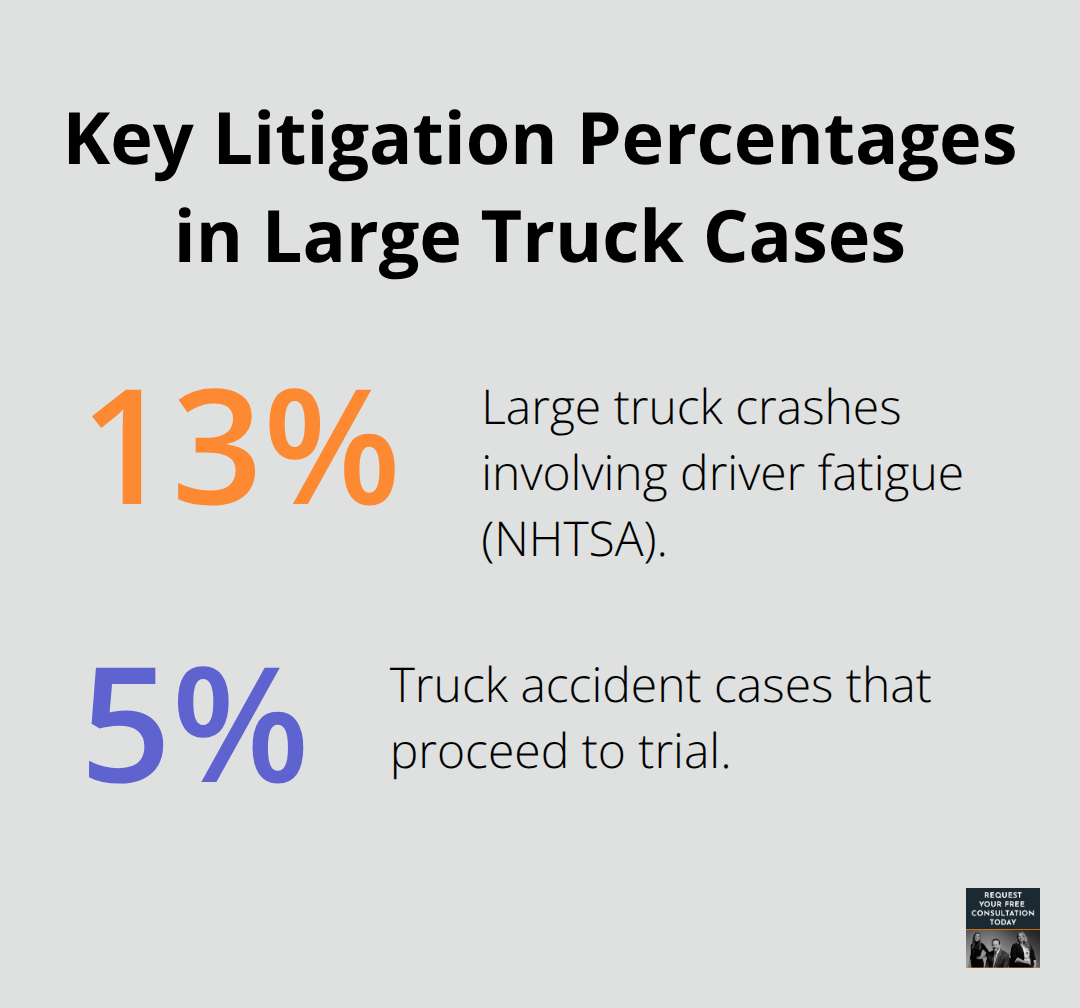
During investigation, your attorney obtains the truck driver’s employment history, training records, and driving record through discovery requests. The National Highway Traffic Safety Administration found that driver fatigue contributes to approximately 13 percent of large truck crashes, making driver logs and hours-of-service violations critical evidence in Santa Cruz County cases. This phase typically lasts three to six months, during which your medical treatment should continue uninterrupted. Medical documentation directly correlates with damage awards, so maintaining consistent treatment records throughout investigation proves essential.
Settlement Negotiations Begin with Strong Evidence
Settlement negotiations typically begin once investigation establishes liability and damages. The trucking company’s insurance carrier will make initial settlement offers, often substantially below what your case actually warrants. Most truck accident claims settle before trial, with the average settlement ranging from 40 to 60 percent higher than initial offers when proper evidence supports your position.

Your attorney handles all negotiations, presenting demand letters that detail medical expenses, lost income, and pain and suffering calculations.
If settlement discussions stall, your case moves toward trial preparation. This phase involves depositions where the truck driver and company representatives answer questions under oath. Your legal team also identifies expert witnesses who testify about trucking industry standards, accident reconstruction, or medical causation.
Trial Preparation and Courtroom Proceedings
Only approximately 5 percent of truck accident cases proceed to trial, but preparation for trial strengthens settlement negotiations significantly. The insurance company recognizes you’re prepared to present your case before a judge or jury when your attorney demonstrates thorough case preparation. Trial itself typically lasts three to seven days for truck accident cases, with juries awarding damages based on evidence presented and California’s comparative negligence rules.
Final Thoughts
A Santa Cruz truck accident demands immediate action and sustained attention throughout your recovery. The steps you take in the first hours-documenting the scene, reporting to police, collecting witness information, and seeking medical care-directly determine your case’s strength. Missing the two-year filing deadline eliminates your right to recover damages entirely, so contacting a legal team within weeks of your accident protects your interests substantially.
Truck accident cases involve multiple liable parties and significantly higher damage awards than standard car accidents because of the severity of injuries and the regulatory framework governing commercial trucking. Your recovery includes economic damages for medical bills and lost wages, non-economic damages for pain and suffering, and potentially punitive damages when negligence was reckless. Strong evidence collected early-police reports, medical records, driver logs, and maintenance violations-positions your case for favorable outcomes.
Contact Schaar & Silva LLP to discuss your Santa Cruz truck accident claim. Most cases settle before trial, with properly documented claims receiving 40 to 60 percent higher settlements than initial offers. Your recovery and financial security depend on taking action now rather than waiting.
