
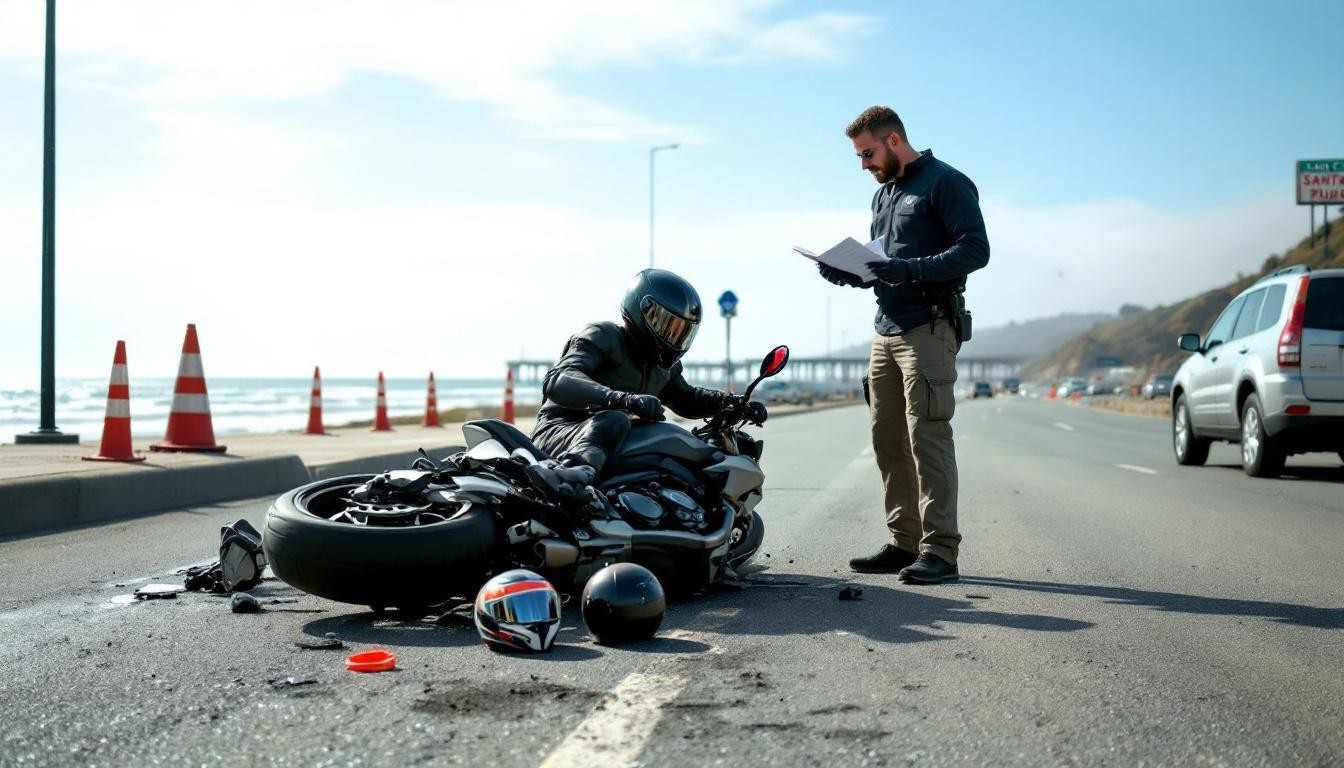
Motorcycle accidents in Santa Cruz happen more often than riders expect, and the aftermath can be overwhelming. Road hazards, weather shifts, and infrastructure gaps create real dangers on local highways and streets.
California’s helmet laws matter legally and medically-they affect both your protection and your insurance claim. We at Schaar & Silva LLP help riders understand their rights and navigate recovery after a Santa Cruz motorcycle accident.
What Makes Santa Cruz Roads Dangerous for Motorcycle Riders
Popular Routes and Their Specific Hazards
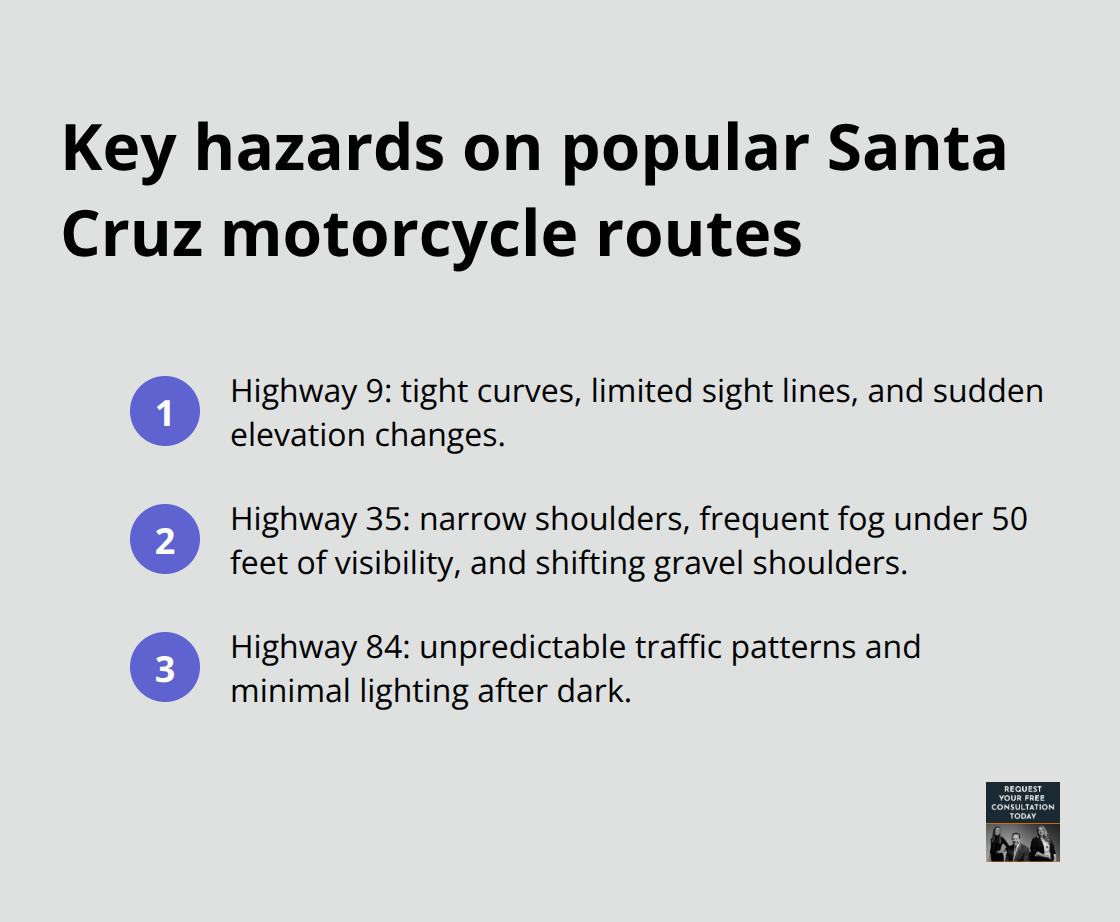
Santa Cruz and Monterey County roads present specific hazards that riders must understand to stay safe. Highways 9, 35, and 84 attract weekend riders, but they demand respect and skill. Highway 9 winds through dense redwood forests with tight curves, limited sight lines, and sudden elevation changes that catch riders off guard. Highway 35 offers coastal views but features narrow shoulders, frequent fog banks that reduce visibility to under 50 feet, and gravel shoulders that shift when wet. Highway 84 cuts through rural terrain with unpredictable traffic patterns and minimal lighting after dark.
Inexperience amplifies these dangers significantly. Riders with less than six months of experience account for more than half of all motorcycle crashes. Most collisions occur on short trips under 5 miles at speeds below 30 mph, which means local commutes and casual rides carry real risk, not just weekend sport riding.
Weather’s Impact on Control and Visibility
Weather dramatically impacts rider control on Santa Cruz roads. Winter fog rolls in quickly along the coast and inland valleys, reducing visibility and increasing stopping distances significantly. Rain activates oil residue on pavement, creating slick patches especially at highway intersections and on bridge decks. Temperature fluctuations between coastal and inland areas affect tire grip and engine performance.
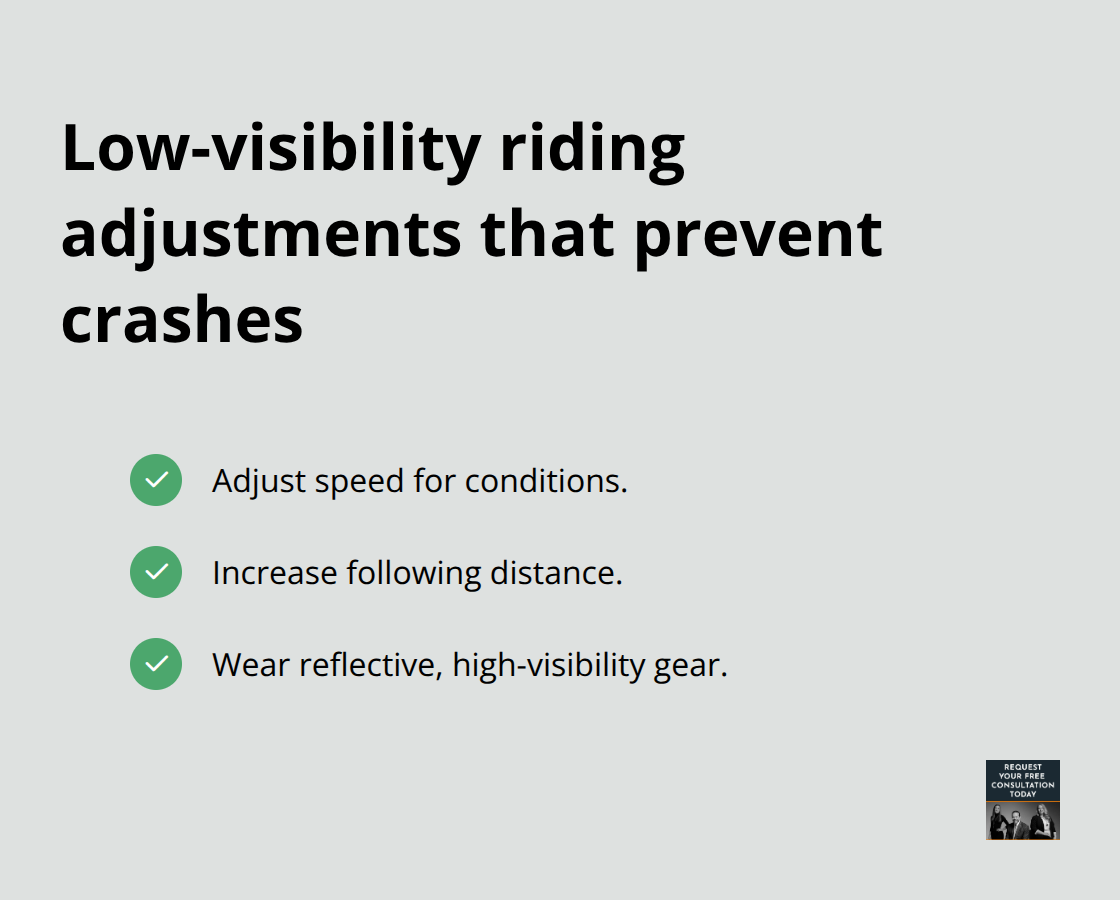
Riders must adjust speed, increase following distance, and wear reflective gear during low-visibility conditions. These adjustments separate safe riders from those who crash.
Infrastructure Gaps and Road Surface Problems
Road infrastructure gaps compound these dangers. Potholes and uneven pavement surfaces on local streets destabilize a motorcycle at moderate speeds. Some intersections lack clear lane markings or have faded stop lines that create confusion during dawn or dusk riding. Poor drainage in certain areas creates standing water that hides road damage. Gravel and debris accumulate on shoulder areas where riders may need to swerve to avoid obstacles.
Night Riding Challenges
Night riding presents additional challenges because many rural roads lack streetlights, and oncoming headlights can temporarily blind riders adjusting from darkness. Riders who understand these hazards take specific precautions-they check weather conditions before leaving, plan routes in advance, and ride defensively during high-risk times. These decisions determine whether a trip ends safely or leads to a crash that requires immediate medical attention and legal support. Understanding what happens after a crash matters just as much as preventing one.
California’s Helmet Requirement and Your Legal Protection
The Legal Mandate for DOT-Compliant Helmets
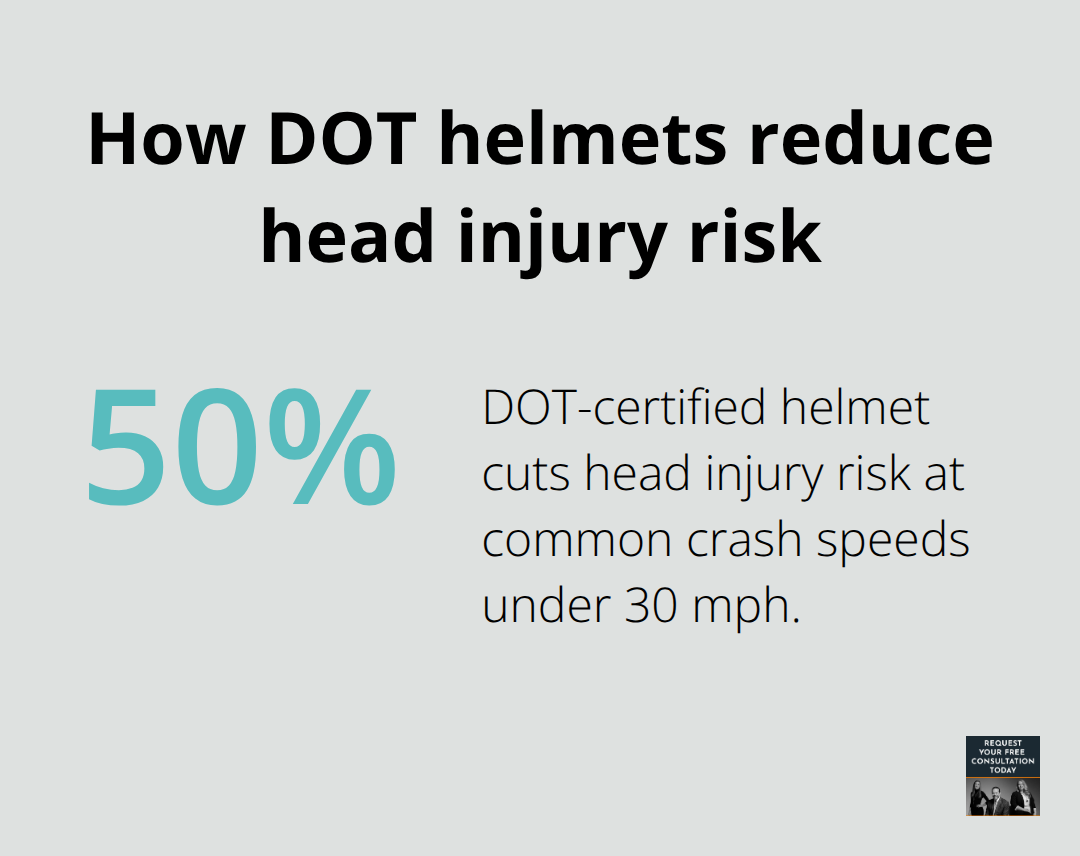
California law requires all motorcycle riders and passengers to wear a U.S. DOT-compliant helmet under California Vehicle Code Section 27803. This isn’t optional advice-it’s a legal mandate with no exceptions. The California DMV specifies that helmets must have permanent DOT labeling that isn’t easily removable, fit snugly around your head with no cracks or loose padding, and stay fastened during every ride. A DOT-certified helmet cuts head injury risk by approximately 50% at common crash speeds under 30 mph according to the U.S. Department of Transportation. More dramatically, wearing a DOT helmet triples your likelihood of surviving a head injury in a collision.
Helmet Types and Protection Standards
Full-face helmets with lock-in visors offer the best protection, though 3/4 and half-shell options also meet legal standards if they carry legitimate DOT certification. Many riders purchase novelty helmets that look DOT-approved but lack actual safety certification-these violate the law and provide zero protection. Verify the permanent DOT label before you ride, and inspect your helmet regularly for damage that compromises its integrity.
Legal Consequences of Non-Compliance
Violating California’s helmet law carries real consequences beyond injury risk. Law enforcement can cite you for riding without a compliant helmet, resulting in fines and points on your driving record. More importantly for accident claims, helmet use directly affects your legal position after a crash. While not wearing a helmet doesn’t automatically bar you from recovering compensation in California, insurance companies and opposing counsel will argue that helmet non-compliance contributed to your injuries and damages. This argument can reduce your settlement or verdict significantly.
How Helmet Use Strengthens Your Claim
If you wore a DOT-certified helmet when your accident occurred, documentation of compliance becomes evidence supporting your credibility and the extent of your injuries. Insurance adjusters take helmet use seriously because it demonstrates responsible behavior and minimizes injury severity. If you weren’t wearing a helmet, transparency about the facts combined with strong medical evidence and liability proof still allows riders to recover fair compensation even in challenging situations. The key is addressing helmet status directly rather than hoping it disappears during negotiations.
Moving Forward After a Crash
Your helmet choice affects both your physical survival and your legal recovery. Once a crash occurs, immediate medical attention becomes your priority, and the documentation you gather in those first hours shapes your entire claim. Medical records, police reports, and witness statements form the foundation of your case-and they begin the moment emergency responders arrive at the scene. If you need guidance navigating your claim, motorcycle accident attorneys in Santa Cruz can help protect your rights.
Where to Get Care and Support After a Santa Cruz Motorcycle Crash
Emergency Response and Initial Medical Documentation
After a motorcycle accident, your immediate actions determine both your physical recovery and your legal position. Santa Cruz County has multiple hospitals equipped to handle trauma cases, with Dominican Hospital in Santa Cruz serving as the primary trauma center for the region. If you’re injured on Highway 9, 35, or 84, paramedics will transport you to the nearest facility capable of managing motorcycle crash injuries, which typically means Dominican Hospital or Watsonville Community Hospital depending on accident location. The California Highway Patrol responds to serious crashes on state highways, while local police handle city street accidents.
Your first step after emergency care is obtaining a complete copy of your medical records and the official police report, both essential for documenting injury severity and establishing liability. Medical documentation from your initial emergency visit creates the foundation for your claim because it timestamps your injuries and connects them directly to the crash. Insurance companies scrutinize medical records heavily, so gaps between the accident date and your first treatment visit weaken your position significantly. If you delay treatment, adjusters will argue your injuries weren’t serious, reducing settlement offers substantially.
Physical Therapy and Rehabilitation Services
Physical therapy and rehabilitation services in Santa Cruz County address the specific demands of motorcycle crash recovery. Riders often suffer road rash, broken bones, spinal injuries, and soft tissue damage that requires months of specialized care. Facilities like Aptos Physical Therapy and Santa Cruz Rehabilitation Services work with accident victims, though your insurance coverage and treatment authorization determine which providers you can access affordably.
Consistent attendance at rehabilitation appointments strengthens your claim significantly. Insurance companies track your compliance with medical treatment plans, and regular therapy sessions demonstrate that your injuries require ongoing professional care. Missed appointments or treatment gaps give adjusters ammunition to argue your injuries resolved faster than your medical records suggest.
Mental Health Support for Accident Survivors
Mental health support matters equally because motorcycle crashes create lasting psychological effects that riders frequently minimize. PTSD, anxiety about riding again, and depression following loss of mobility are common outcomes that require professional treatment. Santa Cruz County Mental Health Services and private trauma therapists offer specialized support for accident survivors.
Many riders resist mental health treatment because they view it as weakness, but insurance companies recognize psychological injury as legitimate damages in settlement negotiations. Documenting therapy sessions and psychiatrist visits strengthens your claim by proving the accident’s full impact on your life. Professional mental health records carry significant weight when adjusters evaluate your total damages.
Managing Medical Costs During Your Case
Medical bills accumulate quickly after a serious motorcycle accident, and financial stress can derail your recovery. Medical lien services allow treatment providers to wait for payment until your case resolves, which means you can access necessary care without depleting savings or taking on debt. At Schaar & Silva LLP, we connect clients with medical lien services that facilitate bill payment during your case, allowing you to focus on recovery rather than financial stress while your claim proceeds.
Final Thoughts on Your Santa Cruz Motorcycle Accident Recovery
A Santa Cruz motorcycle accident creates immediate legal obligations alongside medical priorities. California follows comparative negligence rules, meaning even partial fault doesn’t automatically bar recovery, but the percentage of fault assigned directly reduces your settlement amount. Insurance adjusters will argue you bear more responsibility than you actually do, which is why documenting the crash scene matters immediately-photographs of vehicle damage, road conditions, skid marks, and traffic signals establish facts before memories fade or opposing parties alter narratives.
Medical documentation forms your strongest evidence because it connects your injuries directly to the crash through timestamps and professional assessment. You must collect every medical record, bill, and receipt from emergency care through rehabilitation, as insurance companies scrutinize gaps between your accident date and first treatment to argue injuries weren’t serious. Wage loss documentation and motorcycle repair estimates prove economic damages that extend beyond medical expenses and strengthen your position during settlement negotiations.
We at Schaar & Silva LLP connect clients with medical lien services that allow treatment providers to wait for payment until your case resolves, eliminating financial stress during recovery. Our team evaluates liability, negotiates with insurers, and pursues fair compensation for medical expenses, lost wages, pain and suffering, and property damage. Contact us today to discuss your rights and recovery options without upfront fees.
