

A car accident in Santa Cruz can leave you with more than physical injuries. The emotional trauma that follows often gets overlooked, even though it’s just as real and damaging as broken bones or whiplash.
Many accident victims struggle with anxiety, depression, and PTSD while trying to navigate insurance claims and legal proceedings. We at Schaar & Silva LLP understand that your mental health matters-and it matters in your case too.
The Real Cost of Trauma After a Santa Cruz Car Accident
What Happens in Your Brain After Impact
When you experience a car accident, your amygdala floods your body with stress hormones. Your prefrontal cortex, responsible for rational thinking, temporarily goes offline. This isn’t a weakness-it’s your survival mechanism activating. What matters clinically is that this response can persist long after the accident ends.
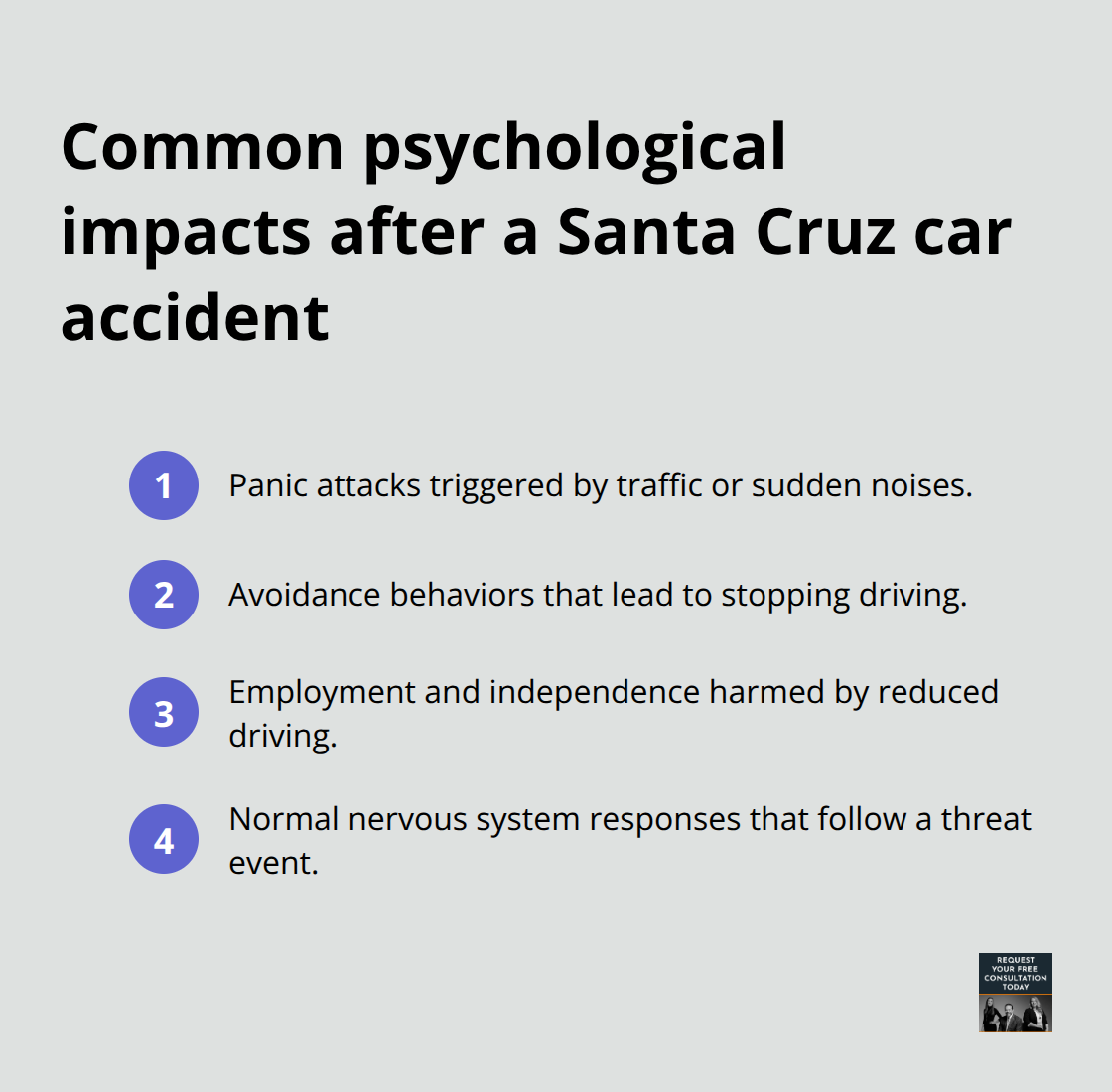
Some Santa Cruz residents experience full-blown panic attacks when sitting in traffic or hearing sudden noises. Others develop avoidance behaviors so severe they stop driving altogether, which directly impacts their employment and independence. Your nervous system has been genuinely traumatized, and your brain responds exactly as it should to a threat event.
Physical Injuries vs. Psychological Damage
Your body’s physical injuries are visible and measurable. A broken arm shows up on X-rays. Whiplash has documented symptoms. But the psychological aftermath of a car accident operates differently, and most accident victims don’t realize how profoundly it shapes their recovery and their legal claim.
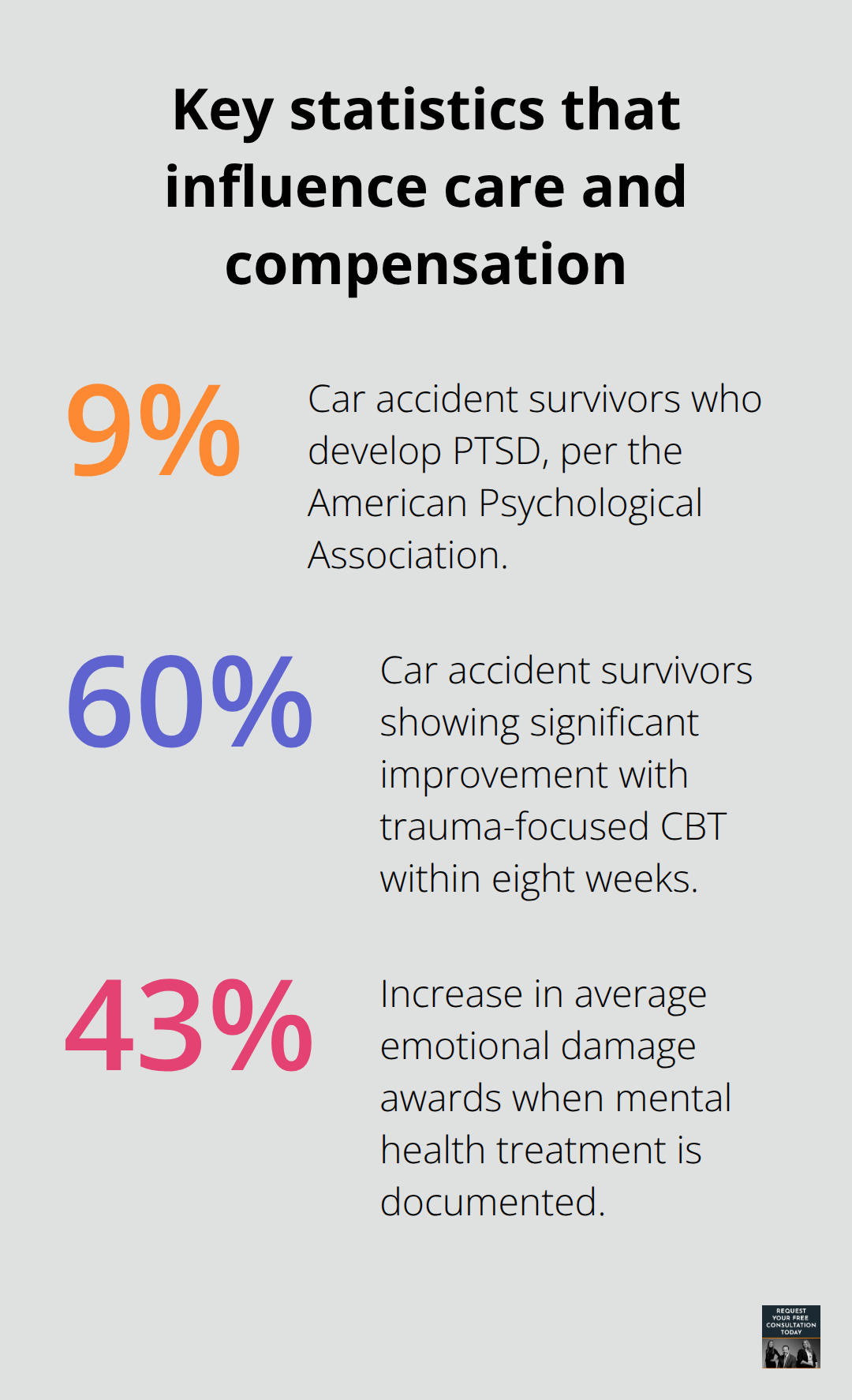
The American Psychological Association reports that approximately 9% of car accident survivors develop post-traumatic stress disorder, yet these psychological injuries rarely receive the same attention as physical damage. In Santa Cruz County, many victims experience intrusive thoughts, hypervigilance while driving, and sleep disturbances for months after the accident. They minimize these symptoms because they’re not visible. This is a mistake.
Why Insurance Companies Overlook Emotional Trauma
Insurance adjusters and opposing counsel rarely care about your emotional response. They focus on medical records and visible injuries because those are easier to quantify. This is precisely why trauma goes unnoticed in legal cases-your emotional damages don’t appear in emergency room reports the way a fractured rib does.
The gap between what you experience and what gets legally recognized depends almost entirely on documentation. If you see a mental health professional after your accident, that creates a medical record linking your psychological symptoms directly to the collision. Without it, you’re asking a court to accept your word against an insurance company motivated to deny your claim.
Building Your Documentation Strategy
Keep detailed notes about your anxiety levels, sleep quality, and any changes to your daily functioning. If you’re avoiding driving or experiencing panic attacks, write that down with dates and specific triggers. This concrete documentation becomes evidence.
Courts in California have increasingly recognized emotional damages as legitimate injury components, but only when supported by professional assessment and consistent records. The difference between a claim denied and a claim that reflects your actual suffering often comes down to whether you pursued mental health treatment and maintained clear records of that treatment.
Understanding how to document your emotional trauma properly sets the foundation for what comes next-identifying the right mental health professionals in Santa Cruz County who can provide both the care you need and the clinical documentation that strengthens your case.
Getting the Right Mental Health Care in Santa Cruz County
Start With Your Primary Care Doctor
Finding a mental health professional who understands accident trauma differs significantly from finding any therapist. In Santa Cruz County, you need someone who recognizes how car accidents rewire your nervous system and can document that process for your claim. Call your primary care doctor and ask specifically for referrals to therapists or psychologists with experience treating post-accident trauma, not just general anxiety or depression. Your insurance company’s employee assistance program often provides three to five free counseling sessions, which gives you time to assess whether a particular professional understands trauma response.
Access Affordable Mental Health Services
If cost creates a barrier, the Santa Cruz County Department of Health Services offers mental health services on a sliding fee scale and can connect you with providers who accept Medi-Cal. When you contact a potential therapist, ask directly whether they document sessions in a way that supports legal claims and whether they have experience with personal injury cases. Many therapists avoid this work, but some specifically market their services to accident victims because they understand how proper documentation strengthens your case.
Evidence-Based Treatments for Accident Trauma
Cognitive behavioral therapy and trauma-focused CBT have strong evidence for treating post-accident PTSD. A 2019 study in the Journal of Anxiety Disorders found that trauma-focused CBT showed significant improvement in 60% of car accident survivors within eight weeks. Eye Movement Desensitization and Reprocessing, or EMDR, also produces measurable results for accident-related trauma, though fewer Santa Cruz providers offer it compared to CBT.
Track Your Progress With Documentation
Ask your therapist about their specific approach and request outcome tracking, such as standardized trauma assessments at regular intervals, because courts value documented progress over subjective improvement reports. Your personal injury claim covers mental health treatment as a legitimate damage component, meaning these therapy costs should be recoverable from the at-fault party’s insurance. This coordination between legal support and clinical treatment removes the burden of figuring out how to pay for care while your case proceeds.
How Mental Health Records Strengthen Your Claim
Proper documentation from your mental health provider creates the foundation that courts recognize when evaluating your emotional damages. The records your therapist maintains directly influence how a judge or jury assesses the psychological impact of your accident. With consistent clinical documentation in place, you’re positioned to move forward with understanding exactly how your emotional damages translate into your legal claim.
How Emotional Damages Factor Into Your Claim
Understanding What Emotional Damages Include
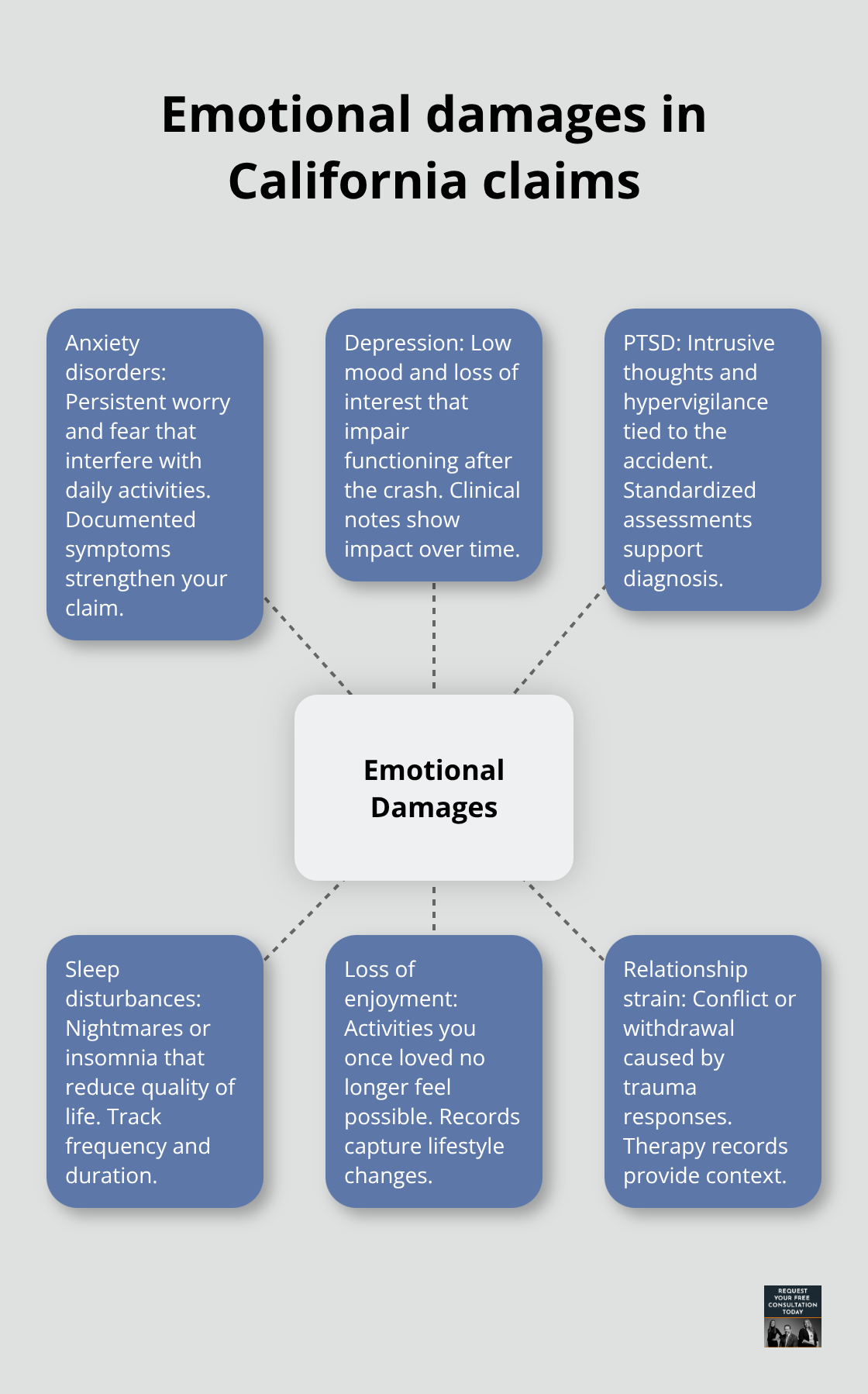
California courts recognize emotional damages as a legitimate injury category, but quantifying psychological harm remains fundamentally different from calculating medical bills. When you file a personal injury claim after a Santa Cruz car accident, emotional damages include anxiety disorders, depression, PTSD, sleep disturbances, loss of enjoyment in activities you once loved, and relationship strain caused by your trauma response. Courts do not assign a fixed dollar amount to these injuries the way they do for a broken leg.
How Courts Value Psychological Injury
Judges and juries evaluate the severity of your psychological condition, how long it persists, and how thoroughly it disrupts your daily functioning. A 2021 study published in the Journal of Empirical Legal Studies found that documented mental health treatment increased average emotional damage awards by 43% compared to cases lacking clinical records. This means the difference between a modest settlement and substantial compensation often hinges on whether you pursued professional help and maintained consistent documentation of your treatment.
Insurance companies use multiplier calculations to estimate emotional damages, typically ranging from 1.5 to 5 times your actual medical expenses depending on injury severity. If you spent $8,000 on mental health treatment, an insurance adjuster might initially offer $12,000 to $40,000 in emotional damages, but this baseline shifts dramatically based on your clinical records and how clearly your treatment provider documents symptom changes over time. Courts in California have increasingly recognized that psychological injuries deserve compensation equal to physical injuries when the evidence supports it.
Documentation That Strengthens Your Case
Your therapist’s progress notes, standardized trauma assessments like the PTSD Checklist, and any functional impact documentation become the currency courts use to evaluate your claim. If your mental health records show you could not return to work for three months due to panic attacks triggered by driving, or that you required medication adjustments following the accident, these specifics translate directly into monetary value. Your psychological suffering receives the recognition and compensation it warrants when proper documentation exists to support your claim.
Final Thoughts
Your emotional recovery and your legal claim reinforce each other. Santa Cruz emotional trauma following a car accident demands the same attention and resources as any physical injury, and treating it seriously strengthens both your wellbeing and your case. The documentation you build through mental health treatment becomes the evidence that courts recognize when calculating what your psychological suffering is worth.
Navigating recovery while managing a legal claim creates real stress, and we at Schaar & Silva LLP understand this burden. We connect you with mental health professionals who understand accident trauma and can document your treatment in ways that support your case, while we handle the medical bill assistance and property damage claims so you can focus on healing rather than administrative tasks.
Your path forward involves two parallel tracks that reinforce each other: pursue the mental health care you need through qualified professionals in Santa Cruz County who provide both treatment and clinical documentation, and work with a legal team that recognizes emotional damages as legitimate injury components. Contact Schaar & Silva LLP to discuss how we can coordinate your mental health support with your legal strategy, and your emotional recovery will receive both the care and the compensation it deserves.
