

A car accident in Santa Cruz County leaves you facing medical bills, lost income, and pain that won’t go away. Understanding Santa Cruz auto compensation is the first step toward recovering what you’re owed.
We at Schaar & Silva LLP help accident victims navigate the claims process and fight for fair payment. This guide breaks down the types of damages you can claim, how insurance companies calculate offers, and when to push back against lowball settlements.
What Counts as Compensable Damages in Santa Cruz
Four Categories of Damages California Law Recognizes
California law recognizes four main categories of damages after a car accident: economic damages, non-economic damages, property damage, and in rare cases, punitive damages. Economic damages cover your actual out-of-pocket losses like medical bills, prescription costs, and lost wages. Non-economic damages compensate for pain, suffering, and emotional distress-these have no receipt but are very real.
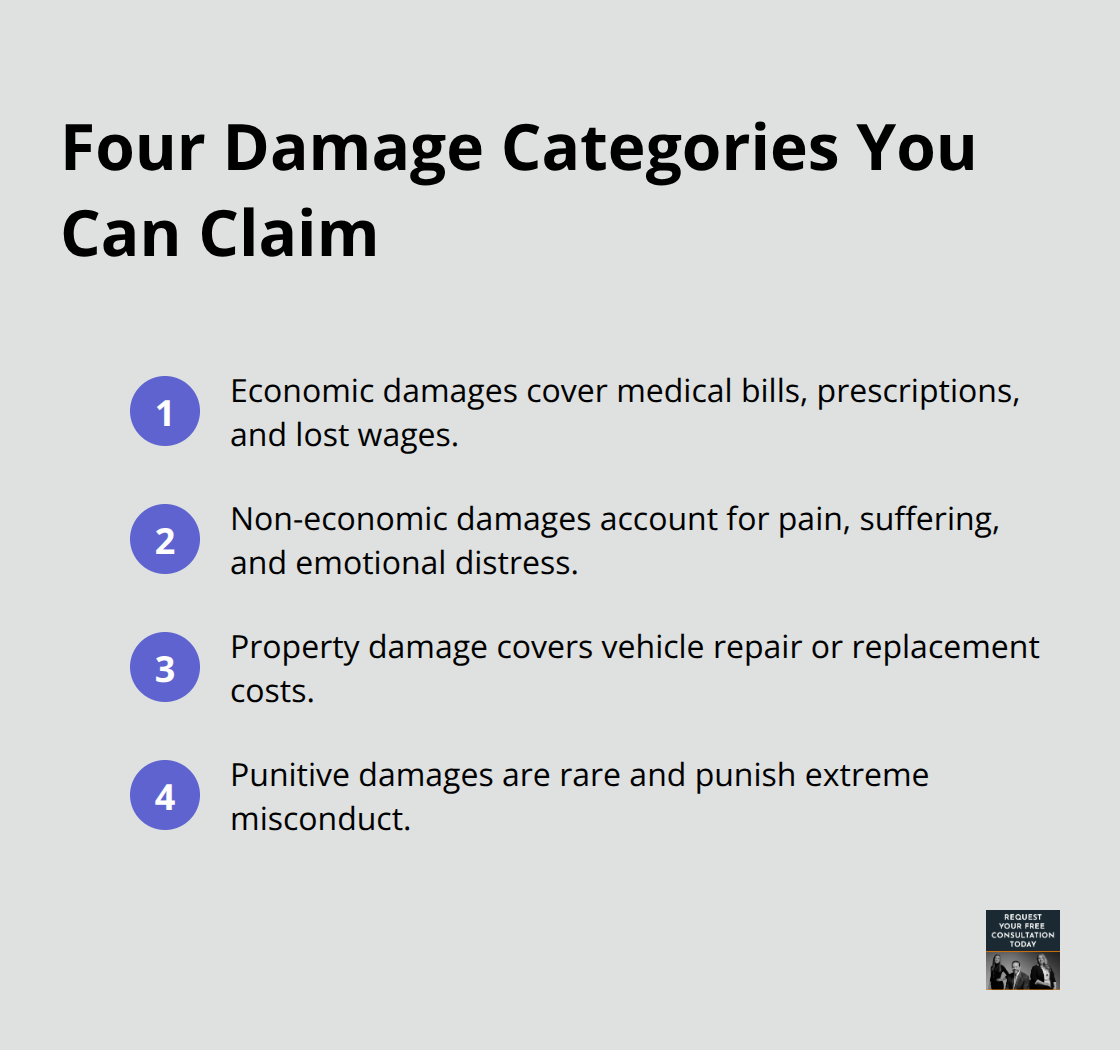
Property damage covers vehicle repairs or replacement.
Understanding Economic and Non-Economic Damages
The California Department of Insurance reports that the average auto accident claim in California ranges from $15,000 to $25,000, though Santa Cruz County cases often vary based on injury severity and liability clarity. Insurance companies in California must follow strict guidelines under California Code Section 3294, which means they cannot simply lowball you with arbitrary figures. Insurance adjusters use formulas that multiply medical expenses by 1.5 to 5 times to estimate pain and suffering, but this formula often undervalues severe injuries.
Settlement Versus Trial Awards
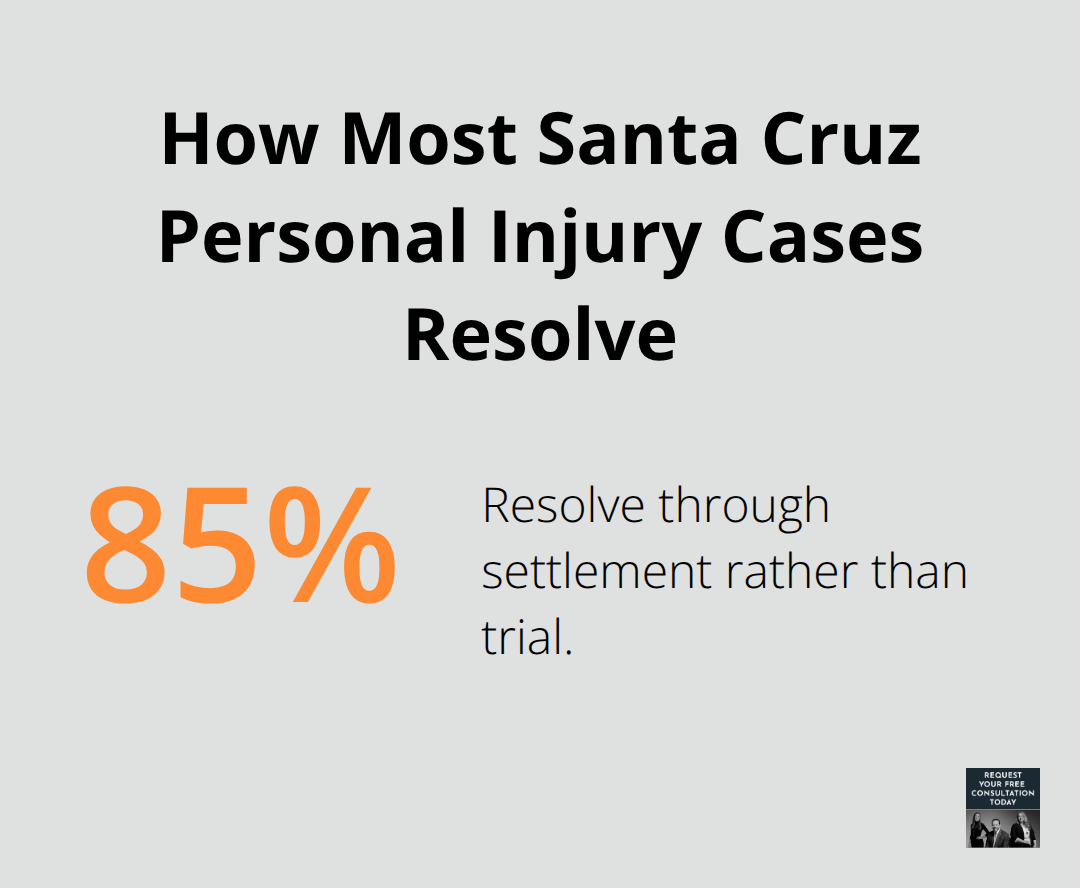
The key difference between settlement and trial awards matters significantly: a settlement is a negotiated agreement where you accept a fixed amount and waive the right to sue further, while a trial award is a judgment issued by a court after evidence presentation. Settlements typically resolve faster (30 to 90 days) and carry less uncertainty, but trial awards can exceed settlement offers if a jury finds the defendant grossly negligent. Santa Cruz County courts handle approximately 2,000 personal injury cases annually, and roughly 85% resolve through settlement rather than trial.
How to Evaluate Settlement Offers
You should never accept an initial offer without documentation showing how the insurer calculated that number-request their settlement breakdown in writing before responding. Medical records, employment verification, and accident reports establish the true value of your damages. Insurance adjusters often underestimate what your claim is worth, which is why understanding how they calculate offers puts you in a stronger position when negotiating your compensation.
What Damages Can You Actually Claim
Medical Expenses and Future Treatment Costs
Medical expenses after a car accident in Santa Cruz County extend far beyond your initial emergency room visit. The National Highway Traffic Safety Administration reports that the average hospitalization for a moderate car accident injury costs between $35,000 and $50,000, and this figure covers only the first treatment phase. You can claim all medical bills including emergency care, surgery, physical therapy, prescription medications, and ongoing specialist visits. Future treatment costs matter just as much-if your doctor confirms you’ll need surgery six months from now or require physical therapy for two years, you include those projected expenses in your claim.
Many accident victims accept settlement offers before their full medical picture emerges; insurance companies count on this mistake. Document every medical recommendation in writing, and avoid settling until your doctor confirms your treatment plan is complete or you have a clear timeline for future care. Insurance adjusters will push you to close your claim quickly, but accepting too soon locks you out of recovering costs that appear later.
Lost Wages and Loss of Earning Capacity
Lost wages represent straightforward compensation that insurance adjusters cannot dispute if you have proper documentation. Your lost income claim includes all wages you missed while recovering, and it extends to loss of earning capacity if your injury reduces your ability to work in your current job or any job. The Bureau of Labor Statistics reports that workers in Santa Cruz County earn a median annual wage of approximately $58,000, which means each month of recovery costs you roughly $4,800 in lost income before taxes.
Request written verification from your employer showing your hourly rate, the dates you missed work, and any reduced hours during your recovery period. This documentation transforms your wage claim from an estimate into a fact that strengthens your negotiating position with the insurance company.
Pain and Suffering Compensation
Pain and suffering compensation is where most accident victims leave money on the table because insurance companies deliberately undervalue this category. California courts recognize that physical pain, emotional distress, loss of enjoyment of life, and mental anguish have real financial worth, and juries consistently award amounts that far exceed the arbitrary multipliers insurance adjusters use. Insurance adjusters typically multiply your medical expenses by 1.5 to 5 times to estimate pain and suffering, but this formula often undervalues severe injuries (especially those affecting your long-term quality of life).
Document the true impact of your injuries on daily life-how pain affects your sleep, your ability to work, your relationships, and your hobbies. This evidence strengthens your claim significantly during negotiations. The gap between what insurance companies offer and what courts award for pain and suffering can reach tens of thousands of dollars, which is why this category demands your careful attention.
Understanding how each damage category works positions you to recognize when an insurance offer falls short of what you actually deserve. The next section examines how insurance companies calculate their settlement offers and when you should push back against their numbers.
How to Strengthen Your Claim Before Settlement
Collect Documentation Immediately After Your Accident
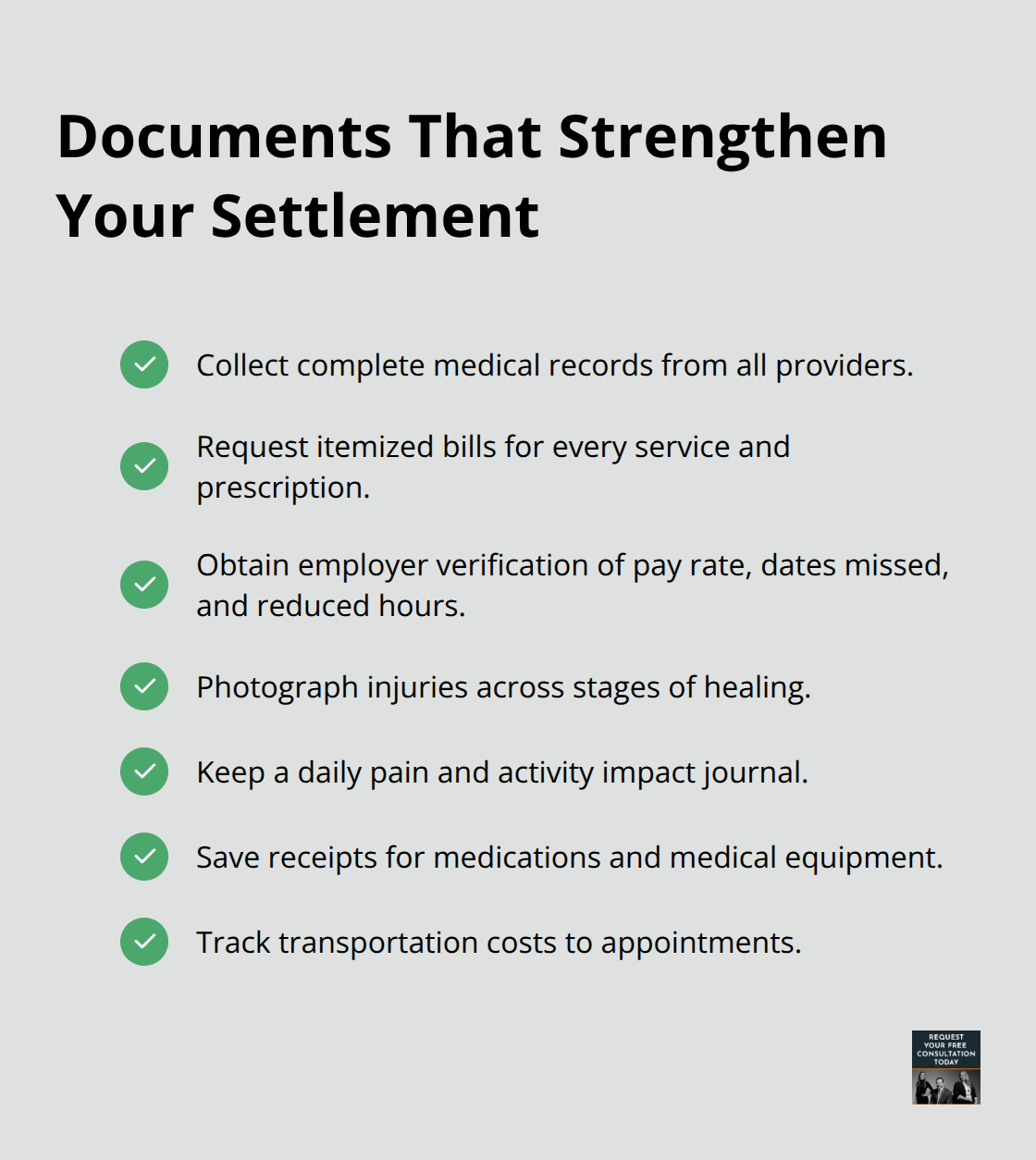
The documents you gather in the first weeks after your accident determine whether you accept a fair settlement or walk away from thousands of dollars you deserve. Insurance adjusters count on accident victims accepting quick offers before they understand what their claim is actually worth, so you must build an irrefutable case before any negotiation happens. Start collecting medical records immediately, not weeks later when details fade and records become harder to obtain. Request itemized bills from every healthcare provider-emergency room, surgeon, physical therapist, pharmacy-because general statements like “treatment cost $5,000” carry far less weight than detailed invoices showing exactly what services you received and when.
Your employment verification should include your hourly rate or salary, the specific dates you missed work, and confirmation from your employer about any reduced hours during recovery. The Social Security Administration reports that wage documentation increases settlement values by an average of 15 to 25 percent because adjusters cannot dispute what your employer confirms in writing. Photograph your injuries at different stages of healing, keep a daily pain journal noting how your injuries affect your sleep and work capacity, and save all receipts for medication, medical equipment, transportation to appointments, and any other accident-related expenses.
Request a Written Settlement Breakdown
Insurance companies employ adjusters trained to minimize what they pay, and their settlement offers reflect what they believe you will accept, not what your claim is actually worth. Request a detailed written breakdown of how the adjuster calculated their offer, including which medical expenses they included, what multiplier they applied to pain and suffering, and how they determined your lost wages. This transparency forces them to justify their numbers and often reveals significant errors in their calculations. If the adjuster refuses to provide a written breakdown, that refusal itself signals they know their offer is too low.
Reject any initial offer that arrives within two weeks of your accident because your medical picture is still incomplete and the adjuster cannot have evaluated your full damages. Many accident victims accept settlements before their doctors clear them to return to work or before they understand whether they need ongoing treatment, which locks them into amounts that fail to cover their actual expenses.
Negotiate With Specific Numbers
If your initial offer falls short of what your documentation supports, push back with specific numbers-medical bills totaling $42,000, lost wages of $8,600 for three months out of work, and a pain and suffering calculation based on a reasonable multiplier of your medical costs. Insurance adjusters expect negotiation and budget for it, so accepting their first number means leaving compensation on the table. Insurance adjusters use formulas to calculate offers, and those formulas only work with the information you provide-incomplete documentation means they calculate lower values. When you counter with documented figures, you shift the conversation from what the adjuster thinks you’ll accept to what your actual damages prove you deserve.
Final Thoughts
Santa Cruz auto compensation claims succeed when you refuse to accept less than what your damages prove you deserve. Insurance adjusters calculate offers based on what they believe you’ll accept, not the true value of your injuries and expenses. The gap between initial offers and what your claim actually supports often reaches thousands of dollars, which is why documentation transforms vague estimates into concrete facts that force higher valuations.
Working with Schaar & Silva LLP changes how insurance companies treat your claim because adjusters stop treating you as someone who will accept whatever they offer when you have professional representation. The team handles the legal complexities of your case while you focus on recovery, and they connect you with medical lien services to manage bills until your case resolves. They also evaluate property damage claims to verify fair valuation and link you with support specialists when your injuries extend beyond physical recovery.
Start gathering the documentation outlined in this guide and request a written settlement breakdown from your insurance company today. If that offer doesn’t match what your medical bills, lost wages, and injury impact support, push back with specific numbers and refuse to settle until your claim reflects your actual damages.
