
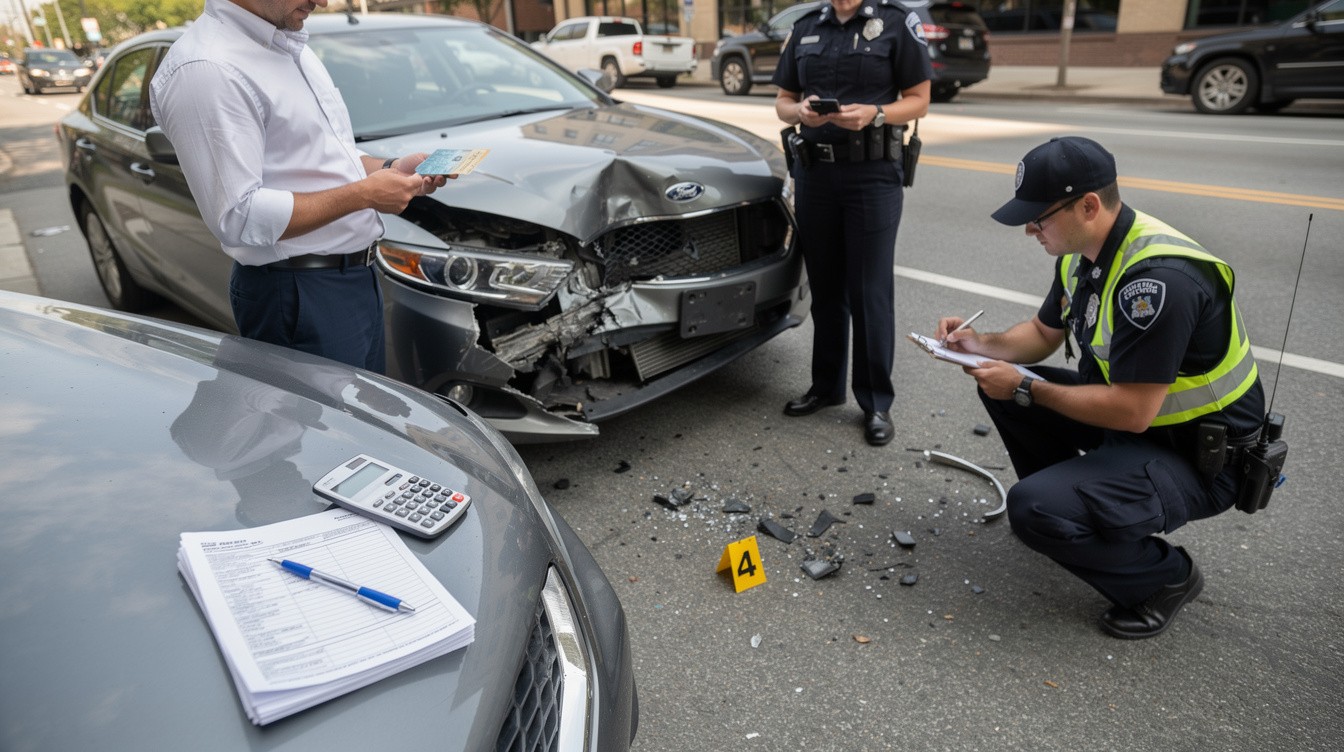
Rear end collisions happen in seconds, but the aftermath can take months to resolve. At Schaar & Silva LLP, we’ve helped countless people in Sacramento and Oakland navigate the settlement process after being hit from behind.
This rear end collision guide walks you through exactly what to do right now and how to build a strong case for maximum compensation.
What to Do Right After a Rear End Collision
Move to Safety First
The first thirty minutes after a rear end collision determine how strong your settlement case becomes. Your actions during this window directly impact what you’ll recover. Move to a safe location if the vehicles are drivable and no one is seriously injured. Turn on your hazard lights and stay visible to other drivers. If anyone is hurt or the vehicles are blocking traffic, call 911 immediately.
Document Everything with Photos and Video
Once you’re safe, pull out your phone and photograph everything at the scene. Take photos of the damage to both vehicles from multiple angles, the accident scene including road conditions and traffic signals, license plates of both vehicles, and the overall accident location. Video footage works even better than still photos because it captures context and movement. According to the Insurance Institute for Highway Safety, photographic evidence increases settlement offers by an average of 23 percent compared to cases without visual documentation. Don’t rely on memory or the other driver’s account of what happened.
Collect Critical Information from the Other Driver
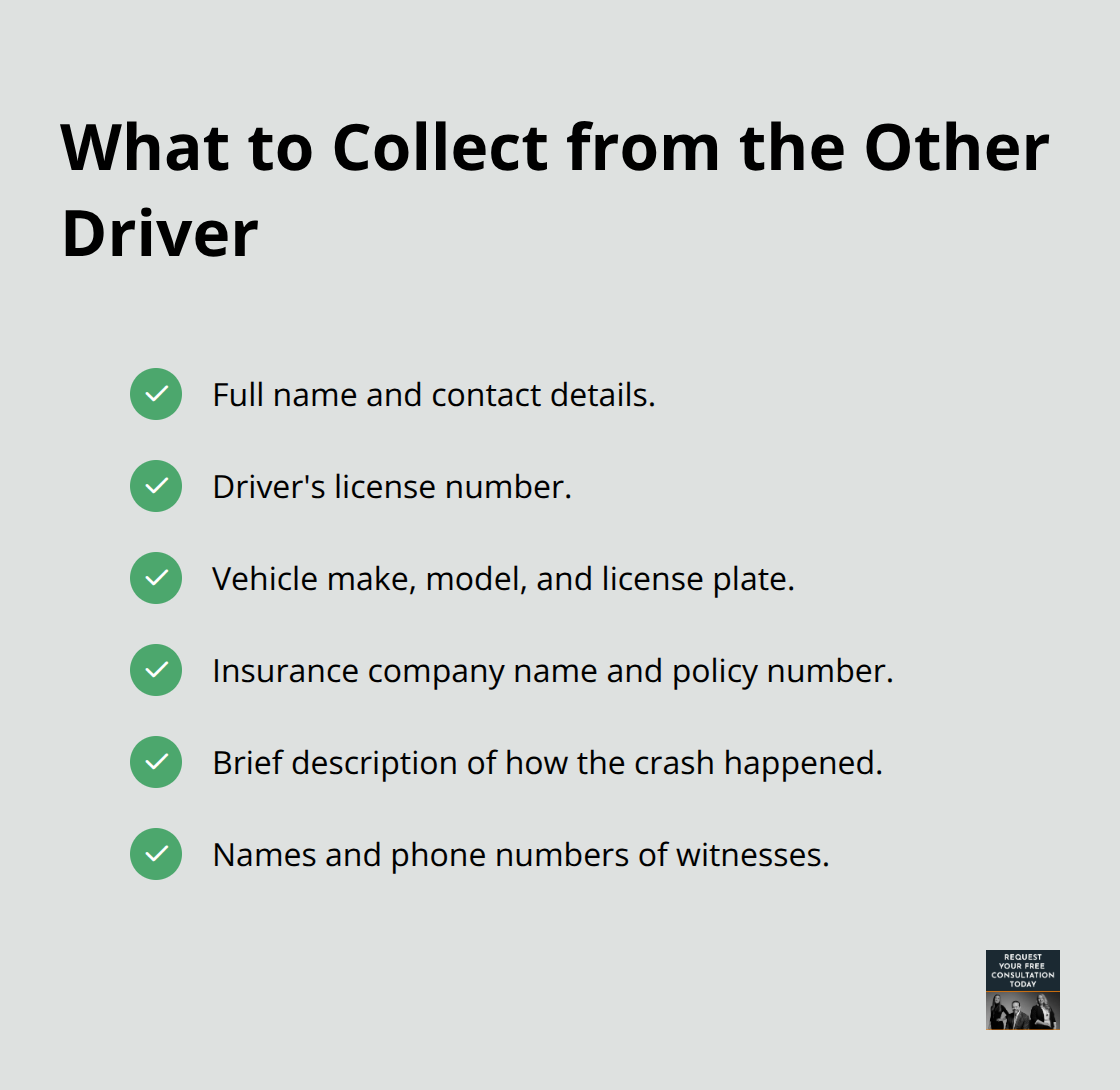
Collect the other driver’s information before they leave the scene. Get their full name, phone number, address, driver’s license number, vehicle make and model, license plate number, and insurance company name and policy number. Ask them to describe how the accident happened and take notes on what they say, but don’t admit fault or apologize for the accident. If there are witnesses, get their names and phone numbers.
Report the Accident and Seek Medical Attention
Contact your insurance company within 24 hours to report the accident. Most policies require prompt reporting, and delaying this notification can complicate your claim. File a police report by calling the non-emergency line in your jurisdiction if the police didn’t respond to the scene. Request a copy of the police report number for your records. Request medical attention even if you feel fine, as rear end collision injuries like whiplash often appear days or weeks later. The sooner you document your injuries medically, the stronger your connection between the accident and your damages. Keep all receipts, medical records, and communication with insurance adjusters organized in a folder or digital file.
This documentation becomes the foundation for understanding liability and determining who bears responsibility for the collision.
Understanding Liability and Fault in Rear End Accidents
Why the Rear Driver Bears Responsibility
In rear end collisions, liability is straightforward in most cases. The driver who hits you from behind is at fault because they failed to maintain a safe following distance and did not brake in time to avoid the collision. California law requires drivers to keep enough distance between vehicles to stop safely if the car ahead brakes suddenly. When you are hit from behind, the at-fault driver violated this basic traffic safety rule. Insurance companies rarely dispute liability in rear end cases because the physics and legal standard are clear. According to the National Highway Traffic Safety Administration, rear end collisions account for approximately 29 percent of all multi-vehicle accidents, and fault determination is one of the least contested aspects of these claims. This works in your favor because you can focus your energy on documenting damages rather than proving fault.
How Insurance Adjusters Determine Fault
Insurance adjusters determine fault by examining police reports, vehicle damage patterns, witness statements, and photos from the scene. The damage location tells the story-if your vehicle shows impact damage to the rear bumper and the other vehicle shows damage to the front bumper, this confirms the rear driver caused the collision. Adjusters also review the police report to see if the officer cited the other driver for following too closely or unsafe speed.
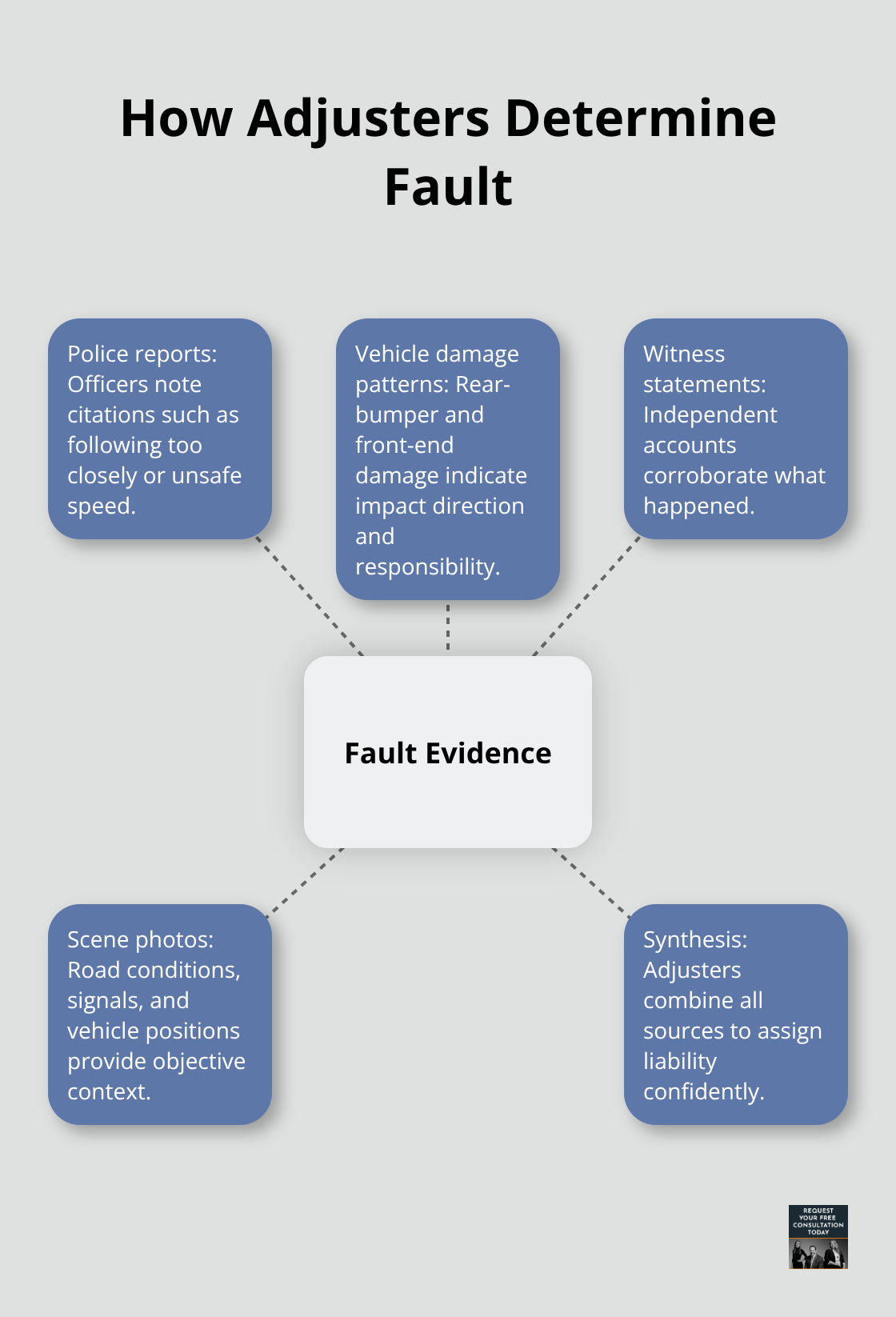
Witness statements carry significant weight, especially if independent parties saw the accident happen. Photos showing road conditions, traffic signals, and vehicle positions strengthen your position.
Evidence That Strengthens Your Claim
When the other driver admits fault in their insurance statement, the case moves toward settlement faster. One critical piece many people miss is obtaining the other driver’s recorded statement to the insurance company, which often contains admissions that support your claim. Collect and organize this evidence systematically because insurance companies process claims more quickly when documentation is complete and clear. The police report, witness contact information, scene photographs, and the other driver’s admission (if available) form the foundation of a strong liability case. With liability established, you can now shift your attention to calculating the full scope of your damages and building the financial case for your settlement.
Calculating What Your Rear End Collision Is Actually Worth
Gather Medical Records Immediately
Medical documentation forms the backbone of every settlement negotiation, and most people underestimate how much detail insurance adjusters require. Start collecting medical records immediately after your first appointment, including initial emergency room visits, follow-up appointments with your primary care doctor, and any specialist consultations like orthopedic or neurological evaluations. Request these records directly from each provider rather than waiting for them to arrive on their own timeline.
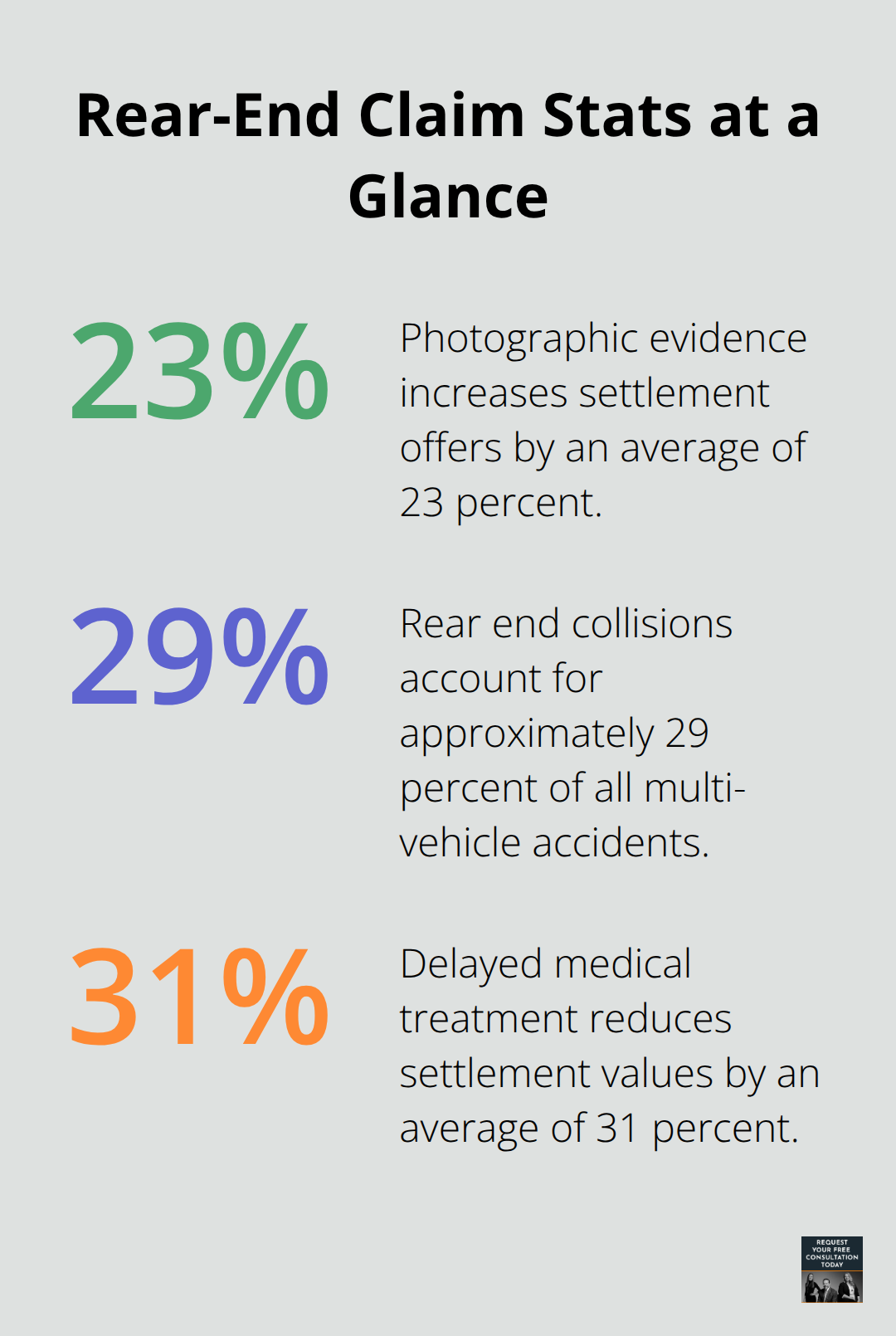
Insurance adjusters scrutinize the gap between your accident date and your first medical visit, so treatment within 72 hours of the collision significantly strengthens your claim. The Journal of Emergency Medicine reports that delayed medical treatment reduces settlement values by an average of 31 percent because adjusters question whether your injuries actually resulted from the accident.
Document Your Symptoms and Pain Levels
Keep detailed notes about your symptoms, pain levels on a scale of 1 to 10, how the injury affects your daily activities, and any medications prescribed. This narrative documentation matters as much as clinical test results because it demonstrates the real impact on your life. Write down specific examples: difficulty sleeping, inability to perform your job duties, or limitations in household tasks. These details transform abstract medical records into a compelling picture of your actual suffering.
Calculate Past Medical Expenses
Past medical expenses include emergency room bills, diagnostic imaging like X-rays or MRI scans, physical therapy sessions, prescription medications, and any medical equipment you purchased. Lost wages include time off work for medical appointments and recovery, calculated by multiplying your hourly rate or daily salary by the actual days missed. Property damage assessment should reflect either repair costs from a certified mechanic or the fair market value of your vehicle if it was totaled, which you can verify through resources like the National Automobile Dealers Association pricing guide.
Account for Future Losses and Ongoing Costs
Many people forget to include ongoing expenses like continued physical therapy, future medical treatment, or permanent disability accommodations. Insurance companies typically offer settlement amounts ranging from 75 to 350 percent of your total medical expenses, depending on injury severity and liability clarity, according to data from the American Association for Justice. Document every expense with receipts and invoices organized chronologically (medical bills, repair estimates, wage loss documentation). When the settlement offer arrives, compare it against your calculated total damages to determine whether their number reflects the actual scope of your losses or requires negotiation.
Final Thoughts
The rear end collision guide you’ve read walks you through the exact steps that protect your rights and build a settlement case reflecting your actual damages. Start by documenting the scene thoroughly, collecting the other driver’s information, and reporting the accident to police and your insurance company within 24 hours. Medical records gathered immediately after the collision strengthen your claim significantly, and organizing your expenses chronologically makes settlement negotiations faster and more straightforward.
Your settlement value depends on three factors: clear liability (which rear end cases typically have), documented medical treatment, and calculated damages including medical bills, lost wages, and property damage. Insurance companies often undervalue claims initially, so comparing their offer against your documented total damages tells you whether negotiation is necessary. Most settlements in rear end collisions range from 75 to 350 percent of medical expenses, depending on injury severity and how thoroughly you’ve documented everything.
Contact a legal professional if the insurance company’s offer falls significantly short of your damages, if the other driver disputes liability despite clear evidence, or if your injuries require ongoing treatment. We at Schaar & Silva LLP help people in Santa Cruz County navigate this process and connect you with the resources you need to recover fully. If you’re in Santa Cruz County and need support with your rear end collision claim, contact Schaar & Silva LLP to discuss your situation.
