

Rear end collision claims often involve complex questions about who’s responsible and what compensation you deserve. The driver who hits you from behind is usually presumed at fault, but the actual settlement process requires careful calculation of your damages and injuries.
We at Schaar & Silva LLP help accident victims in Santa Cruz County, Sacramento, and Oakland understand their rights and fight for fair settlements. This guide walks you through liability rules, damage calculations, and the serious injuries that rear end collisions cause.
Who’s Actually Liable in a Rear End Collision
The Legal Presumption of Fault
Rear end collisions create a straightforward liability picture in California, but the details matter more than most accident victims realize. The driver who strikes your vehicle from behind carries the legal presumption of fault because California traffic law assumes the trailing driver failed to maintain a safe following distance. California Vehicle Code Section 21704 explicitly requires drivers to maintain control of their vehicles and keep a safe distance from the vehicle ahead. This presumption shifts the burden significantly-the at-fault driver’s insurance company must prove you caused the accident rather than you having to prove they caused it. In practice, this means the insurance adjuster cannot simply deny your claim based on a vague story about sudden stops or unclear road conditions.
When the Rear Driver Might Share Fault
California law recognizes specific situations where the rear driver might not bear full liability or might share it with the front driver. If you suddenly reversed without warning or changed lanes directly in front of the trailing vehicle with insufficient space and time for them to react, you could share fault. A driver who braked abruptly to avoid an animal or obstacle might argue comparative negligence, though California courts have consistently ruled that drivers must maintain enough distance to stop safely regardless of unexpected objects. Defective vehicle equipment also matters: if your brake lights were inoperative or your vehicle had mechanical failure that caused sudden unexpected stopping, the liability picture becomes murkier.
Protecting Your Claim Through Documentation
Insurance companies will investigate these exceptions aggressively, which is why you must document the accident scene thoroughly. Photograph road conditions, vehicle damage patterns, traffic signals, and any obstructions. Obtain statements from independent witnesses before they leave the scene, as their accounts carry more weight than statements from interested parties. If you suffered serious injuries like spinal cord damage or traumatic brain injuries from the impact, medical records become critical evidence supporting your claim value regardless of liability questions.
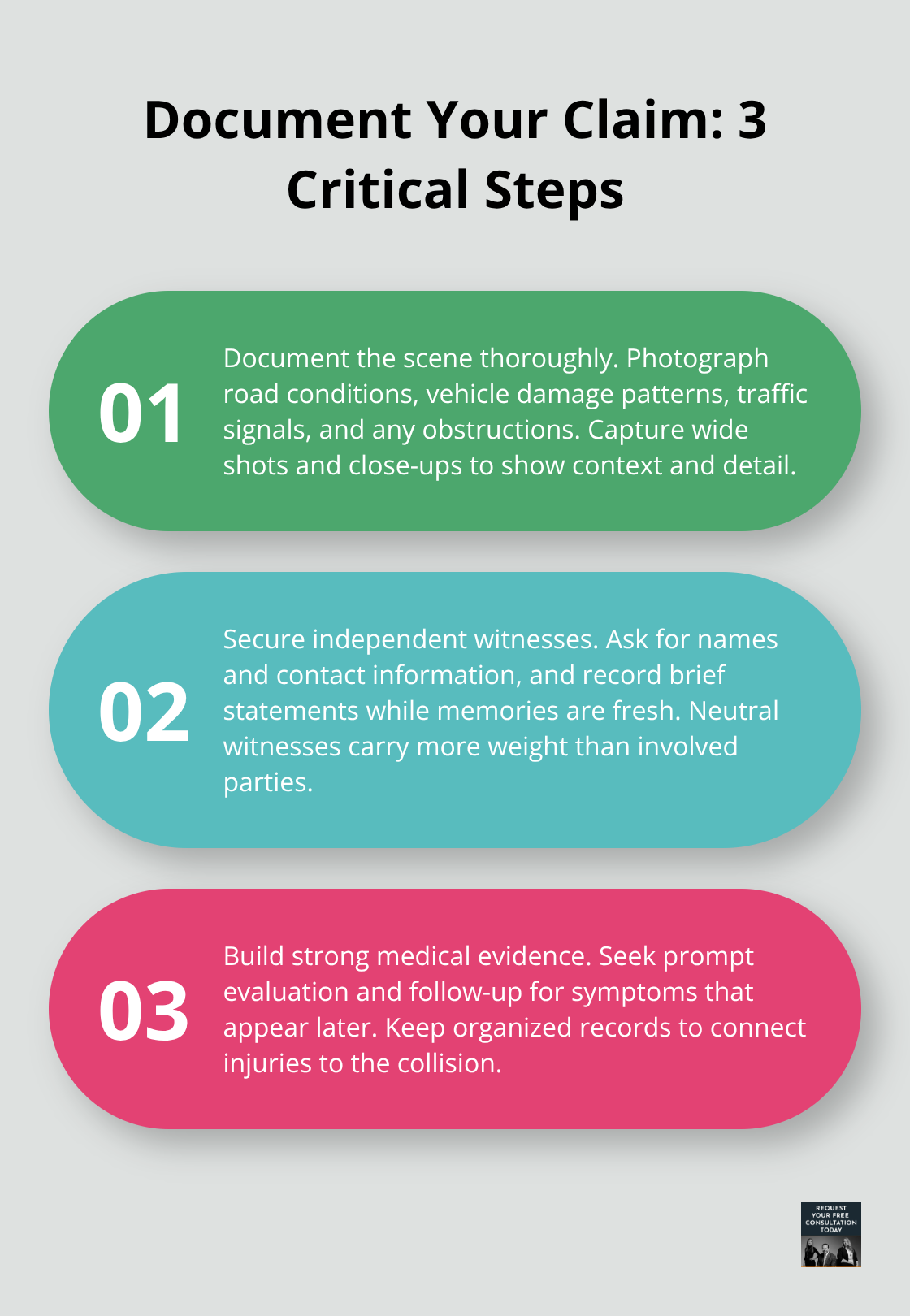
The strength of your documentation directly affects how insurance companies evaluate your case and what settlement they ultimately offer.
What Damages Can You Recover After a Rear End Collision
Calculating your actual damages requires moving beyond insurance company estimates and understanding what California law allows you to recover. Medical bills form the foundation of most rear end collision claims, but they represent only the starting point. If you suffered whiplash, spinal cord injuries, or traumatic brain injuries from the impact, your treatment costs extend far beyond the emergency room visit.
Medical Expenses and Treatment Costs
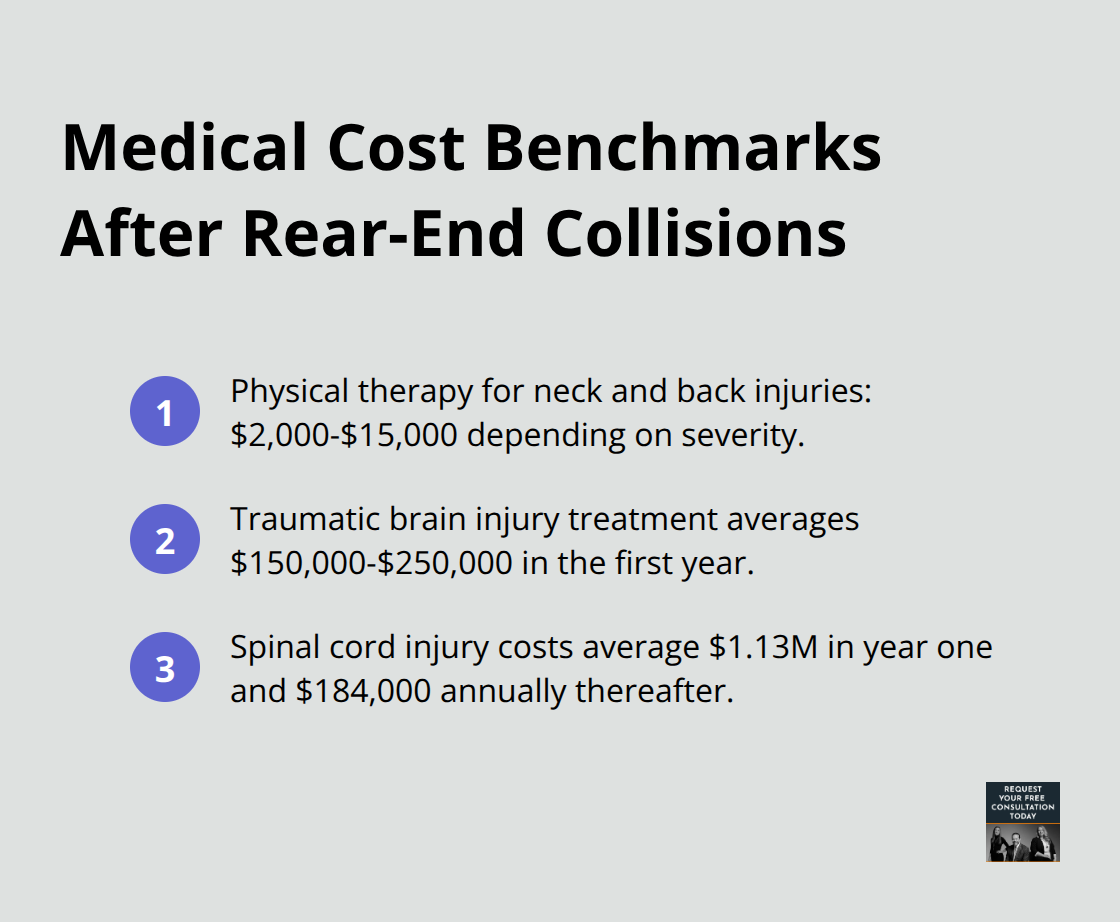
Physical therapy for neck and back injuries typically costs between $2,000 and $15,000 depending on severity, according to data from the American Physical Therapy Association. Brain injury treatment costs average $150,000 to $250,000 in the first year alone when you factor in neurological evaluations, imaging, rehabilitation, and ongoing monitoring. Insurance adjusters often pressure victims to accept settlements based only on immediate medical expenses, ignoring future treatment needs that emerge months or years after the accident.
You have the right to recover all reasonably necessary medical costs, including surgeries, medications, diagnostic imaging, mental health treatment for trauma and PTSD, and rehabilitation services. Keep detailed records of every medical appointment, procedure, and prescription because your documentation directly determines what compensation you receive.
Lost Income and Earning Capacity
Your earning capacity matters as much as your medical bills when calculating fair compensation. If spinal cord damage or brain injury prevents you from working for months or years, you lose income that an insurance company must repay. Calculate your lost wages by multiplying your average monthly income by the number of months you cannot work, then add reduced earning capacity if you return to work at lower pay due to permanent injury.
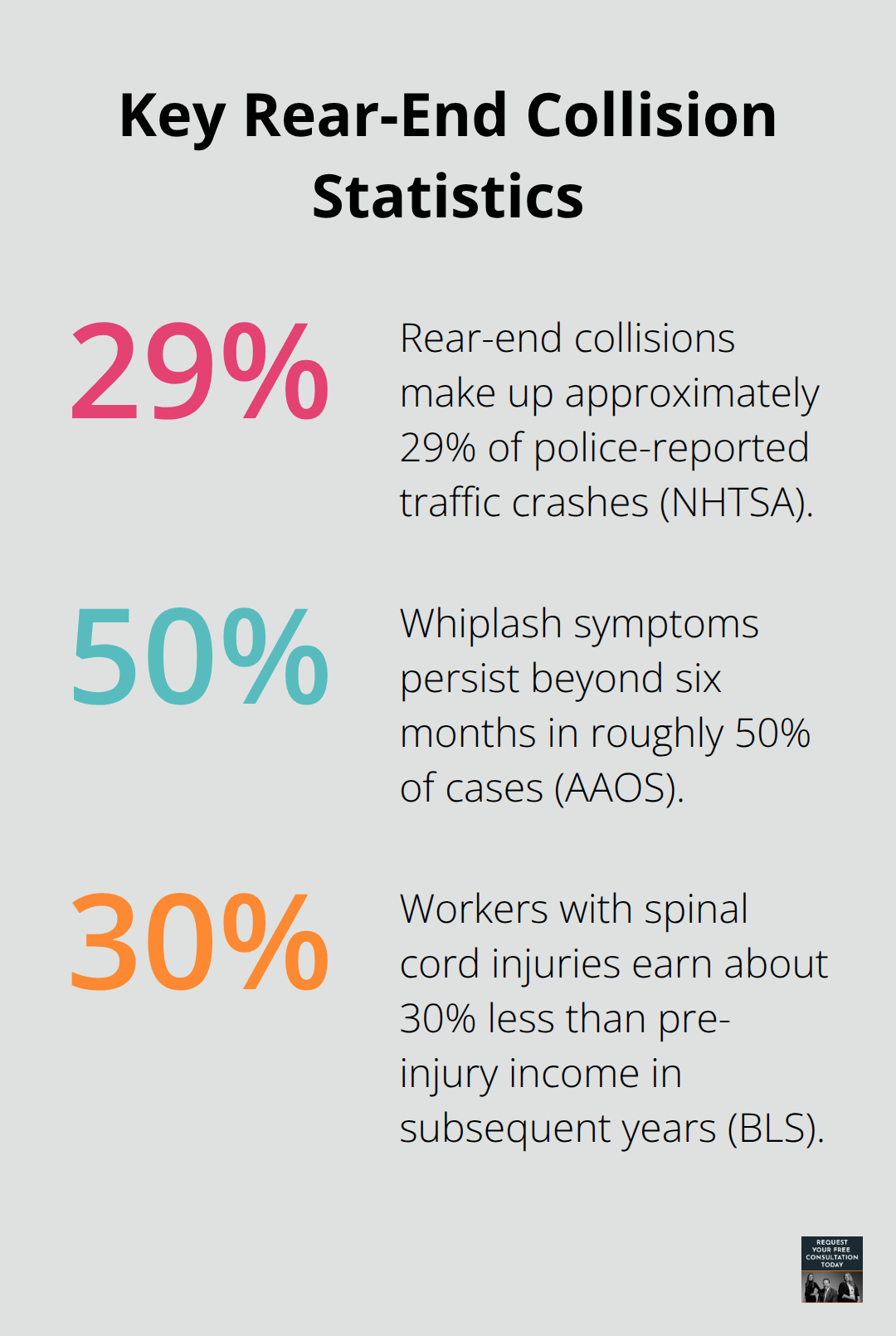
The Bureau of Labor Statistics reports that workers with spinal cord injuries earn approximately 30 percent less than their pre-injury income in subsequent years, making this a substantial component of your claim. Self-employed individuals and business owners should document their average monthly revenue for the two years before the accident to establish baseline income.
Vehicle Damage and Property Loss
Property damage to your vehicle represents another concrete expense that requires proper valuation. Insurance companies often undervalue vehicle damage by using outdated repair estimates or failing to account for structural damage that affects vehicle safety. Obtain independent repair quotes from at least two mechanics and document the vehicle’s condition before the accident through photos or maintenance records.
Pain and Suffering Compensation
Pain and suffering compensation reflects the physical pain, emotional distress, and reduced quality of life caused by your injuries. This category allows for significantly higher awards when you suffered serious injuries like brain damage or spinal cord injury (injuries that fundamentally alter your daily functioning and long-term prospects). The severity of your medical condition directly correlates with what compensation you can reasonably expect in this category.
Understanding these damage categories positions you to evaluate settlement offers accurately and identify when an insurance company undervalues your claim. The next section examines the specific injuries that rear end collisions produce and how those injuries affect your damage calculations.
What Injuries Do Rear End Collisions Actually Cause
How Rear End Impact Forces Injure Your Body
Rear end collisions produce predictable injury patterns because the physics of impact forces your body forward violently while your head lags behind. The National Highway Traffic Safety Administration reports that rear end collisions account for approximately 29 percent of all police-reported traffic crashes, making them the most common accident type on California roads. Understanding the specific injuries you likely sustained helps you recognize long-term symptoms that develop weeks or months after impact and ensures you claim compensation for all related damages.
Whiplash and Neck Injuries
Whiplash occurs when your neck extends backward suddenly then flexes forward, straining ligaments and muscles that support your cervical spine. The American Academy of Orthopaedic Surgeons indicates that whiplash symptoms persist beyond six months in roughly 50 percent of cases, contradicting the common misconception that neck injuries heal quickly. Many victims experience chronic neck pain, reduced range of motion, and recurring headaches that interfere with work and daily activities for years.
Spinal Cord and Back Damage
Spinal cord injuries from rear end collisions range from mild nerve compression to severe damage that causes permanent paralysis or loss of function. The Craig Hospital reports that spinal cord injury treatment costs average $1.13 million in the first year and $184,000 annually thereafter, underscoring why insurance companies aggressively undervalue these claims. If imaging reveals disc herniation, nerve root compression, or ligament damage, your medical records establish the need for long-term treatment and justify higher compensation demands.
Traumatic Brain Injuries
Traumatic brain injuries occur more frequently in rear end collisions than most people realize because your brain moves within your skull during impact, causing bruising and tearing of brain tissue. The Centers for Disease Control and Prevention documents that traumatic brain injury survivors experience persistent cognitive problems (including difficulty concentrating, memory loss, and impaired judgment) months or years after injury. These neurological changes affect your ability to work, maintain relationships, and perform routine tasks.
Psychological Trauma and PTSD
Psychological trauma and post-traumatic stress disorder develop when accident victims experience flashbacks, anxiety, and avoidance behaviors triggered by driving or similar situations. The Veterans Affairs system treats PTSD in accident survivors with the same protocols used for combat veterans, recognizing that motor vehicle accidents produce comparable neurological changes. Insurance adjusters typically minimize psychological injury claims, but California courts award substantial compensation when medical evidence shows ongoing psychological treatment and functional impairment. Document every symptom you experience, no matter how minor it seems initially, because delayed symptom onset strengthens your claim that injuries resulted from the collision rather than pre-existing conditions.
Final Thoughts
Rear end collision claims succeed when you document injuries thoroughly, calculate damages accurately, and refuse to accept lowball settlement offers from insurance companies. The liability framework in California strongly favors accident victims because the trailing driver bears the presumption of fault, but this advantage only translates to fair compensation when you understand what damages you can recover and what injuries warrant higher claim values. Your medical records, lost wage documentation, and psychological treatment records form the foundation of your settlement demand.
Insurance adjusters will pressure you to accept quick settlements that ignore future medical needs, reduced earning capacity, and the long-term impact of spinal cord damage or traumatic brain injuries. Whiplash symptoms persist in half of cases, spinal cord injury treatment costs exceed $1 million in the first year, and brain injury survivors experience cognitive problems for years after impact. Resist this pressure by recognizing that these figures represent the true cost of your injuries.
We at Schaar & Silva LLP help accident victims throughout Santa Cruz County, Sacramento, and Oakland navigate the settlement process and fight for compensation that reflects your specific situation. Contact Schaar & Silva LLP to discuss your rear end collision claim and learn what fair compensation looks like for your injuries and circumstances.