

A car accident shakes more than just your body-it affects your mind and emotions too. Many people in Santa Cruz County experience anxiety, depression, or trauma after a crash, yet they focus only on their legal claim and ignore their mental health.
At Schaar & Silva LLP, we know that psychological support in Santa Cruz is just as important as handling your case. Taking care of your mental health while your claim progresses isn’t a luxury-it’s part of your recovery.
How Your Body and Mind React After a Crash
The Immediate and Lasting Impact
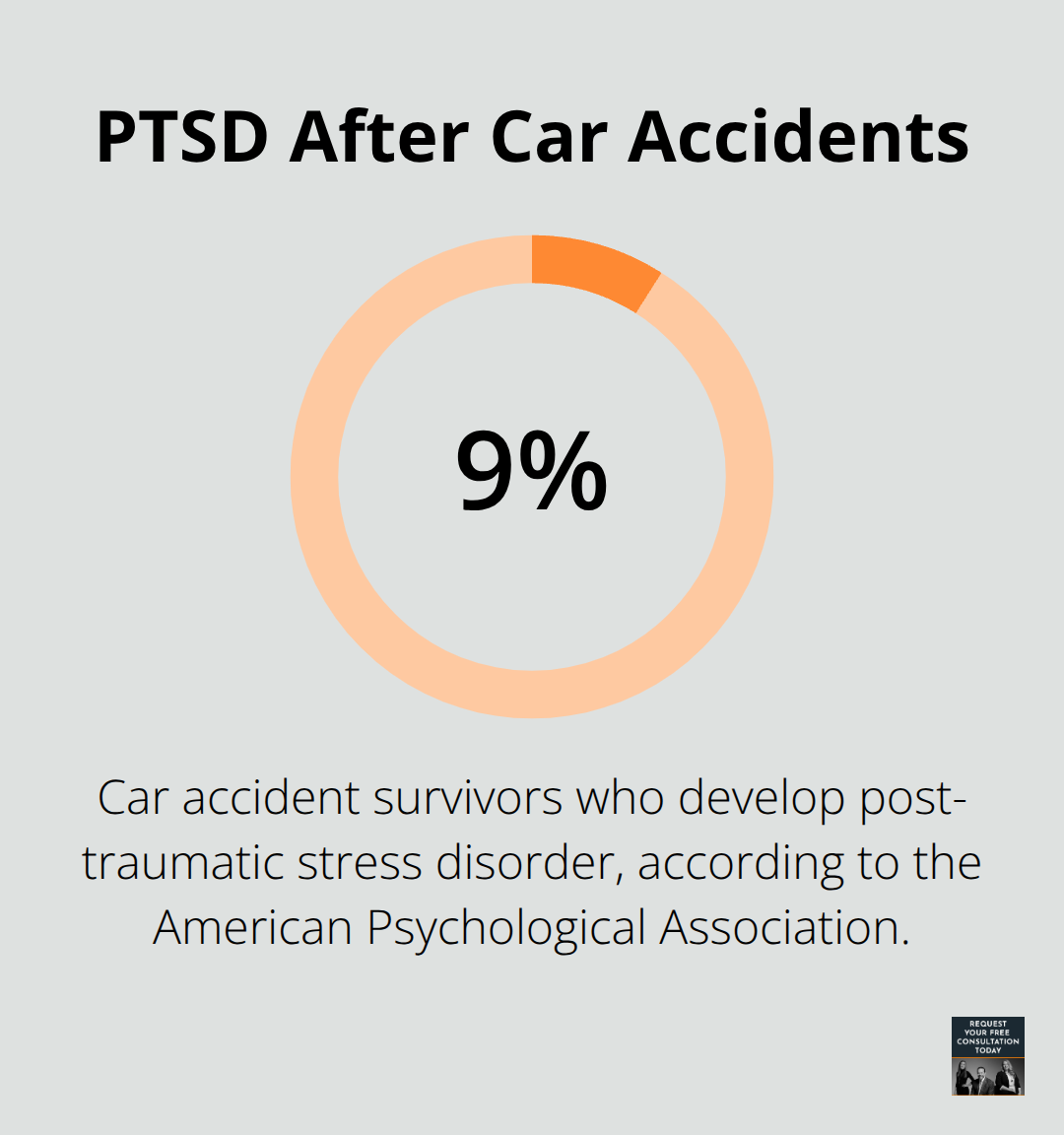
A car accident triggers immediate physical responses, but the psychological impact often arrives quietly and lingers longer. According to the American Psychological Association, approximately 9% of car accident survivors develop post-traumatic stress disorder, with many more experiencing acute stress reactions, anxiety, or depression in the weeks following their crash. In Santa Cruz County, accident survivors commonly report intrusive thoughts about the collision, hypervigilance while driving, sleep disturbances, and difficulty concentrating on daily tasks.
These aren’t signs of weakness-they’re normal neurological responses to trauma. Your brain has experienced a threat and works overtime to protect you from future danger. The problem is that this protective mechanism doesn’t simply switch off when your legal claim begins.
Why Suppression Backfires
Many people suppress their emotional responses to focus on their case, which actually intensifies psychological symptoms over time. Unaddressed trauma worsens anxiety and depression, which then interferes with your ability to participate effectively in your case, communicate clearly with your attorney, and make sound decisions about settlement offers. This dangerous cycle creates obstacles that extend far beyond your emotional well-being.
The Cost of Waiting
Untreated trauma from auto accidents doesn’t fade on its own. Research from the National Institute of Mental Health shows that without intervention, acute stress reactions develop into chronic conditions in roughly 30% of accident survivors. This means that the anxiety or depression you experience three weeks after your crash could become a long-term mental health issue affecting your employment, relationships, and overall quality of life.
The longer you delay seeking psychological support, the more entrenched these symptoms become, making treatment more difficult and lengthy. Additionally, insurance companies and opposing counsel often scrutinize delayed mental health treatment, sometimes arguing that your psychological symptoms are unrelated to the accident.
Building Your Documentation
Starting therapy or counseling soon after your crash creates clear documentation linking your symptoms directly to the collision, which strengthens your claim if psychological damages are part of your compensation. This documentation becomes valuable evidence that demonstrates the accident’s full impact on your life. With this foundation in place, you’re ready to explore the mental health resources available throughout Santa Cruz County.
Where to Find Mental Health Support in Santa Cruz County
Access Points in Santa Cruz County
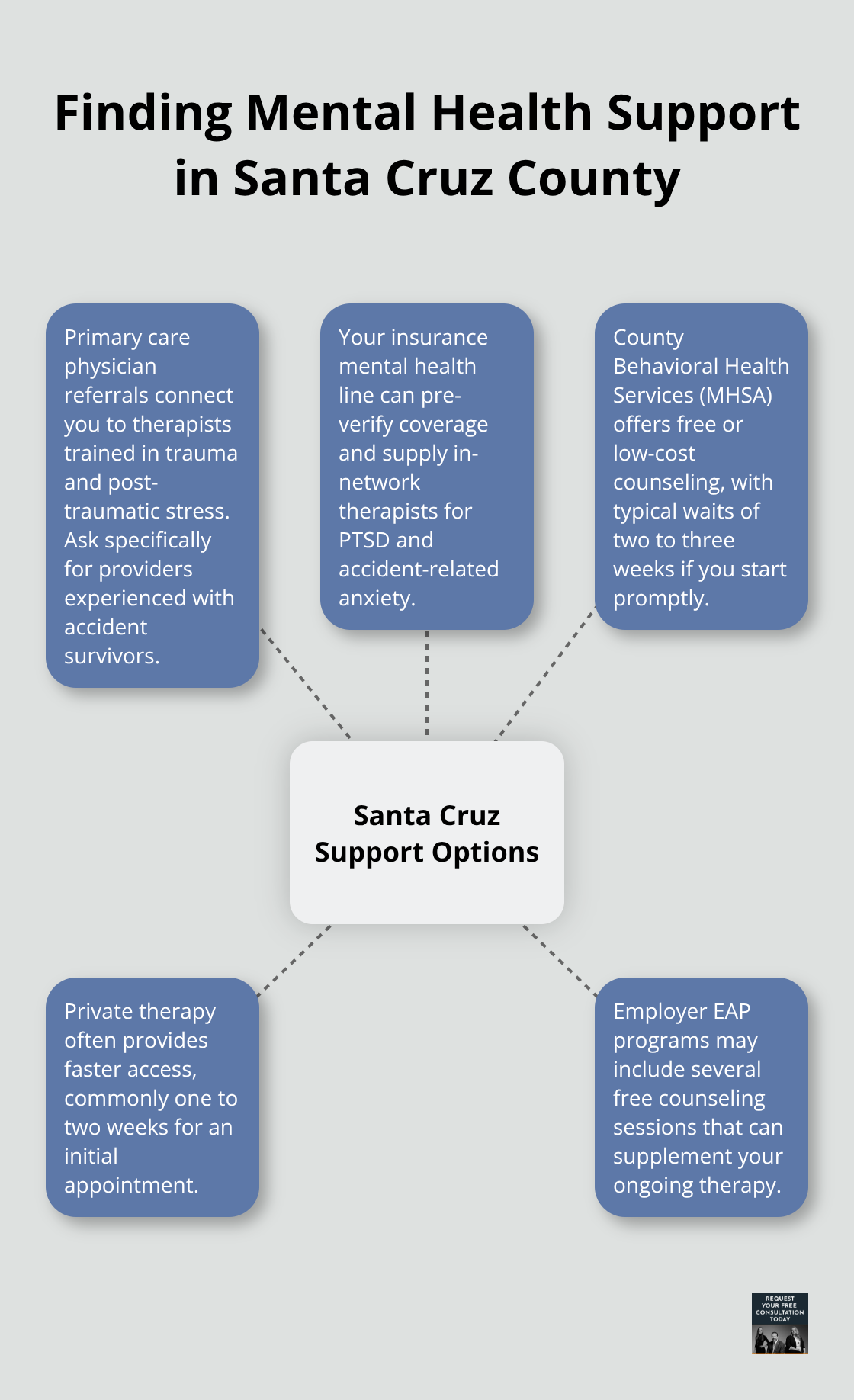
Santa Cruz County has more mental health resources than most accident survivors realize. The Monterey Bay Area has approximately 340 licensed therapists and counselors according to Psychology Today’s directory, though many don’t advertise their experience with accident trauma specifically. Your first move should involve contacting your primary care physician, who can refer you to therapists trained in trauma and post-traumatic stress. Many physicians in Santa Cruz County work with mental health providers who have specific experience treating accident survivors.
If you have health insurance, call your provider’s mental health line directly and ask for therapists who treat PTSD and accident-related anxiety. Most insurance plans require this step before covering therapy sessions anyway. Santa Cruz County also operates the Mental Health Services Act, which provides free or low-cost counseling through the County Behavioral Health Services office. Wait times average two to three weeks, which is manageable if you start the process immediately after your accident. For faster access, private therapy typically has shorter wait times, usually one to two weeks for an initial appointment.
Selecting the Right Therapist
When selecting a therapist, look specifically for those trained in cognitive behavioral therapy or trauma-focused cognitive behavioral therapy, both of which have strong research backing for accident trauma. The Anxiety and Depression Association of America found that these approaches produce measurable improvement in 60-80% of trauma patients within 12 weeks. Insurance coverage varies significantly between plans, but most cover 20 to 30 therapy sessions annually with a copay of 20-40% after your deductible.
Some therapists in Santa Cruz County offer sliding scale fees if your insurance has high out-of-pocket costs. Never delay treatment waiting for perfect insurance clarity. Starting therapy now and sorting coverage details with your provider later protects your mental health and strengthens your legal position simultaneously.
Navigating Insurance and Financial Barriers
Your insurance company’s mental health line can answer specific questions about coverage limits, copays, and deductibles before you schedule your first appointment. This conversation takes 15 minutes and eliminates financial surprises later. If your plan has high out-of-pocket costs or limited coverage, ask your therapist about sliding scale options or community mental health programs that operate on a pay-what-you-can basis.
As you move forward with both therapy and your legal claim, understanding how to balance these two processes becomes essential to your overall recovery.
How to Keep Your Life Stable While Your Claim Moves Forward
Structure Your Days Around Recovery
Accident survivors often treat their claim and daily life as separate tracks, but your mental health directly affects your ability to work, maintain relationships, and make clear decisions about your case. When anxiety spikes or depression sets in, your job performance suffers, which then creates financial stress on top of everything else. This compounding effect means you need concrete strategies to stabilize your routine while your claim progresses.
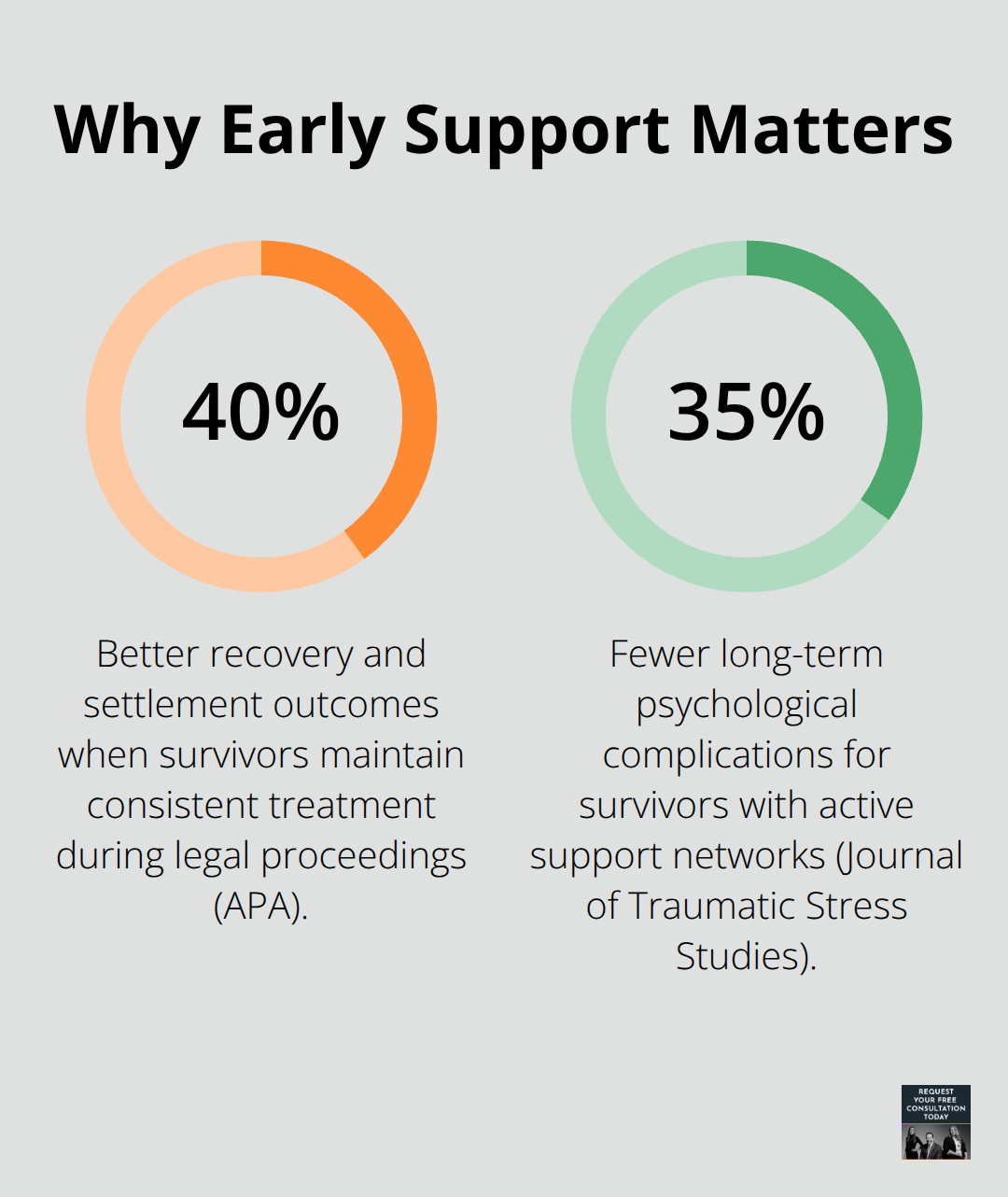
Start with a structured schedule that includes non-negotiable therapy appointments, just as you would a court date. The American Psychological Association reports that accident survivors who maintain consistent mental health treatment alongside their legal proceedings report 40% better outcomes in both their recovery and their settlements. This isn’t coincidence-it’s because you function better, communicate more clearly with your attorney, and make sound decisions when settlement offers arrive.
Navigate Your Workplace Effectively
Work closely with your employer about your situation. You don’t need to share every detail, but informing your supervisor that you’re managing post-accident recovery helps explain any productivity changes and often qualifies you for accommodation under the Americans with Disabilities Act if your symptoms affect your performance.
Many employers in Santa Cruz County offer Employee Assistance Programs that provide free counseling sessions (typically between 3 and 8 sessions annually), which can supplement your regular therapy without additional cost. If your symptoms make driving difficult, explore remote work options or carpool arrangements with trusted friends rather than pushing through hypervigilance behind the wheel. Your safety and your coworkers’ safety matter more than proving you’re unaffected.
Coordinate Your Documentation
When it comes to managing your claim alongside recovery, Schaar & Silva LLP can help coordinate your medical and psychological documentation so you’re not scrambling to gather records while also attending therapy. This coordination removes one source of stress from your plate during an already difficult time.
Build Your Support Network
Construct your support network deliberately by identifying 2 to 3 people you trust who can listen without judgment when anxiety peaks. Research from the Journal of Traumatic Stress Studies shows that accident survivors with active support networks experience 35% fewer long-term psychological complications than those who isolate.
These supporters don’t need to solve anything-they simply need to be present. Tell them specifically what helps: whether that’s a phone call during difficult moments, helping with household tasks when motivation drops, or simply sitting with you during anxious periods (no advice required). The combination of professional mental health care, workplace flexibility, and genuine personal support creates the conditions where both your recovery and your legal claim progress without one sabotaging the other.
Final Thoughts
Your mental health and your legal claim work together as interconnected parts of your recovery, not competing priorities. Psychological support in Santa Cruz strengthens your ability to navigate your case effectively because addressing trauma early helps you think more clearly, communicate better with your attorney, and make sound decisions about settlement offers. This foundation matters because untreated symptoms create obstacles that extend far beyond emotional well-being into your work, relationships, and financial stability.
Santa Cruz County residents have access to real resources available right now. Your primary care physician can refer you to trauma-trained therapists within days, your insurance company’s mental health line can clarify coverage in a single phone call, and the County Behavioral Health Services office provides free or low-cost counseling if cost presents a barrier. Starting psychological support now creates documentation that strengthens your claim while protecting your mental health simultaneously.
Contact Schaar & Silva LLP to discuss how we can support your recovery while protecting your legal rights and help coordinate your medical and psychological documentation during this difficult time.