
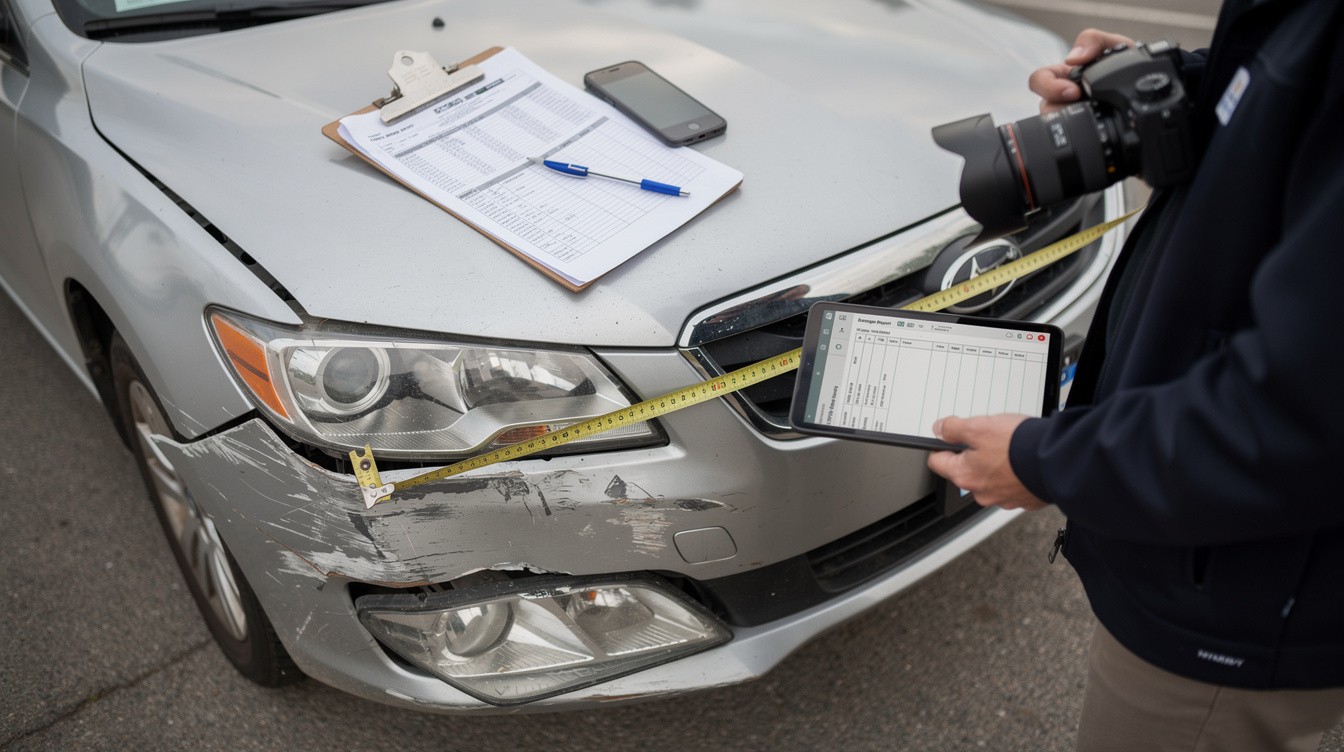
After an auto accident, insurance companies often undervalue your vehicle damage. This means you could receive far less compensation than your claim actually deserves.
Property damage valuation requires careful documentation and strategic negotiation. We at Schaar & Silva LLP help accident victims in Santa Cruz County, Sacramento, and Oakland understand their rights and fight for fair settlements.
How Insurance Companies Undervalue Your Damage
Insurance Databases Don’t Reflect California Repair Costs
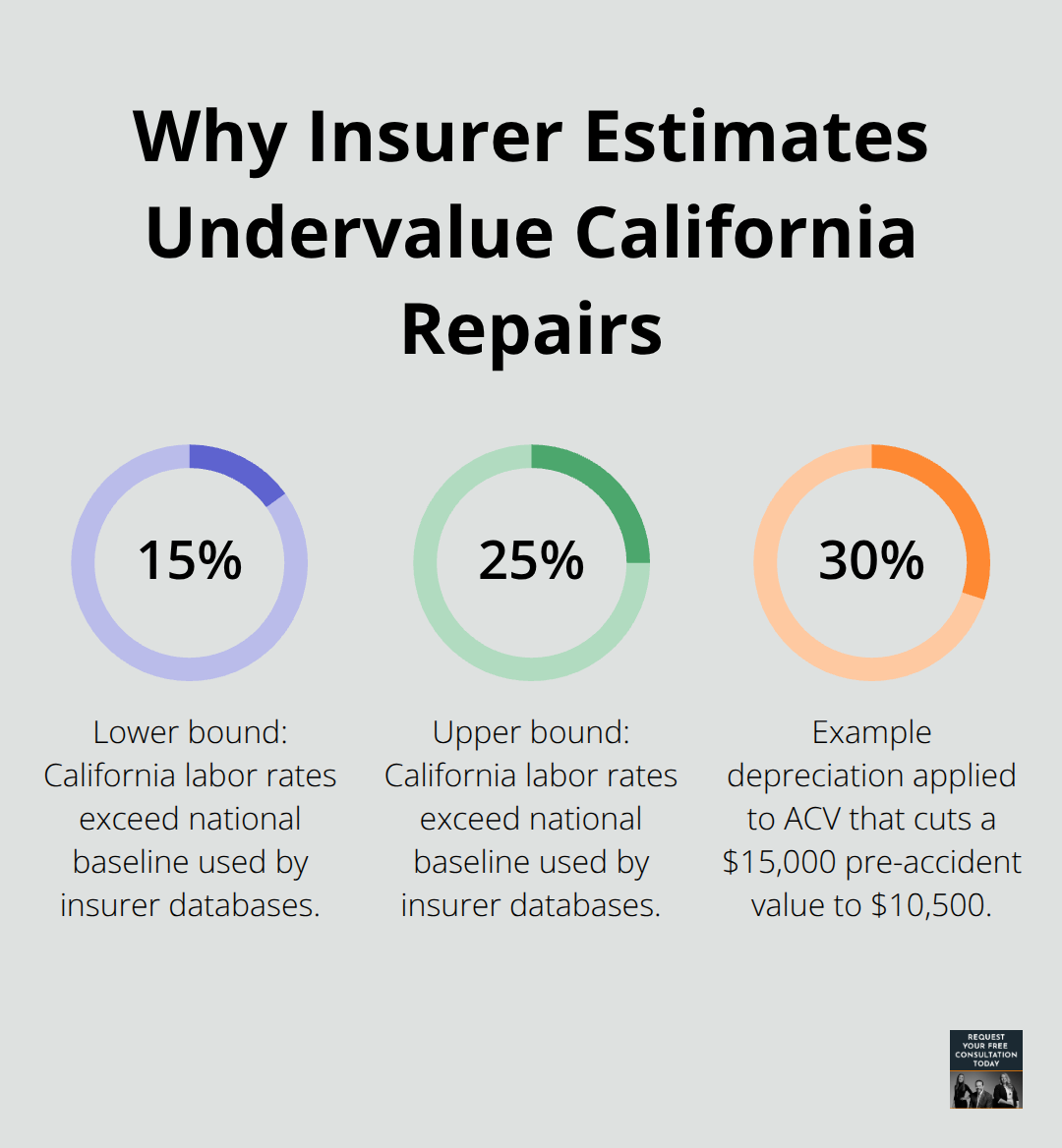
Insurance companies use specific formulas to assess vehicle damage, and most of them systematically undervalue what repairs actually cost. When an adjuster inspects your vehicle, they typically use databases like CCC ONE, Mitchell, or Audatex to generate repair estimates. These tools rely on outdated labor rates and don’t account for regional price variations. In California, repair shops charge significantly more than the national averages these databases use. A 2023 analysis by the American Collision Repair Association found that labor rates in California are 15-25% higher than the national baseline, yet insurance companies often settle claims based on those lower figures. This gap directly reduces your payout.
Actual Cash Value Versus Replacement Cost
The distinction between actual cash value and replacement cost matters enormously for your claim. Actual cash value deducts depreciation from your vehicle’s value before the accident, while replacement cost covers what you’d pay to buy an identical vehicle today. Insurance companies overwhelmingly use actual cash value because it results in lower payouts. If your car was worth $15,000 before impact but the company applies 30% depreciation, you receive $10,500 instead. Replacement cost would give you closer to the actual market price needed to purchase a comparable vehicle. Most California policies default to actual cash value unless you specifically negotiated replacement cost coverage.
Hidden Damage Surfaces After Initial Inspections
Insurance adjusters frequently omit hidden damage that surfaces during repairs. They conduct visual inspections in parking lots or repair shops, missing frame damage, electrical system problems, or suspension issues that only emerge once work begins. Once repairs start and new damage appears, many insurers resist covering the additional costs, claiming it wasn’t documented in the initial assessment. Photographs taken immediately after the accident (from multiple angles and distances) protect you here. Get estimates from at least two independent repair shops, not just the insurer’s recommended facility. Independent shops have financial incentive to identify all damage since they’ll perform the work, whereas insurance-approved shops sometimes minimize estimates to maintain relationships with insurers.
Building Your Documentation Strategy
Gathering solid evidence transforms your negotiating position. Photographs, repair estimates from independent facilities, and market data create leverage that insurers cannot easily dismiss. The next section shows you exactly how to challenge a low settlement offer using these tools.
Building Your Evidence Right After Impact
The moments immediately following an accident determine whether you receive fair compensation or accept an artificially low settlement. Start photographing everything before anyone moves vehicles or clears debris. Take wide shots showing the accident scene, vehicle positions, and surrounding environment, then move closer to capture damage on all four sides of your vehicle. Include photos of the other vehicle, license plates, and visible injuries if present. Photograph the road conditions, weather, and any hazards that contributed to the collision. Timestamp matters-modern phones automatically embed dates and times into images, creating documentation insurance companies cannot dispute.
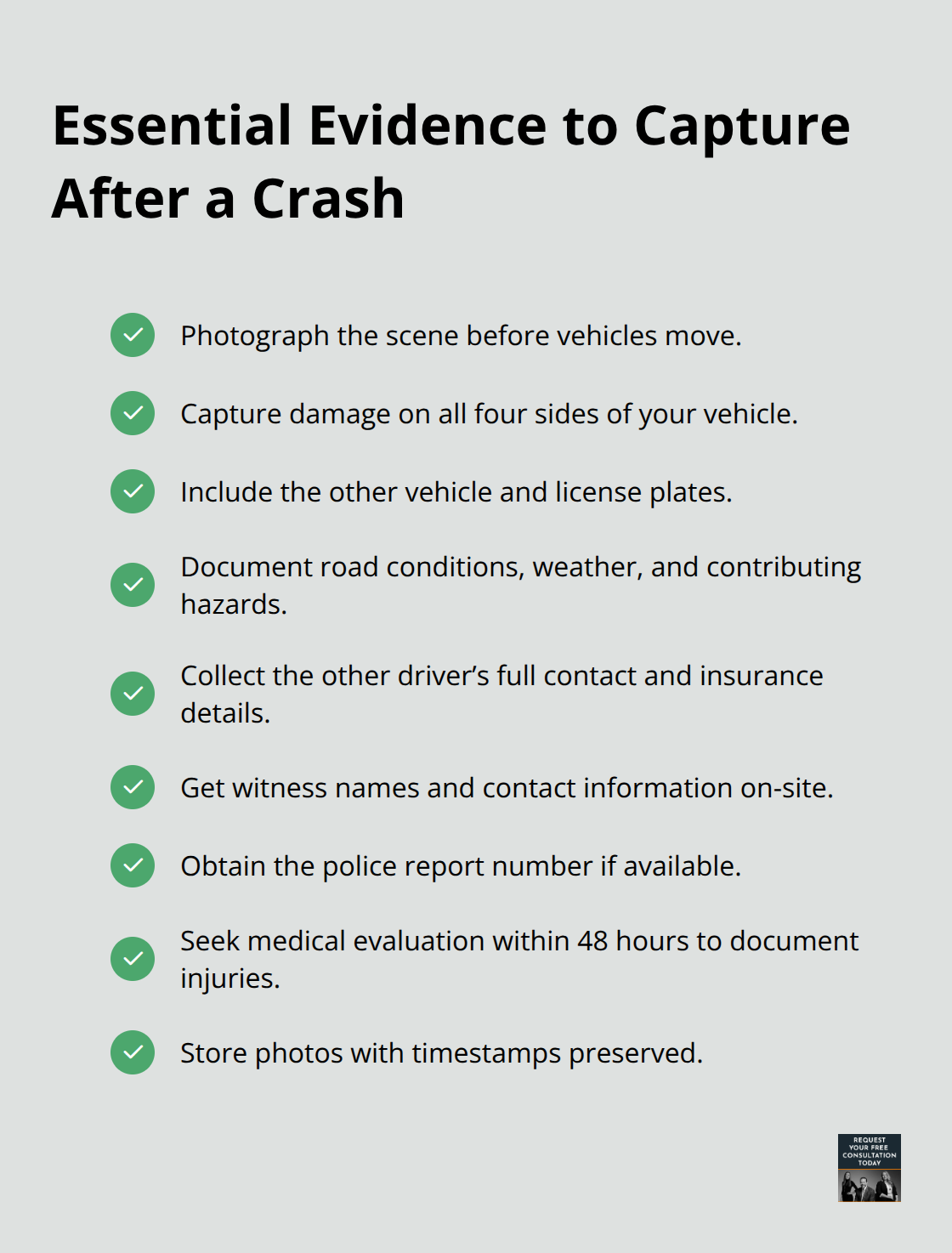
Collect the other driver’s name, phone number, address, insurance company, policy number, and vehicle details immediately. Request contact information from witnesses before they leave the scene. Police reports provide critical baseline documentation; obtain the report number even if officers don’t file a full accident report. Within 48 hours, visit urgent care or your doctor and describe all injuries, even minor ones that feel insignificant. Medical records create an official timeline linking your injuries to the accident.
Getting Independent Repair Estimates
Never rely solely on the insurance company’s damage assessment. Schedule inspections with at least two independent repair shops in Santa Cruz County, Sacramento, or Oakland before accepting any settlement offer. Independent shops have financial incentive to document every damaged component since they will perform the repairs and absorb costs if damage surfaces later. Insurance-approved facilities, by contrast, maintain relationships with insurers and sometimes minimize estimates to preserve those partnerships.
Request written repair estimates that itemize every repair needed, including parts and labor costs. California repair shops typically charge $55–$95 per labor hour depending on location and shop reputation, significantly higher than the national averages insurance databases use. Obtain OEM (original equipment manufacturer) parts pricing when replacement parts are necessary, as aftermarket alternatives artificially lower estimates.
How Independent Assessments Create Leverage
Photograph the damage during the independent inspection process. When you submit multiple independent estimates to your insurance company, you create leverage-insurers struggle to justify settlements lower than documented market rates from actual repair facilities. This approach typically increases settlements by 20–35% compared to accepting initial insurer offers.
Insurance adjusters often miss hidden damage that surfaces during repairs. They conduct visual inspections in parking lots or repair shops, missing frame damage, electrical system problems, or suspension issues that only surface once work begins. Once repairs start and new damage appears, many insurers resist covering the additional costs, claiming it wasn’t documented in the initial assessment. Your photographs and independent estimates protect you here by establishing what damage existed at the time of inspection.
Moving Forward With Your Claim
Multiple independent estimates from actual repair facilities in your area establish the true cost of restoring your vehicle. This documentation forms the foundation for negotiating with your insurance company and challenging any settlement offer that falls short of market rates.
Challenging Your Insurance Settlement
Why Insurance Companies Lowball Initial Offers
Insurance companies count on you accepting their first offer without question. Their initial settlement rarely reflects the true cost of repairs, and they know most accident victims lack the documentation to push back effectively. The gap between what insurers offer and what independent repair shops actually charge creates opportunity for negotiation, but only if you present evidence they cannot dismiss.
Using Independent Estimates as Leverage
Your independent repair estimates from Santa Cruz County, Sacramento, or Oakland shops establish a market baseline that contradicts the lowball figures in the insurance adjuster’s report. When you submit multiple estimates showing labor rates of $55–$95 per hour against the $35–$45 rates their database uses, the insurer faces a choice: justify the discrepancy or increase their offer. Most choose to increase it.
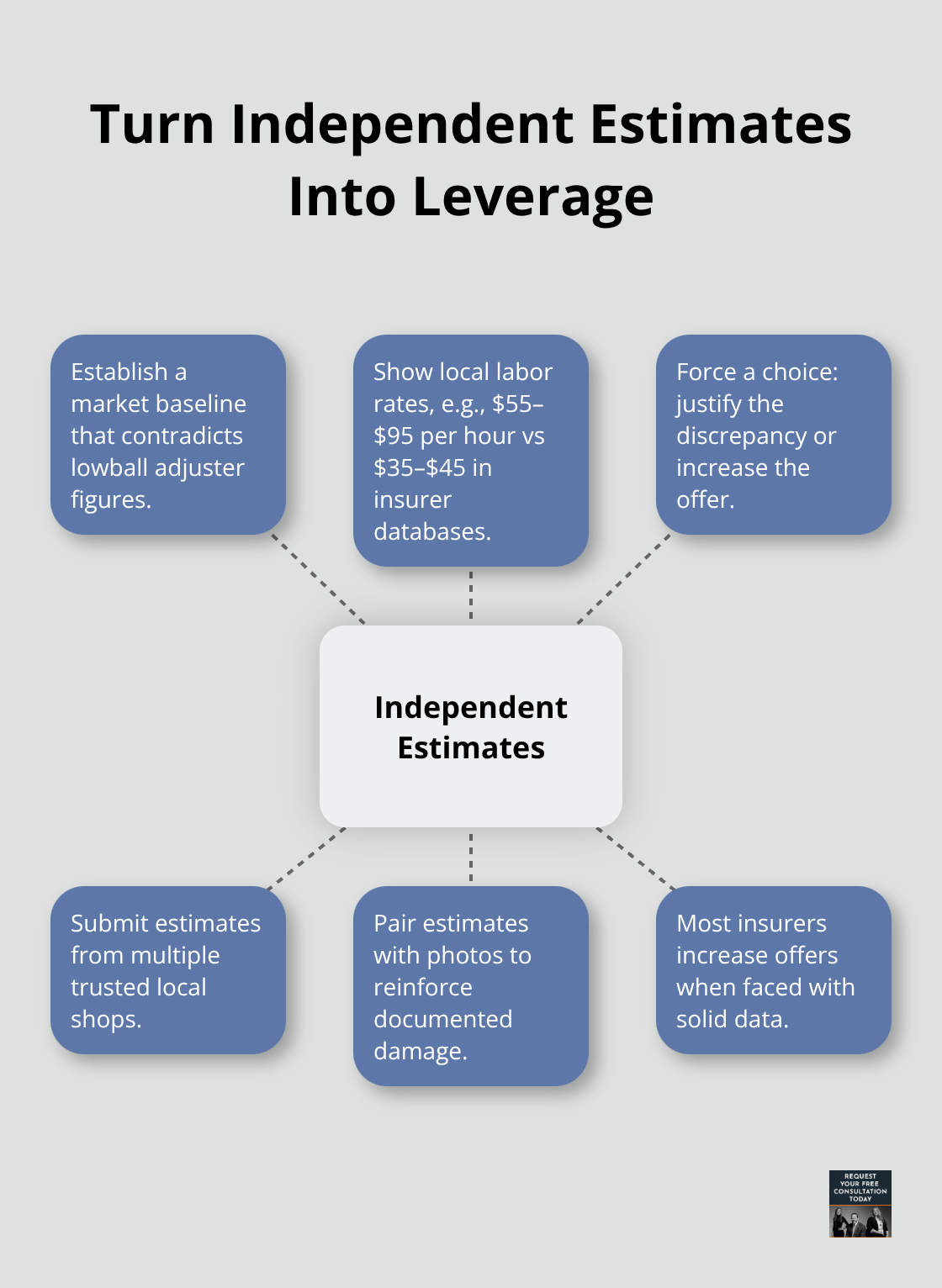
The California Automobile Repair Association reports that settlements increase by 20–35% when claimants submit independent estimates compared to accepting initial offers, a significant difference that directly affects your recovery. This data demonstrates that documentation transforms your negotiating position from weak to strong.
Structuring Your Written Response
Start your negotiation by sending a formal written response to any settlement offer you consider inadequate. Include your independent repair estimates, photographs documenting all damage from multiple angles, and a line-by-line comparison showing where the insurer’s assessment falls short of actual market rates. Request a specific dollar amount based on the higher estimates, not a vague request for more money.
Insurance adjusters respond to concrete numbers backed by documentation far more readily than general complaints about unfair treatment. A detailed written response creates an official record that protects you if the claim escalates to litigation or regulatory review.
When Legal Representation Shifts the Outcome
If the insurer denies your request or offers only a modest increase, consider whether legal representation makes financial sense. An attorney can evaluate whether the cost of litigation justifies pursuing additional compensation, particularly if hidden damage surfaces during repairs or if the insurer’s conduct suggests bad faith handling.
Many insurers shift their position immediately when they receive communication from an attorney, recognizing that litigation costs them more than paying a fair settlement. The decision to hire legal representation should depend on the gap between what you’re offered and what documentation shows you deserve, not on general principles about fairness. At Schaar & Silva LLP, we assist in evaluating the extent of property damage and help you receive a fair valuation for your loss.
Final Thoughts
Property damage valuation requires documentation, strategic negotiation, and sometimes legal support to succeed. Independent repair estimates from shops in Santa Cruz County, Sacramento, or Oakland create leverage that transforms your negotiating position from weak to strong. Submitting multiple estimates, detailed photographs, and written responses to lowball offers typically increases settlements by 20–35% compared to accepting initial insurer figures.
If the insurer increases their offer substantially after you submit your documentation, you may resolve the claim without further assistance. If they resist or offer only modest increases, legal representation becomes worth considering, as an attorney evaluates whether the gap between what you’re offered and what you deserve justifies pursuing additional compensation through formal channels.
We at Schaar & Silva LLP help accident victims throughout Santa Cruz County navigate property damage claims and receive fair valuations for their losses. Contact Schaar & Silva LLP to discuss your accident and learn how we can protect your rights.