
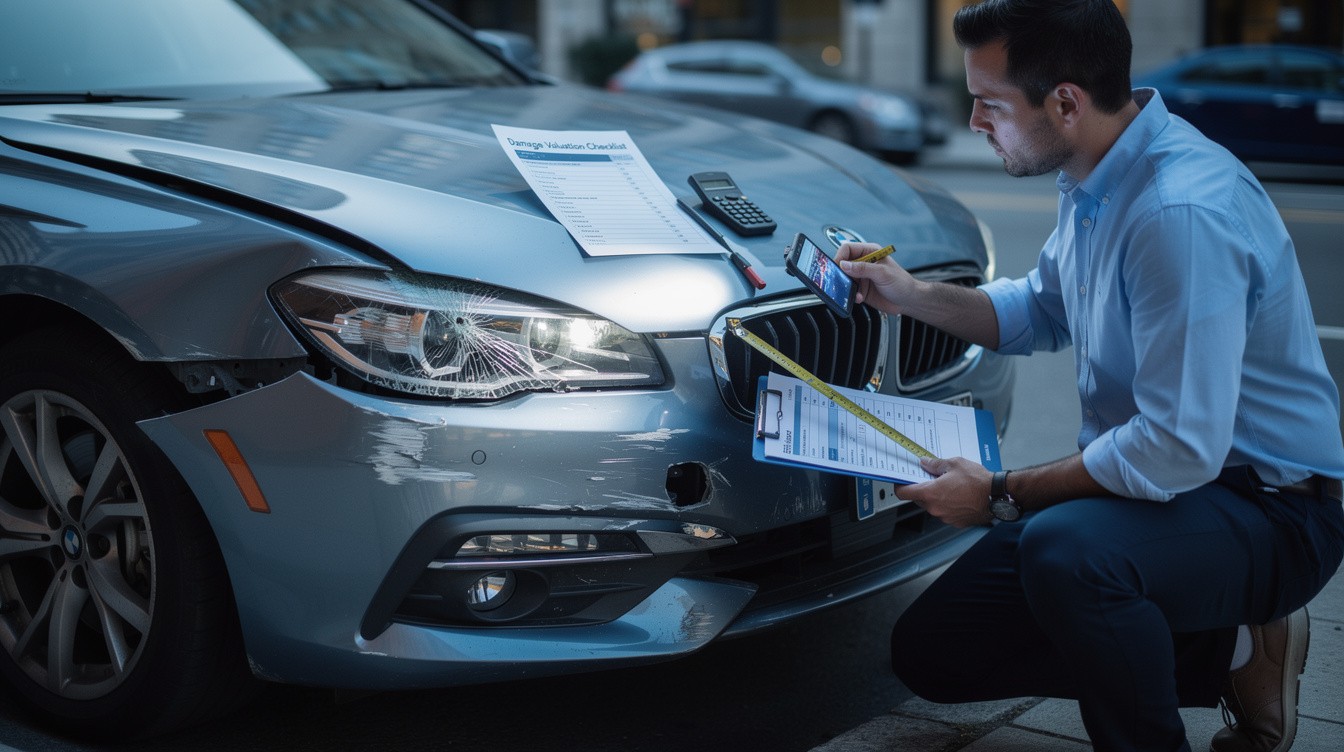
A car accident leaves you with more than just stress-it leaves you with property damage that needs proper valuation. Insurance companies often underestimate what your vehicle is actually worth to repair or replace.
We at Schaar & Silva LLP have helped countless vehicle owners in Santa Cruz County, Sacramento, and Oakland navigate this process. This property damage valuation guide walks you through each step so you understand exactly what your claim should cover.
Understanding Property Damage After a Car Accident
Types of Damage Covered by Insurance
Insurance policies cover two main categories of vehicle damage: collision and comprehensive. Collision damage includes harm from accidents with other vehicles or objects, while comprehensive covers theft, weather, vandalism, and animal strikes. Most policies also include coverage for glass damage, though some require separate claims. Your insurer will only pay for damage directly caused by the covered event-not pre-existing conditions or wear and tear. California law requires minimum liability coverage, but property damage to your own vehicle depends on your specific policy limits. Check your declarations page immediately after an accident to confirm what coverage applies.
How Insurers Actually Value Your Vehicle
Insurance companies use three primary methods to assess vehicle damage: comparable vehicle analysis, repair cost estimation, and total loss evaluation. They pull data from sources like NADA Guides and Kelley Blue Book to establish your vehicle’s pre-accident fair market value, then compare repair costs against that baseline. If repairs exceed 70 to 80 percent of the vehicle’s value, most insurers declare it a total loss.
The problem lies in outdated market data. Insurers often fail to account for recent vehicle price increases-used vehicle prices jumped approximately 35 percent between 2020 and 2022 according to Cox Automotive data. Your insurer’s initial valuation is rarely their final offer. They examine repair estimates from their preferred shops, which tend to be lower-cost facilities, not necessarily the dealership where you originally purchased your vehicle. Damage assessment happens within days of your claim, so the appraiser may miss hidden frame damage or internal component issues that emerge during actual repairs.
Building Your Documentation Before the Claim
Photograph everything at the accident scene from multiple angles (overall scene, all vehicle damage, license plates, and road conditions). If other vehicles are involved, capture their damage too. Obtain the other driver’s insurance information, policy number, and vehicle identification number before leaving the scene. Take photos of your odometer and maintenance records if available-these establish your vehicle’s condition before impact.
Write down the accident details while they’re fresh: time, weather, traffic conditions, and what happened. Request a police report number if law enforcement responded; you’ll need this for your claim. Don’t rely on memory weeks later when filing your claim. Insurance adjusters specifically look for documentation gaps, and incomplete scene photos give them leverage to offer lower settlements. Collect repair quotes from at least two independent shops (not just your insurer’s preferred vendor) within the first week while damage assessment remains straightforward.
Next Steps in Your Valuation Process
Once you’ve gathered your documentation and initial repair estimates, you’re ready to work directly with insurance adjusters and obtain independent assessments that will shape your settlement offer.
Getting an Accurate Valuation of Your Vehicle
What Insurance Adjusters Actually Do During Inspections
Insurance adjusters work on tight schedules and limited budgets. Most adjusters handle 8 to 12 claims simultaneously, which means your vehicle inspection might last 30 minutes or less. During this time, they look for reasons to justify a lower payout, not reasons to increase it. When the adjuster arrives, have your documentation ready and your repair estimates visible. Don’t accept their initial valuation as final. Ask specific questions about how they calculated fair market value, which comparable vehicles they used, and why they chose certain repair facilities over others. Request their damage assessment in writing before you sign anything.
Challenging Total Loss Declarations
If the adjuster declares your vehicle a total loss, ask for the exact NADA Guides or Kelley Blue Book valuation they used, including the vehicle’s condition rating. Adjusters often underrate condition to justify lower payouts. Challenge this directly by providing maintenance records and photos showing your vehicle’s pre-accident condition. California doesn’t mandate a specific threshold for total loss declarations, which means you can push back if your insurer declares a vehicle a total loss prematurely. Demand a detailed breakdown showing how they calculated fair market value separately from repair costs.
Getting Independent Repair Estimates
Independent repair estimates carry substantial weight in negotiations. Get quotes from at least two shops that aren’t on your insurer’s preferred vendor list, particularly if you have a relationship with a dealership or trusted local mechanic. These estimates typically run 10 to 20 percent higher than what your insurer’s preferred shops quote, according to data from the American Automobile Association. The difference exists because independent shops include comprehensive diagnostics and use OEM parts, while insurer-preferred facilities often use aftermarket components and skip detailed inspections. Request itemized estimates that break down labor costs, parts costs, and diagnostic fees separately. When your independent estimate significantly exceeds the insurer’s offer, you’ve found your negotiating position.
Understanding Fair Market Value vs. Repair Costs
Fair market value and repair costs are two different calculations that insurers sometimes conflate. Fair market value is what your vehicle would sell for on the open market before the accident, determined by age, mileage, condition, and market comparables. Repair costs are what it actually takes to restore your vehicle to pre-accident condition. If repairs exceed 70 percent of fair market value, most insurers declare a total loss, but this threshold varies by state and insurer. Provide your own comparable vehicle listings from local dealerships to support a higher valuation and counter any lowball offers your insurer presents.
Moving Toward Your Settlement
With independent estimates in hand and a clear understanding of how your insurer calculated their offer, you’re positioned to navigate the claims process and respond effectively to any settlement offers that fall short of what your vehicle actually warrants.
Navigating Claims and Maximizing Your Settlement
File Your Claim Within the Critical Window
File your property damage claim within the first two weeks after an accident to secure your strongest negotiating position. Contact your insurance company immediately and provide your claim number, the police report number, and your preliminary damage documentation. Most insurers process initial claims within 10 to 15 business days, but this timeline only starts when they receive complete information from you.
Submit your repair estimates, photos from the accident scene, and the other driver’s insurance details all at once rather than spreading information over weeks. Insurance companies use information gaps as justification for lower offers, so completeness matters more than speed.
Present Your Evidence to the Adjuster
When the adjuster contacts you, have your independent repair estimates ready and ask them to explain their valuation methodology in writing before you sign anything. Never accept the first offer without presenting your independent estimates.
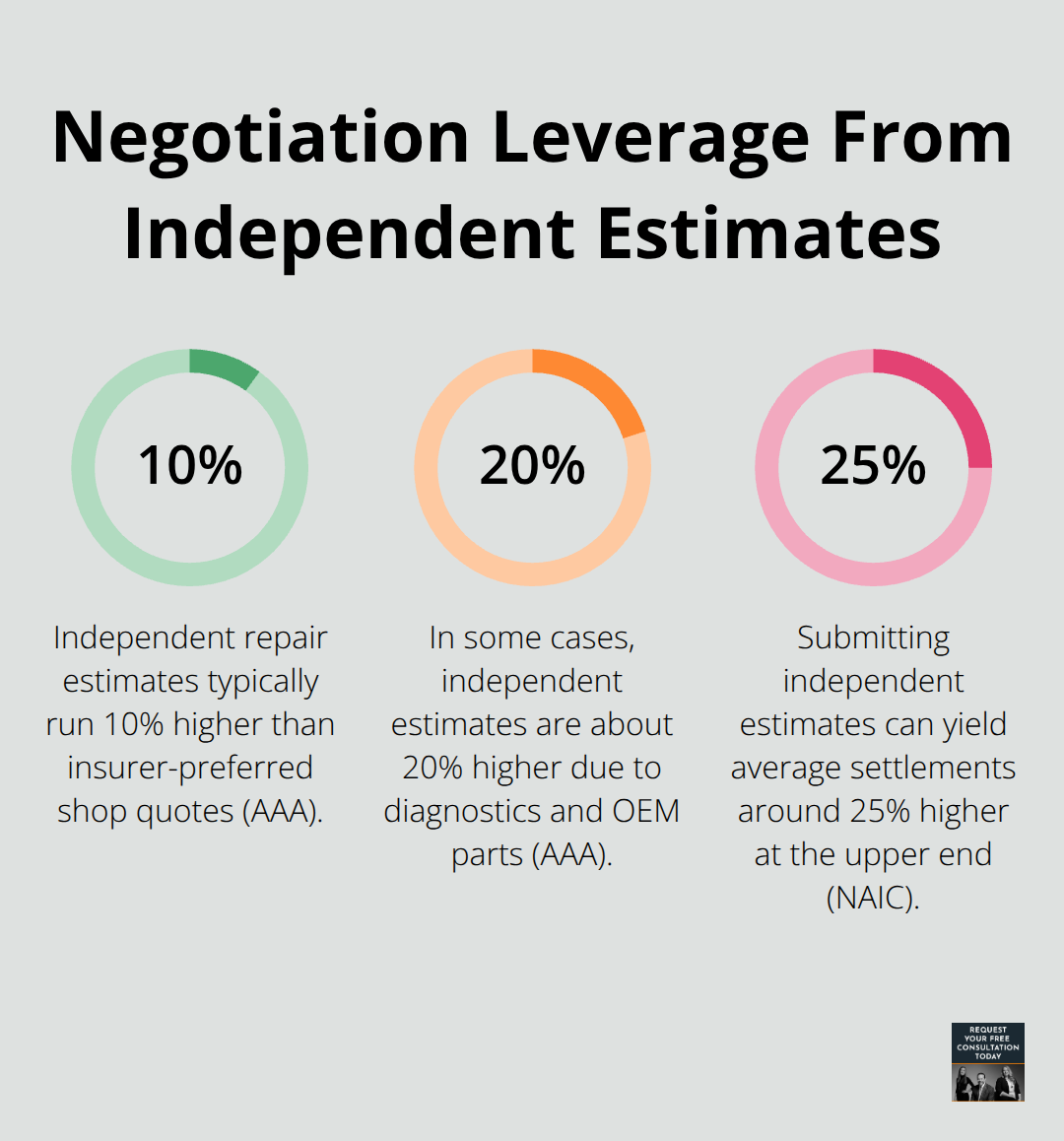
According to data from the National Association of Insurance Commissioners, claimants who submit independent repair estimates receive settlements averaging 15 to 25 percent higher than those who rely solely on the insurer’s assessment.
Respond to Lowball Offers With Documentation
Lowball offers arrive regularly because insurers know many vehicle owners lack the patience or knowledge to push back. When you receive an offer significantly below your independent estimates, respond in writing with a detailed comparison showing the difference between their valuation and yours.
Cite specific comparable vehicles from local dealerships that support your vehicle’s pre-accident value, and explain why their chosen repair facility’s estimate doesn’t reflect actual market costs. If the gap remains substantial after your first response, you’ve reached the point where legal assistance becomes practical.
Evaluate Legal Assistance for Disputed Claims
Some insurers respond to pressure from legal representatives faster than they respond to individual claimants. If your vehicle is a total loss and the valuation dispute exceeds 20 percent of their offer, the cost of legal review typically justifies itself through the settlement increase you’ll secure. We at Schaar & Silva LLP help vehicle owners evaluate whether their property damage disputes warrant formal claim disputes or legal action.
Final Thoughts
You now understand how to navigate property damage valuation after an accident, from documenting the scene to challenging lowball settlement offers. Start by protecting yourself immediately-photograph all damage from multiple angles, collect the other driver’s information, and file your claim within two weeks with complete documentation submitted at once. Insurance companies exploit information gaps, so submitting everything together strengthens your negotiating position from day one.
Independent repair estimates from shops outside your insurer’s preferred network typically run 10 to 20 percent higher than preferred facility quotes, and that difference represents your actual negotiating leverage. Respond to lowball offers in writing with specific comparables from local dealerships that support your vehicle’s pre-accident value, and cite the differences between their repair facility’s estimate and independent quotes. If the gap remains substantial after your response, legal assistance becomes practical, particularly when total loss valuations are disputed by more than 20 percent of the insurer’s offer.
We at Schaar & Silva LLP help vehicle owners in Santa Cruz County, Sacramento, and Oakland evaluate whether their property damage disputes warrant formal claim disputes or legal action. Contact Schaar & Silva LLP to discuss your property damage valuation guide and explore whether your settlement offer reflects what your vehicle actually warrants.