

After a car accident in Santa Cruz County, insurance companies often undervalue what you’re actually owed. We at Schaar & Silva LLP know that property claims Santa Cruz residents file frequently fall short of covering real damages.
This guide walks you through exactly what compensation you can claim, the mistakes that cost people thousands, and how to build a claim that gets results.
What Compensation You Can Actually Claim
Medical Expenses Add Up Quickly
Medical bills pile up fast after an accident. Hospital visits, emergency room charges, physical therapy, imaging studies-these stack into thousands within weeks. Santa Cruz County residents often underestimate these costs because they focus only on immediate treatment and miss follow-up care, medications, and ongoing rehabilitation that emerge months later. The National Safety Council reports that the average hospitalization for a crash injury costs over $35,000, and that’s before physical therapy or specialist visits.
You need to identify every medical expense tied to your accident, including treatments your doctor has recommended but you haven’t started yet. This matters because insurance companies count only what’s already been paid, not what’s medically necessary going forward.
Lost Wages and Earning Capacity
Lost income hits differently than medical bills because it represents money you never earned. If you missed work during recovery, you’re owed those wages. If your injuries prevent you from working at full capacity, you can claim lost earning potential. The Bureau of Labor Statistics shows that workers injured in vehicle crashes lose an average of 11 days of work, but many lose far more. Some people in Santa Cruz County face months or years of reduced capacity.
Vehicle Damage Requires Precision
Vehicle damage claims demand accuracy-the actual cash value of your car matters less than what it costs to return it to pre-accident condition. Obtain three repair estimates from certified mechanics, not just one. Insurance adjusters routinely lowball initial offers by 20-40% based on insufficient documentation.
Pain and Suffering Compensation
Pain and suffering compensation reflects your physical discomfort and emotional distress, but California courts expect concrete evidence: medical records showing severity, treatment duration, and ongoing symptoms. A soft tissue injury with six months of physical therapy supports a stronger claim than one with minimal documentation. Medical lien services allow providers to defer payment until your case resolves, removing pressure to accept inadequate settlements quickly.
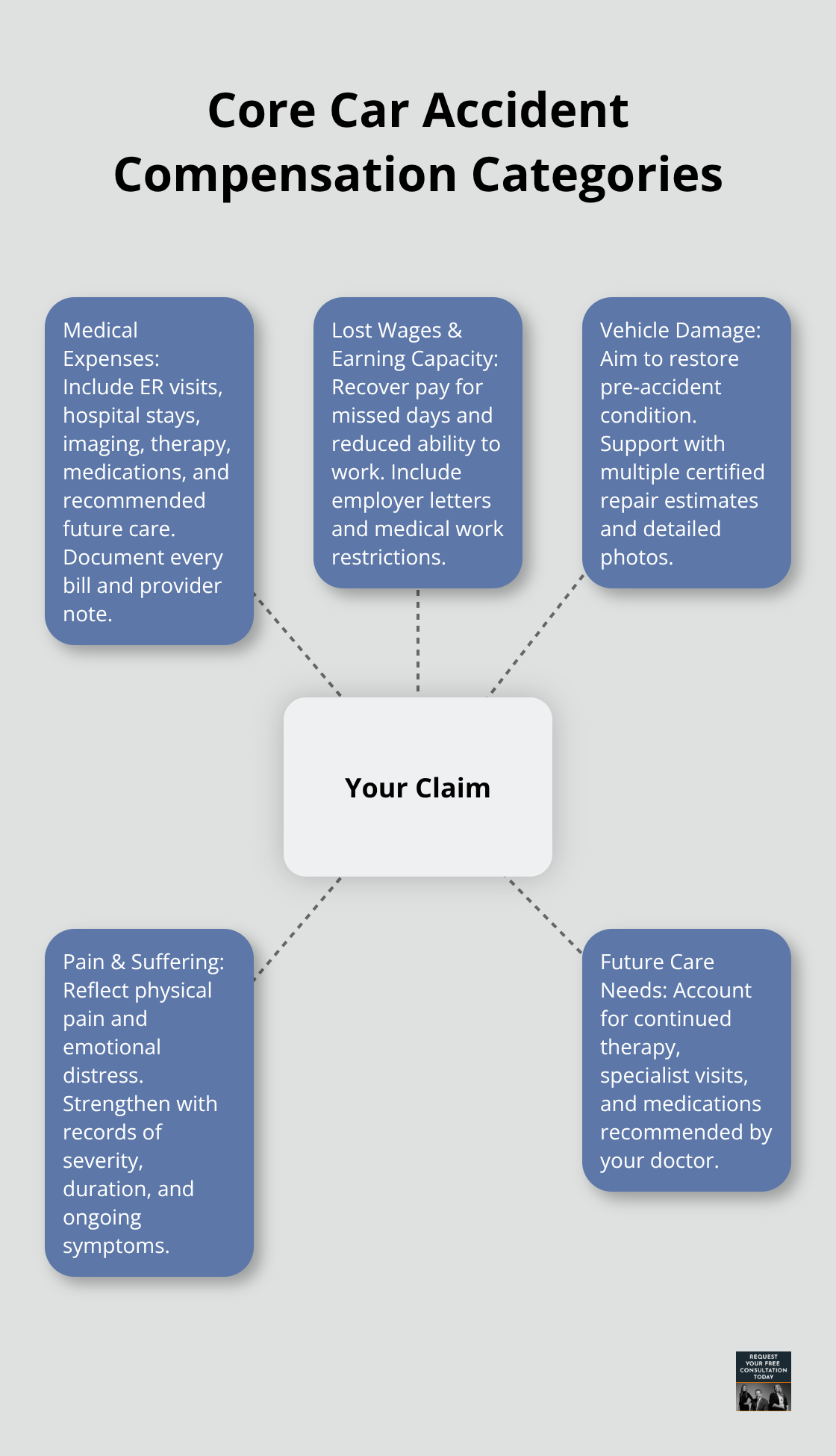
These compensation categories form the foundation of your claim, but how you document and present them determines whether you recover what you actually deserve. The mistakes people make when filing these claims often cost thousands in lost compensation.
Mistakes That Drain Thousands From Your Claim
The Settlement Trap
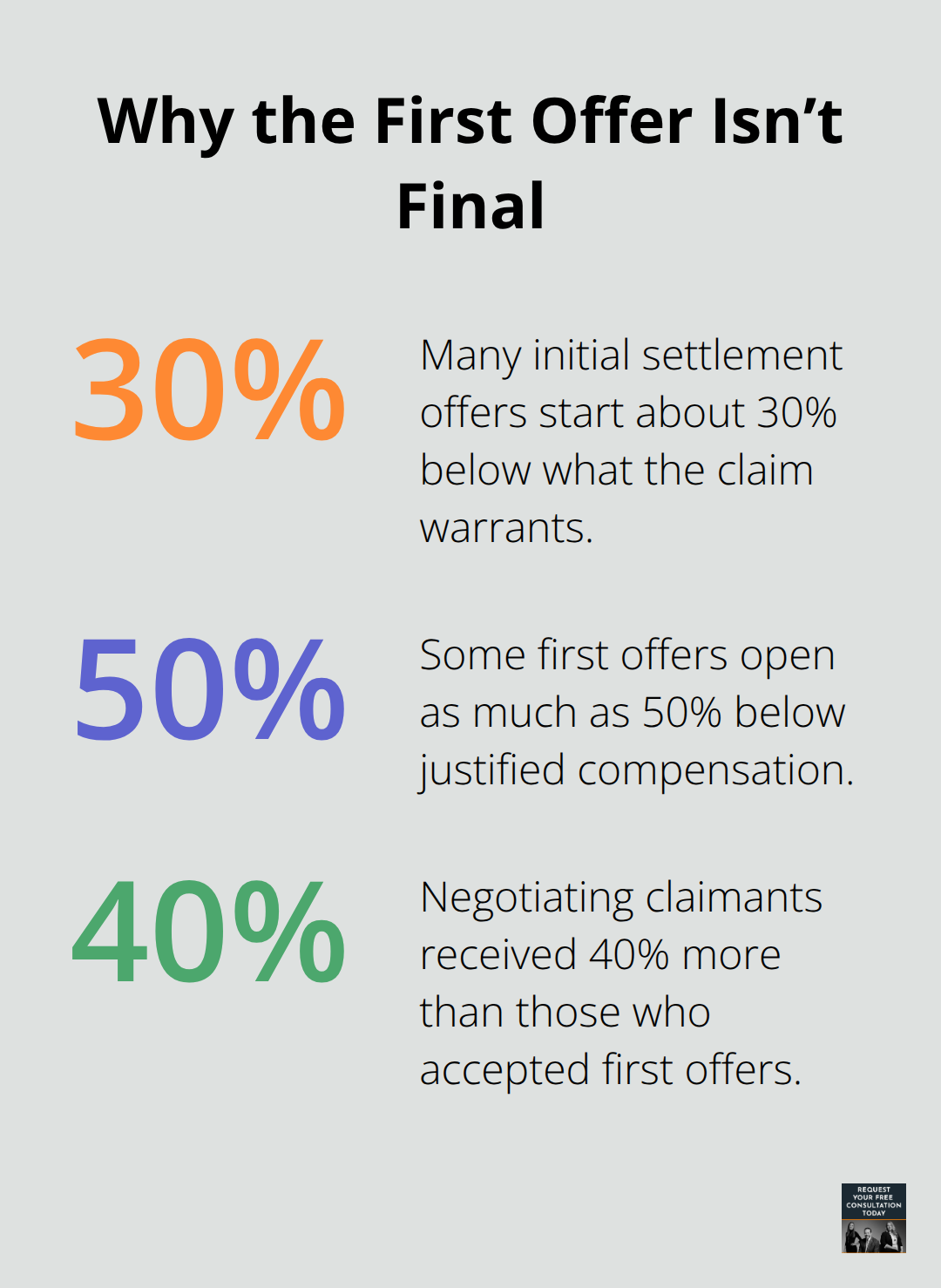
Insurance adjusters count on Santa Cruz residents making preventable errors that reduce payouts. The first mistake happens almost immediately: accepting the initial settlement offer without pushback. Insurers typically open with figures 30-50% below what claims actually warrant, banking on injured people wanting quick resolution. A study by the Insurance Research Council found that claimants who negotiated settlements received 40% more compensation than those who accepted first offers. Speed feels necessary when medical bills arrive weekly, but accepting a low settlement locks you out of recovering additional damages later.
The adjuster knows your financial pressure and uses it against you.
Incomplete Documentation Costs You Thousands
You need documentation to counter lowball numbers, which brings us to the second critical failure: incomplete accident scene documentation. Most people photograph vehicle damage but miss the broader context that strengthens claims. Take photos of skid marks, road conditions, traffic signals, weather conditions, and the accident location from multiple angles and distances. Photograph your vehicle from all sides before any repairs begin.
Get the other driver’s insurance information, vehicle details, and photos of their vehicle damage. Request a police report number and obtain the full report, which contains officer observations about fault and scene conditions that insurers heavily weight. The California Highway Patrol and local Santa Cruz County law enforcement documents carry authority that your own statements cannot match.
Report Your Claim Immediately
Delayed claim reporting creates unnecessary complications. California law doesn’t impose strict reporting deadlines, but insurers use delays against you by claiming memory fades and documentation disappears. Report your claim within 48 hours of the accident, even if you haven’t fully assessed injuries or damage. Early reporting establishes a clear timeline and shows you acted responsibly, which matters when adjusters evaluate credibility.
Seek Medical Treatment Without Delay
Medical treatment delays present another problem: waiting weeks to see a doctor gives adjusters ammunition to argue injuries weren’t serious. Seek medical attention immediately even if symptoms feel mild, because some injuries manifest days later. Soft tissue damage, concussions, and internal injuries don’t always announce themselves at the accident scene. Medical records created close to the accident date prove causation far more effectively than records from months later.
When you work with medical providers on lien arrangements (services that defer payment until settlement), you eliminate the pressure to accept inadequate offers just to pay bills. This financial flexibility allows you to pursue the full compensation your claim warrants rather than settling prematurely. Understanding these mistakes positions you to build a stronger claim, which requires specific steps to gather evidence and documentation that insurers cannot dismiss.
How to Build a Strong Property Damage Claim
Gather Evidence Immediately After the Accident
Construction of a strong property damage claim depends entirely on what you can prove, not what you believe happened. Start collecting evidence immediately after the accident because memory fades and conditions change. Photograph your vehicle from every angle before repairs begin, capturing close-ups of damage and wide shots showing the accident location. Include images of road conditions, weather, traffic signals, and any visible skid marks.
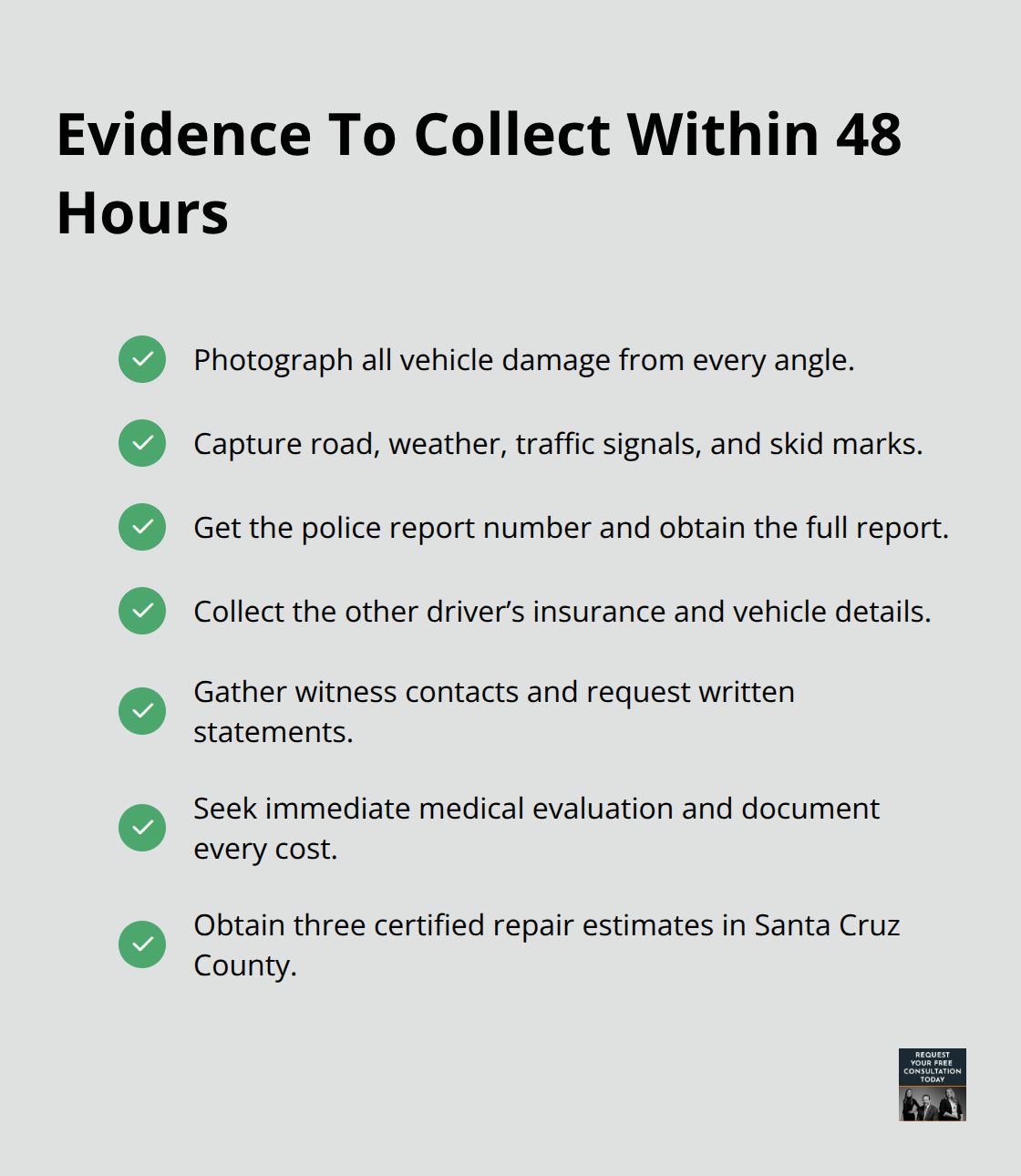
Request the police report number at the scene and obtain the full report within days, as these official documents carry weight that personal statements cannot match. The California Highway Patrol report includes officer observations about fault and scene conditions that insurers use heavily when evaluating claims. Collect contact information from all witnesses and request written statements from them within 48 hours while events remain fresh.
Create Medical Records Close to the Accident Date
Medical records must originate close to the accident date to establish causation effectively. Delayed treatment records give adjusters ammunition to argue injuries weren’t serious, so see a medical provider immediately even if symptoms feel mild. Document every medical expense with receipts and invoices, including treatments your doctor recommends for future care, because insurance companies count what’s medically necessary going forward, not just what’s already been paid.
Obtain Multiple Repair Estimates From Certified Mechanics
Repair estimates determine your vehicle damage compensation, so obtaining multiple estimates from certified mechanics is non-negotiable. Insurance adjusters routinely lowball initial offers by 20-40% based on insufficient documentation, which means one estimate leaves you vulnerable to undervaluation. Try getting three separate estimates from different certified repair shops in Santa Cruz County and compare their assessments of damage, required parts, and labor costs.
Choose shops certified by AAA or manufacturer programs because their credentials strengthen your claim’s credibility. These certifications signal to insurers that the repair facility meets industry standards and won’t inflate costs.
Use Medical Lien Arrangements to Avoid Premature Settlement
Medical lien arrangements remove the financial pressure that forces premature settlement acceptance. These services defer payment to medical providers until your case resolves, eliminating the urgency to accept inadequate offers just to pay mounting bills. When you work with medical providers on lien arrangements, you gain the flexibility to pursue full compensation rather than settling quickly out of financial desperation. We at Schaar & Silva LLP can direct you to medical lien services that facilitate this arrangement, allowing your recovery to take priority over insurance company pressure.
Final Thoughts
You’ve now seen exactly what compensation you can claim, the costly mistakes that drain thousands from settlements, and the concrete steps that build stronger property damage claims. Santa Cruz residents who document thoroughly, report promptly, and gather multiple repair estimates recover significantly more than those who rush through the process. Insurance adjusters count on injured people making preventable errors under financial pressure, so preparation determines your outcome far more than luck.
Property claims Santa Cruz County residents file succeed based on what you can prove, not what you believe happened. When you photograph accident scenes comprehensively, obtain police reports, create medical records immediately, and secure multiple repair estimates, you remove the adjuster’s ability to lowball your claim with confidence. Medical lien arrangements deserve special attention because they fundamentally change your negotiating position by deferring provider payments until settlement, which eliminates the desperation that forces acceptance of inadequate offers.
The difference between accepting a first offer and negotiating properly often exceeds $10,000 for moderate accidents. Contact Schaar & Silva LLP for guidance on your specific situation and let us assist you with property damage evaluation and the legal navigation that maximizes your recovery. The sooner you begin building your claim properly, the sooner you can focus on recovery rather than fighting with insurance companies.