
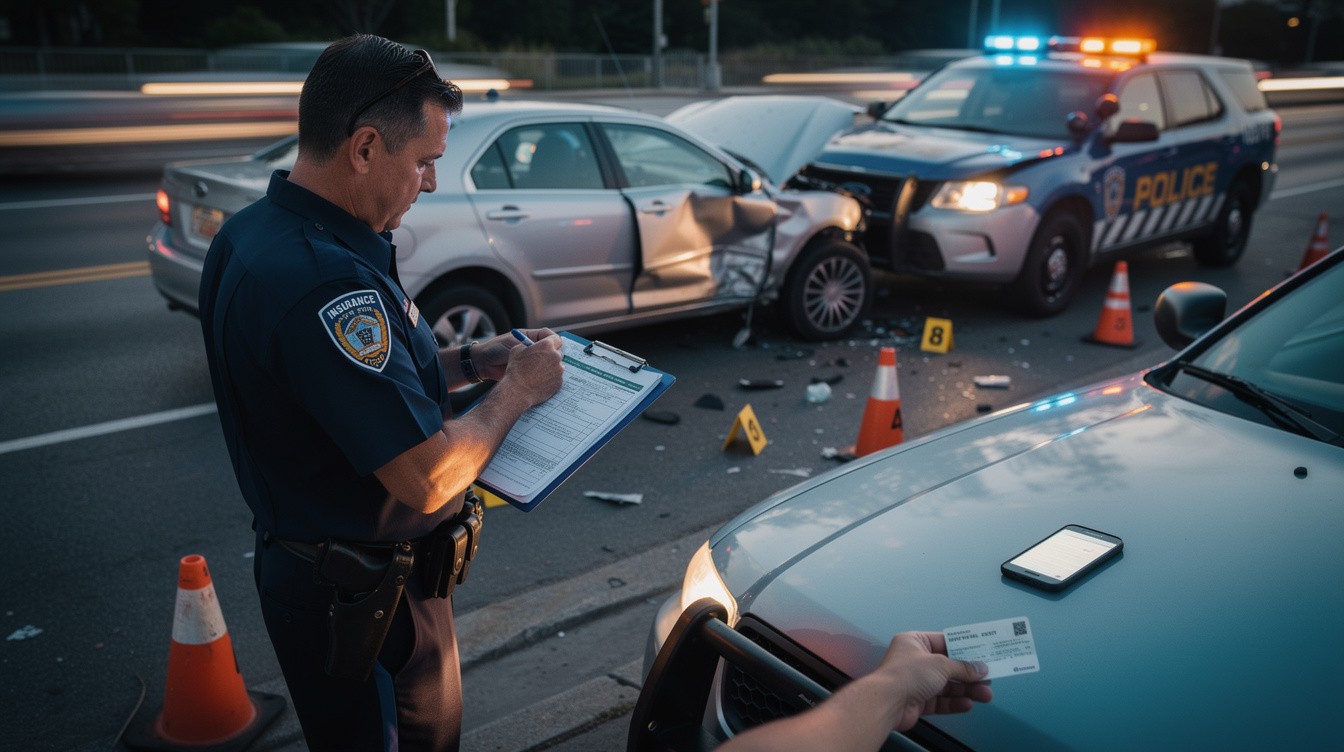
After a crash, the police report becomes one of your most important documents. It shapes how insurance companies view your claim and influences what happens next in your case.
At Schaar & Silva LLP, we’ve seen how confusion about police reports costs people time and money. Understanding when you’ll get your report, what it contains, and how to spot errors makes a real difference.
What Happens at the Crash Scene
The First Minutes Matter Most
The first minutes after a crash determine what gets recorded in your police report. When emergency responders arrive, they work against the clock to assess injuries, clear the roadway, and gather initial information. First responders typically spend 10 to 20 minutes at the scene for minor accidents, though serious crashes with injuries can keep them on-site for 45 minutes or longer. During this time, police officers photograph vehicle damage, measure skid marks, note weather conditions, and interview witnesses. The National Highway Traffic Safety Administration reports that witness statements collected within the first hour of an accident are significantly more reliable than those gathered later, so police prioritize getting these accounts while memories remain fresh. What you say in those initial moments becomes part of the official record, and inconsistencies between your first statement and later claims can raise red flags for insurance companies.
What You Should Say to Police
Your role during those first minutes is to stay calm and provide straightforward answers to police questions. Don’t speculate about how the crash happened or accept blame for something you’re unsure about. Stick to what you directly observed: the traffic light color, vehicle speeds, weather conditions, and the sequence of events. Many people make the mistake of apologizing or saying things like “I’m sorry that happened” when talking to officers, and insurance adjusters sometimes interpret these statements as admissions of fault. If you’re injured or in shock, tell the officer this affects your ability to provide complete details right now. Police understand that crash victims may not remember everything clearly.
Gathering Critical Information Before They Leave
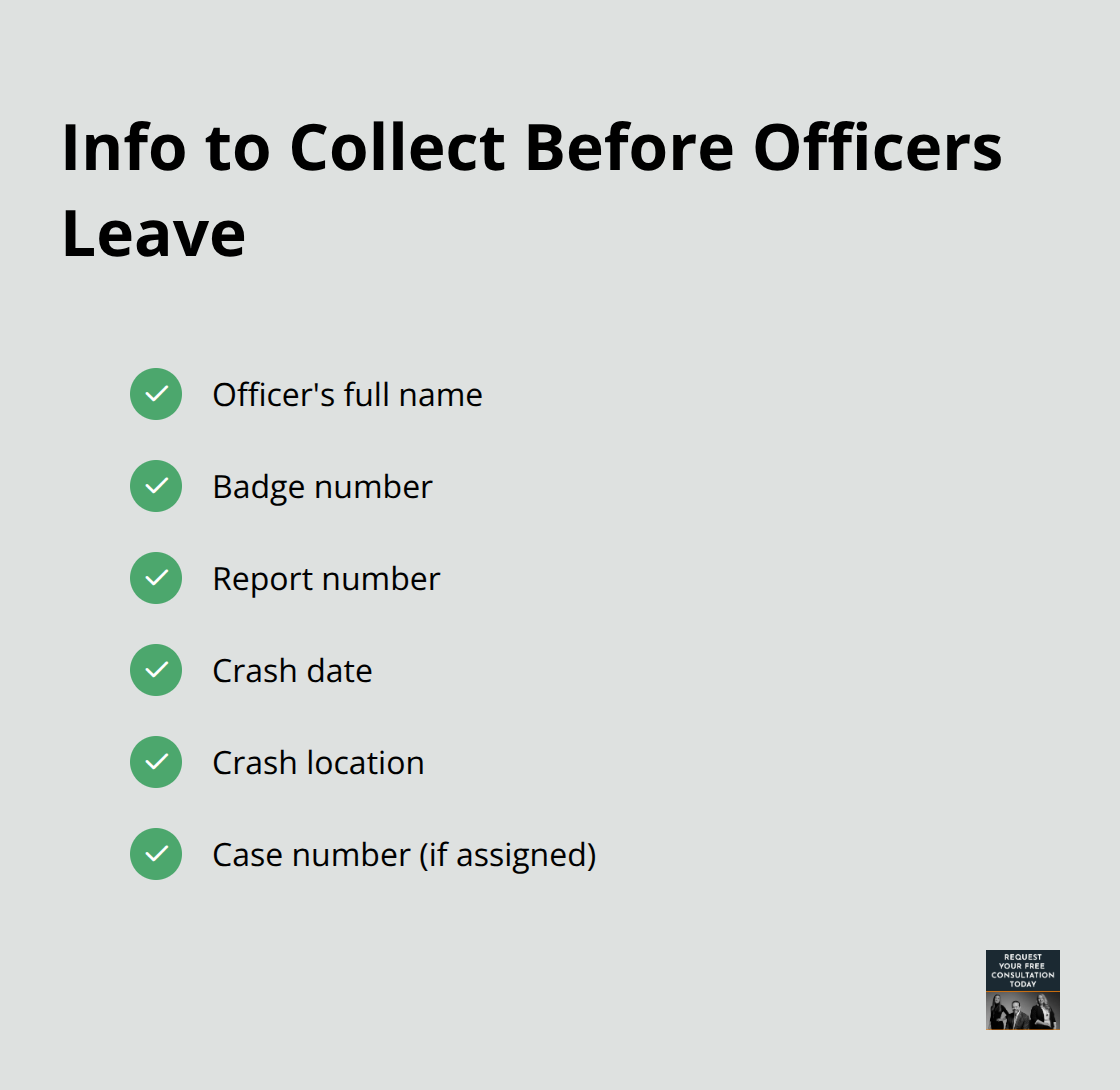
Request the officer’s name, badge number, and the report number before they leave the scene. This information helps you track down your report later. These details (officer identification, badge number, and report number) form the foundation for locating your official documentation. Having this information in hand prevents delays when you contact the police department days or weeks later.
The next section covers how police reports are structured and what information they actually contain.
Understanding Your Police Report
What Information the Report Contains
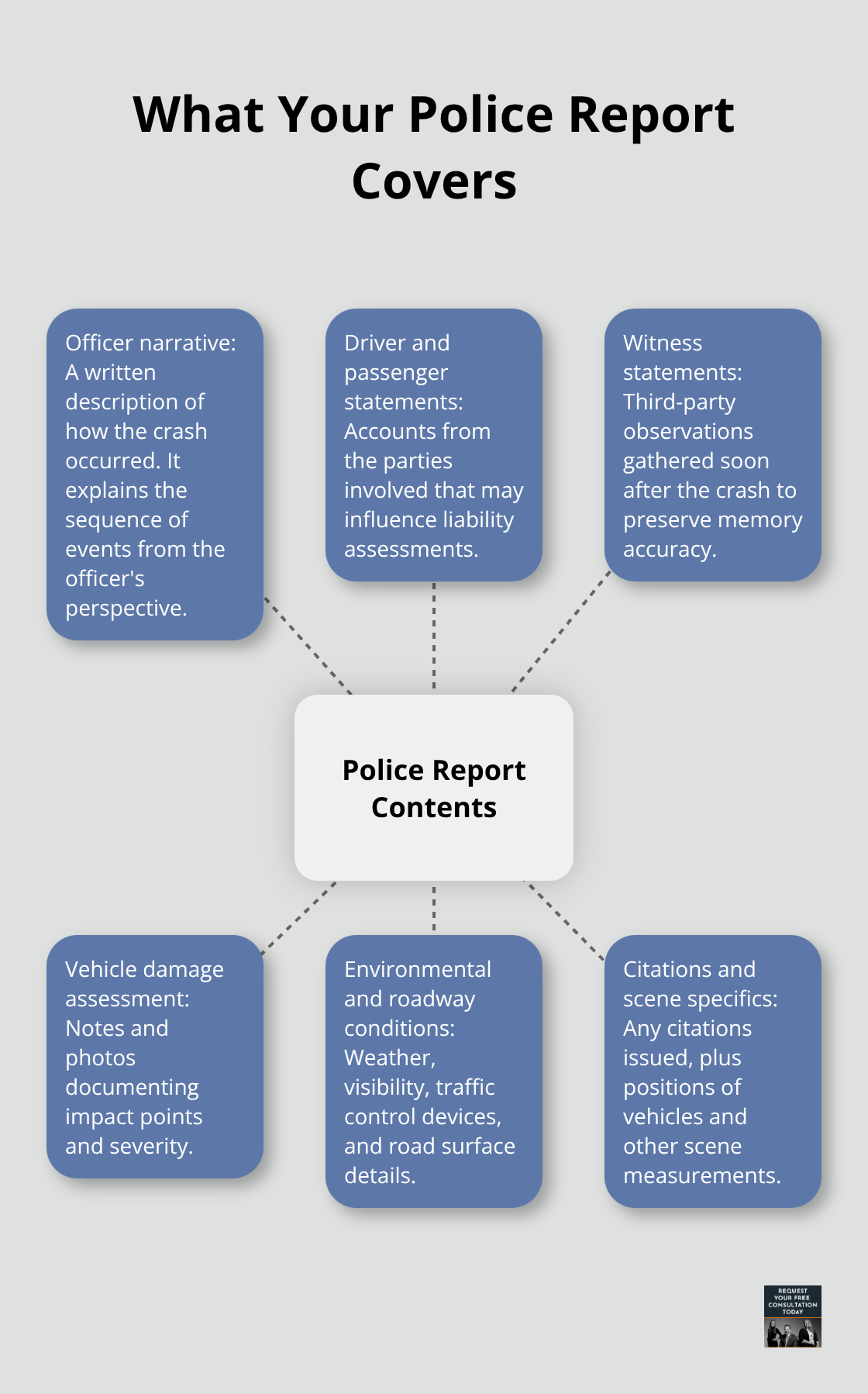
The police report from your crash contains far more detail than most people realize, and understanding its structure helps you spot problems before they affect your claim. The report includes the officer’s narrative description of how the crash occurred, statements from all parties involved, witness accounts, vehicle damage assessments, and environmental conditions at the time of the accident. Citations issued at the scene carry significant weight with insurance companies since a citation suggests fault determination. The report documents specific details like vehicle positions, traffic control devices, road surface conditions, and visibility factors.
California Highway Patrol reports average 35 to 40 pages for serious injury crashes, while minor accidents generate 5 to 10 pages. This document becomes the foundation for how insurance companies evaluate your claim, which is why errors in the report can cost you thousands of dollars in reduced settlements.
How to Obtain Your Police Report
Getting your hands on the actual report requires knowing where to look and what to expect in terms of timing. In California, you can request your police report from the agency that responded to your crash within 30 days, though some departments take 60 to 90 days to process requests. Santa Cruz County Sheriff’s Office, Oakland Police Department, and Sacramento Police Department all maintain specific procedures for releasing accident reports. You’ll need the date of the crash, location, and case number to expedite the process. Many departments now allow online requests through their websites, which speeds up delivery significantly compared to in-person visits. The report costs between 10 and 25 dollars depending on the agency and format.
Spotting Errors in Your Report
Once you have the report in hand, read it carefully against what you remember from the crash because errors are surprisingly common. Approximately 30 to 40 percent of reports contain factual mistakes ranging from vehicle descriptions to sequence of events. Common errors include incorrect vehicle colors, wrong traffic signal descriptions, misquoted witness statements, or inaccurate speed estimates. If you spot discrepancies, contact the reporting officer immediately to request a correction or amendment. Document your request in writing so you have proof of when you reported the error. This written record protects you if the insurance company later questions why the report contains conflicting information. Once you’ve reviewed your report and addressed any errors, the timeline for your claim moves forward-and understanding when you can actually use this document becomes your next priority.
Timelines for Getting Your Police Report
How Long Police Take to File Reports
The waiting period for your police report is one of the most frustrating parts of a crash aftermath, and the timeline varies significantly depending on where your accident occurred. In California, most police departments aim to complete reports within 30 days, though Santa Cruz County Sheriff’s Office, Oakland Police Department, and Sacramento Police Department often take 45 to 60 days for standard accidents. More serious crashes involving injuries or fatalities stretch this timeline to 90 days or longer because officers must conduct thorough investigations, interview additional witnesses, and sometimes wait for toxicology results. The delay isn’t arbitrary-officers juggle multiple cases simultaneously, and your report competes with dozens of others in the queue.
Taking Action While You Wait
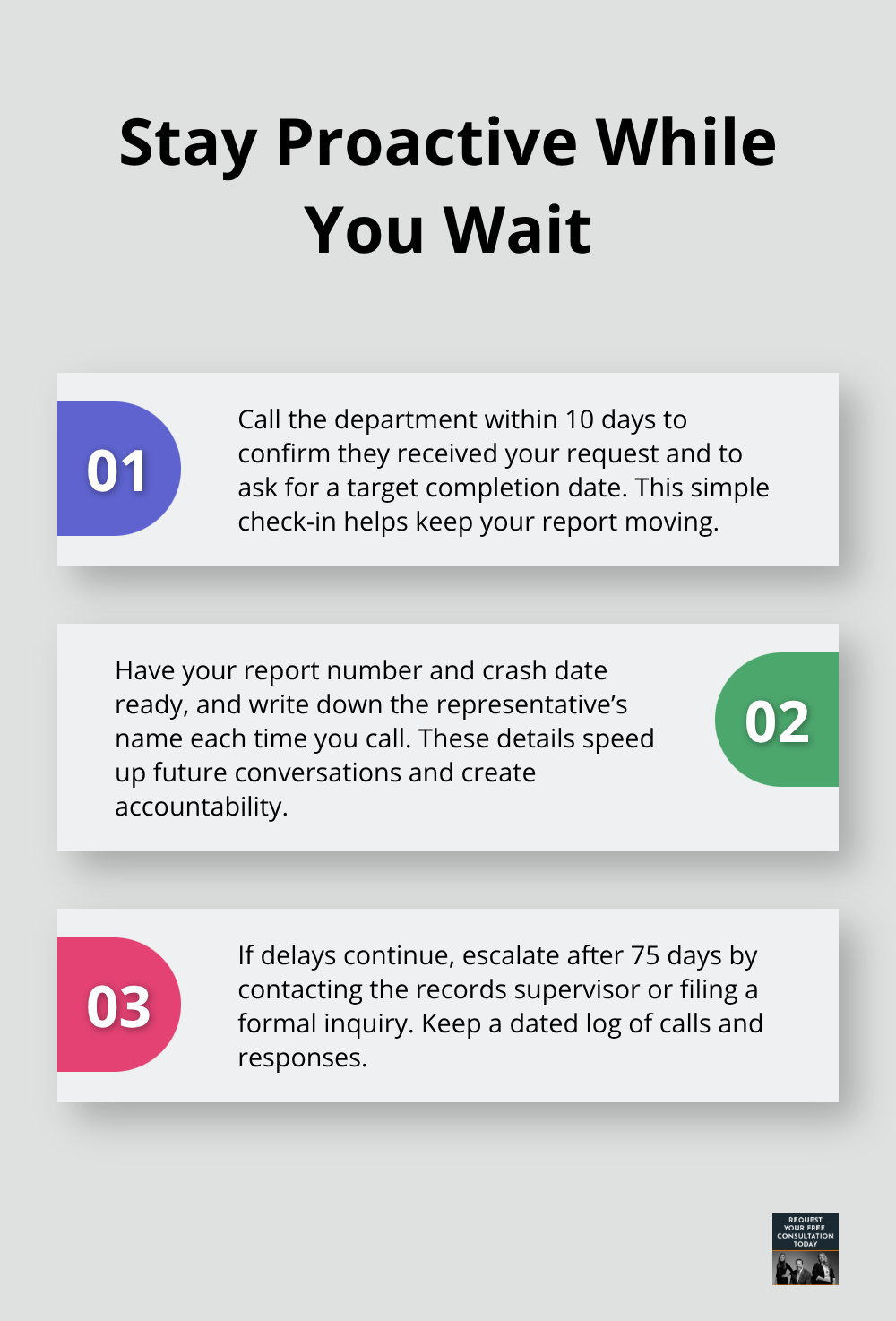
What matters most is that you don’t sit passively waiting. Contact the police department within 10 days of your crash to confirm they received your report request and ask for a specific completion date. When you call, have your report number and crash date ready, and write down the name of whoever you speak with. This creates accountability and gives you a contact person if the report gets delayed further.
Accessing Your Report Once It’s Ready
Once your report is filed and released, you have access to it immediately, though the method of access depends on the agency. Most departments now offer online portals where you can download your report within 24 hours of completion, while others mail physical copies that take 5 to 7 business days to arrive. If your department doesn’t provide online access, request expedited in-person pickup at the police station rather than waiting for mail delivery-this cuts your waiting time from a week to a single day.
Handling Delays and Escalation
If your report hasn’t been completed after 75 days, escalate your request by calling the department’s records supervisor or filing a formal inquiry with the agency’s non-emergency line. Document every call you make with dates and names. Insurance companies understand that delays happen, but they move faster when you have written proof that you’ve been actively pursuing the report rather than waiting passively. Your persistence directly impacts how quickly your claim advances.
Final Thoughts
Your police report after a crash shapes how insurance companies evaluate your claim and what compensation you ultimately receive. The accuracy of this document directly impacts your financial recovery, which is why understanding its contents and catching errors matters far more than most people realize. Contact the police department within 10 days, follow up at the 75-day mark if needed, and request expedited access once the report is ready.
After you receive your report, review it against your own recollection of the crash and look for discrepancies in vehicle descriptions, traffic signal colors, witness statements, and the sequence of events. Request written corrections immediately if you find errors, as this documentation protects you if questions arise later about why your account differs from the official record. Your persistence demonstrates to insurance companies that you’re serious about moving your claim forward.
For minor crashes with no injuries, you may handle the claim directly with the insurance company, but crashes involving significant injuries, medical bills, or disputed fault warrant legal guidance. We at Schaar & Silva LLP help people in Santa Cruz County navigate what comes after a crash, from medical bill assistance to property damage claims and connecting you with support during recovery. Contact us to discuss how your police report affects your specific situation and what options are available to you.
