

A Sacramento pedestrian accident can happen in seconds, leaving you injured, confused, and unsure what to do next. The moments immediately following a crash are critical-the decisions you make now will affect your health, your claim, and your future.
We at Schaar & Silva LLP have helped countless pedestrians navigate this exact situation. This guide walks you through the essential steps to protect yourself and build a strong case.
Securing the Scene and Evidence
The first 30 minutes after a pedestrian crash determine whether you’ll have strong documentation or weak proof later. Your immediate priority is safety-move to a secure location if you can do so without worsening injuries-then shift to evidence collection before the scene changes.
Photograph and Film the Accident Site
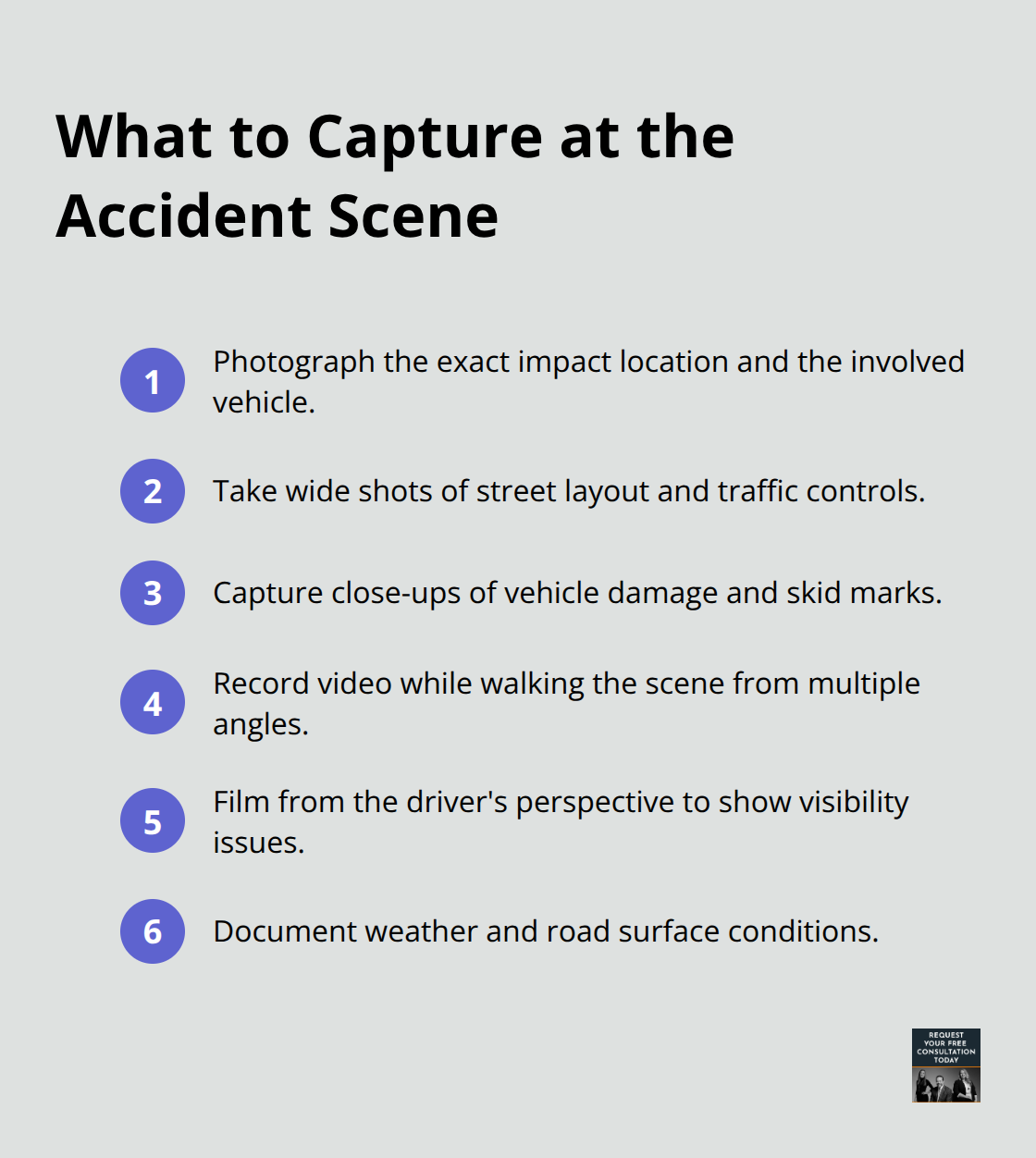
Use your phone to photograph the exact location where the vehicle struck you, the vehicle involved, road conditions, traffic signals, and any visible injuries. Take wide shots showing the street layout and close-ups of vehicle damage, skid marks, and street markings. Video surpasses photos because it captures context and movement. Walk around the accident site and film from multiple angles, including views from the driver’s perspective to show visibility issues. If weather is poor or the road is wet, document that-these conditions matter enormously in pedestrian cases. Police photos focus on accident reconstruction, not plaintiff evidence, so don’t rely on officers alone to capture what you need.
Collect Witness Information Immediately
Witnesses vanish within minutes, and tracking them down later becomes nearly impossible. Approach anyone who saw the crash and ask their name, phone number, email, and address. Ask what they saw specifically-did they see you enter the crosswalk, was the signal in your favor, did the driver appear distracted. Write down their answers immediately in your phone notes. If they refuse to give information, record their vehicle license plate and description. Ask if they’re willing to speak with police; some witnesses cooperate with officers but disappear before you can contact them. Request their social media handles if they’re comfortable sharing-this helps you reconnect if phone numbers change. Pedestrians comprised about 18% of road fatalities in high-income countries according to the WHO 2009 Global Status Report, and witness testimony often becomes the deciding factor in determining fault when video evidence is unavailable.
File a Police Report and Obtain Documentation
Call 911 if anyone is injured, even if injuries seem minor. The police report creates an official accident record with the officer’s observations, the driver’s statement, and citation information. Request the report number before officers leave and follow up within 48 hours to obtain a copy-this document anchors your insurance claim and any legal action. The report typically includes the officer’s determination of fault, which influences insurance settlements. However, don’t assume the initial fault determination is final; insurance adjusters review evidence independently and sometimes reach different conclusions than police. If you believe the officer’s report contains errors, you can request corrections. When speaking with police, stick to facts: you were crossing at a marked crosswalk, the pedestrian signal indicated walk, the vehicle struck you. Avoid speculation about the driver’s intent or emotional statements. The police report becomes evidence, and anything you say may be quoted directly.
Your documentation now complete, the next phase requires immediate medical attention-even injuries that feel minor can develop into serious conditions within hours or days.
Medical Care and Documentation
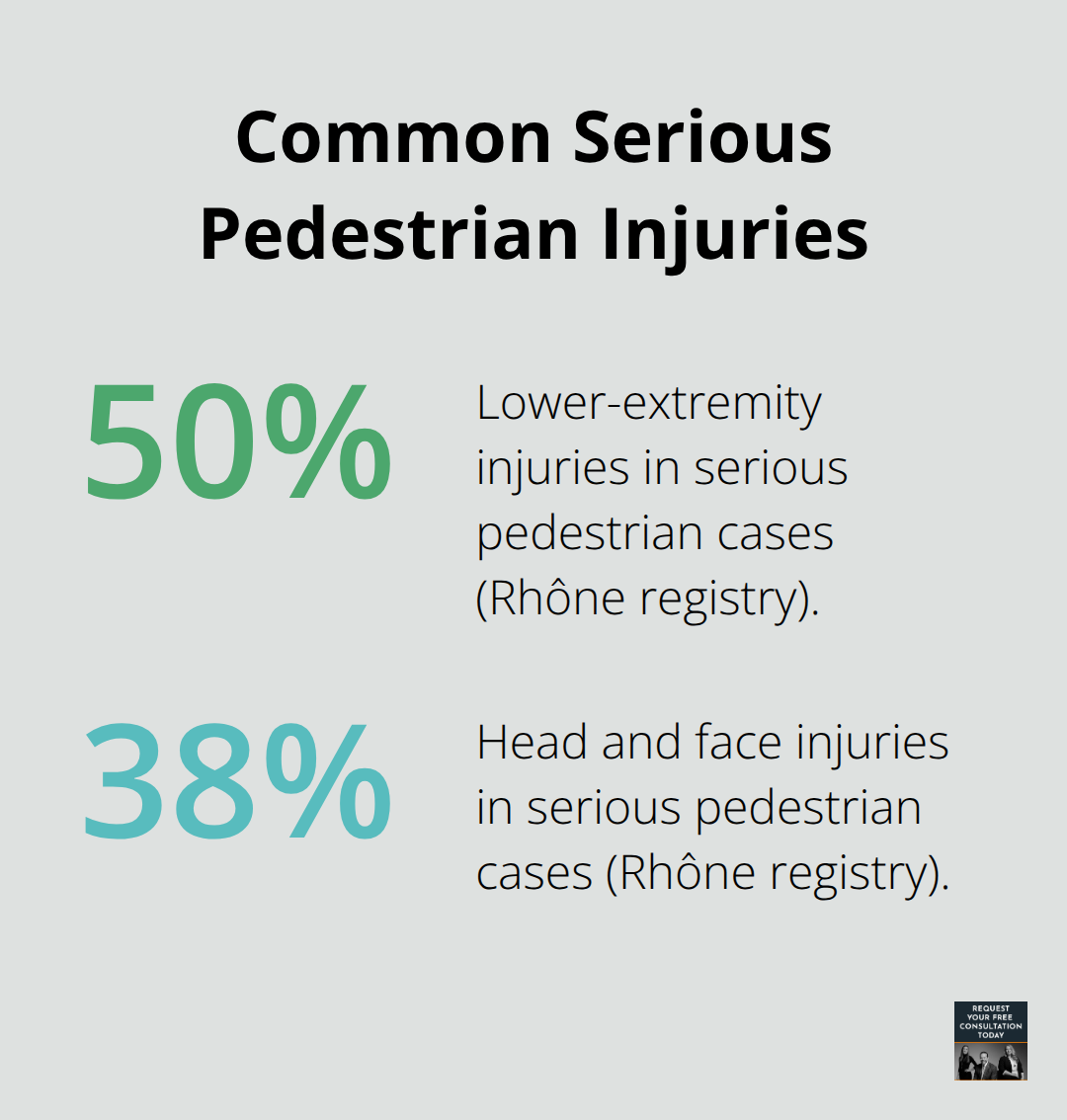
Head to the nearest emergency room immediately after a pedestrian accident, regardless of how minor your injuries feel. The Rhône Department registry documented that pedestrians sustain lower-extremity injuries in roughly 50% of serious cases, followed by head and face injuries at 38%, and these injuries frequently worsen over the first 24 to 72 hours as swelling and internal damage become apparent. UC Davis Medical Center ranks first in the Sacramento area for comprehensive trauma care and holds national rankings in six adult specialties, making it your top choice if you’re near the medical center.
Sutter Medical Center-Sacramento ranks second regionally and performs exceptionally in 20 procedures and conditions, including orthopedic and neurological care critical for pedestrian injuries. Kaiser Permanente Roseville Medical Center and Mercy San Juan Medical Center also rank high regionally. Do not delay treatment thinking you’ll visit a doctor later-emergency room physicians document baseline injuries that become essential evidence in your claim. The medical record created on the day of your accident establishes causation between the crash and your injuries, something that’s far harder to prove if you wait days or weeks to seek care.
Obtain Complete Medical Records Before Hospital Discharge
Before discharge, ask the hospital records department for copies of all documentation: the emergency room report, imaging results, physician notes, and discharge summary. Request them in digital format if possible. Many hospitals charge nominal fees for records (typically 10 to 25 dollars per request), but obtaining them immediately prevents delays later when you need them for insurance claims or legal action. Pedestrians aged 65 and older face significantly higher rates of thoracic, spine, and pelvis injuries according to injury registry data, so if you’re in that age group, ensure imaging studies for these areas receive thorough documentation. Ask your physician specifically about any injuries that weren’t immediately obvious, particularly to your spine or internal organs, as these can develop into serious complications. Keep a separate folder with all medical bills, receipts for medications, and documentation of lost wages from time away from work. Insurance companies scrutinize medical expenses, so organized, complete records strengthen your position during settlement negotiations.
Schedule Specialist Appointments Within Two Weeks
If your primary care physician recommends follow-up with an orthopedic surgeon, neurologist, or physical therapist, schedule those appointments within two weeks of your accident. Gaps in treatment suggest to insurance adjusters that your injuries weren’t serious, even if you delayed care due to cost or scheduling difficulties. Attend every recommended appointment and follow treatment plans precisely. If a specialist recommends imaging studies, physical therapy sessions, or other treatments and you can’t afford them, contact the provider’s office directly-many facilities offer payment plans. Document the cost of every treatment visit, including copays and out-of-pocket expenses. These costs become part of your damage claim. Pedestrians with fractures comprise roughly 73% of serious injury cases according to injury registries, and fractures require extended follow-up care with imaging and physical therapy.
Track Functional Limitations and Lost Income
Document your functional limitations during recovery-if you couldn’t work, couldn’t perform household tasks, or needed assistance with daily activities, record these impacts. This information supports claims for lost wages and reduced quality of life that extend beyond medical bills alone. Insurance adjusters evaluate not just what you paid for treatment, but how the accident affected your ability to earn income and live normally. Keep receipts for any services you hired to replace work you couldn’t do yourself, such as housecleaning or childcare. These expenses demonstrate the real cost of your injuries. Photograph any visible injuries during recovery and note dates when you returned to work or resumed normal activities. This timeline helps establish the severity and duration of your recovery period, which directly influences the value of your claim.
With your medical care underway and documentation complete, the next phase requires you to notify your insurance company and begin the claims process-a step that demands precision and strategic thinking.
Protecting Your Claim Through Insurance and Legal Action
Contact your insurance company within 24 hours of the accident, not because insurers advocate for you but because delays give them grounds to deny your claim later. Most policies require prompt notice, and waiting days or weeks creates a paper trail showing negligence on your part. When you call, stick to facts: the date, time, location, vehicle description, and that a motor vehicle struck you as a pedestrian. Do not apologize, speculate about fault, or volunteer information beyond what’s asked.
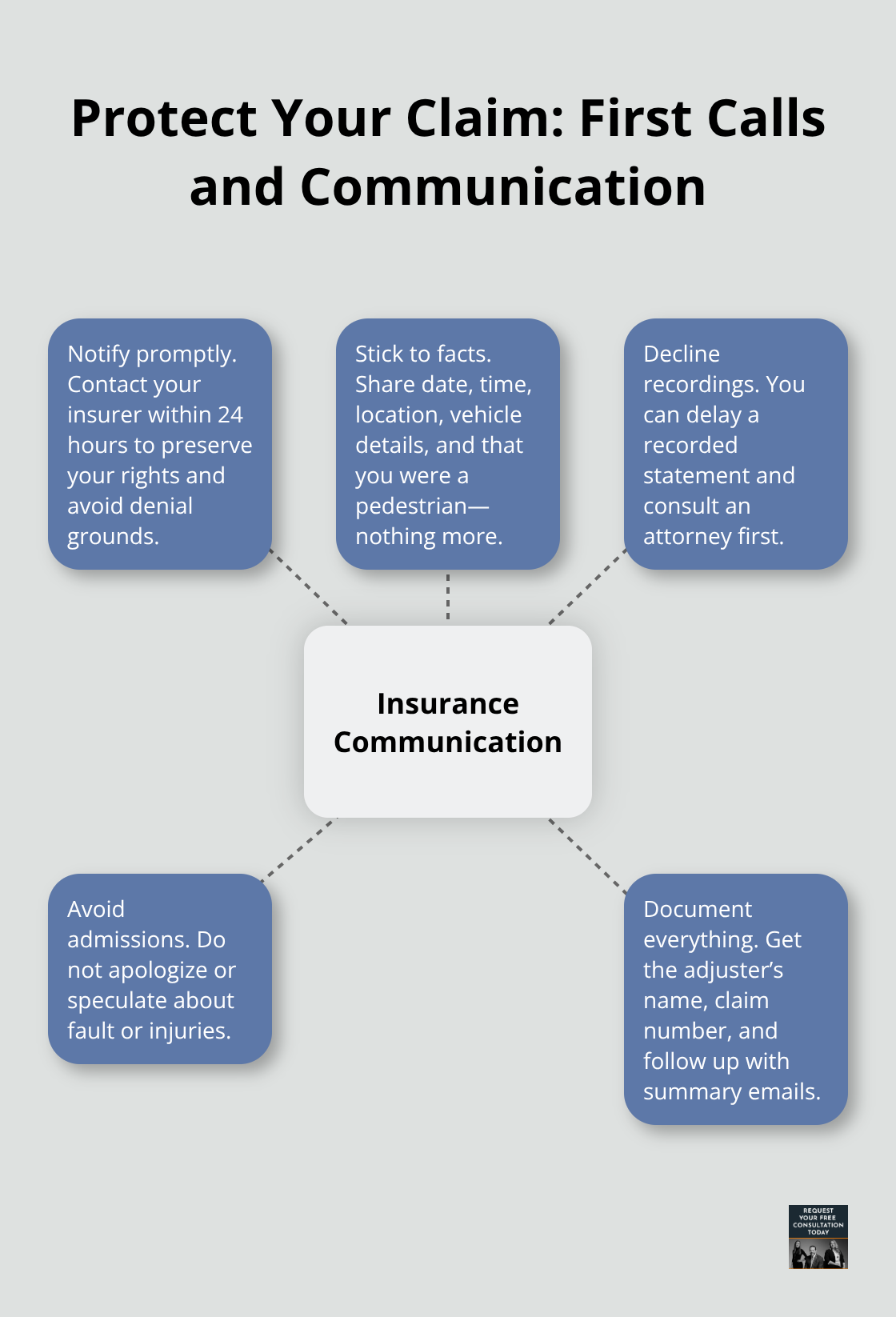
The insurance adjuster will request a recorded statement; you are not obligated to provide one immediately and should consider consulting an attorney first. Adjusters are trained to extract statements that minimize your damages, and anything you say can be used against you during settlement negotiations. Request the adjuster’s name, claim number, and direct contact information, then follow up all conversations with written emails summarizing what was discussed. Insurance companies process thousands of claims monthly, and written documentation prevents miscommunication or forgotten details that could harm your case later.
Document Every Expense and Loss
Gather every expense and loss resulting from the accident into a single organized file. Medical bills, emergency room records, prescription receipts, physical therapy invoices, and transportation costs to medical appointments all count as economic damages. Lost wages require documentation from your employer stating the dates you missed work and your hourly rate or salary. If you’re self-employed, provide tax returns or bank statements showing your typical income. Beyond medical expenses, document non-economic damages like pain and suffering, emotional distress, and reduced quality of life through a recovery journal where you note daily limitations, sleep disruption, and activities you couldn’t perform. Insurance adjusters often undervalue these intangible damages, but thorough documentation shifts the negotiation in your favor. Request itemized bills from healthcare providers rather than accepting summary statements, as itemization reveals the true cost of your care and prevents adjusters from challenging individual line items. Photograph any permanent scarring or visible injury effects during your recovery period, as visual evidence strengthens claims for disfigurement damages. The total value of your claim rests on the completeness and organization of this documentation.
Understand Settlement Traps and Negotiation Tactics
Insurance adjusters have one job: minimize what their company pays. They know most injured pedestrians lack legal knowledge and will accept settlements far below what their cases are worth. An attorney levels this playing field through understanding settlement values in Sacramento pedestrian cases, negotiating aggressively with insurers, and filing lawsuits when offers fall short. Your attorney also protects you from common settlement traps, such as accepting a lump sum that seems large but proves inadequate when medical complications emerge months later. Many pedestrians delay hiring an attorney hoping to resolve claims quickly, then regret this decision when insurers lowball their offers. The cost of legal representation typically comes from your settlement or judgment, not from your pocket, making early consultation financially risk-free. Pedestrians with serious injuries (those involving fractures, which comprise roughly 73% of serious injury cases according to injury registries) particularly benefit from legal representation because insurers routinely underestimate long-term treatment costs and functional limitations.
Why Legal Representation Matters for Pedestrian Cases
The legal team at Schaar & Silva LLP serves Sacramento and understands the specific challenges pedestrians face in accident claims. Our years of experience in personal injury law mean we handle medical bill negotiations, evaluate property damage claims fairly, and connect you with psychological support specialists for trauma recovery. We focus on directing you to medical lien services that facilitate payment of your bills until your case is resolved, removing financial pressure during recovery. Emotional trauma is frequently underestimated in pedestrian accidents, and we connect you with specialists who can offer the psychological support you may require. Your attorney protects you from common settlement traps and ensures that complications emerging months after your accident don’t leave you without adequate compensation.
Moving Forward
A Sacramento pedestrian accident disrupts your life in ways that extend far beyond the initial impact. The steps you take in the hours and days following the crash determine whether you recover fully and receive fair compensation for your injuries and losses. Documentation at the scene, immediate medical care, organized expense tracking, and strategic communication with insurers form the foundation of a successful claim.
Insurance adjusters are trained to minimize payouts, and most injured pedestrians lack the legal knowledge to recognize when they’re being offered far less than their cases are worth. This imbalance is why legal representation matters profoundly in pedestrian accident cases. An attorney who understands Sacramento’s traffic patterns, local hospital networks, and how courts evaluate pedestrian injury claims can negotiate aggressively on your behalf and protect you from settlement traps that leave you inadequately compensated when complications emerge months later.
The legal team at Schaar & Silva LLP brings years of experience in personal injury law to your case and handles the medical bill negotiations that free you from financial pressure during recovery. We connect you with psychological support specialists for trauma that often accompanies pedestrian accidents and direct you to medical lien services that facilitate payment of your bills until your case is resolved. Contact an experienced personal injury attorney who can review your documentation, evaluate your claim’s true value, and guide you toward the compensation you deserve.
