
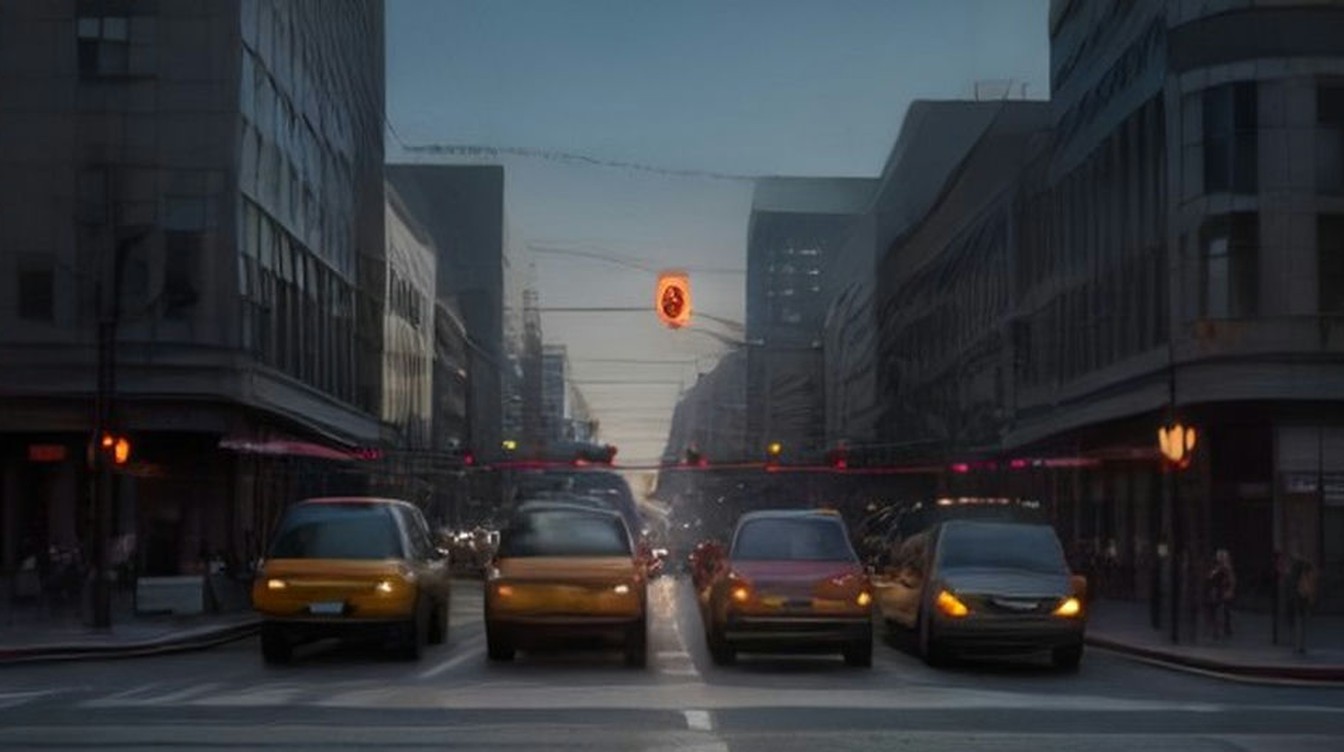
An Oakland T-bone accident is one of the most frightening crashes a driver or passenger can experience. When one vehicle drives straight into the side of another, there is very little metal between the occupants and the striking car, and injuries can be serious even at city speeds. These collisions usually happen at intersections, where one driver runs a red light, rolls through a stop sign, or misjudges the right-of-way. Understanding how California law decides who had the right to be in the intersection gives you real control over your claim.
At Schaar & Silva LLP, we help people injured in Oakland car and truck accidents hold careless drivers accountable so you can move forward with confidence. This guide explains how T-bone crashes actually happen on Oakland streets, how fault is proven after a side-impact collision, and the mistakes that can weaken an otherwise strong claim.
How Oakland T-Bone Accidents Actually Happen
A T-bone, also called a broadside or side-impact collision, occurs when the front of one vehicle strikes the side of another, forming the shape of the letter T. In Oakland, these crashes happen at busy signalized intersections along corridors such as Broadway, International Boulevard, and MacArthur Boulevard, and at quieter neighborhood intersections controlled by stop signs. In almost every case, the question that decides the claim is simple to state but sometimes hard to prove: which driver was supposed to yield? California’s Vehicle Code answers that question for each kind of intersection.
Red-Light Running at Signalized Intersections
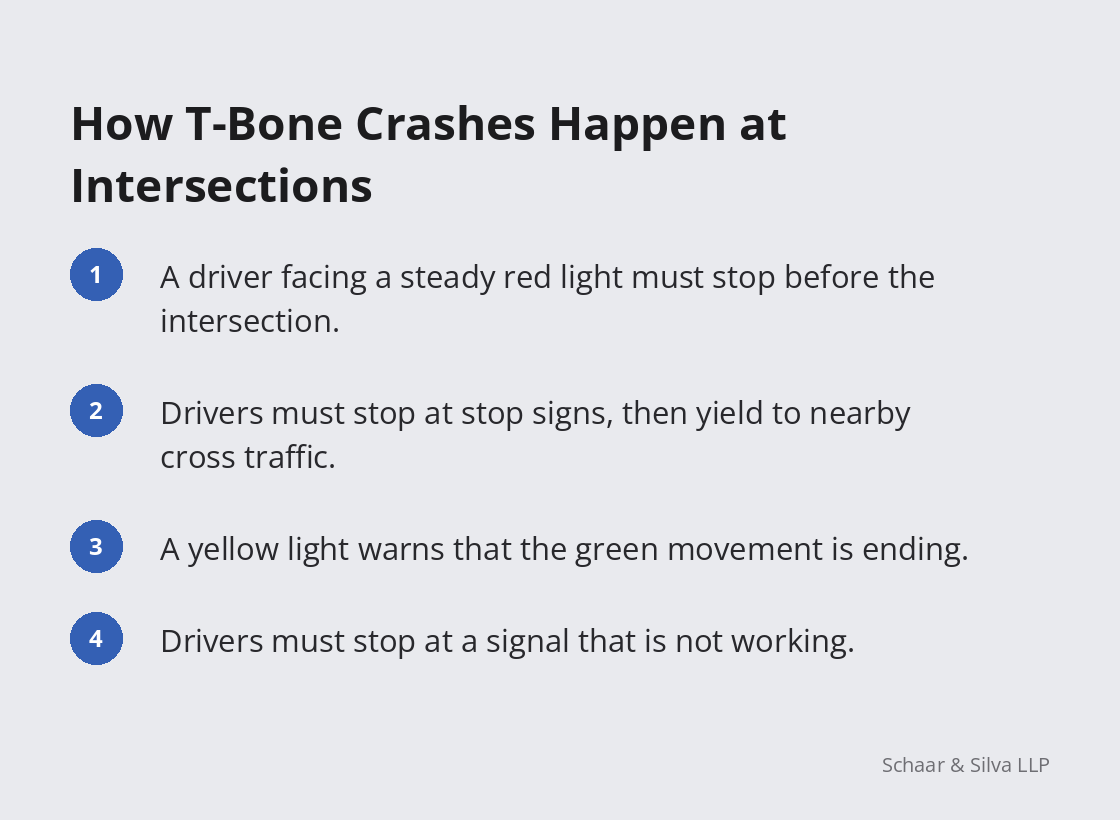
Vehicle Code Section 21453 provides that a driver facing a steady circular red signal alone shall stop at a marked limit line, or if none, before entering the crosswalk on the near side of the intersection, or if none, before entering the intersection, and shall remain stopped until an indication to proceed is shown. A driver who enters an intersection against a red light and strikes a vehicle crossing on a green signal has violated a basic rule of the road. Red-light crashes are among the most common causes of T-bone collisions because the driver with the green light often has no warning that a car is about to cross into their path.
Rolling Through Stop Signs
Many Oakland neighborhoods rely on stop signs rather than traffic signals. Vehicle Code Section 22450 requires the driver of any vehicle approaching a stop sign at the entrance to an intersection to stop at a limit line, if marked, otherwise before entering the crosswalk on the near side of the intersection. Stopping is only the first step. Under Vehicle Code Section 21802, the driver must then yield the right-of-way to vehicles that have approached from another highway or are approaching so closely as to constitute an immediate hazard. A driver who stops briefly and then pulls out in front of cross traffic can still be at fault for the resulting side-impact crash.
Yellow Lights, Green Lights, and Uncontrolled Intersections
Vehicle Code Section 21452 states that a steady yellow signal warns drivers that the related green movement is ending or that a red indication will be shown immediately thereafter. A yellow light is a warning, not an invitation to speed up. Even a driver with a green light has duties. Vehicle Code Section 21451 requires any driver, including one turning, to yield the right-of-way to other traffic and to pedestrians lawfully within the intersection or an adjacent crosswalk. At intersections without signals or stop signs, Vehicle Code Section 21800 requires a driver approaching an intersection to yield to any vehicle that has already entered it from a different highway, and when two vehicles enter at the same time, the driver on the left generally yields to the driver on the immediate right. The same section requires drivers approaching a signal that is not working to stop and proceed with caution when it is safe to do so.
Proving Fault After a Side-Impact Crash in Oakland
T-bone claims often turn into a dispute over the color of the light or who reached the intersection first. Each driver may honestly believe they had the right-of-way, and insurance companies are quick to argue that responsibility should be split. Building a strong claim means connecting the other driver’s conduct to a specific traffic rule and backing that connection with evidence gathered as soon as possible after the crash.
Traffic Laws as Evidence of Negligence
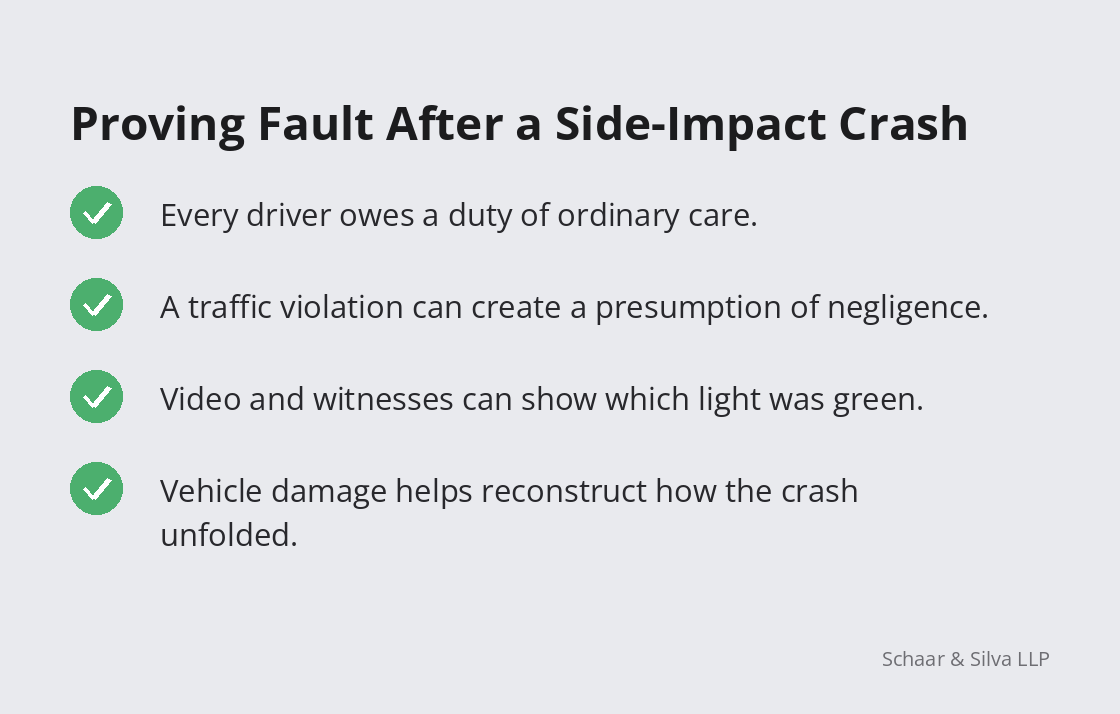
Under Civil Code Section 1714, everyone is responsible for an injury caused to another by a lack of ordinary care in the management of their property or person. When the careless conduct is also a traffic violation, California Evidence Code Section 669 can help. That section creates a presumption that a person failed to exercise due care if they violated a statute, the violation caused the injury, the injury was the kind the statute was designed to prevent, and the injured person was among those the statute was meant to protect. The presumption can be rebutted, but it often shifts the focus of the case toward the driver who ran the light or the stop sign.
Video, Witnesses, and Physical Evidence
Because the color of a traffic signal is so often disputed, independent evidence matters. Traffic cameras, dashcams, nearby business security systems, home doorbell cameras, and cameras on buses may have captured the moments before the crash, but many systems record over old footage quickly, so it is important to identify them early. Witnesses who were waiting at the intersection or walking nearby can confirm which light was green. The location of the damage on each vehicle, the final resting positions, and debris on the roadway also help reconstruct how the collision unfolded.
When More Than One Driver Shares the Blame
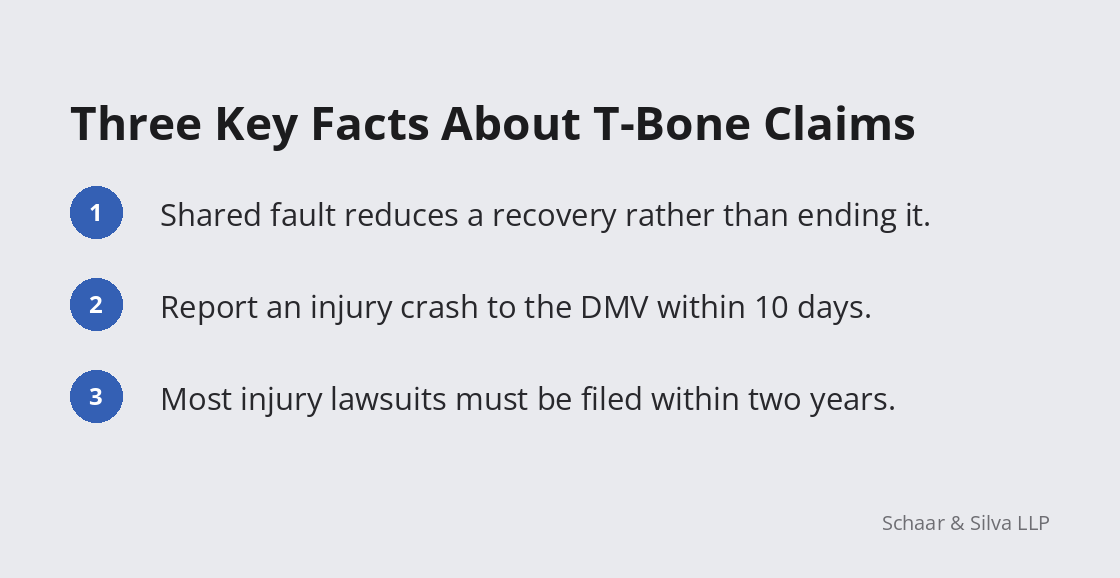
Some T-bone crashes involve fault on both sides, such as a driver who ran a red light striking a driver who was speeding through a green. California follows a comparative fault system. Under CACI No. 405, the instruction California juries receive on this issue, an injured person’s damages are reduced by the percentage of their own responsibility rather than eliminated. Insurers sometimes exaggerate a victim’s share of fault to reduce what they owe, which is why a careful review of the evidence is so important before accepting any explanation of how the crash occurred.
Mistakes That Can Weaken an Oakland T-Bone Claim
The days and weeks after a side-impact collision are often stressful, and it is easy to make decisions that later hurt a claim. Many of these mistakes are avoidable once you know what to watch for. Protecting your health and your rights at the same time puts you in the best position to recover what the law allows.
Downplaying Side-Impact Injuries
Side-impact crashes can cause head injuries, neck and back injuries, broken ribs, pelvic injuries, and internal injuries, and some symptoms do not appear right away. Adrenaline after a crash can mask pain, and people often tell the officer or the other driver that they feel fine. Seeking prompt medical care and following through with recommended treatment protects your health and creates a clear record that links your injuries to the collision. Gaps in treatment are frequently used by insurers to argue that an injury was minor or caused by something else.
Giving the Other Insurer a Recorded Statement Too Soon
The other driver’s insurance company may contact you quickly and ask for a recorded statement about the color of the light, your speed, and where you were looking. Those questions are designed to find details that support splitting fault. Before you give a statement, it is wise to understand how the intersection rules apply to your crash and what evidence exists. Speaking with an attorney first helps make sure your account is accurate and complete and is not twisted to fit the insurer’s version of events.
Missing Reporting and Filing Deadlines
California has deadlines that apply after a car crash. Vehicle Code Section 16000 requires a driver involved in an accident that results in bodily injury or death, among other situations, to report the accident to the Department of Motor Vehicles within 10 days on an approved form. For the injury claim itself, Code of Civil Procedure Section 335.1 generally allows two years to file a lawsuit for injury or death caused by the wrongful act or neglect of another. If a city vehicle or a public roadway condition played a role, Government Code Section 911.2 generally requires a claim to be presented to the public entity within six months, so acting promptly matters.
Final Thoughts
An Oakland T-bone accident almost always comes down to the right-of-way. California’s rules for red lights, stop signs, yellow signals, and uncontrolled intersections set clear expectations for every driver, and when someone ignores those rules, the law gives injured people a path to hold them accountable. Evidence such as video, witness accounts, and vehicle damage can turn a disputed intersection into a clear picture of what happened.
You do not have to sort through these questions alone while you are recovering. Learning more about how we handle Oakland auto accident claims is a good first step toward understanding your options and protecting your recovery from the start.
If you were hurt in a side-impact crash in Oakland, contact Schaar & Silva LLP to speak with our team about your case. We’ll review how the collision happened, explain your rights under California law, and help you move forward with confidence.