
Minor injuries might seem straightforward, but Santa Cruz minor injury claims require careful documentation to avoid costly mistakes. We at Schaar & Silva LLP have seen too many people settle for less because they didn’t gather proper evidence upfront.
This guide walks you through exactly what to photograph, what medical records matter, and how to negotiate effectively with insurance adjusters. You’ll also learn the small claims court process in Santa Cruz County so you know your options before deciding how to proceed.
Documentation Essentials for Minor Injury Claims
Photograph and Video Evidence from the Scene
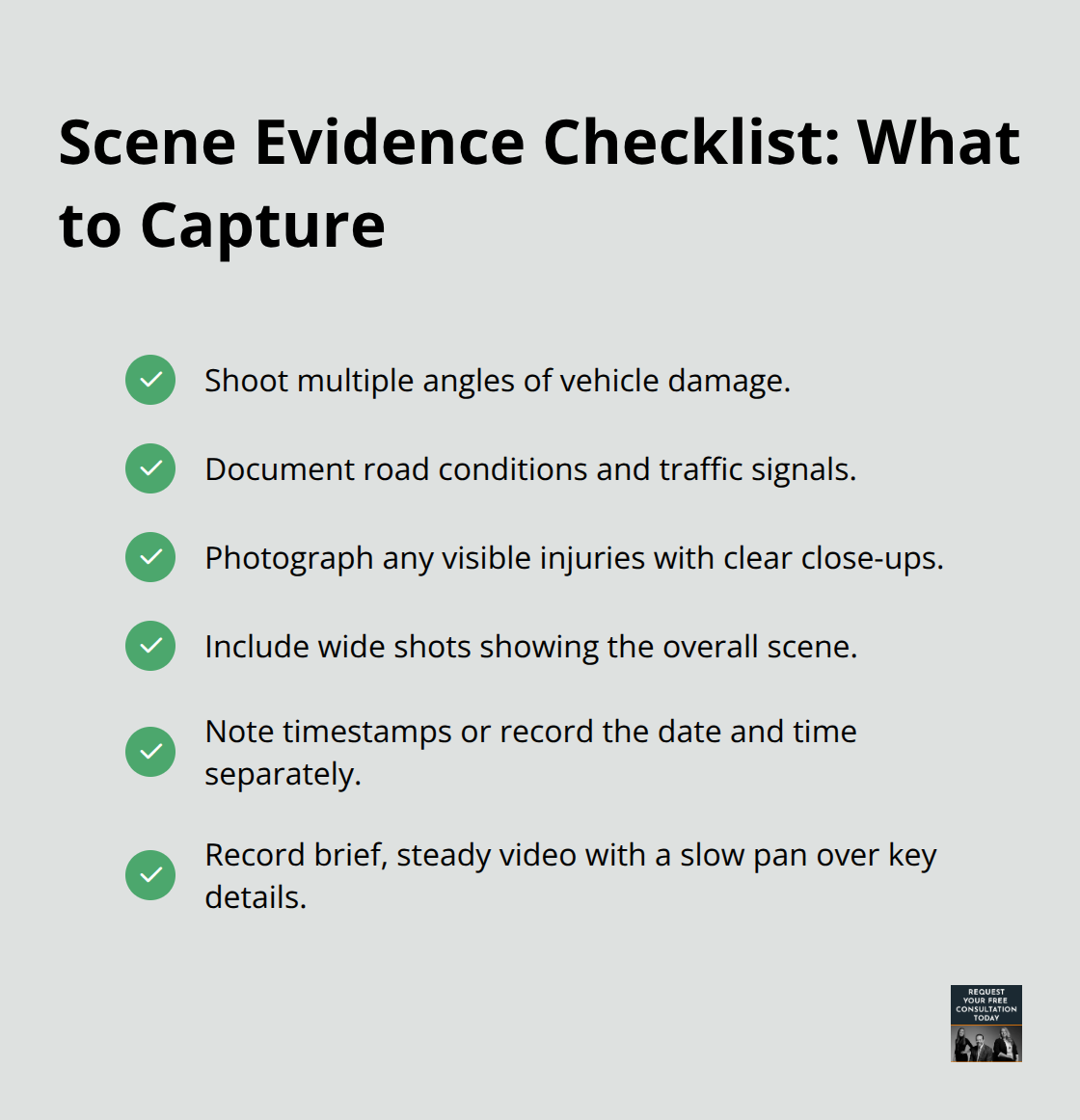
Photographs and videos from the accident scene carry far more weight than you might think. Capture multiple shots from different angles, showing vehicle damage, road conditions, traffic signals, and any visible injuries. Include wide shots that reveal the overall scene and close-ups of specific damage areas. Timestamp your photos if possible, or note the date and time separately. If you record video, keep it brief and focused-pan slowly across relevant details rather than producing shaky footage that raises credibility questions.
Many people skip this step entirely, which weakens their negotiating position significantly. Insurance adjusters reviewing claims with clear visual evidence move faster toward settlement because they cannot argue about what happened.
Medical Records and Treatment Documentation
Medical records form the backbone of soft-tissue injury claims, and timing matters enormously. Seek treatment within 48 hours of the accident, as delays create gaps that adjusters exploit to minimize your claim value. Request copies of every document from your healthcare provider: initial exam notes, imaging results, treatment plans, medication prescriptions, and follow-up visit summaries. Include records from physical therapy or chiropractic care if applicable. For minor injury claims in Santa Cruz County, document each treatment session with the provider’s notes on pain levels, range of motion, and functional limitations. Many people fail to collect complete records, leaving money on the table during negotiations.
Witness Statements and Contact Information
Witness statements carry significant credibility because they come from neutral parties. Obtain contact information from anyone who saw the accident, including their full names, phone numbers, email addresses, and their exact location during the incident. Ask them to provide a brief written account of what they observed, signed and dated. Even one credible witness statement can shift settlement discussions in your favor by corroborating your account. Store all documentation in a single organized folder (both physical and digital) so you can produce any requested item within hours rather than days. With your evidence package complete, you’re ready to understand what your claim actually costs and how to communicate that value to insurance adjusters.
Negotiation Strategies for Fast Resolution
Understanding Your Claim Value
Insurance adjusters rely on low initial offers because many claimants lack clarity about what their claim is worth. Start by calculating your actual damages: medical expenses, lost wages, and out-of-pocket costs directly tied to the injury. For soft-tissue injuries in Santa Cruz County, medical costs typically range from $2,000 to $8,000 for minor claims, though this varies based on treatment duration and type. Add lost income if you missed work-even a few days matters. Then multiply your economic damages by 1.5 to 3 times to account for pain and suffering, depending on injury severity and documentation quality. A claimant with complete medical records, witness statements, and clear photo evidence typically receives multipliers closer to 3, while incomplete documentation pushes adjusters toward 1.5. Know this number before any conversation with the insurance company. An adjuster making an opening offer of $3,000 on a claim worth $9,000 counts on you not knowing the difference.
Communicating with Insurance Adjusters
Communication with adjusters follows a simple principle: provide information strategically and never accept the first offer. When the adjuster contacts you, have your complete documentation package ready. Present your organized records methodically-medical chronology first, then photographs, then witness statements. Adjusters process dozens of claims monthly, so a well-structured presentation signals seriousness and reduces time spent arguing about missing information. Request their settlement offer in writing, then wait at least one week before responding.
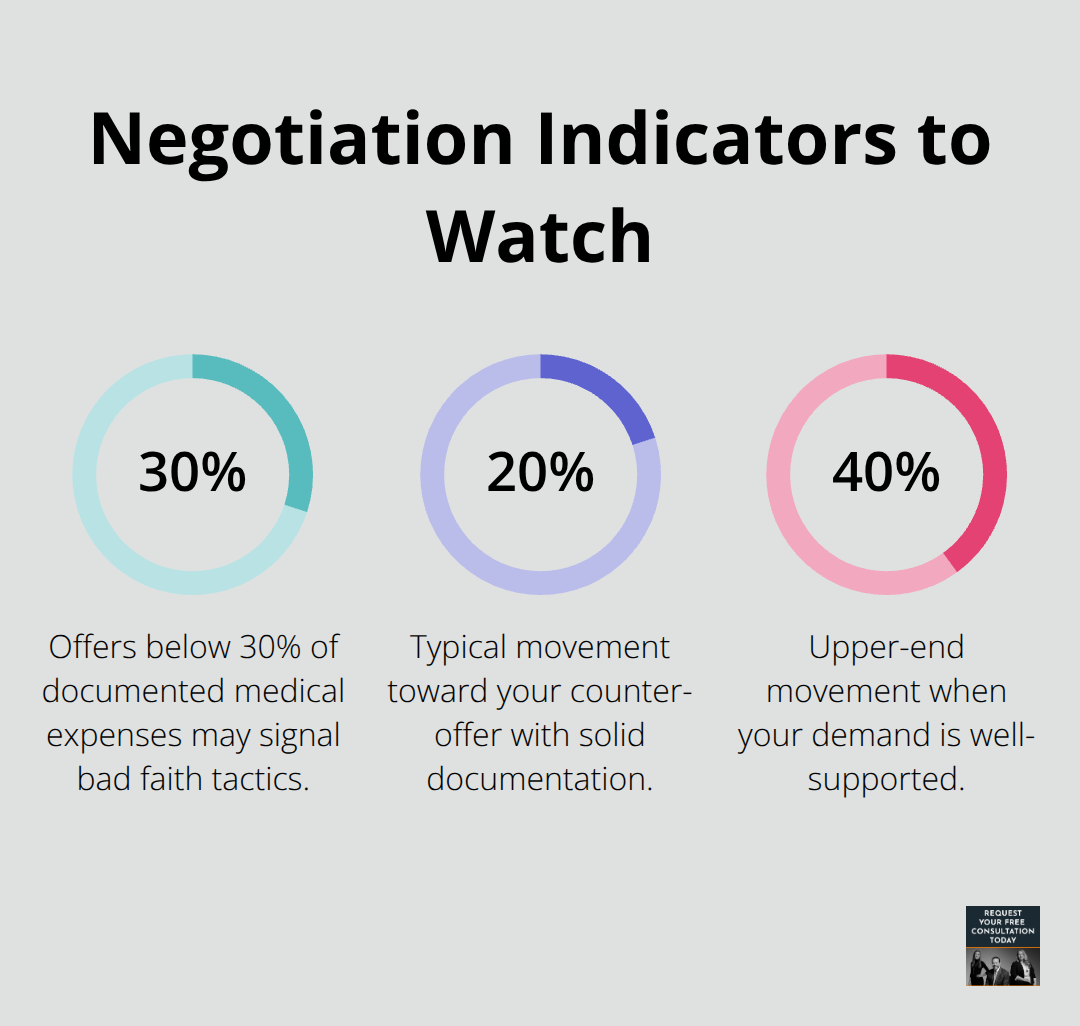
During that week, prepare a counter-offer letter that references specific medical findings, treatment timelines, and lost wages with supporting documentation attached. Never negotiate solely by phone; written communication creates a record and prevents misstatements. If an adjuster pressures you to settle quickly, that pressure itself indicates they view your claim as stronger than their opening offer suggests. Offers below 30% of documented medical expenses typically signal bad faith tactics designed to pressure acceptance without proper evaluation.
Leveraging Documentation to Strengthen Your Position
Most adjusters move 20 to 40 percent closer to your counter-offer if your documentation is solid and your demand is reasonable. The difference between accepting a first offer and negotiating properly often exceeds $2,000 on minor injury claims. Your organized evidence package transforms settlement discussions because adjusters cannot dispute facts backed by medical records, photographs, and witness accounts.
Settlement negotiations typically provide faster resolution than court battles, making them the preferred path for most minor injury victims. With your negotiation strategy in place, you now face a critical decision: whether to settle or pursue your claim through Santa Cruz County’s small claims court process.
Small Claims Court in Santa Cruz County
Understanding the Small Claims Process
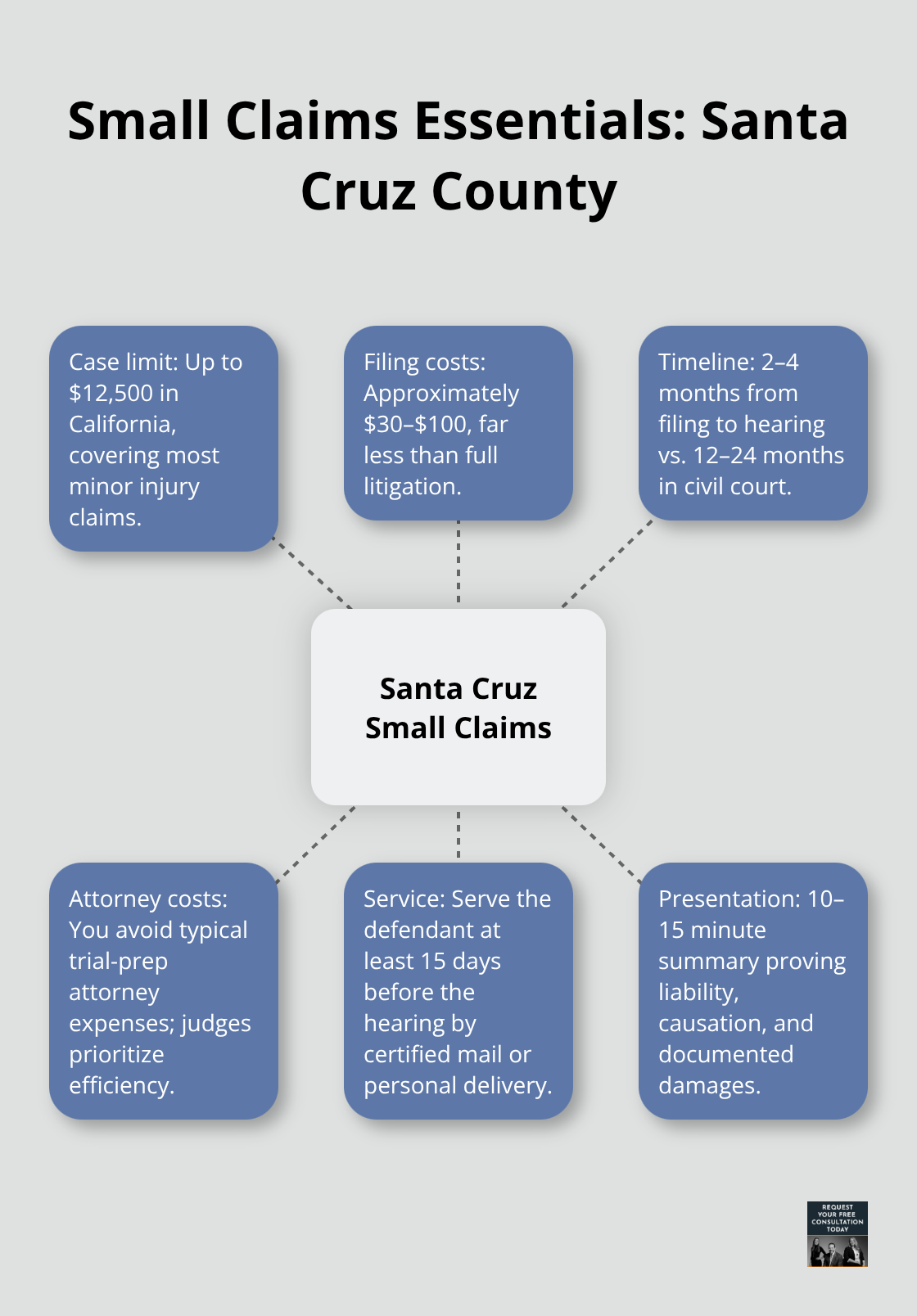
If settlement negotiations stall or the insurance company’s final offer falls short of your documented damages, Santa Cruz County’s small claims court provides a faster and more affordable alternative to traditional litigation. Small claims court handles cases up to $12,500 in California, which covers most minor injury claims. The process moves quickly because judges prioritize efficiency, and you avoid the expense of hiring an attorney for trial preparation. Filing costs run approximately $30 to $100 depending on your claim amount, far less than the thousands you’d spend on a full lawsuit. Court timelines typically span 2 to 4 months from filing to hearing, compared to 12 to 24 months for standard civil litigation. This speed prevents your claim from dragging on indefinitely while medical bills accumulate and your evidence grows stale.
Filing Your Claim Correctly
Filing your case requires completing a civil claim form with the Santa Cruz County Court, listing the defendant’s name and address, your claim amount, and a brief description of what happened. The deadline to file is typically within two years of the accident, but filing earlier strengthens your position because recent evidence remains fresher and witnesses remain available. You must serve the defendant with copies of your complaint at least 15 days before the hearing date, either by certified mail or personal delivery. Submit your paperwork at least 6 to 8 weeks before you want your hearing scheduled, as many claimants file too close to the deadline and then struggle with service requirements.
Preparing Your Evidence Package
Bring your complete documentation package to court: organized medical records in chronological order, all photographs and video evidence clearly labeled with dates, witness statements with contact information, receipts for medical expenses and lost wages, and a one-page summary showing how you calculated your total damages. Judges in Santa Cruz County see dozens of minor injury claims monthly and favor claimants who present organized, well-documented cases. Your presentation should take 10 to 15 minutes maximum, focusing on three elements: the defendant’s liability for the accident, your injury caused directly by that accident, and your specific damages with supporting documentation.
Presenting Your Case Effectively
Speak clearly and let your evidence speak for itself rather than repeating arguments or becoming emotional. Expect the defendant or their insurance representative to argue that your injuries were minor, that medical treatment was unnecessary, or that your damages were inflated. Counter these arguments by referencing specific medical findings, treatment timelines, and lost income documentation. Judges rarely award damages that exceed documented medical expenses multiplied by 2 to 2.5 times for minor soft-tissue injuries, so keep your demand reasonable and backed by actual evidence.
After the Judgment
If the judge rules in your favor, the defendant has 30 days to pay before you can pursue collection efforts. If you lose, you cannot appeal small claims decisions, making thorough preparation critical before your hearing date arrives.
Final Thoughts
Documenting Santa Cruz minor injury claims properly determines whether you recover fair compensation or settle for far less than your case deserves. Most claimants who follow the steps outlined in this guide-gathering scene evidence, collecting complete medical records, obtaining witness statements, calculating accurate claim value, and communicating strategically with adjusters-negotiate settlements 20 to 40 percent higher than initial offers, often without stepping foot in court. Small claims court remains your backup option if negotiations stall, providing a faster and more affordable path than traditional litigation.
Some situations benefit from professional guidance. If the insurance company denies your claim outright, disputes liability, or makes an offer that falls significantly below your documented damages, consulting with an attorney protects your interests. Medical bill complications, disputes over treatment necessity, or cases involving multiple parties also warrant legal review before accepting any settlement.
We at Schaar & Silva LLP assist Santa Cruz County residents with exactly these situations. Contact Schaar & Silva LLP to discuss whether your claim benefits from legal representation and to explore medical bill assistance through lien services, property damage valuation, and connections with support specialists when needed.
