
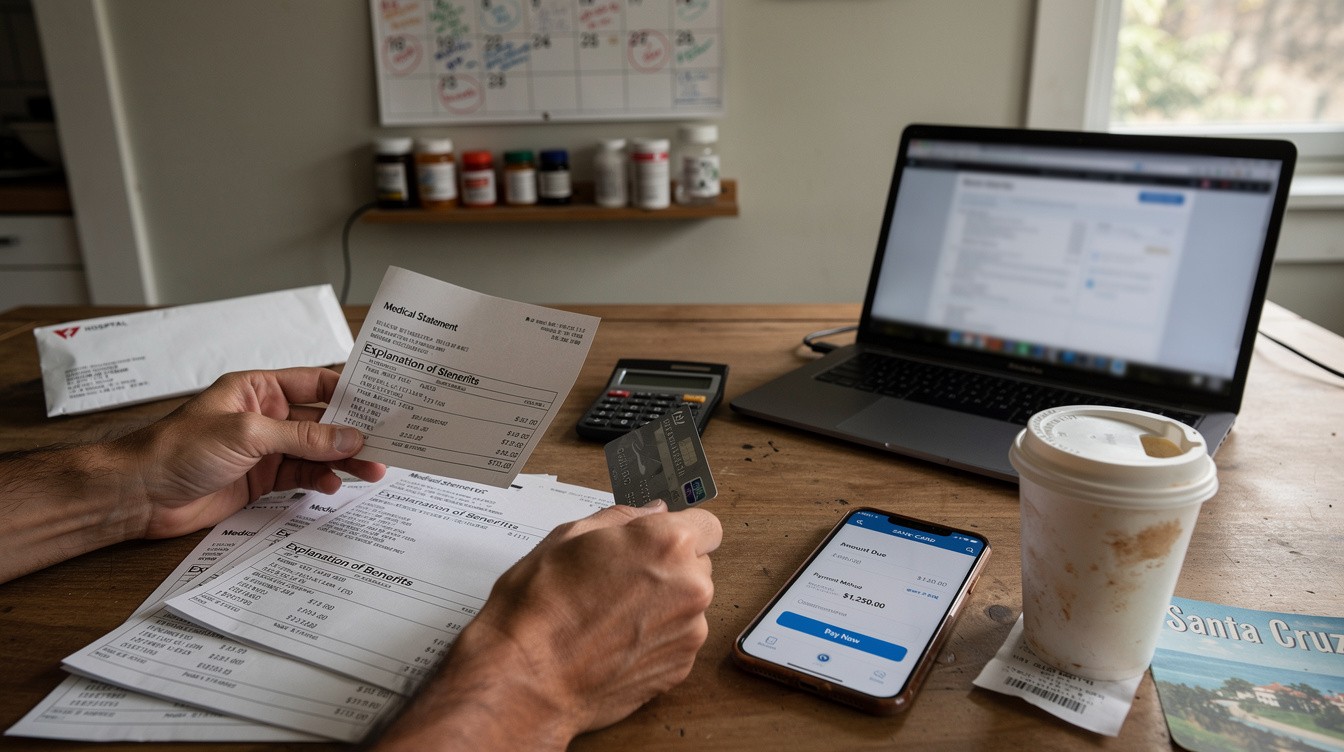
A car accident in Santa Cruz can leave you facing medical bills that pile up faster than you expected. Emergency room visits, follow-up appointments, imaging scans, and physical therapy add costs that quickly spiral beyond what your insurance covers.
We at Schaar & Silva LLP understand how overwhelming these financial pressures become while you’re still recovering. This guide shows you concrete ways to reduce what you owe and protect your finances.
What Costs Actually Hit Your Medical Bills After an Accident
Emergency Room and Initial Treatment Expenses
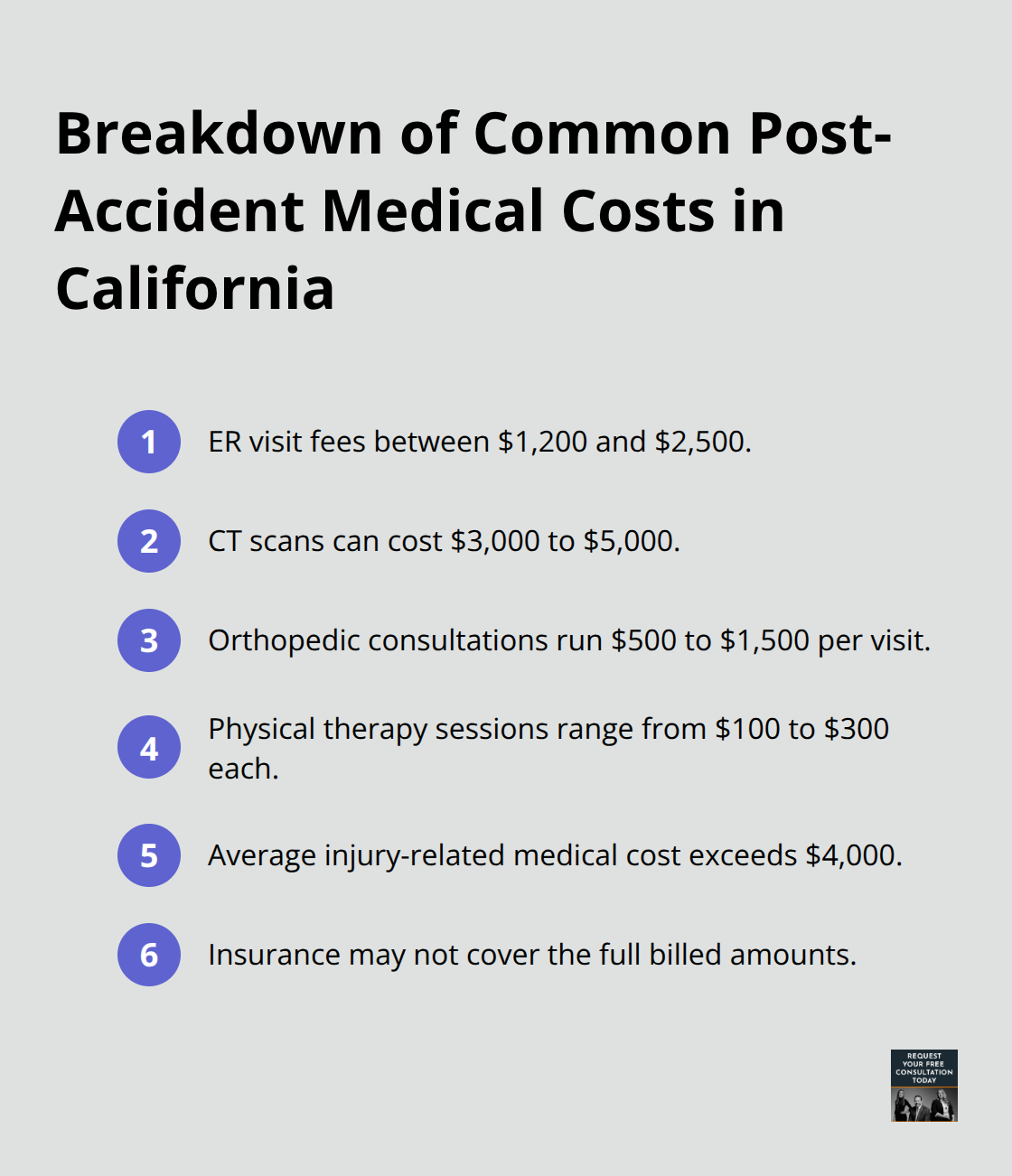
A typical emergency room visit in California costs between $1,200 and $2,500 just to walk through the door, according to data from the American Hospital Association. Add imaging like CT scans ($3,000 to $5,000), orthopedic consultations ($500 to $1,500 per visit), and physical therapy sessions ($100 to $300 each), and your medical expenses climb rapidly. The National Safety Council reports that the average injury-related medical cost following a vehicle accident exceeds $4,000, but this figure masks the real problem: most people face significantly higher bills because insurance rarely covers the full amount.
Insurance Gaps That Leave You Responsible
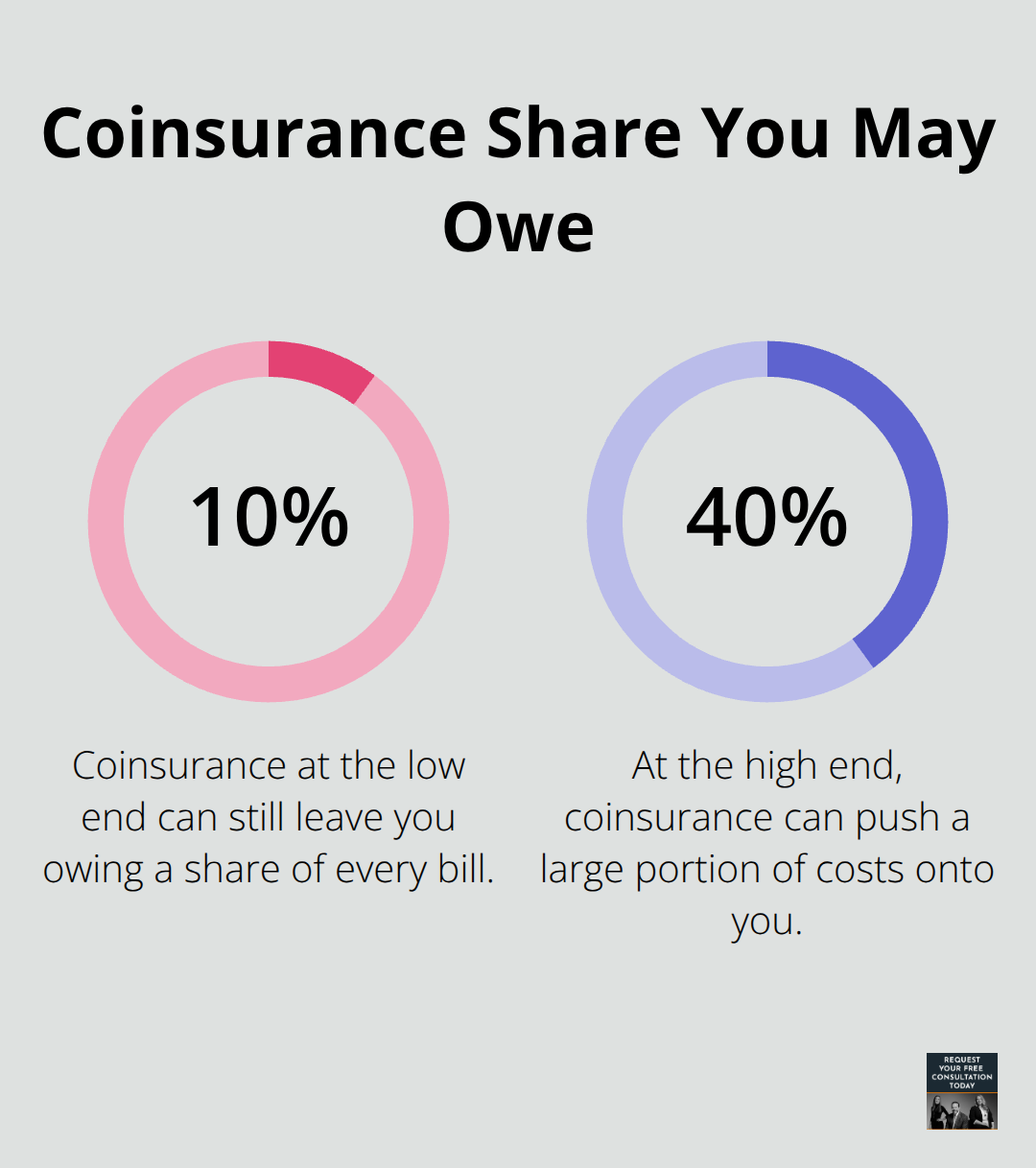
Your health insurance policy likely has deductibles ranging from $500 to $2,500, copays for each visit, and coinsurance percentages that leave you responsible for 10 to 40 percent of the total bill. If the accident involved another driver, their liability insurance may eventually cover these costs, but that process takes months or longer while medical providers demand immediate payment.
Healthcare providers in Santa Cruz County often bill at rates 200 to 400 percent higher than what insurance companies actually pay. A procedure billed at $5,000 might settle with an insurance company for $1,500, but if you’re uninsured or underinsured, the provider will pursue you for the full amount.
Medical Liens and Credit Damage
Medical providers can place liens against any settlement you receive, meaning they get paid directly from your case proceeds before you see a dollar. If you miss payments during your recovery, providers report the debt to credit agencies within 30 to 60 days, damaging your credit score and making it harder to secure loans or housing. The burden becomes particularly severe for those without adequate health coverage, those with high-deductible plans, or those whose injuries require ongoing treatment beyond the initial incident.
Understanding these costs is the first step toward protecting yourself. The next section covers practical strategies you can use right now to reduce what you owe and take control of your medical bills.
How to Actually Reduce What You Owe
Negotiate Your Medical Bills Directly
Most people accept their medical bills as final numbers, but healthcare providers routinely overcharge and expect negotiation. Call the billing department at your healthcare provider and ask for an itemized bill, then request a discount for paying in cash or setting up a payment plan. Hospitals in Santa Cruz County often reduce bills by 20 to 40 percent when patients negotiate directly, according to patient advocacy research from the Patient Advocate Foundation. Many providers will also waive or reduce bills if you qualify for financial hardship programs, which typically apply to households earning below 200 to 300 percent of the federal poverty line.
Ask specifically about charity care programs and sliding scale fees, which nonprofit hospitals are legally required to offer but rarely advertise. If a provider refuses to negotiate, contact your state representative’s office or file a complaint with the California Department of Insurance, as aggressive collection tactics violate state law.
Use Medical Liens to Your Advantage
Medical liens complicate your recovery because providers claim a portion of your settlement before you receive payment, but understanding how they work gives you leverage in negotiations. When a provider places a lien, they’re stating they’ll accept payment from your personal injury settlement rather than pursuing immediate collection. This actually works in your favor during settlement negotiations because it removes the provider’s incentive to demand inflated amounts upfront.
However, you must notify all lienholders when your case settles, and their claims take priority over your access to settlement funds. Many medical providers will accept reduced lien amounts if you negotiate before settlement, sometimes dropping their claims by 25 to 50 percent in exchange for faster payment. We at Schaar & Silva LLP can direct you to medical lien services that handle these negotiations on your behalf, protecting your settlement proceeds while providers receive fair compensation.
Access Payment Plans and Financial Assistance
Most major hospitals offer interest-free payment plans extending 12 to 36 months, and some providers will freeze collection efforts entirely once you enroll in a formal plan. Community health centers throughout Santa Cruz County offer services on a sliding fee scale based on income, reducing costs for uninsured or underinsured patients. Check whether you qualify for Medicaid or county health programs, which can retroactively cover accident-related medical expenses if you meet income requirements.
Local nonprofits and disease-specific organizations also offer bill assistance grants that don’t require repayment. These resources exist specifically to help accident victims manage the financial fallout while their cases move forward. Understanding your options positions you to make informed decisions about your medical debt rather than letting providers dictate terms.
How We Handle Your Medical Bills and Settlement
Coordinating with Medical Lien Services
Medical bill management during your personal injury case requires someone who understands both the healthcare system and the legal process. We at Schaar & Silva LLP direct you to medical lien services that handle negotiations with your providers, removing the burden from your shoulders while you recover. These services work on your behalf to reduce lien amounts before your settlement closes, often securing reductions of 25 to 50 percent from what providers initially claim. Rather than facing providers alone, you gain professionals who speak their language and know exactly which bills are negotiable and which ones hold firm.
Protecting Your Settlement Proceeds
We handle the coordination between your medical providers and your settlement, making certain that no lien surprises emerge after your case resolves. This approach protects your settlement proceeds and prevents gaps where providers demand payment you cannot afford. Fair settlements depend on accounting for every medical expense you’ve incurred and will incur in the future.
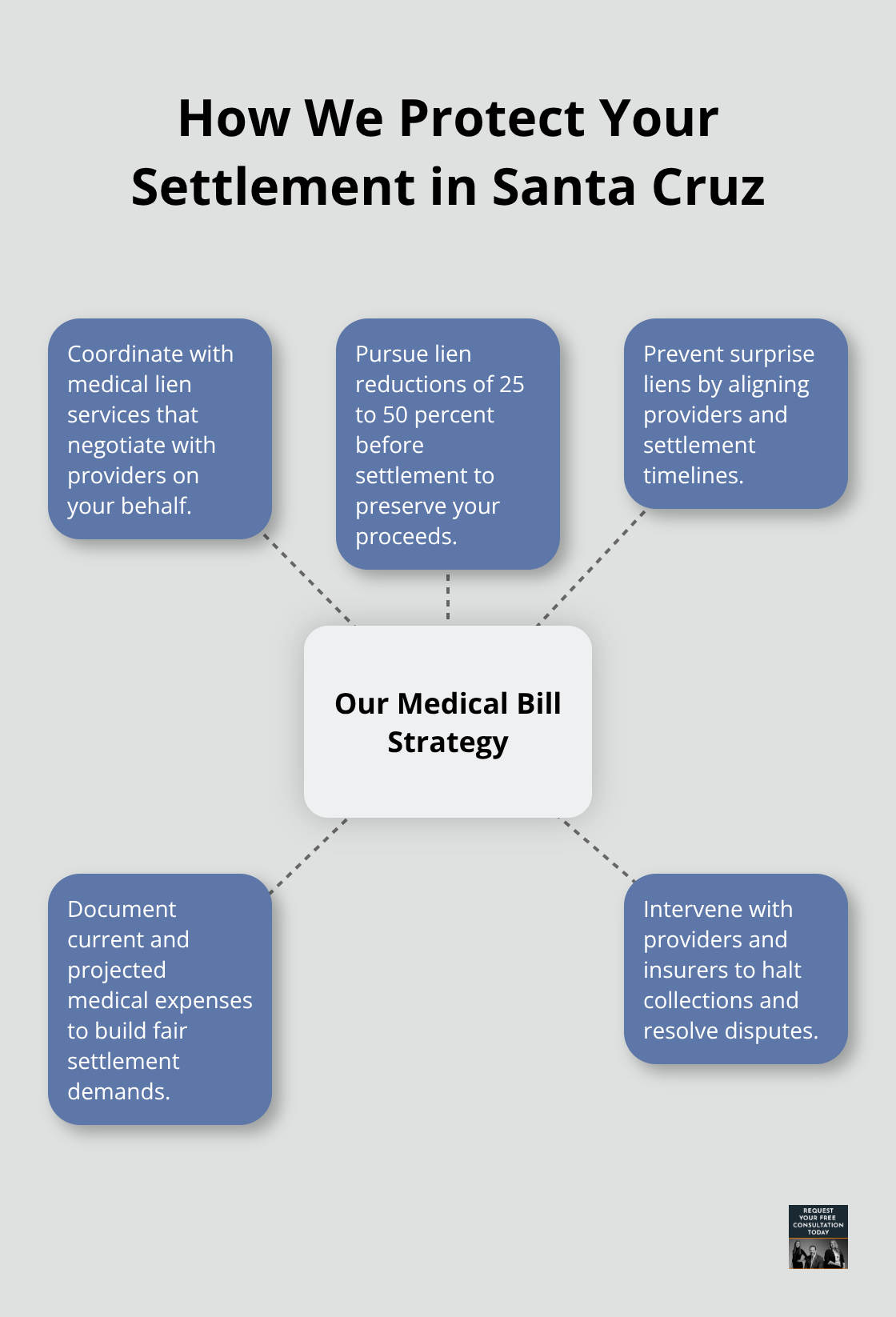
We work with your healthcare providers to document current and projected expenses, then build those figures into settlement demands so you’re not left short-handed.
Addressing Billing Issues During Recovery
Many accident victims accept settlements far below their actual medical needs because they don’t understand what costs they’ll face months or years down the road. If billing issues arise during your recovery, we intervene directly with providers and insurance companies to halt collection efforts and resolve disputes. Your focus stays on healing while we manage the financial complexities that could otherwise derail your recovery (and drain your settlement). We make certain your settlement covers not just past medical bills but also ongoing treatment, physical therapy, and any long-term care your injuries require.
Final Thoughts
Medical bills in Santa Cruz don’t have to control your financial future after an accident. You now have concrete strategies to negotiate with providers, understand how medical liens work in your favor, and access payment plans that fit your situation. These tools put real control back in your hands rather than leaving you at the mercy of whatever providers demand.
We at Schaar & Silva LLP handle the legal and financial complexities while you focus on healing. Our team coordinates with your healthcare providers, works with medical lien services to reduce what you owe, and builds settlements that cover both current and future medical expenses. When billing issues arise, we intervene directly to stop collection efforts and resolve disputes so you can concentrate on recovery.
Contact Schaar & Silva LLP to discuss your accident and medical bills today. Our team understands Santa Cruz County’s healthcare system and the personal injury process, giving you someone in your corner who knows exactly how to reduce what you owe and protect your financial recovery.