

A car accident in Santa Cruz County can leave you unable to work, and that lost income adds up fast. Medical appointments, recovery time, and physical limitations can keep you away from your job when you need your paycheck most.
We at Schaar & Silva LLP know that loss of wages California claims are often overlooked, yet they represent real money you’ve already lost. This guide walks you through what counts, how to calculate it, and how to get compensated.
What Counts as Lost Wages
Lost wages after a car accident extend far beyond your regular paycheck. If you cannot work due to injuries or medical appointments, every day away from the job represents money you should recover. The key is understanding exactly what qualifies as lost income so you don’t leave money on the table when filing your claim.
Your Regular Salary and Overtime
Your regular salary or hourly wages form the obvious starting point. If you earn $50,000 annually and miss three weeks of work, that amounts to approximately $2,885 in lost wages you can claim. However, many people overlook income that disappears beyond their base pay. If your job typically includes overtime and you cannot work extra hours during recovery, that qualifies as recoverable income too. Bonuses tied to your work performance, commissions on sales you would have completed, and benefits like health insurance continuation all factor into your total loss.
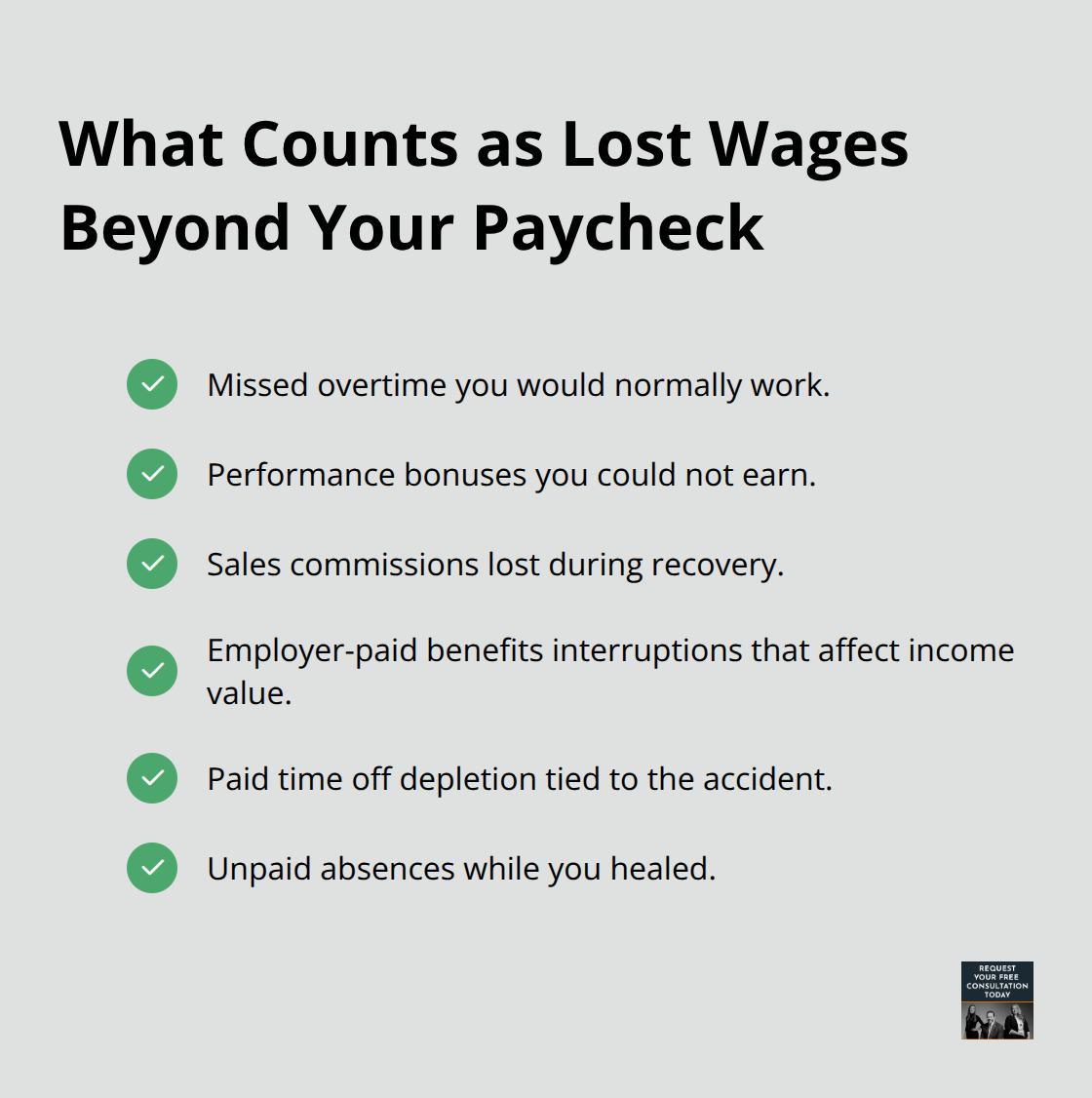
Some employers provide paid time off, but once that runs out, unpaid absences directly reduce your income. Insurance companies will not automatically count these-you need to document them clearly.
Self-Employment and Gig Economy Income
Self-employed workers and gig economy participants face a different calculation. If you drive for a rideshare company or run your own business, your lost income depends on what you would have earned during your recovery period. Pull your tax returns from the past two years and your recent income records to establish your average monthly earnings. If you typically made $4,000 per month before the accident and lost two months of work, you’re looking at an $8,000 claim. Gig workers should track their platform earnings statements, which provide detailed breakdowns of income by date. The challenge here is proving your typical earning capacity, which is why consistent records matter significantly. Insurance companies scrutinize self-employment claims more heavily, so your documentation needs to be airtight (especially when income fluctuates month to month).
What Happens When You Return to Work Partially
Many accident victims return to work before they fully recover, but at reduced capacity. If you normally work full-time but can only handle part-time hours, or if you cannot perform your regular job duties and earn less in a temporary role, that income reduction counts as lost wages. Calculate the difference between what you earned before the accident and what you earned during your partial-return period. This difference represents your actual loss and should be included in your claim. Insurance adjusters often miss these partial-work scenarios, so you must present clear evidence of your reduced earning capacity.
Building Your Documentation Strategy
The strength of your lost wages claim rests entirely on documentation. Collect pay stubs from before and after your accident, employer letters confirming your absence and typical earnings, and any records showing overtime or commission patterns. For self-employed individuals, bank statements and tax returns establish your baseline income. Medical records that correlate your treatment dates with your time away from work create a clear timeline. When you present this evidence to insurance companies, you eliminate their ability to dispute what you actually lost. The more thorough your records, the faster your claim moves toward resolution.
How to Calculate Your Lost Wages Claim
Establish Your Baseline Income
Start with your pay stubs from the three months before your accident-these establish your baseline income and show whether you receive overtime, bonuses, or commissions regularly. If you earn $20 per hour and typically work 40 hours weekly, losing two weeks of work equals $1,600 in lost wages. Request a letter from your employer stating your regular hours, hourly rate or salary, and the exact dates you missed work due to your accident. This letter carries significant weight with insurance companies because it comes directly from the source.
Calculate Wages for Complete Work Absences
For salaried employees, divide your annual salary by 52 weeks, then multiply by the number of weeks you were unable to work. Self-employed individuals should pull tax returns from the past two years and recent bank statements showing average monthly income. If you earned $5,000 monthly before the accident and lost 30 days of work, you can claim approximately $5,000. Your medical records should include appointment dates and treatment durations, which you then match against your work absence dates.
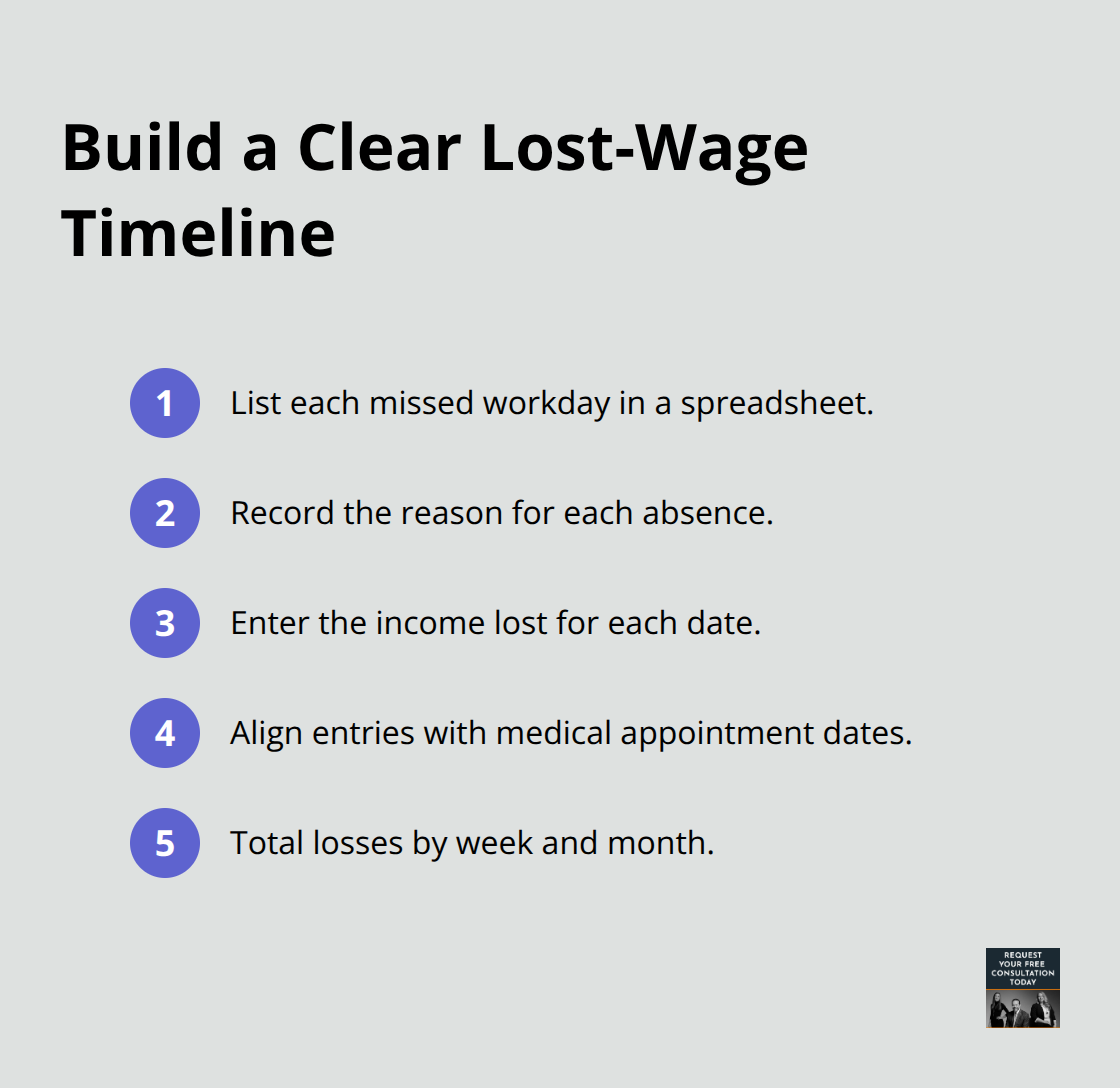
Create a simple spreadsheet listing each day you missed work, the reason (medical appointment, recovery at home, inability to perform duties), and the income you lost that day. Insurance adjusters review these timelines carefully, and gaps or vagueness in your records give them reason to deny portions of your claim. Documentation practices in wage recovery programs demonstrate how clear records impact financial outcomes-participants who maintained detailed earning records received an average of $1,285 in six-month supplements.
Document Reduced Capacity Situations
Reduced capacity situations require different calculations. If you returned to work part-time earning $800 weekly instead of your normal $1,200, document that $400 weekly difference for every week you worked at reduced capacity. Request pay stubs showing reduced hours or lower commission earnings during your recovery period. When you cannot perform your regular job duties and accept temporary lower-paying work, calculate the difference between your pre-accident earnings and your temporary earnings for each pay period.
Collect contemporaneous evidence-emails to your employer about restrictions, medical notes stating work limitations, or supervisor confirmations of reduced hours. Insurance companies dispute partial-work losses more frequently than complete absences, so your documentation must be undeniable. Gather any performance reviews or job descriptions that outline your normal responsibilities, then obtain medical records stating which activities you could not perform. This combination proves the causal link between your injury and your reduced earning capacity.
Present Your Evidence Systematically
Present this evidence systematically to your insurance company, with a clear calculation showing the total income difference over your recovery period. Insurance adjusters scrutinize self-employment claims more heavily, so your documentation needs to be airtight (especially when income fluctuates month to month). The strength of your lost wages claim rests entirely on documentation, and the more thorough your records, the faster your claim moves toward resolution. Once you’ve compiled your evidence, you’ll need to understand what insurance companies will actually cover and how to build a case that withstands their scrutiny.
Getting Compensated for Lost Wages in Santa Cruz County
What Insurance Companies Cover and Reject
Insurance companies in California operate under strict rules about what they will and will not cover for lost wages, and understanding these boundaries determines whether you receive full compensation or face a partial denial. California law requires insurers to pay for income you actually lost due to the accident and your resulting injuries, but they reject claims that lack solid documentation or that stretch beyond what you can prove. Most insurers cover lost wages from complete work absences when you provide medical records showing treatment dates and employer letters confirming the dates you missed. However, they frequently deny or reduce claims for partial-work situations, reduced earning capacity, or self-employment income unless you present exceptionally clear records. The specific amount they cover depends entirely on what you submit as evidence. If you claim $5,000 in lost wages but only provide three pay stubs and a vague email from your boss, the adjuster will likely approve only $2,000 and move on.
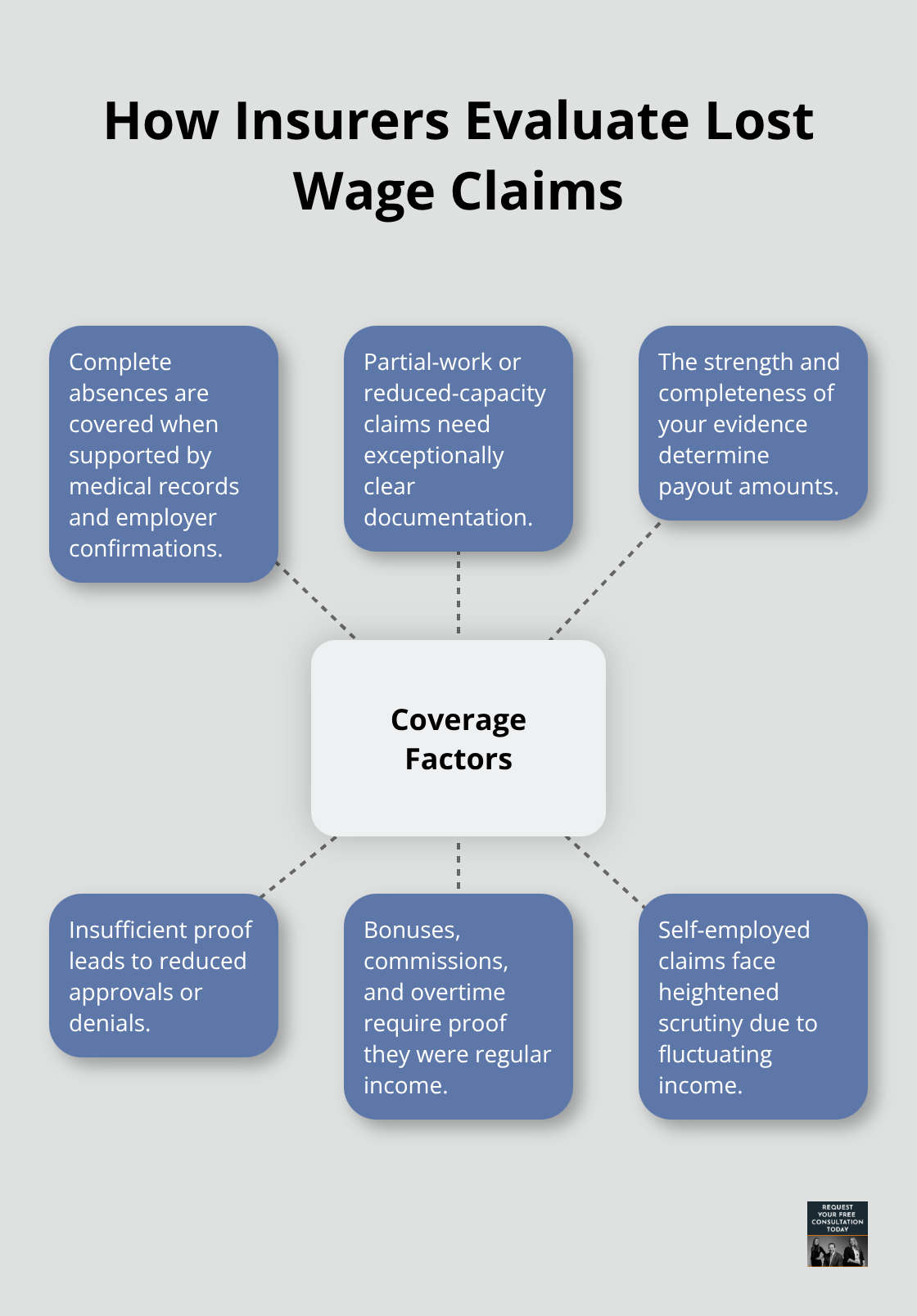
Insurance companies also resist covering bonuses, commissions, or overtime unless your pay stubs demonstrate these were regular parts of your income before the accident. Self-employed individuals face the harshest scrutiny because fluctuating monthly income makes it easier for adjusters to argue your loss was less than you claimed.
Organize Your Documentation Trail
A comprehensive file removes all doubt about what you lost. Start with your last three months of pre-accident pay stubs, your employer’s written statement confirming your regular hours and earnings, all medical records with appointment dates and durations, and a detailed timeline showing which dates you missed work and why. For self-employed workers, include your most recent two years of tax returns plus monthly bank statements from the year before your accident, which establish your normal earning pattern. Request your employer provide a letter stating your hourly rate or salary, typical weekly hours, whether overtime was available, and the exact dates you were absent from work due to your accident and recovery. This letter carries significant weight because it comes from the source and eliminates the adjuster’s ability to question your baseline income. Create a simple spreadsheet that lists each day missed, the reason, and the income amount lost that day, then total it by month. Insurance adjusters handle hundreds of claims monthly, and organized, complete files move faster than scattered documents.
Present Your Claim Strategically
When you submit your claim, include a cover letter that walks the adjuster through your documentation in logical order, pointing out where each piece of evidence appears and what it proves. This approach (organizing evidence before submission) prevents adjusters from overlooking critical information that supports your losses. Many claimants in Santa Cruz County underestimate their wage recovery because they submit incomplete documentation or fail to account for all income sources they lost. With proper presentation of your evidence, you recover what you actually lost rather than settling for whatever the adjuster initially offers. Medical lien services can facilitate bill payment during your recovery, which helps protect your income while your case progresses. When you work with a legal team to present your claim, they organize your documentation in the format insurers prefer, identify gaps in your evidence before submission, and respond to denial letters with the specific facts that prove your losses.
Final Thoughts
Recovering lost wages after a car accident in Santa Cruz County requires you to document what you earned before the crash, calculate exactly what you lost during recovery, and present that evidence clearly to your insurance company. Most accident victims leave money on the table because they miss income sources, fail to organize their records, or underestimate what they can claim. Your regular paycheck is only the beginning-overtime, commissions, bonuses, and reduced earning capacity all count, and solid documentation determines your recovery amount.
Insurance adjusters process hundreds of claims monthly and routinely deny or reduce amounts when documentation appears incomplete or disorganized. They know most accident victims won’t push back, so they offer less than what’s actually owed. When you work with a legal team, they identify every income source you lost, organize your evidence in the format insurers prefer, and respond to denials with the specific facts that prove your losses.
Contact Schaar & Silva LLP to review your loss of wages California claim and move toward full financial recovery. The sooner you document your losses and present them properly, the faster you can focus on healing.