
Getting into a car accident in Santa Cruz County is stressful enough without the added confusion of dealing with insurance claims. An insurance settlement in Santa Cruz requires understanding multiple steps, from filing your claim to negotiating with adjusters.
We at Schaar & Silva LLP have helped many accident victims navigate this process and recover fair compensation. This guide walks you through what to expect and how to protect your interests.
How Insurance Settlement Works After an Auto Accident
The Settlement Timeline in Santa Cruz County
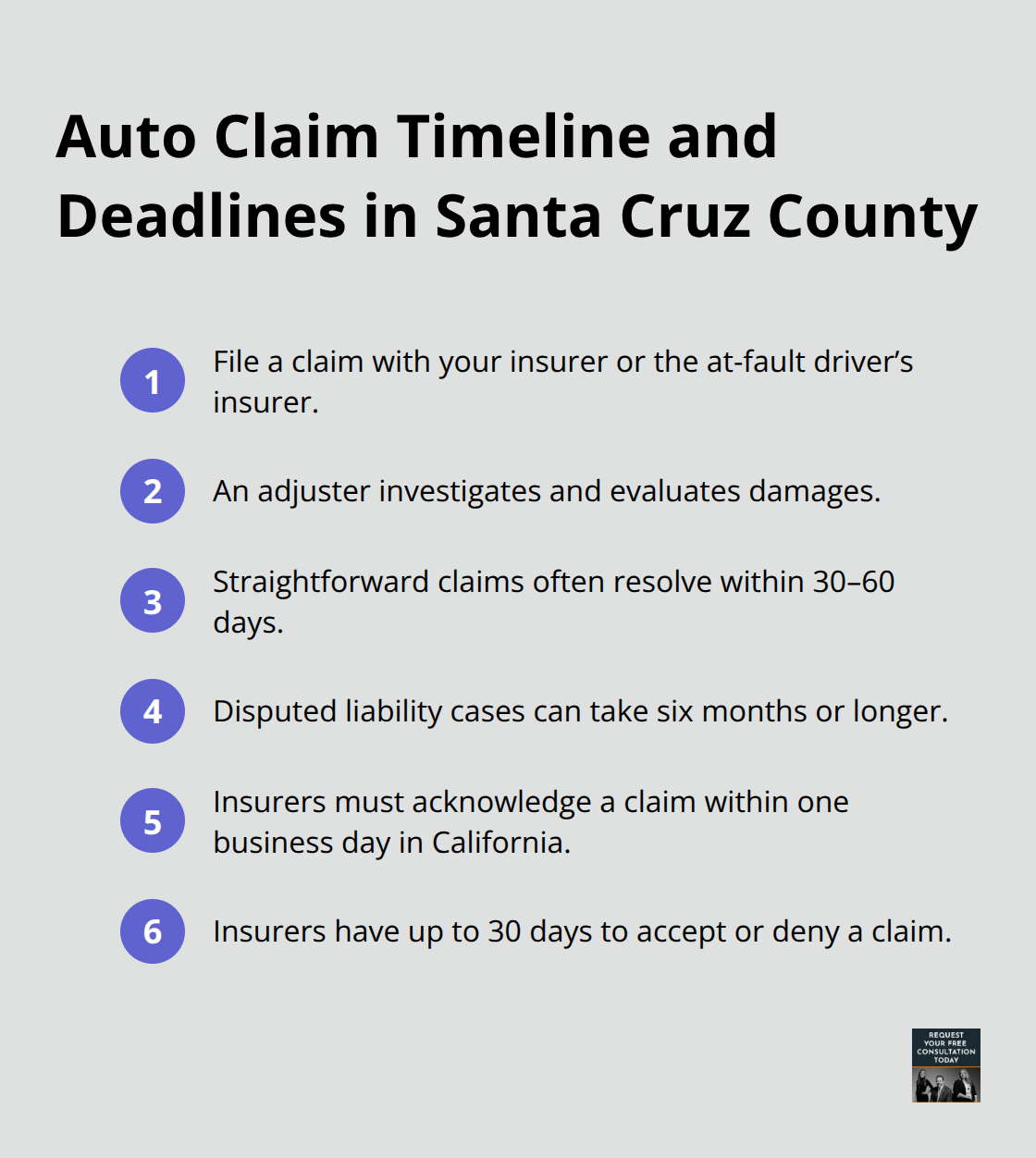
After an accident in Santa Cruz County, the insurance settlement process follows a fairly predictable path, though timelines vary significantly depending on claim complexity. Most straightforward claims resolve within 30 to 60 days, according to data from the National Association of Insurance Commissioners, but disputed liability cases can stretch to six months or longer. The process starts when you file a claim with either your own insurance company or the at-fault driver’s insurer, which then assigns an adjuster to investigate.
What Adjusters Request and Why It Matters
The adjuster will request documentation including the police report, medical records, repair estimates, and photos of vehicle damage. California law requires insurers to acknowledge your claim within one business day and begin their investigation promptly, though they have up to 30 days to accept or deny your claim. The adjuster’s job is to determine fault and calculate the value of your damages, which includes medical expenses, vehicle repairs, lost wages, and pain and suffering. This is where most accident victims run into trouble: insurers frequently undervalue claims on the first offer, banking on injured people accepting less than they deserve because they’re desperate for quick resolution.
Building a Strong Documentation File
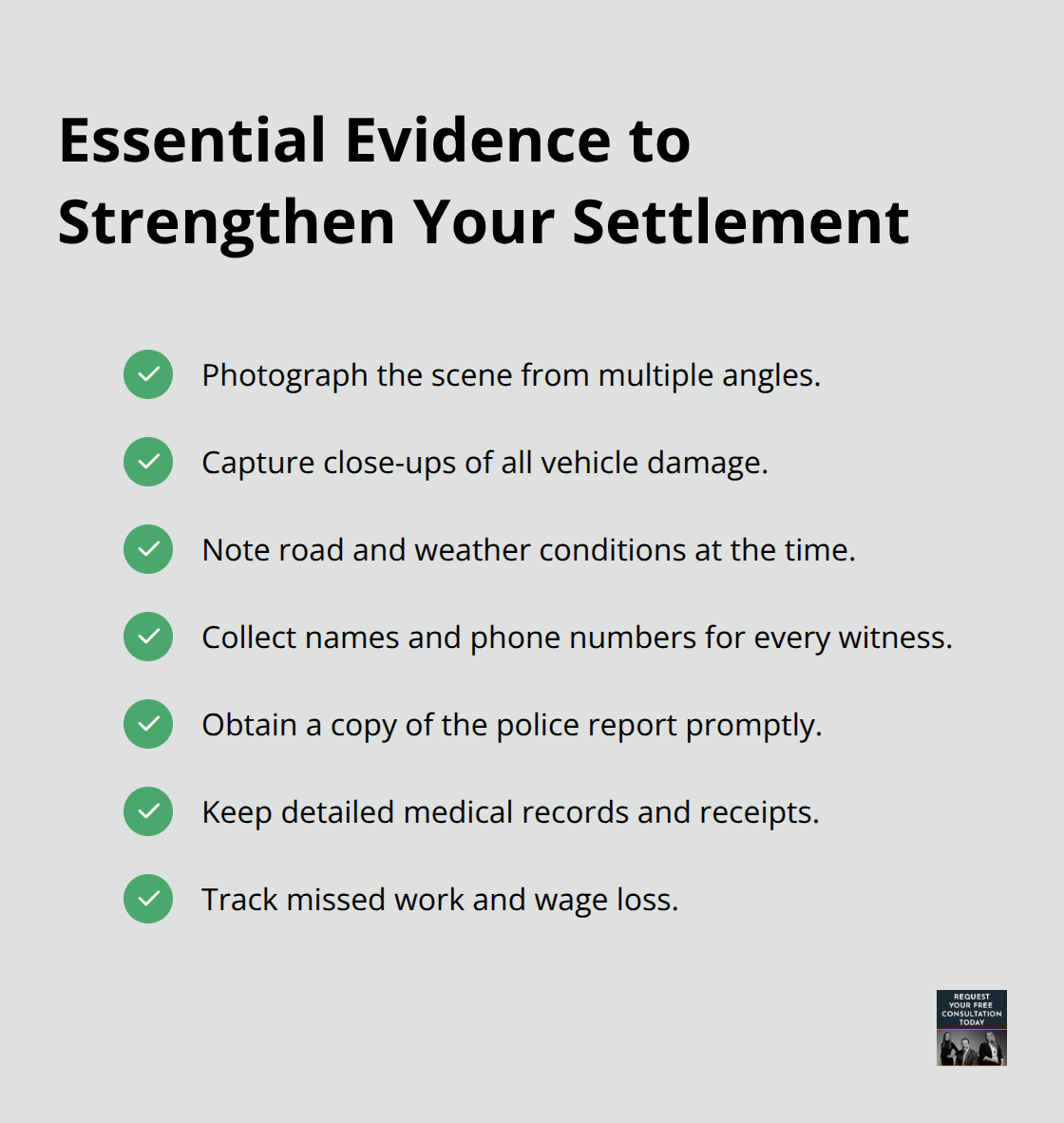
Getting organized with documentation immediately after your accident dramatically improves your settlement outcome. Photograph the accident scene from multiple angles, capture vehicle damage, note road conditions and weather, and collect contact information from witnesses before leaving the scene. Obtain a copy of the police report within days of the accident, as this document carries significant weight with adjusters. Keep meticulous records of every medical appointment, treatment, and expense, including receipts for medications, physical therapy, and transportation to appointments. Document lost income by obtaining a letter from your employer stating dates missed and wages lost.
Insurance adjusters respond to concrete evidence, not estimates or approximations. Santa Cruz County accident victims who present organized, comprehensive documentation typically receive settlement offers 20 to 30 percent higher than those who submit incomplete files. The difference between a thorough file and a scattered one often determines whether you recover fair compensation or accept far less than your claim warrants.
When Professional Guidance Becomes Necessary
If you believe the adjuster’s offer significantly undervalues your claim, professional guidance can clarify whether negotiation or legal action makes sense for your situation. The next section covers the common obstacles that prevent fair settlements and how to overcome them.
Common Challenges in Auto Accident Settlements
Insurance companies routinely deny or minimize claims in Santa Cruz County using tactics that most accident victims don’t anticipate. The three biggest obstacles that prevent fair settlements are disputed fault determinations, deliberate undervaluation of your damages, and aggressive pushback on medical expenses and lost wages. Understanding how these challenges work gives you the ability to counter them effectively.
Fault Disputes Cost You Money
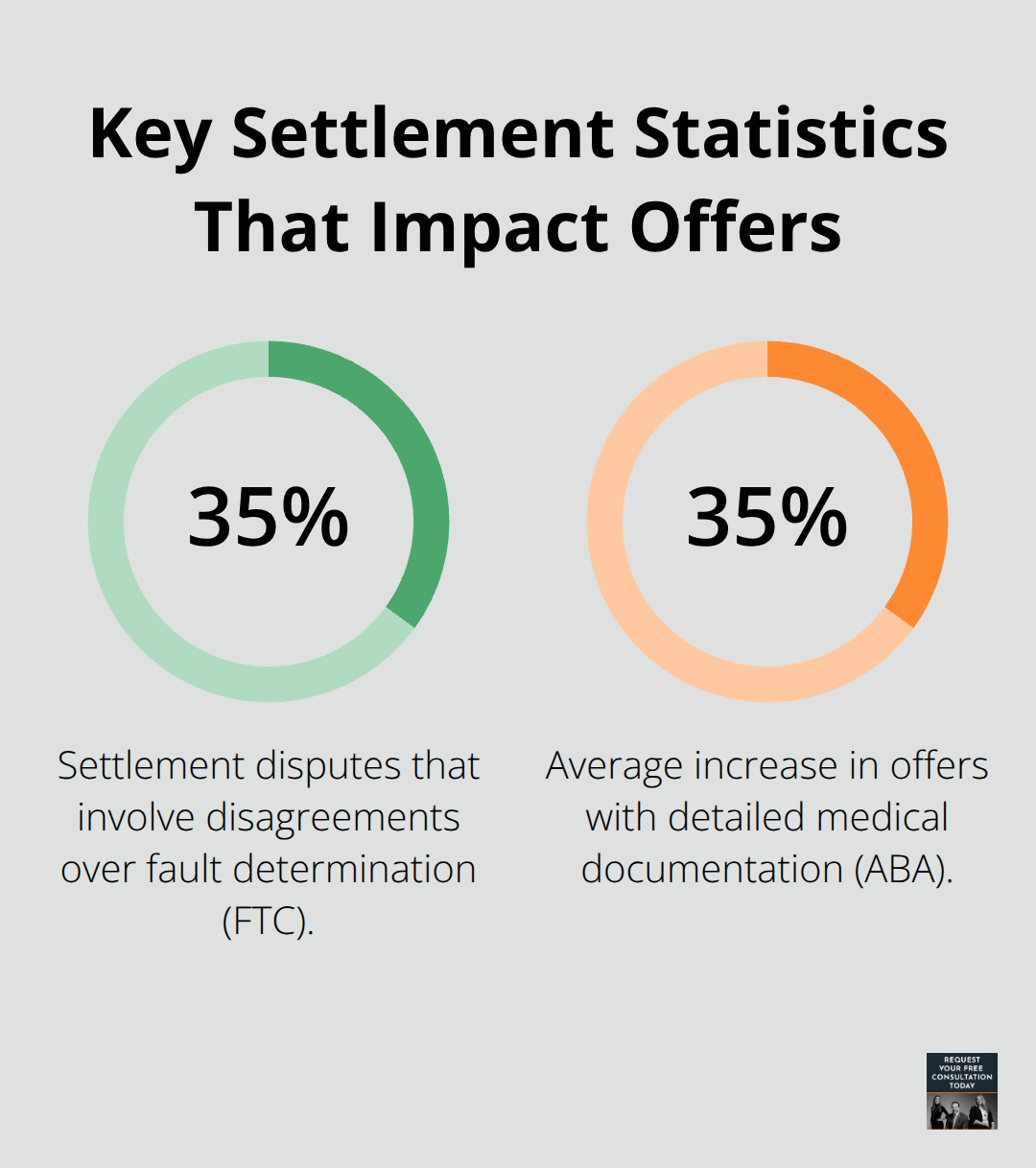
Fault disputes occur frequently in Santa Cruz County accidents because insurers profit when they can shift blame away from their policyholder. California’s comparative negligence law means even if you’re partially at fault, you can still recover damages, but insurers exploit gray areas to argue you were more responsible than you actually were. If a witness saw the accident differently than the police report indicates, or if road conditions contributed to the collision, adjusters will seize on these ambiguities to reduce their payout. The Federal Trade Commission reports that approximately 35 percent of settlement disputes involve disagreements over fault determination.
Insurers Systematically Undervalue Claims
Undervaluation happens because insurers know most accident victims lack professional valuation skills and will accept lowball offers to resolve claims quickly. An adjuster’s first settlement offer typically represents only 40 to 60 percent of your claim’s actual value, according to data from the American Association for Justice. They’re betting you’ll accept rather than negotiate, which is why organized documentation and firm pushback matter tremendously.
Medical and Wage Loss Disputes Create the Biggest Headaches
Medical bills and lost wages create the most contentious disputes because insurers question whether your treatment was necessary or your time away from work was legitimate. Insurance companies frequently deny payment for physical therapy, mental health counseling, or ongoing treatment, arguing these services were excessive or unrelated to your accident. Wage loss disputes arise when adjusters demand extensive employer documentation or claim you could have worked despite your injuries. Santa Cruz County victims often accept reduced settlements rather than endure months of correspondence with adjusters over medical necessity.
The reality is that insurers employ teams of medical reviewers trained to find reasons to deny coverage, while most injured people navigate these battles alone. This imbalance creates a significant disadvantage for accident victims. When an adjuster denies treatment as unnecessary or disputes your wage loss calculations, having someone who understands insurance company tactics makes the difference between accepting pennies on the dollar and recovering what you actually deserve. The next section covers specific strategies that counter these tactics and help you negotiate stronger settlements.
How to Build a Stronger Settlement Case
Photograph and Document the Accident Scene Immediately
The gap between what insurers initially offer and what your claim actually deserves comes down to one factor: the quality of evidence you present. Santa Cruz County accident victims who take specific actions immediately after their accident and maintain rigorous documentation throughout the claims process recover significantly more compensation than those who handle things passively. The first hours after an accident are critical because evidence disappears quickly. Photograph the accident scene from multiple angles showing vehicle positions, road markings, traffic signals, and surrounding area conditions. Capture close-ups of all vehicle damage, including minor scratches and dents that adjusters will later claim are unrelated to your accident.
If weather conditions contributed to the collision, photograph wet pavement, fog, or debris. Collect names and phone numbers from every witness, not just those who seem most favorable to your position. Witnesses often become unreachable within days, and their statements carry substantial weight with adjusters. Request a copy of the police report within one week because this official document establishes the responding officer’s initial fault determination and accident reconstruction findings.
Obtain Detailed Medical Records That Link Your Injuries to the Accident
Medical documentation determines whether you recover for pain and suffering or accept a minimal settlement offer. After receiving medical treatment, request detailed records from every healthcare provider including diagnosis codes, treatment dates, and clinical notes explaining how your injuries connect to the accident. Insurance companies frequently deny pain and suffering claims when medical records lack specific language linking your symptoms to accident-related trauma.
Ask your physician to document functional limitations, such as inability to work, reduced mobility, or sleep disruption caused by your injuries. The American Bar Association reports that accident victims with detailed medical documentation receive settlement offers averaging 35 percent higher than those with minimal records.
Present Evidence Methodically to Adjusters
When negotiating with adjusters, present evidence methodically rather than emotionally. Organize your documentation chronologically and reference specific evidence when countering lowball offers. Adjusters respond to organized pressure backed by concrete facts far more readily than they respond to frustration or anger. If an adjuster denies payment for treatment, respond with your physician’s clinical notes explaining medical necessity. When they undervalue your wage loss, provide your employer’s written confirmation of missed work and lost income.
Most adjusters increase their offers when faced with comprehensive, well-organized documentation because they recognize the victim has prepared a case that would survive litigation if necessary. This systematic approach transforms your position from a desperate accident victim into someone who understands their claim’s actual value.
Final Thoughts
The path to fair compensation after a Santa Cruz auto accident requires organized documentation, firm negotiation, and knowing when professional help becomes necessary. You’ve now seen how insurance adjusters operate, what tactics they use to minimize payouts, and exactly how to counter their lowball offers with concrete evidence. The accident victims who recover the most money treat their claim like a business negotiation rather than a favor they’re asking from their insurance company.
Your documentation file represents your most powerful tool in an insurance settlement Santa Cruz case. When you photograph the scene, collect witness statements, maintain medical records, and track lost wages methodically, you transform yourself from a desperate victim into someone with leverage. Adjusters recognize this preparation and respond by increasing their offers significantly, often by thousands of dollars.
However, some situations demand more than documentation and negotiation skills. If the adjuster denies your claim entirely, disputes fault aggressively, or offers substantially less than your damages warrant, we at Schaar & Silva LLP can help you navigate these obstacles. Contact us to discuss whether your claim needs professional representation or if negotiation strategies alone will get you to a fair settlement.