

After a car accident in Santa Cruz, most people focus on getting medical help and dealing with insurance calls. What they often miss is that injury documentation Santa Cruz can make or break your claim.
We at Schaar & Silva LLP have seen countless cases where poor documentation cost people thousands in compensation. The difference between a strong claim and a weak one usually comes down to what you wrote down, photographed, and kept organized from day one.
What to Document Right After Your Accident
Photograph Vehicle Damage and the Scene
The first 30 minutes after a Santa Cruz car accident determine whether your claim succeeds or fails. Your phone becomes your most powerful tool in these critical moments. Photograph every vehicle involved from multiple angles-capture the overall scene first, then close-ups of all damage including bumpers, doors, windows, and undercarriage areas. Walk around each vehicle and record video footage while narrating what you see so the audio establishes date and time. Include wide shots showing the accident location, street names visible in the frame, traffic signals, and road markings. This visual evidence becomes invaluable because insurance adjusters often dispute damage severity months after the incident, and your photos create an undisputed record from day one.
Document Environmental and Road Conditions
Weather conditions, road surface quality, and visibility matter far more than most accident victims realize. Photograph wet pavement if it rained, document potholes or debris in the roadway, and capture whether street lights functioned if the accident occurred at dusk or night. These details shift liability in ways that vehicle damage alone cannot. Photograph street signs, traffic signals, and road condition indicators that existed at the time of collision. Note the positions of all vehicles after impact, the direction of vehicle travel, and any skid marks or debris scattered across the roadway.
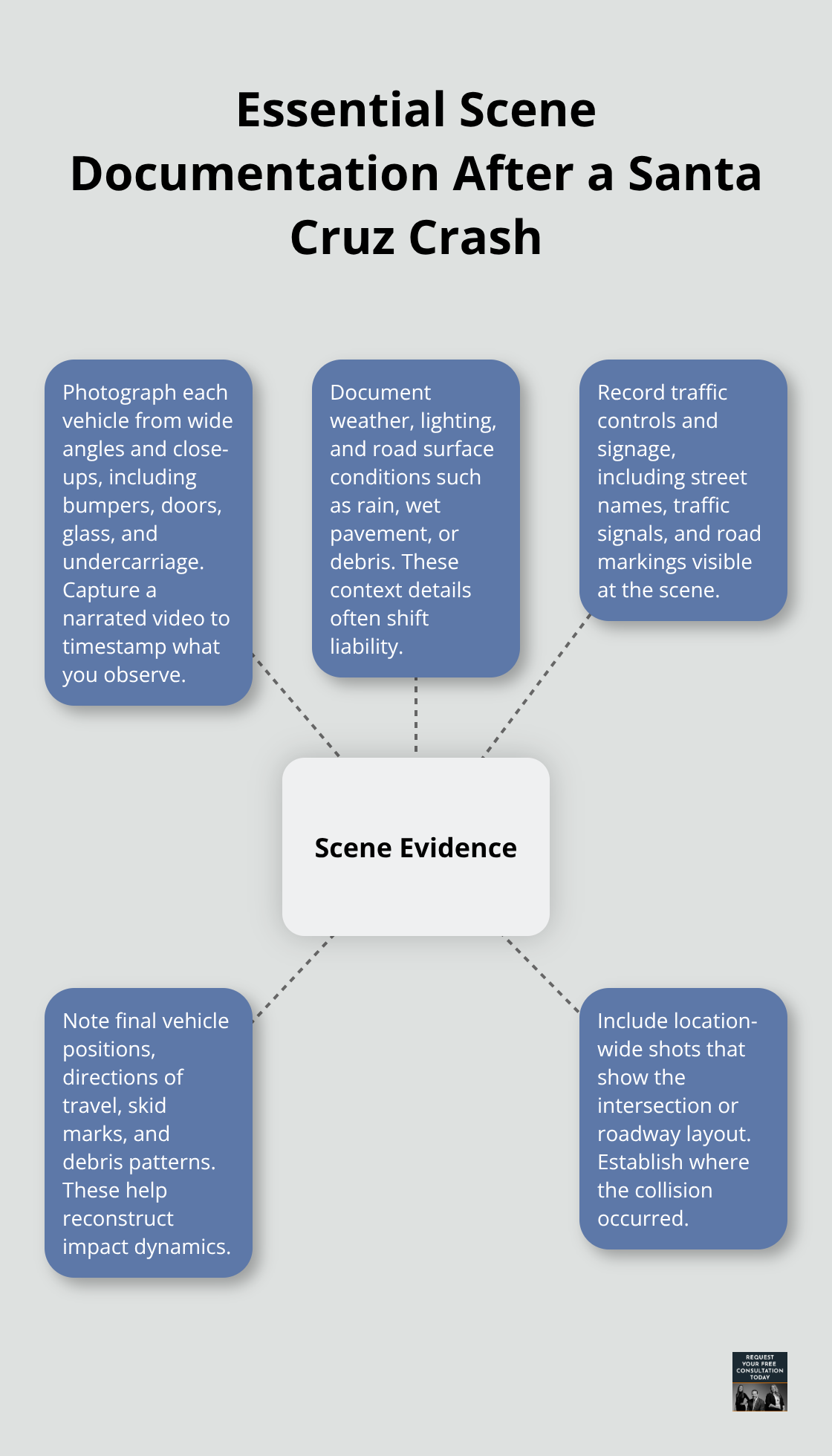
This scene documentation takes 15 minutes maximum but prevents months of disputes later.
Collect Witness Information Immediately
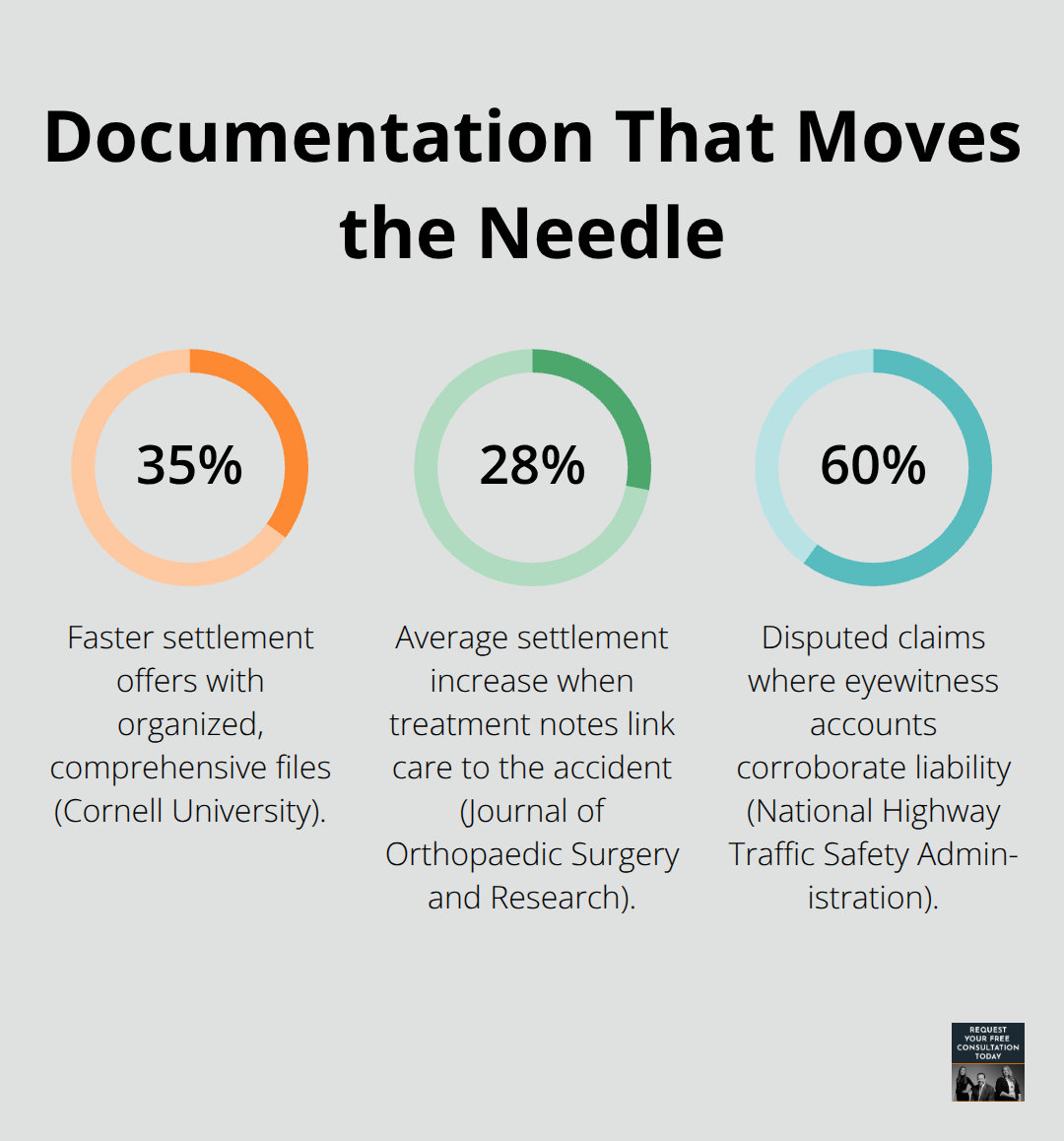
Get the names, phone numbers, and addresses of every witness at the scene, including passengers in other vehicles and nearby pedestrians. Ask witnesses to describe what they saw before, during, and after impact. Request their email addresses too, since some people become unreachable weeks later when insurers try to verify statements. If a witness seems hesitant, explain that you’re simply documenting their account for accuracy purposes. Police reports in California often contain witness information, but relying solely on that document leaves gaps in your evidence. The National Highway Traffic Safety Administration data shows that eyewitness accounts corroborate liability in approximately 60% of disputed claims, making direct witness contact essential.
With scene documentation complete, your next priority shifts to the medical side of your claim. The records you gather over the coming weeks and months will prove the extent of your injuries and connect them directly to the accident.
Building Your Medical Evidence File
Request Records Immediately After Your Accident
Start collecting medical records the moment you receive emergency care, not weeks later when your claim stalls. Request records directly from every healthcare provider you visit, including emergency rooms, urgent care centers, primary care physicians, physical therapists, and specialists. Most California hospitals must provide records within 15 business days under state law, though this timeline often stretches longer if you wait months to request them. We recommend obtaining records within two weeks of your accident while details remain fresh and while medical staff can clearly connect your treatment to the collision. Create a spreadsheet tracking each provider’s name, contact information, date records were requested, and date received.
Document Every Medical Appointment and Treatment
Insurance adjusters scrutinize gaps in medical treatment records because they claim any break in care means your injuries weren’t serious. You must document every appointment regardless of duration, including telehealth visits, follow-up calls with nurses, and canceled appointments you attempted to attend. The Cleveland Clinic reports that patients with continuous documented treatment receive settlements averaging 40% higher than those with sporadic records. Photograph or scan every receipt, bill, and explanation of benefits statement from every medical provider. Healthcare billing contains errors in approximately 25% of invoices according to the American Medical Association, so comparing your bills against itemized statements catches duplicate charges and incorrect procedures that could inflate or misrepresent your damages.
Organize Records Chronologically and Securely
Keep original documents in a fireproof safe and maintain digital copies on cloud storage. Insurance companies routinely request medical records multiple times throughout your claim, and you need rapid access to verify what was already submitted versus what remains outstanding. Organize your records chronologically in folders labeled by provider and date of service, then create a summary document listing every treatment date, provider name, treatment type, and cost.
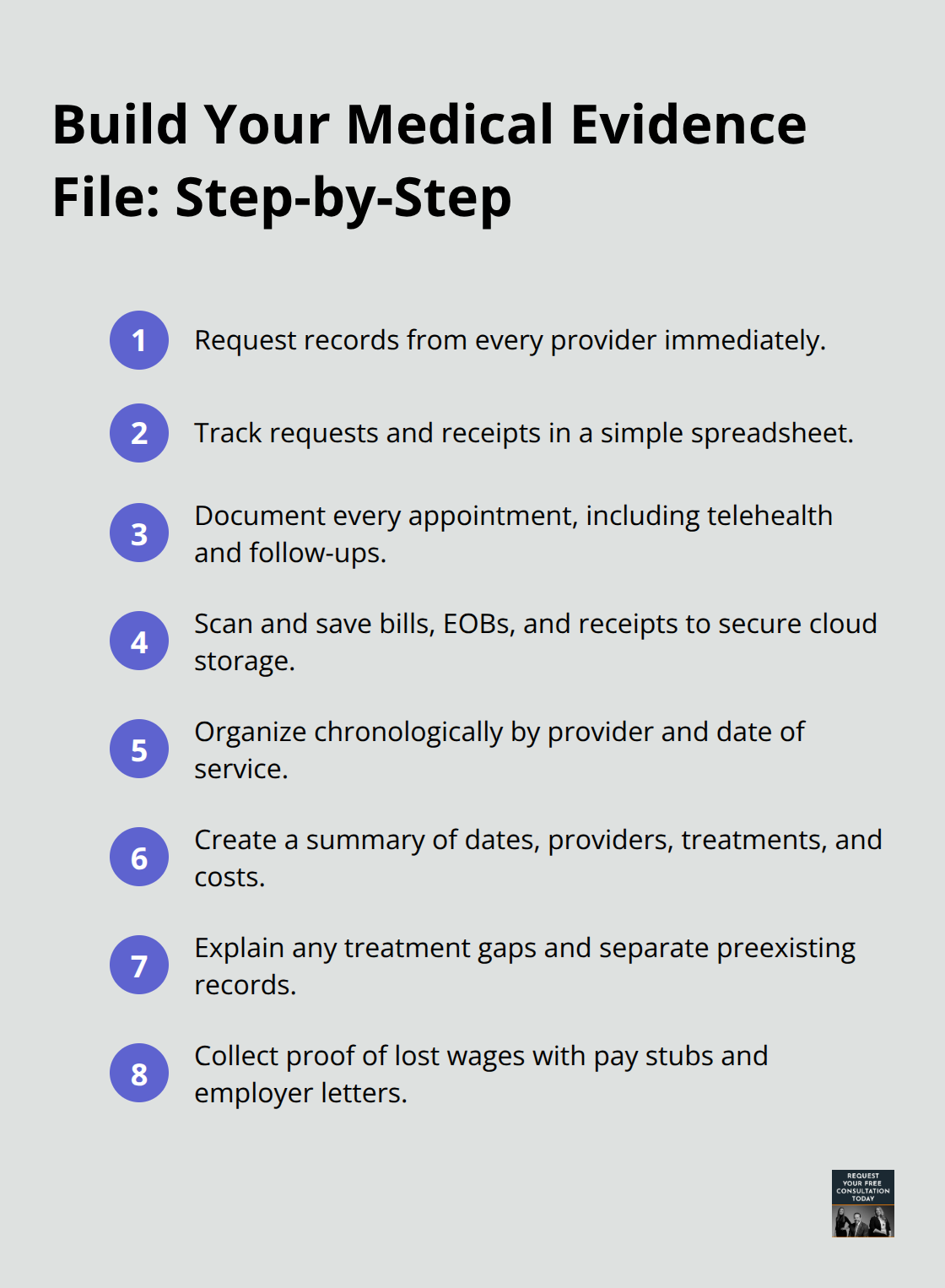
This summary becomes invaluable during settlement negotiations because adjusters can instantly verify the full scope of your medical response to the accident rather than hunting through hundreds of individual documents.
Address Treatment Gaps and Preexisting Conditions
Note any periods when you couldn’t afford treatment or delayed appointments due to financial hardship, then explain these gaps in writing attached to your file. These explanations prevent adjusters from weaponizing treatment breaks against you. If you received treatment before the accident for a preexisting condition, clearly separate those records from post-accident treatment to prevent insurers from claiming your current injuries stem from old problems. Request itemized bills rather than summary statements because itemization reveals exactly what services you received and their individual costs.
Document Lost Wages and Economic Damages
If you’re unemployed or underemployed due to accident injuries, document lost wages through employer statements, tax returns, and pay stubs. The American Journal of Public Health found that accident victims lose an average of 18 days of work during the first year, representing significant economic damages beyond medical expenses. Your organized file transforms from a pile of paperwork into compelling evidence that directly connects your injuries to the Santa Cruz accident and quantifies your actual losses. With your medical records properly assembled, you now possess the foundation needed to demonstrate how the accident affected your health and finances-evidence that becomes critical when you move into settlement discussions with insurance adjusters.
Why Your Documentation Matters in Settlement Talks
How Complete Records Accelerate Settlement Offers
Your organized file transforms into leverage during settlement negotiations because insurance adjusters operate on strict timelines and budget constraints. When you present a complete chronological record of every medical visit, bill, and treatment detail within days of requesting settlement discussions, adjusters face immediate pressure to review your claim rather than delay tactics. Most insurance companies process claims faster when documentation is thorough because incomplete files require follow-up requests that extend timelines by weeks or months. The Cornell University study on settlement negotiations found that claimants with organized, comprehensive documentation received settlement offers 35% faster than those with scattered records.
Adjusters know that organized claimants are prepared for litigation, which motivates them to settle rather than invest resources in defending a weak position in court. Your spreadsheet of medical providers, treatment dates, and costs eliminates the excuse that documentation is unavailable or unclear. When an adjuster asks for proof of a specific treatment, you respond within hours rather than days, demonstrating that your claim is serious and professionally managed.
Establishing the Connection Between Accident and Treatment
Insurance companies scrutinize the connection between your accident and each medical treatment, so your documentation must establish this link explicitly. Write brief notes next to each medical record explaining how that treatment addresses injuries caused by the Santa Cruz accident rather than preexisting conditions. For example, if you visited physical therapy three times weekly for eight weeks, document that the therapist specifically treated whiplash injuries from the collision rather than general back pain. The Journal of Orthopaedic Surgery and Research reports that detailed treatment notes connecting injuries to the specific accident event increase settlement values by an average of 28% compared to generic medical records alone. Adjusters reject vague connections between accidents and treatment, but specific documentation showing that your orthopedic specialist diagnosed a rotator cuff tear directly caused by impact forces becomes nearly impossible to dispute.
Protecting Against Common Insurance Tactics
Your file also protects you against the common insurance tactic of claiming you delayed treatment unnecessarily or visited providers too frequently. When your records show consistent treatment schedules based on medical recommendations rather than random visits, adjusters cannot argue that your injuries were minor or that you pursued excessive care. This documentation transforms settlement negotiations from a conversation where the adjuster controls the narrative into one where your evidence dictates the discussion. Insurance companies frequently challenge treatment frequency and duration, but your organized records (with dates, provider notes, and medical justifications) eliminate these arguments before they start. The strength of your documentation determines whether you negotiate from a position of power or weakness during these critical conversations.
Final Thoughts
The documentation you gather after a Santa Cruz car accident determines whether your claim succeeds or fails. From the moment the collision happens, your photos, witness statements, and medical records become the foundation of your entire case. Insurance adjusters cannot dispute what you documented on day one, which is why the first 30 minutes matter more than most people realize.
Organization transforms scattered paperwork into powerful evidence that accelerates settlement offers. When you maintain a chronological file with medical records, treatment dates, provider contact information, and itemized bills, you eliminate the delays and disputes that typically extend claims by months. Your organized injury documentation Santa Cruz demonstrates that you take your case seriously and are prepared for litigation if necessary.
If you’re navigating this process alone, Schaar & Silva LLP can guide you through injury documentation and handle the legal complexities while you focus on recovery. The team assists with medical bill navigation, property damage evaluation, and connects you with the support you need during this difficult time.