
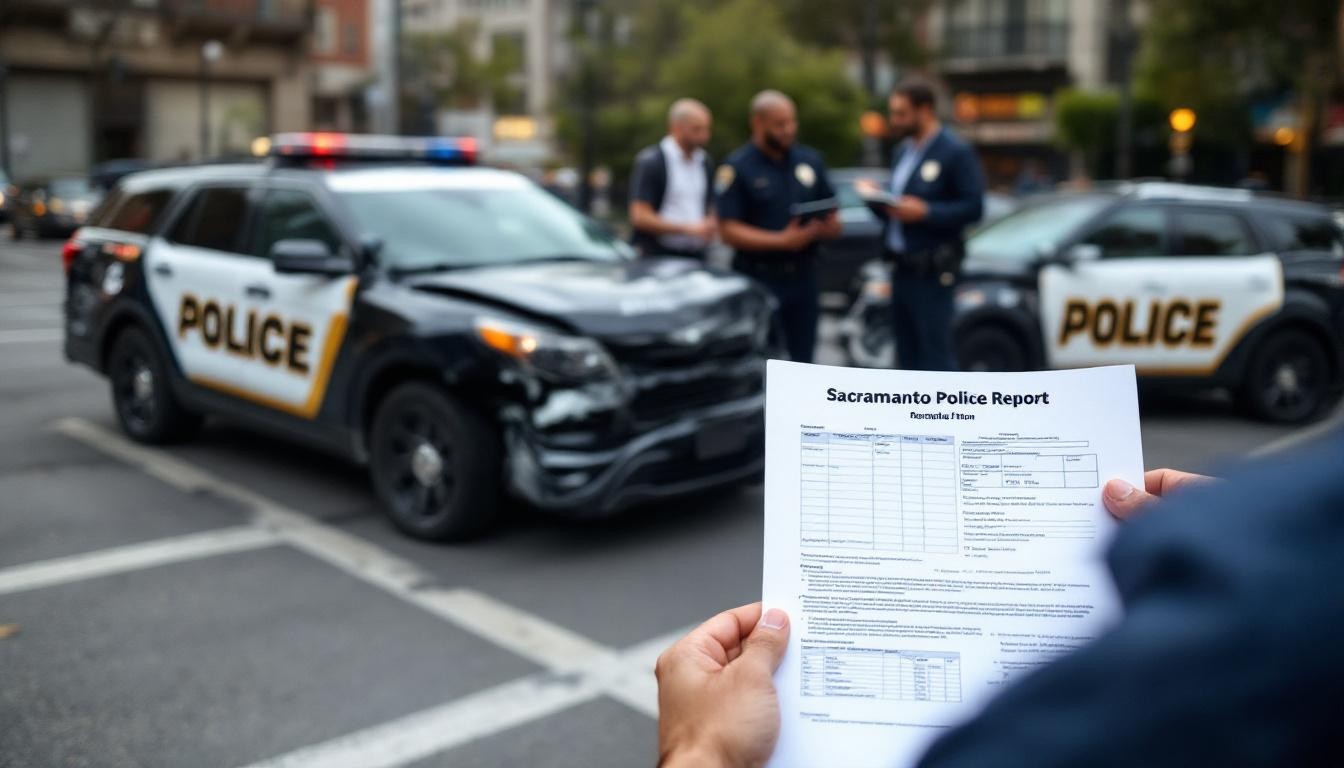
A Sacramento police report is one of the most important documents after a collision. Insurance companies rely on these official records to determine fault, and having the right documentation can make or break your injury claim.
At Schaar & Silva LLP, we’ve helped countless clients navigate the process of obtaining and using police reports effectively. This guide walks you through exactly what you need to do.
Getting Your Sacramento Police Report
Request Your Report from Sacramento Police Department
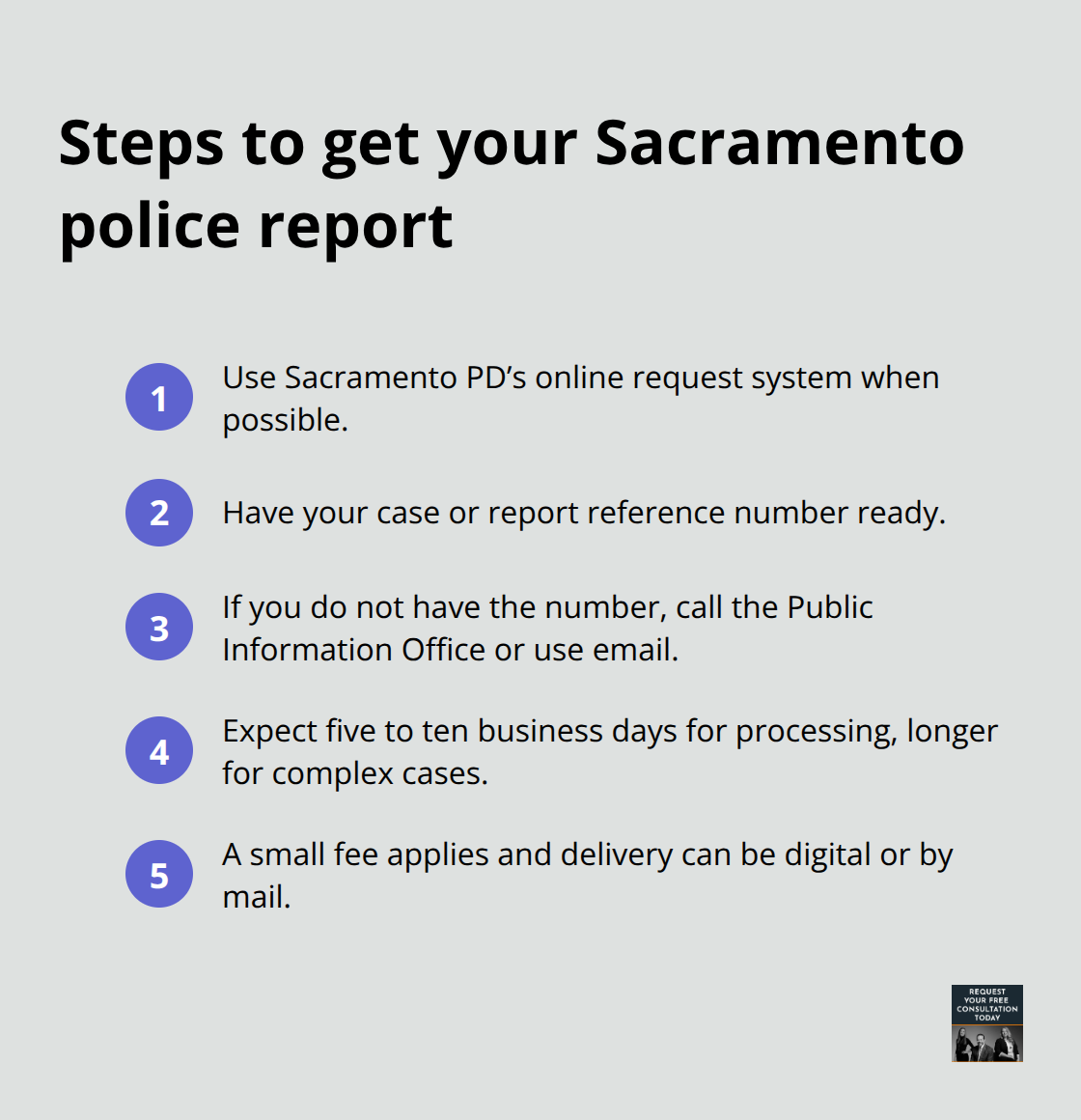
After a collision, the Sacramento Police Department processes reports differently depending on the incident type. If officers responded to the scene and filed a report, you can request an official copy through the department’s Police Records section. The fastest approach uses Sacramento PD’s online request system. You’ll need your case number or report reference number, which you should have received at the scene or via email confirmation.
If you don’t have this number, contact the SacPD Public Information Office at 916-808-5471 (non-emergency line) or use their email option for assistance. Processing times typically range from five to ten business days, though complex cases may take longer. A small fee applies for obtaining a copy, and you receive the official documentation either digitally or by mail depending on your request method.
Understanding When Reports Are Filed
Not all collisions generate a full investigative police report. Sacramento PD takes traffic collision reports at the scene only if injury, DUI involvement, a hit-and-run, or city property damage occurred. For minor collisions without these factors, you can file an online collision report with SPD for documentation and insurance purposes, though these reports remain uninvestigated.
The online option requires your collision time and location, vehicle license plate, driver license number, insurance carrier and policy number, and contact information for all parties involved. File this report as soon as possible after the collision. Online and counter reports serve documentation purposes only and won’t be used for investigation, so they’re separate from any investigative report an officer may have filed at the scene.
Additional State-Level Reporting Requirements
You may also need to file a California DMV Traffic Accident Report Form SR-1 with the state. This form is required in addition to any local police reporting for DMV collision records. If the incident occurred outside Sacramento city limits, contact the California Highway Patrol or the appropriate jurisdiction to determine which agency handles your report. Understanding these multiple reporting channels ensures you meet all legal obligations and protect your insurance claim.
Using Your Police Report in Your Injury Claim
How Insurance Companies Evaluate Police Reports
Insurance companies treat police reports as the foundation of claim decisions. An officer’s assessment of fault carries significant weight because it represents an impartial investigation conducted at the scene. When you submit a police report to your insurer, they use it to establish liability, determine coverage, and calculate settlement amounts. The officer’s observations about vehicle damage, road conditions, traffic violations, and witness statements directly influence how much your claim is worth.
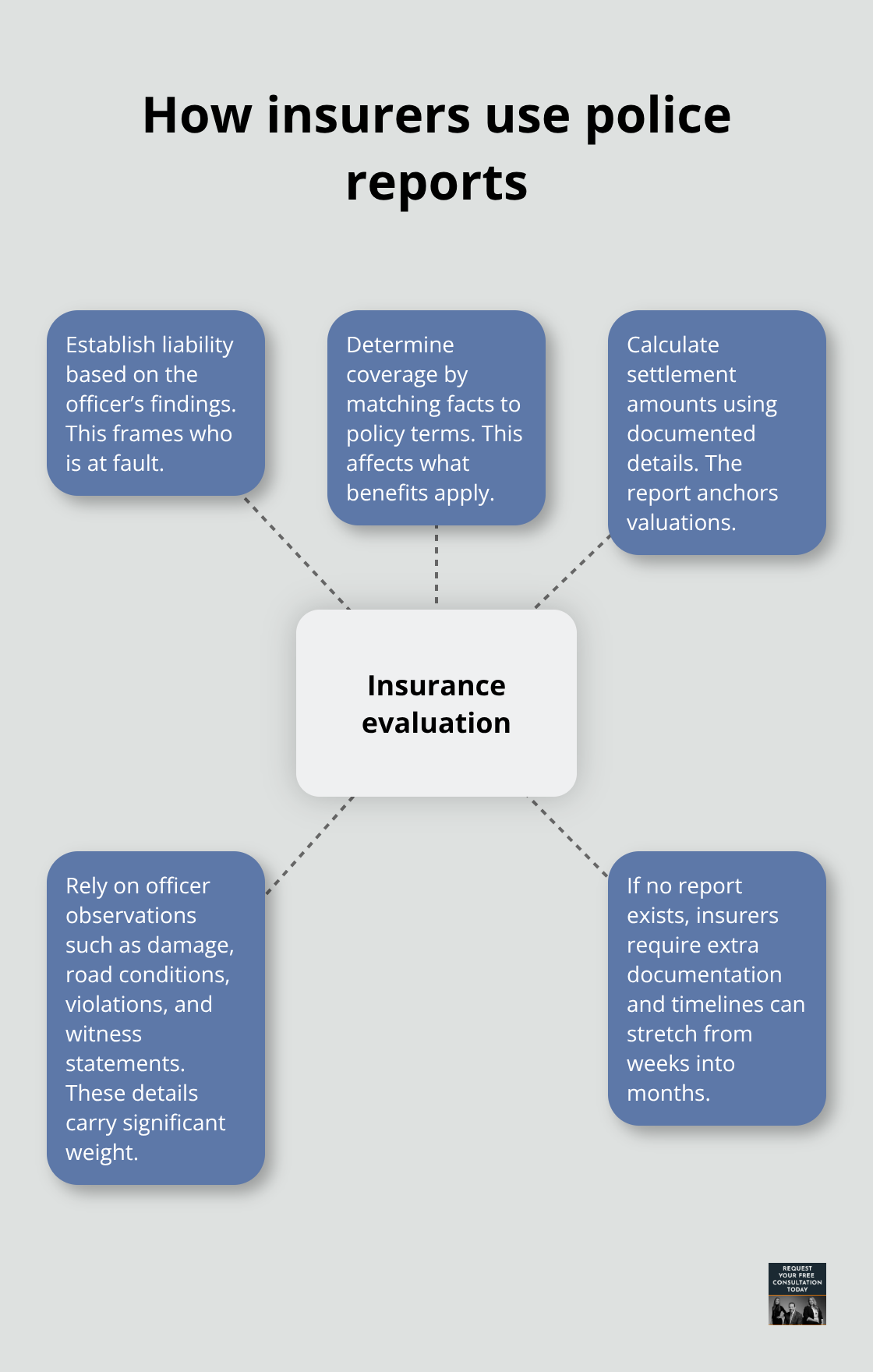
Without a police report, insurers request additional documentation like photos, witness contact information, and your own written account. This requirement stretches your claim resolution from weeks into months, leaving you without compensation while medical bills accumulate.
Leveraging Fault Determinations in Your Claim
Fault determinations in your report shift entire claim outcomes. If the officer noted that the other driver violated California Vehicle Code 21703(a) for following too close or 21453(a) for running a red light, your insurer uses this as concrete evidence to support your position. These specific code violations provide insurers with objective grounds to assign liability rather than relying on competing narratives.
Submit your report to your insurance provider with your initial claim notification rather than waiting. Provide both the official police report number and a copy of the full document to accelerate processing.
Correcting Errors Before Submission
If your report contains errors or omissions, contact the Sacramento Police Department’s non-emergency line at 916-808-5471 to request corrections before submitting to your insurer. Corrected reports carry more credibility and reduce the likelihood of claim denials or reduced settlements. Insurance adjusters process claims faster when documentation is complete and accurate from the start.
Jurisdiction Considerations for Your Report
You may need reports from the California Highway Patrol instead of Sacramento PD, depending on where your collision occurred. Verify which agency has jurisdiction over your collision location to request from the correct source. This step (particularly in unincorporated areas or outside Sacramento city limits) prevents delays caused by submitting reports to the wrong department.
Preparing for the Next Phase
Your police report now forms the official record that insurers will scrutinize. The documentation you’ve gathered and corrected positions you to move forward with confidence. Understanding how injury claims work-and how police documentation shapes your case-requires insight into what happens when officers arrive and what they record.
What Happens When Officers Arrive at Your Collision Scene
Providing Statements to Law Enforcement
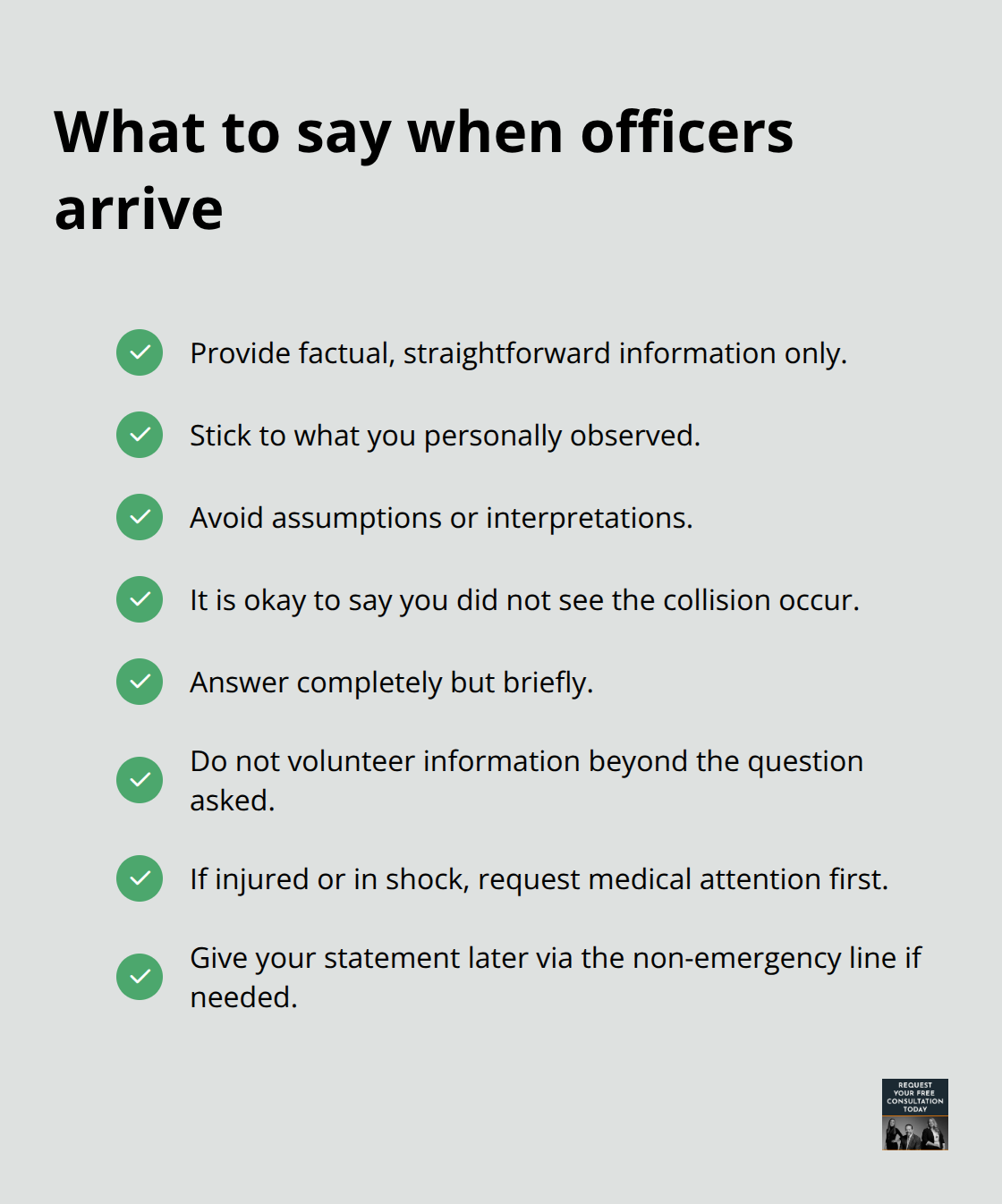
The moments when Sacramento PD or CHP officers arrive set the trajectory for your entire claim. Your interaction with law enforcement directly shapes what gets documented in the official report, and that report becomes the foundation insurers use to evaluate your case. When officers arrive, provide factual, straightforward information about what happened. State only what you observed directly, not assumptions or interpretations. If you didn’t see how the collision occurred, say so.
Officers can tell when statements contradict each other or lack credibility, and inconsistencies damage your claim later.
When the officer asks questions, answer completely but briefly. Don’t volunteer information beyond what’s asked. If you’re injured or in shock, it’s acceptable to request medical attention first and provide a statement later through the non-emergency line at 916-808-5471.
Collecting Evidence at the Scene
Exchange information with the other driver at the scene: driver license numbers, vehicle license plates, names, addresses, phone numbers, and insurance details. Take photos of vehicle damage, road conditions, traffic signals, and any visible injuries before emergency responders move vehicles. Photograph the overall scene and any skid marks or debris. These visual records supplement the officer’s observations and provide insurance adjusters with concrete evidence of impact severity.
If witnesses are present, obtain their contact information immediately. Witnesses often disappear before officers complete their statements, and their accounts carry significant weight in fault determination. Officers document witness statements in the report, but having direct contact with witnesses allows you to follow up if insurers need additional clarification.
Understanding Officer Fault Assessments
The officer’s assessment of fault in the report carries substantial influence over claim outcomes. California Vehicle Code violations documented at the scene provide objective evidence of liability. If the other driver violated VC 21703(a) for following too close, VC 21453(a) for running a red light, or VC 22350 for speeding, these specific code citations become powerful tools in your claim. Insurance companies treat code violations as concrete proof rather than disputed narratives.
Identifying the Correct Reporting Agency
For collisions outside Sacramento city limits, the California Highway Patrol handles the report instead of Sacramento PD. CHP reports follow the same format and carry equal weight with insurers, but you’ll request them through the CHP Online Crash Report System on CA.gov rather than through Sacramento PD’s channels. Verify which agency has jurisdiction by checking whether your collision occurred on a state highway, city street, or county road. This distinction determines where you file reports and which agency’s documentation you’ll need for your claim.
If you’re unsure about jurisdiction, contact the non-emergency line and provide your collision location. Don’t assume the officer who responded has the authority to investigate; some collisions fall outside their jurisdiction entirely. Getting the correct report from the correct agency prevents delays that extend your claim timeline by weeks.
Final Thoughts
Your Sacramento police report forms the foundation of your injury claim, and submitting it promptly to your insurer accelerates the entire process. Insurance adjusters process cases faster when you provide official documentation upfront, and specific California Vehicle Code violations noted in the report give you concrete evidence for liability determination. Request your report from Sacramento PD’s Police Records section using your case number, or contact their non-emergency line at 916-808-5471 if you need assistance locating your documentation.
Errors in your report can undermine your claim, so verify that all witness statements, damage assessments, and fault determinations are accurate before submission to your insurer. Contact Sacramento PD at 916-808-5471 to request corrections if you spot inaccuracies, and allow five to ten business days for processing. If your collision occurred outside city limits, request your report from the California Highway Patrol through their online system instead.
Significant injuries or disputed liability require experienced legal representation to protect your interests. We at Schaar & Silva LLP handle the legal complexities while you focus on recovery, managing everything from medical bill assistance to property damage claims and connecting you with specialists for support.
