

Car accidents in Santa Cruz County can leave victims facing mounting medical bills and lost income. Understanding car crash injury payouts helps you know what compensation you might receive.
We at Schaar & Silva LLP see how settlement amounts vary dramatically based on injury severity and other factors. The right legal approach can make a significant difference in your final payout.
What Factors Control Your Car Crash Payout Amount
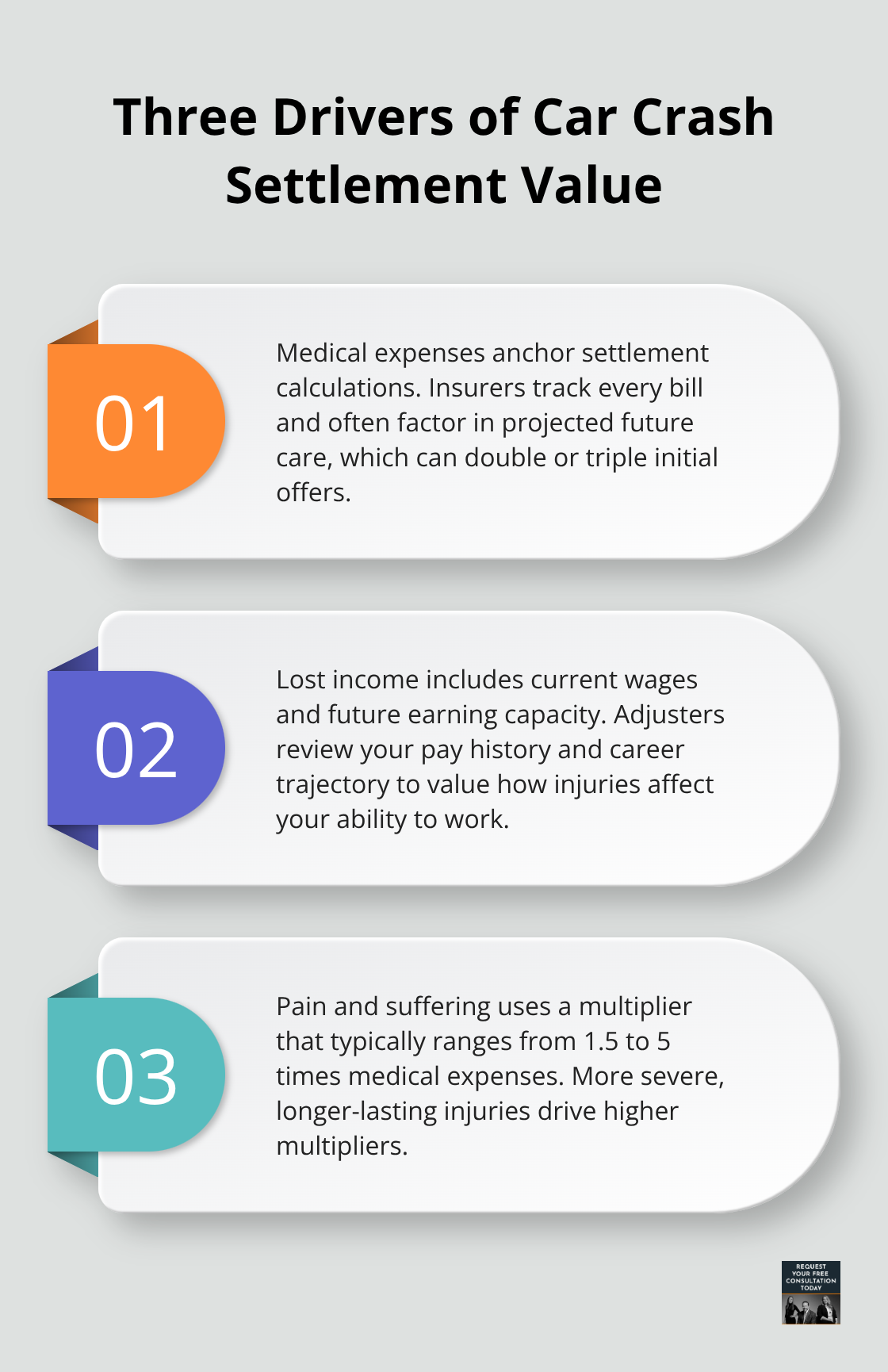
Your medical expenses form the foundation of any car crash settlement. Insurance companies calculate payouts starting with documented medical bills, which average around $19,000 for typical personal injury cases nationwide. However, this figure jumps dramatically for severe injuries.
Back injuries, particularly herniated discs, represent the most common car accident injuries and can generate six-figure settlements when proper documentation exists. The key lies in comprehensive medical documentation from day one of treatment.
Medical Bills Drive Settlement Values
Emergency room visits, diagnostic tests, physical therapy sessions, and ongoing treatment costs all contribute to your economic damages. Insurance companies track every medical expense, making thorough documentation vital.
Future medical needs significantly impact settlement amounts. If your injury requires ongoing care, surgery, or long-term rehabilitation, these projected costs get factored into negotiations (often doubling or tripling initial settlement offers).
Lost Income Calculations Extend Beyond Current Pay
Lost wage calculations examine your complete financial picture. Insurance adjusters review your income history, career trajectory, and how injuries affect your ability to work. High earners naturally receive larger settlements for identical injuries compared to lower-income individuals.
Future earning capacity matters just as much as current lost wages. If your injury prevents career advancement or forces a job change, these losses become part of your claim.
Pain and Suffering Multiplies Your Award
Non-economic damages for pain and suffering typically range from 1.5 to 5 times your medical expenses, depending on injury severity. Catastrophic injuries like spinal cord damage or permanent disabilities generate the highest multipliers.
The duration and intensity of your pain directly influence these calculations. Your daily activities, sleep disruption, and emotional distress all contribute to pain and suffering awards.
Insurance companies use algorithms to compute initial offers, but these often undervalue serious injury cases. Understanding how different types of compensation work together helps you recognize whether settlement offers reflect your case’s true value.
What Types of Compensation Can You Receive
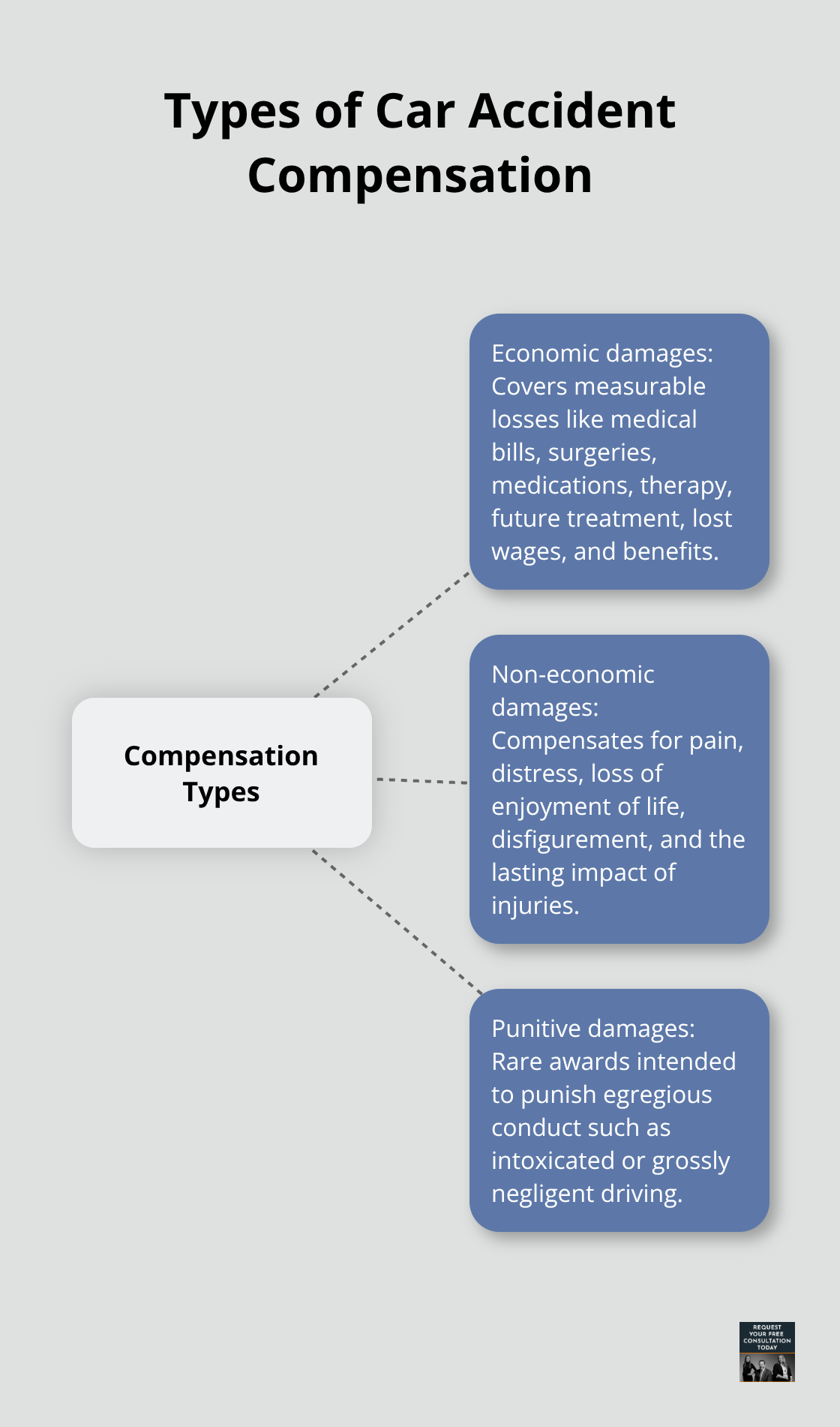
Car accident compensation falls into three distinct categories, each serving a different purpose in your recovery. Economic damages cover your tangible financial losses, while non-economic damages address your physical and emotional pain. Punitive damages, though rare, punish drivers whose reckless behavior caused your accident.
Economic Damages Cover Your Financial Losses
Economic damages include all measurable financial losses from your accident. Medical expenses form the largest component and cover emergency room visits, surgeries, medications, physical therapy, and future treatment needs. Lost wage calculations extend beyond your current paycheck to include overtime, bonuses, and benefits you would have earned.
If your injuries prevent you from work at full capacity, future income losses become part of your economic damages. Property damage to your vehicle, rental car costs, and transportation expenses to medical appointments all qualify as economic damages. California law requires insurance companies to pay these documented expenses (which makes thorough record-keeping vital for your recovery).
Non-Economic Damages Address Pain and Suffering
Non-economic damages compensate for the invisible impacts of your injuries. Pain and distress awards typically multiply your medical expenses by 1.5 to 5 times, depending on injury severity and duration. Loss of enjoyment of life covers activities you can no longer participate in due to your injuries.
Emotional distress damages address anxiety, depression, and trauma from your accident. Physical disfigurement and permanent disability generate substantial non-economic awards. Insurance companies often undervalue these damages because they cannot attach specific dollar amounts to your pain (making strong legal representation vital for fair awards).
Punitive Damages Target Reckless Drivers
Punitive damages punish defendants whose conduct was particularly egregious and deter similar behavior. California courts award punitive damages when drivers were intoxicated, street racing, or engaged in other grossly negligent behavior. These damages can exceed your actual losses by significant margins, sometimes reaching millions of dollars in severe cases.
However, punitive damages apply to fewer than 5 percent of car accident cases and require clear evidence of malicious or reckless conduct beyond simple negligence. Understanding these compensation types helps you evaluate whether settlement offers reflect the true scope of different injury categories and their typical payout ranges.
What Settlement Amounts Can You Expect for Different Injuries
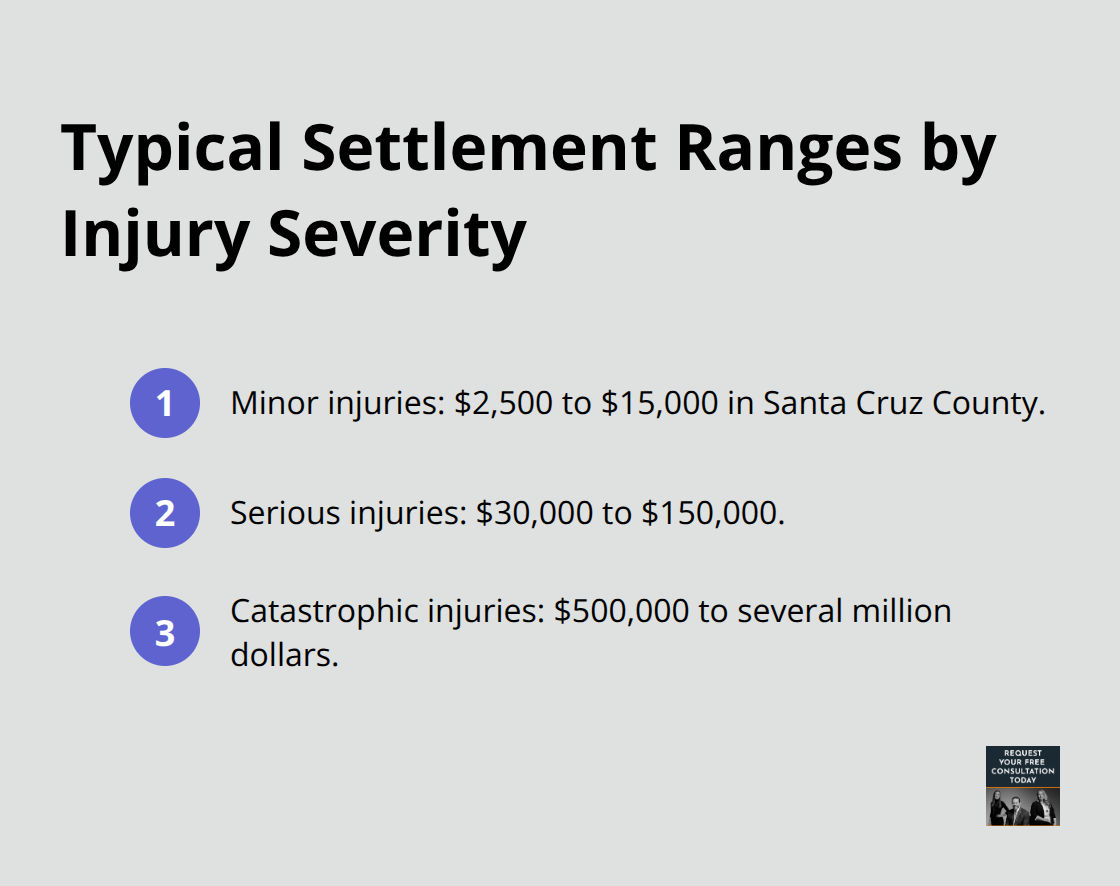
Minor injuries like whiplash, sprains, and soft tissue damage typically produce settlements between $2,500 and $15,000 in Santa Cruz County. These cases involve minimal medical treatment, often limited to emergency room visits, pain medication, and short-term physical therapy. Insurance companies settle these claims quickly because medical costs remain low and recovery occurs within weeks or months.
Serious Injuries Command Higher Payouts
Broken bones, herniated discs, and significant back injuries produce settlements from $30,000 to $150,000. Back injuries represent the most common car accident injury type, and well-documented herniated disc cases routinely reach six-figure settlements. The key difference lies in treatment duration and complexity.
Serious injuries require surgery, extended physical therapy, and sometimes permanent lifestyle changes. Medical bills alone can exceed $50,000, and pain and suffering multipliers push total settlements much higher. Treatment duration directly affects settlement values (with longer recovery periods justifying larger awards).
Catastrophic Injuries Generate Maximum Awards
Spinal cord injuries, traumatic brain injuries, and permanent disabilities create settlements from $500,000 to several million dollars. These cases involve lifetime medical care, home modifications, assistive equipment, and complete loss of income capacity. A 35-year-old construction worker who becomes paralyzed faces $2-4 million in lifetime costs for medical care and lost income.
Insurance companies fight these claims aggressively because payout amounts threaten their profit margins. Strong legal representation becomes absolutely necessary to counter insurance company tactics and secure fair compensation for devastating injuries that forever change victims’ lives (making attorney selection critical for maximum recovery).
Final Thoughts
Car crash injury payouts depend on three primary factors: injury severity, medical expenses, and your ability to document losses. Minor soft tissue injuries typically settle between $2,500 and $15,000, while catastrophic injuries can reach millions of dollars. Your medical bills, lost wages, and pain and suffering all contribute to your final settlement amount.
Insurance companies use algorithms that often undervalue serious injury cases, particularly those with permanent disabilities or complex medical needs. Their initial offers rarely reflect the true value of your claim, especially when future medical care and lost earning capacity come into play. These companies prioritize profits over fair compensation (which makes strong legal representation vital for maximum recovery).
We at Schaar & Silva LLP help Santa Cruz County accident victims navigate insurance company tactics while they focus on recovery. If you’ve been injured in a car accident, document all medical treatment and keep detailed records of expenses. Avoid quick settlement offers until you understand your case’s true value.
