
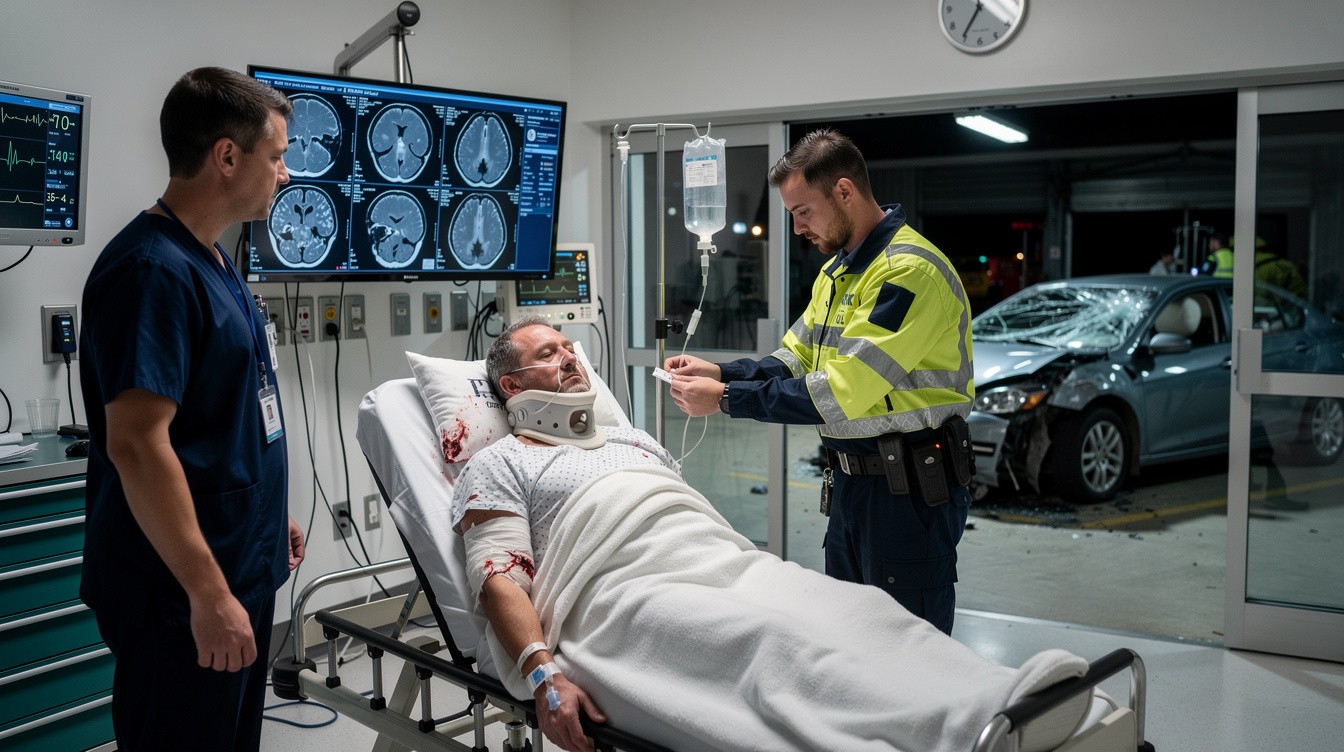
A head injury from a car accident can change your life in seconds. Pain, confusion, memory problems, and mounting medical bills often follow.
We at Schaar & Silva LLP help accident victims in Santa Cruz understand their injuries and fight for fair compensation. This guide walks you through head injury types, treatment options, and how to build a strong legal claim.
What Head Injuries Actually Look Like After a Car Accident
Concussions and How They Develop
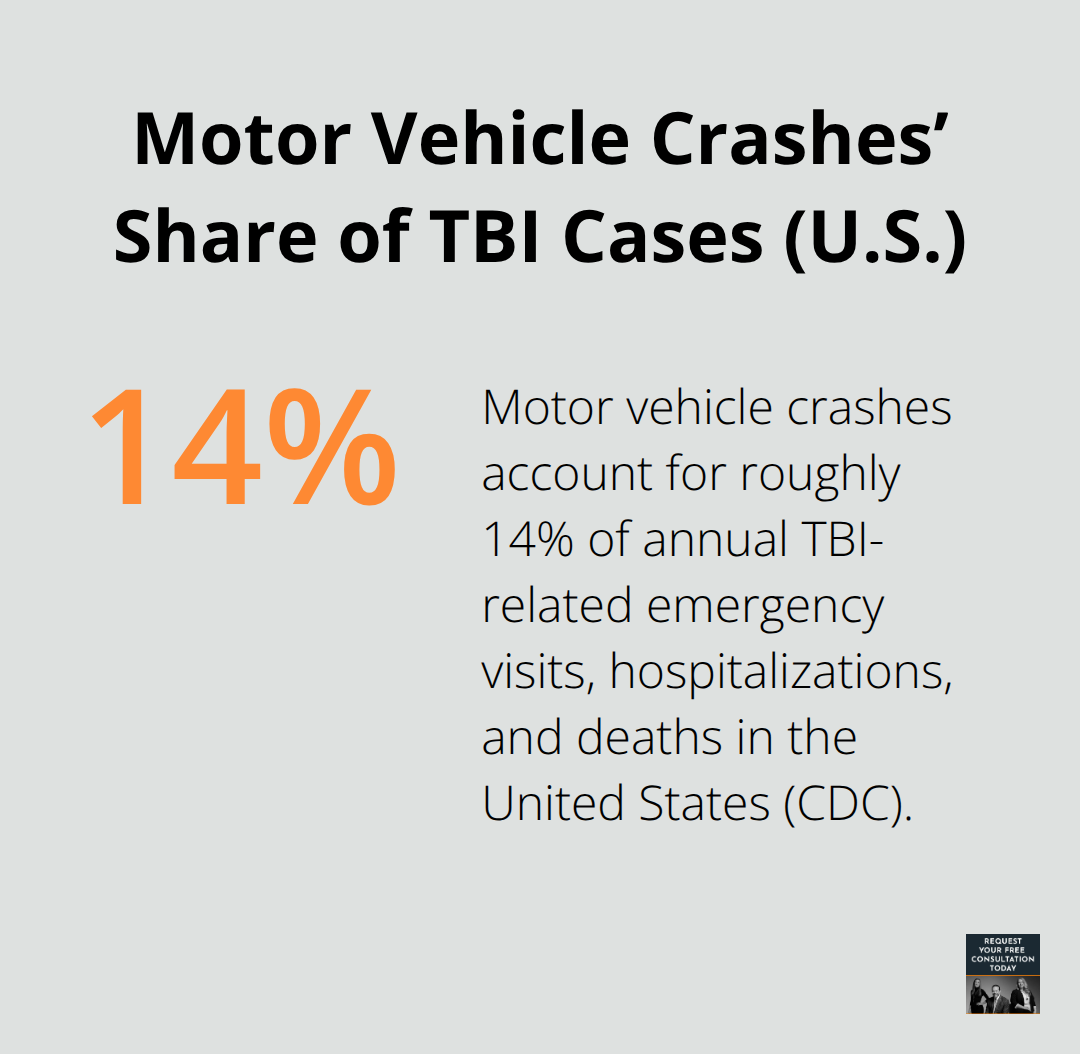
Head injuries from car accidents range from mild to catastrophic, and understanding the differences matters for your recovery and your claim. A concussion happens when the brain moves rapidly inside the skull, and you don’t need to lose consciousness to have one. The Centers for Disease Control and Prevention reports that about 2.87 million traumatic brain injury-related emergency department visits, hospitalizations, and deaths occur annually in the United States, with motor vehicle crashes accounting for roughly 14% of these cases.
Concussion symptoms often appear within hours or days and include headaches, dizziness, confusion, sensitivity to light, nausea, and memory problems. Some people experience post-concussion syndrome, where symptoms persist for weeks or months, affecting work and daily life. If you hit your head in a Santa Cruz accident, get checked immediately even if you feel fine-symptoms can develop later and documentation helps your case significantly.
Traumatic Brain Injuries and Long-Term Consequences
Traumatic brain injuries represent the more severe end of the spectrum and cause permanent changes to how your brain functions. Moderate to severe traumatic brain injuries result in long-term cognitive problems, emotional changes, physical disabilities, and personality shifts. The National Institute of Neurological Disorders and Stroke indicates that outcomes depend heavily on injury severity and how quickly you receive appropriate medical care.
Recovery from these injuries often takes months or years and includes physical therapy, cognitive rehabilitation, and ongoing medical monitoring. This extended recovery period directly impacts your earning capacity and quality of life, which is why documenting every medical visit, therapy session, and lost wage from your time away from work matters for your compensation claim.
Skull Fractures and Internal Bleeding
Skull fractures and internal bleeding are medical emergencies that require immediate hospitalization and imaging. Epidural hematomas (blood pooling between the brain and skull) can become life-threatening within hours if not treated. Subdural hematomas develop more slowly but still cause serious damage and demand urgent intervention.
These injuries create substantial medical costs and recovery challenges that extend far beyond the initial accident. Understanding what happened to your body helps you work with medical professionals and legal representatives who can calculate fair compensation for all your losses. We at Schaar & Silva LLP help Santa Cruz accident victims navigate these complex medical and legal situations so you can focus on healing.
Getting the Right Medical Care After a Head Injury
Immediate Emergency Response Matters
The first hours after a head injury determine your recovery trajectory and the strength of your compensation claim. Head to an emergency room immediately, even if you feel relatively okay-head injuries frequently worsen over hours or days as swelling develops inside the skull. Emergency physicians will perform a Glasgow Coma Scale assessment, which rates consciousness level from 3 to 15, and this score becomes critical documentation for your legal case. The American College of Emergency Physicians recommends that anyone with loss of consciousness, confusion, severe headache, or vomiting receive immediate imaging.
Diagnostic Imaging in Santa Cruz Hospitals
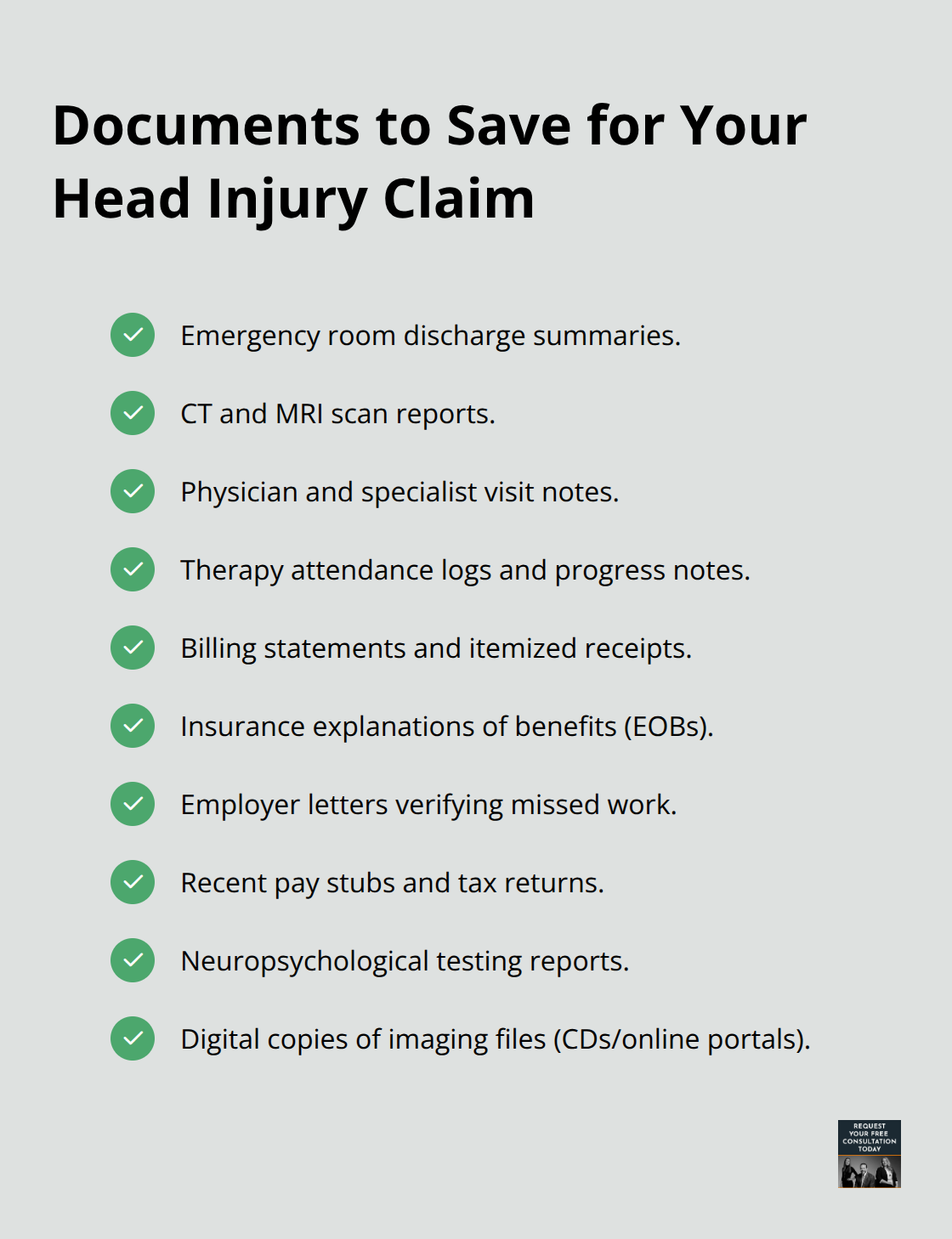
Hospitals in Santa Cruz County typically use CT scans as the first imaging tool because they work quickly and reveal bleeding or fractures. MRI scans provide more detailed images of brain tissue damage but take longer, so they’re usually ordered after the acute emergency phase passes. Keep every receipt, scan report, and physician note because insurance companies scrutinize medical records closely when calculating fair settlements.
Physical and Cognitive Rehabilitation
Recovery from head injuries demands ongoing attention that extends far beyond the emergency room visit. Physical therapy addresses balance problems, coordination issues, and strength loss, often requiring 2 to 3 sessions weekly for several months depending on injury severity. Cognitive rehabilitation helps with memory, attention, and problem-solving difficulties through structured exercises and real-world practice.
Documentation That Strengthens Your Claim
Many Santa Cruz County patients need neuropsychological testing to document cognitive changes, which involves several hours of standardized testing that creates powerful evidence for your claim. Return-to-work timelines vary dramatically-mild concussions might allow return within weeks, while moderate to severe injuries can keep people out of work for months or years. Document every therapy session, every missed workday, and every symptom that persists because this detailed record transforms vague pain complaints into quantifiable damages. Insurance adjusters and juries respond to specific medical evidence rather than general statements about suffering, so maintaining thorough documentation gives you the concrete information needed to build your strongest case.
As your medical treatment progresses and your records accumulate, understanding how to calculate the actual value of your damages becomes the next critical step in your recovery and your claim.
What Your Head Injury Claim Is Actually Worth
Economic Damages: Medical Bills and Lost Income
Medical bills pile up fast after a head injury, and calculating what you deserve requires understanding how damages work in Santa Cruz County. Economic damages cover concrete costs: emergency room visits, CT scans, physical therapy sessions, neuropsychological testing, and ongoing medical care. If you earned $60,000 annually and missed four months of work while recovering, that’s roughly $20,000 in lost wages you can claim. Keep pay stubs, tax returns, and letters from your employer documenting time away because insurance companies demand proof before cutting checks.
Non-Economic Damages: Pain and Permanent Changes
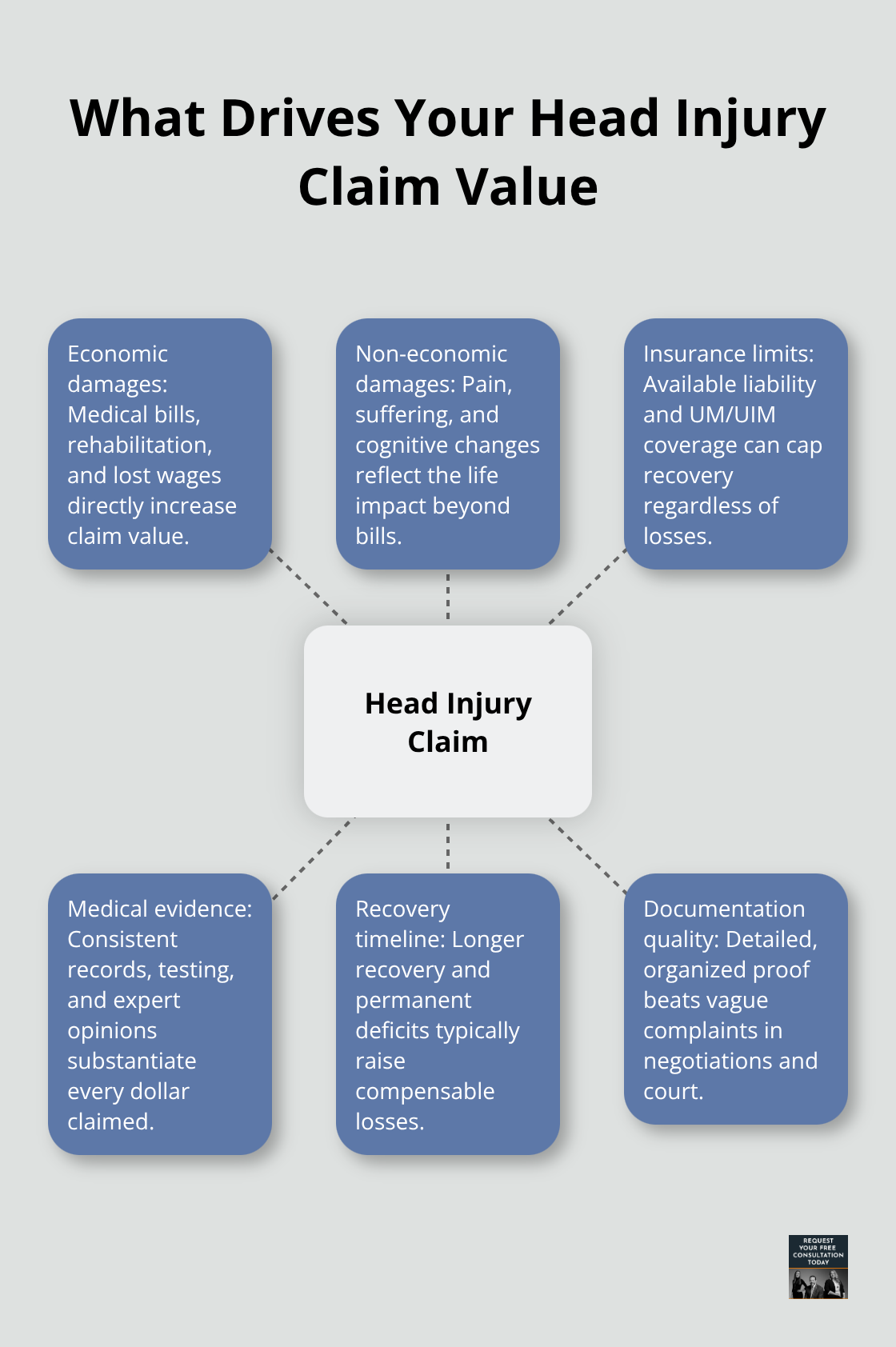
Non-economic damages address pain, suffering, cognitive changes, and reduced quality of life-these numbers vary wildly depending on injury severity and how well your medical records document lasting effects. A mild concussion with full recovery might warrant $15,000 to $30,000 in non-economic damages, while a moderate traumatic brain injury causing permanent memory problems could justify $75,000 to $150,000 or more. The National Highway Traffic Safety Administration estimates that serious traffic injuries cost society roughly $99 billion annually in medical expenses and lost productivity, which reflects just how substantial these injuries truly are.
Insurance Coverage and Policy Limits
Insurance policies in California typically carry liability limits of $15,000 to $100,000 per person, and your recovery depends heavily on whether the at-fault driver carried adequate coverage. If their policy maxes out at $30,000 and your damages total $80,000, you have an underinsured motorist claim against your own policy if you purchased that coverage. Medical lien services can help manage your bills while your case resolves, meaning you don’t drain savings waiting for settlement funds.
Building Strong Cases with Medical Evidence
Insurance adjusters often lowball initial offers-their job is minimizing payouts, not providing fair value for permanent brain damage or months of lost income. Documented medical evidence transforms vague injury claims into specific damage calculations: a neuropsychological report showing cognitive decline holds far more weight than your word that memory feels fuzzy. At Schaar & Silva LLP, we focus on building cases with the medical records, wage documentation, and opinions that insurers cannot dismiss, helping ensure your settlement reflects the actual cost of your injury rather than what adjusters hope you’ll accept.
Final Thoughts
Head injuries from car accidents demand immediate medical attention and legal action. Roughly 14% of traumatic brain injuries in the United States stem from motor vehicle crashes, and many victims face months or years of recovery alongside mounting bills and lost income. Waiting to seek treatment or delaying legal representation costs you money and weakens your claim because medical documentation created early carries far more weight than records gathered months later.
Head to an emergency room immediately if you experienced any head impact, even if symptoms seem minor. Concussions, traumatic brain injuries, and skull fractures frequently worsen over hours or days as swelling develops, and early imaging creates the documentation that insurance companies cannot ignore. Request copies of every medical record, imaging report, and physician note because these documents form the foundation of your compensation claim.
Once you’ve secured medical care, contact a legal representative who understands head injury Santa Cruz cases. Insurance adjusters routinely undervalue brain injuries because they’re harder to quantify than broken bones, and they count on injured people accepting lowball offers out of desperation. Contact Schaar & Silva LLP to discuss your case with someone who understands what you’re facing.