
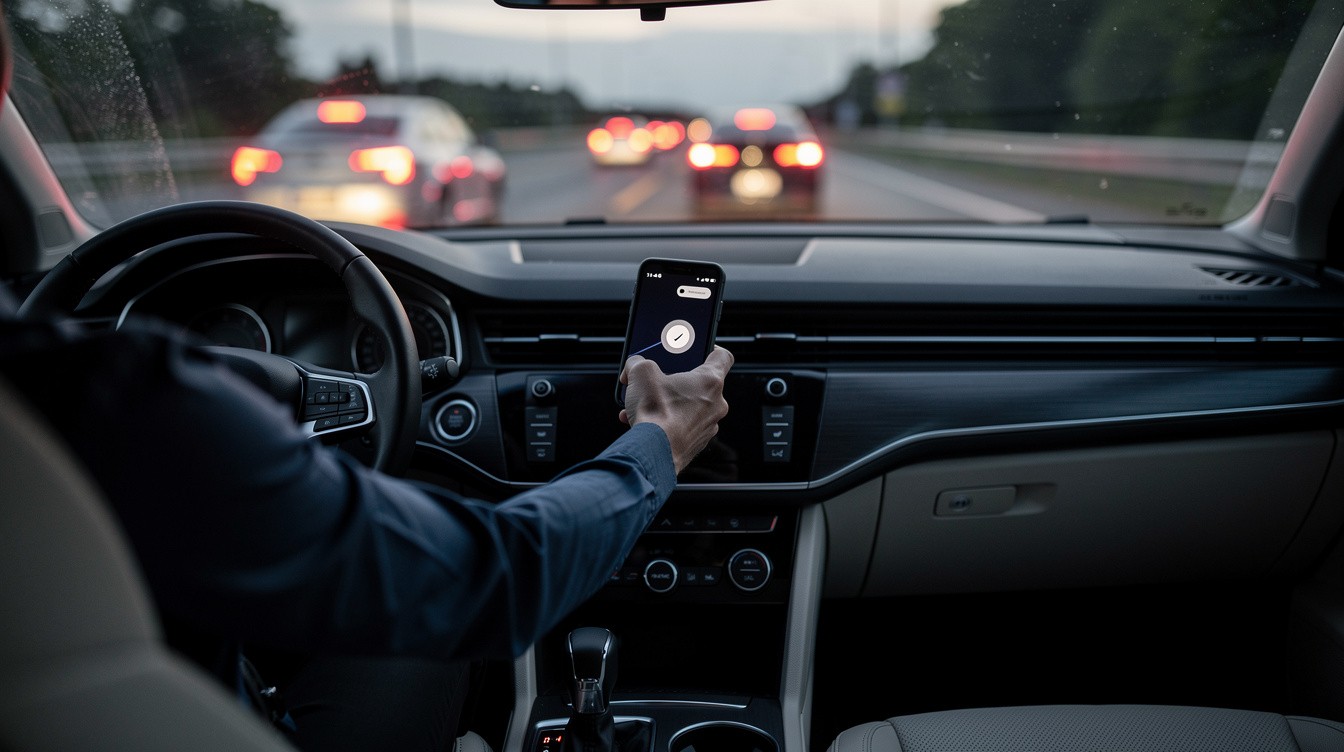
Distracted driving incidents cause thousands of crashes every year across California. At Schaar & Silva LLP, we see firsthand how a split-second glance at a phone or a moment of inattention can change lives forever.
Whether you’re navigating Santa Cruz County, Sacramento, or Oakland roads, understanding the risks and knowing your rights matters. This guide covers prevention strategies, California’s distracted driving laws, and what to do if you’ve been hit by a distracted driver.
How Distracted Driving Crashes Actually Happen
The Scale of the Problem
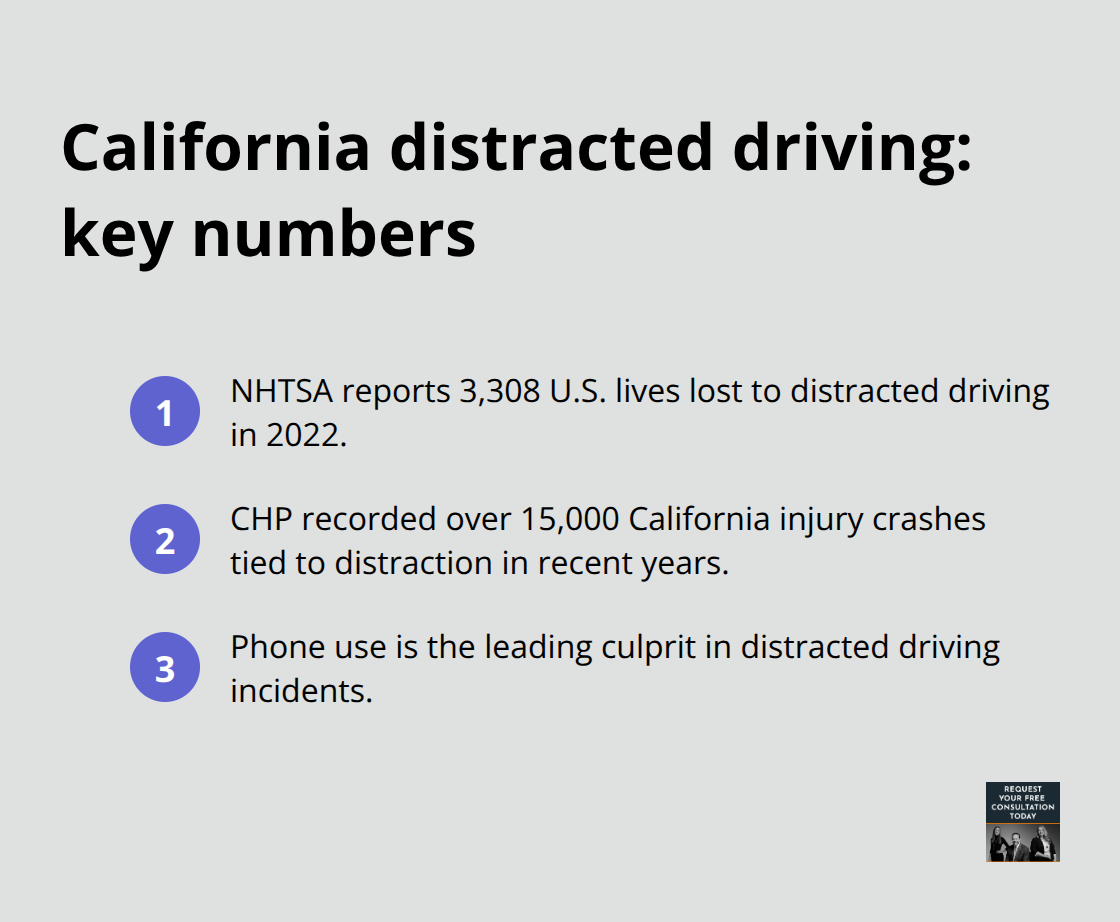
The National Highway Traffic Safety Administration reported that distracted driving claimed 3,308 lives in 2022, a number that has remained stubbornly high despite increased awareness campaigns. In California specifically, the California Highway Patrol documented over 15,000 injury crashes involving distracted driving in recent years, with phone use being the leading culprit. These aren’t abstract statistics-they represent real people on Santa Cruz County, Sacramento, and Oakland roads who took their eyes off the street for just a few seconds.
Why Distractions Turn Deadly
Cellphone use while driving increases the likelihood of a crash by four times, according to research from the Virginia Tech Transportation Institute. Text messaging while driving makes a crash 23 times more likely. The problem extends far beyond phones. Eating, adjusting climate controls, talking to passengers, and reaching for items in your vehicle all steal attention from the road.
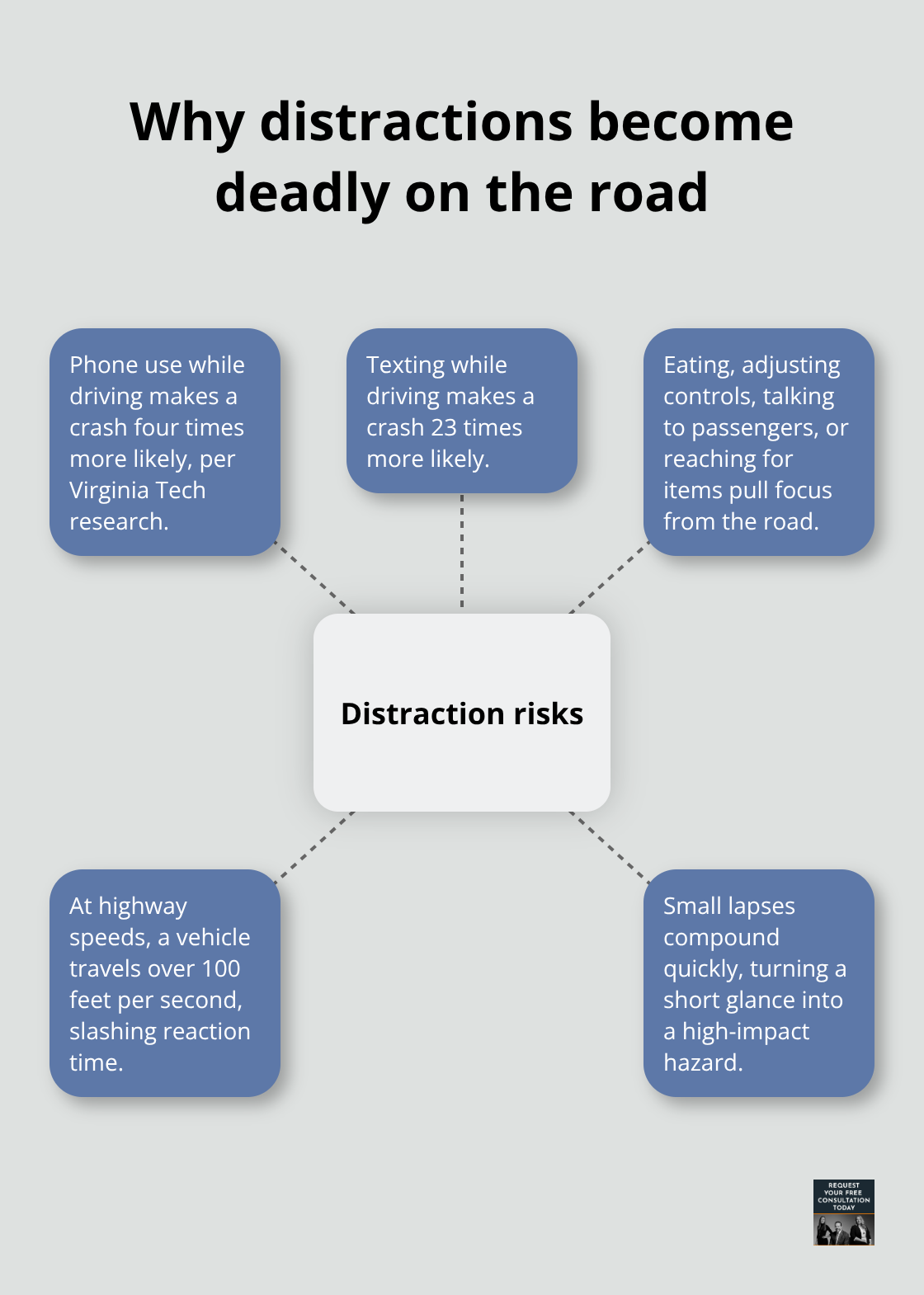
Many drivers underestimate how quickly these distractions become deadly, especially at highway speeds where a vehicle travels over 100 feet per second.
The Financial and Legal Fallout
Victims of distracted driving accidents face mounting medical bills, vehicle repair costs, lost wages, and long-term physical rehabilitation. In cases involving brain or spinal injuries, the financial burden extends decades into the future. The at-fault driver faces California’s distracted driving laws, which carry fines starting at $161 for a first offense and escalate significantly for repeat violations.
Insurance companies use distracted driving admissions as grounds to deny claims or reduce payouts, leaving victims to shoulder costs themselves. If you’ve been injured by a distracted driver in Santa Cruz County, you have the right to pursue a personal injury claim for damages. The legal team at Schaar & Silva LLP can help you navigate these claims and connect you with medical lien services to manage bills while your case resolves.
What Happens Next
Understanding your rights after a crash matters just as much as preventing one in the first place. California’s distracted driving laws create specific liability standards that affect how your case moves forward.
What Really Distracts Drivers on California Roads
Visual Distractions Dominate Crash Statistics
Phones dominate the conversation about distracted driving, but the reality on Santa Cruz County, Sacramento, and Oakland roads is more complex. The Insurance Institute for Highway Safety reports that visual distractions-taking your eyes off the road-account for the majority of crashes, yet many drivers don’t recognize what counts as a visual distraction until it’s too late. Reaching for a water bottle, adjusting your GPS, or checking your mirror for longer than necessary all pull your attention away.
The problem intensifies at higher speeds. At 55 miles per hour, taking your eyes off the road for five seconds means traveling the length of a football field blind. This distance gives you no time to react to sudden obstacles, pedestrians, or other vehicles.
Passengers and In-Car Interruptions
Passengers create different hazards depending on their age and behavior. Teenage passengers significantly increase crash risk for young drivers, according to the CDC, because they distract the driver through conversation or rowdiness. Children requiring attention from car seats or asking questions mid-drive force drivers to divide focus between the road and their needs.
Managing these interruptions requires deliberate strategies, not willpower alone. The most effective approach involves removing distractions before you drive rather than managing them while driving.
Practical Strategies That Actually Work
Set your phone to Do Not Disturb mode before leaving your driveway-this single step eliminates the temptation to check notifications. Program your destination into your GPS before moving, so you don’t fumble with the device while driving. If you have passengers, establish clear expectations about conversation volume and timing, especially during highway merges or heavy traffic.
Keep snacks, drinks, and personal items within arm’s reach before starting your vehicle. If you’re driving with children, address their needs at stops rather than attempting to manage them while moving. Research from the National Safety Council shows that hands-free phone systems don’t eliminate cognitive distraction the way most drivers believe-your brain still processes the conversation instead of road conditions.
When Prevention Fails
The strongest defense is accepting that some activities simply cannot happen while driving, no matter how convenient they seem. If a distracted driver hits you and leaves you facing medical bills or insurance complications, understanding your legal options becomes the next critical step.
What Happens When a Distracted Driver Hits You
How California Law Strengthens Your Case
California’s distracted driving law prohibits phone use while driving, with the California Highway Patrol enforcing Vehicle Code Section 23123.5 for handheld device violations. A first offense carries a $161 fine, but the real consequence emerges when you’re the victim. The at-fault driver’s admission of distraction strengthens your liability case significantly. Insurance adjusters review police reports and statements carefully-if the report documents phone use, texting, or other distractions, the other driver’s insurance company faces stronger pressure to accept full liability rather than dispute fault. This matters because disputed liability delays your claim resolution and forces you to prove negligence yourself. When distraction is documented, insurance companies rarely fight the claim.
Gathering Evidence That Proves Distraction
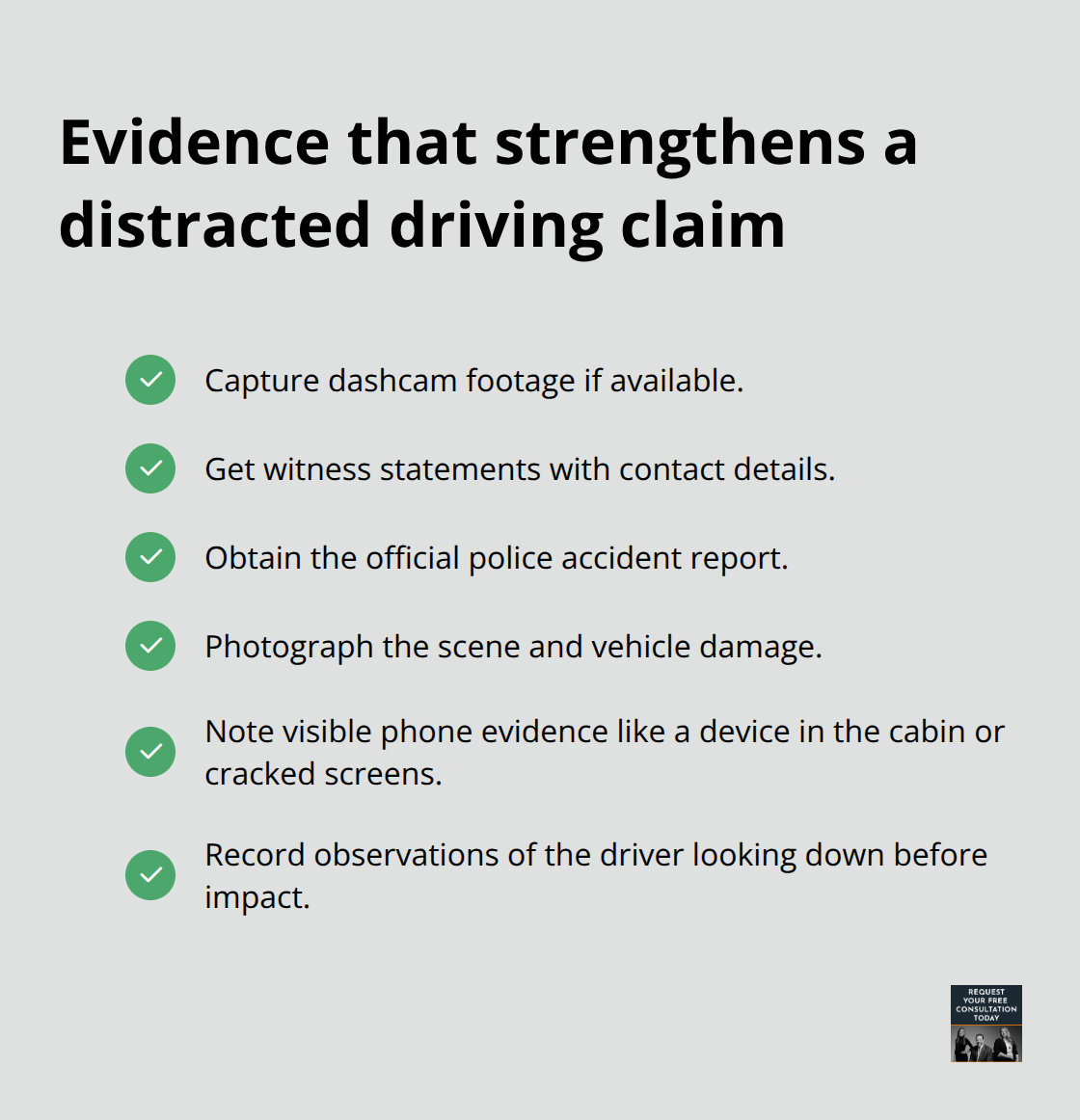
Many drivers deny distraction even when evidence exists, which is why dashcam footage, witness statements, and police reports become your strongest tools. If a distracted driver hit you in Santa Cruz County, Sacramento, or Oakland, request the official accident report immediately and photograph the scene if you’re able. Document any visible evidence of phone use-a phone visible in the vehicle, cracked phone screens, or witness accounts of the driver looking down before impact. These details transform a he-said-she-said dispute into documented fact.
Understanding Comparative Negligence and Your Recovery Rights
California is a comparative negligence state, meaning even if you were partially at fault, you can still recover damages as long as you’re less than 50 percent responsible. For brain and spinal injuries resulting from distracted driving accidents, medical costs accumulate rapidly-initial emergency care, imaging studies, specialist consultations, and ongoing physical therapy often exceed $100,000 within the first year alone. Insurance companies know this, which is why they sometimes delay claim processing or offer low settlements hoping you’ll accept quickly out of financial desperation.
Medical Liens and Avoiding Premature Settlement
Understanding your rights matters most when financial pressure mounts. The legal team at Schaar & Silva LLP can connect you with medical lien services that allow your healthcare providers to defer payment until your case resolves, removing the pressure to settle prematurely. Never accept an initial insurance offer without understanding the full scope of your injuries. Spinal injuries especially develop complications months after the crash-nerve damage, chronic pain, and mobility loss often emerge gradually. Contact a personal injury attorney before signing any settlement documents or giving recorded statements to insurance adjusters.
Final Thoughts
Distracted driving incidents remain preventable tragedies that claim thousands of lives annually across California. The strategies outlined in this guide-silencing your phone, programming your GPS before driving, and removing in-car distractions-work because they eliminate temptation rather than relying on willpower. If you drive regularly in Santa Cruz County, Sacramento, or Oakland, these practices directly reduce your crash risk.
If a distracted driver has already hit you, your immediate priority shifts to protecting your legal rights and managing medical costs. California’s distracted driving laws work in your favor when the at-fault driver’s phone use or inattention is documented. Insurance companies settle these claims faster when evidence is clear, which means gathering dashcam footage, witness statements, and police reports immediately after the crash matters enormously.
Medical bills from brain and spinal injuries accumulate rapidly, and accepting a premature settlement often leaves you short when complications emerge months later. The team at Schaar & Silva LLP can connect you with medical lien services that allow your healthcare providers to defer payment until your case resolves, removing financial pressure while your claim processes. Contact us if a distracted driver has injured you or damaged your vehicle.
